THE WORLD’S MOST STUNNING VINEYARD HOTELS
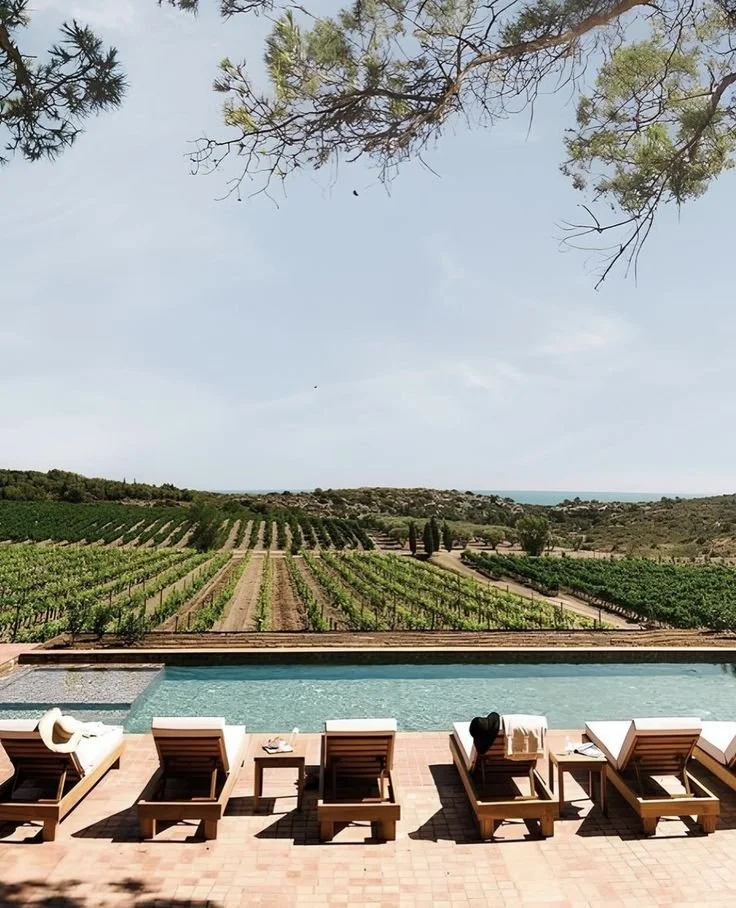
If you’ve ever sat with a glass of wine, looked around at wherever you were, and thought, “yeah, I need more of this in my life,” first of all - same. Second of all, I have very good news for you because it turns out there is an entire category of travel built around staying in or next to vineyards producing the wine you already love. You may be thinking, “duh,” but I don’t mean in a quirky-bed-and-breakfast that smells like old books kind of way. We’re talking full-on estates, boutique hotels, Frank Gehry architecture, Michelin-starred dining, and waking up to rows of vines in every direction. Brilliant, I know.
Sure I’ve been to vineyards and tasting rooms, but never considered the alternative. I fell down a rabbit hole looking at vineyard hotels around the world after seeing just one post about them. What genuinely surprised me wasn’t just the beauty of the places, but the range. There is something on the list for minimalists who want to disappear into the countryside and maximalists who want to enjoy their wine in a Frank Gehry titanium building in Spain. There is art, history, sustainability, insane food, and in almost every case, the kind of scenery that makes you put your phone down (briefly, then pick it back up to take about 400 photos).
Below is a curated roundup of my favorite rabbit hole discoveries. A bunch of the world’s most spectacular vineyard stays. Different countries, different wines, different vibes, but all deeply worth your consideration and your calendar.
Why a Vineyard Vacation Just Makes Sense
This might be a no-brainer, but let’s just break down why this is genuinely one of the best travel concepts out there, especially if wine is your thing. Unlike a typical resort vacation where wine is just something you order at dinner, a vineyard stay means you are fully immersed in it. You wake up, and the vines are right there. You can take a tour of the estate before breakfast, sit in on a tasting mid-afternoon, and have a glass at sunset that was literally grown on the property you’re sleeping on. It’s literally a more romantic farm-to-table situation.
There is also something really wonderful about the slowness of vineyard travel. These are places that operate on a seasonal rhythm, and the energy just tends to rub off on you. You’ll find yourself lingering over meals longer, walking more, talking more, and checking your phone less. Something I experienced on vineyard tours, but it seems like a luxury on a full vacation. And because most of these hotels are on working estates, the food is usually exceptional.
Add in the fact that many of these properties are set in regions most travelers don’t think to visit, like the volcanic landscapes of the Canary Islands or the wild Maremma Coast in Tuscany, and you’re also getting a genuinely off-the-beaten-path experience without sacrificing comfort. Honestly, it’s the trip I didn’t really know I needed until I started looking at it. And now I just think about it…a lot.
César Lanzarote
Canary Islands
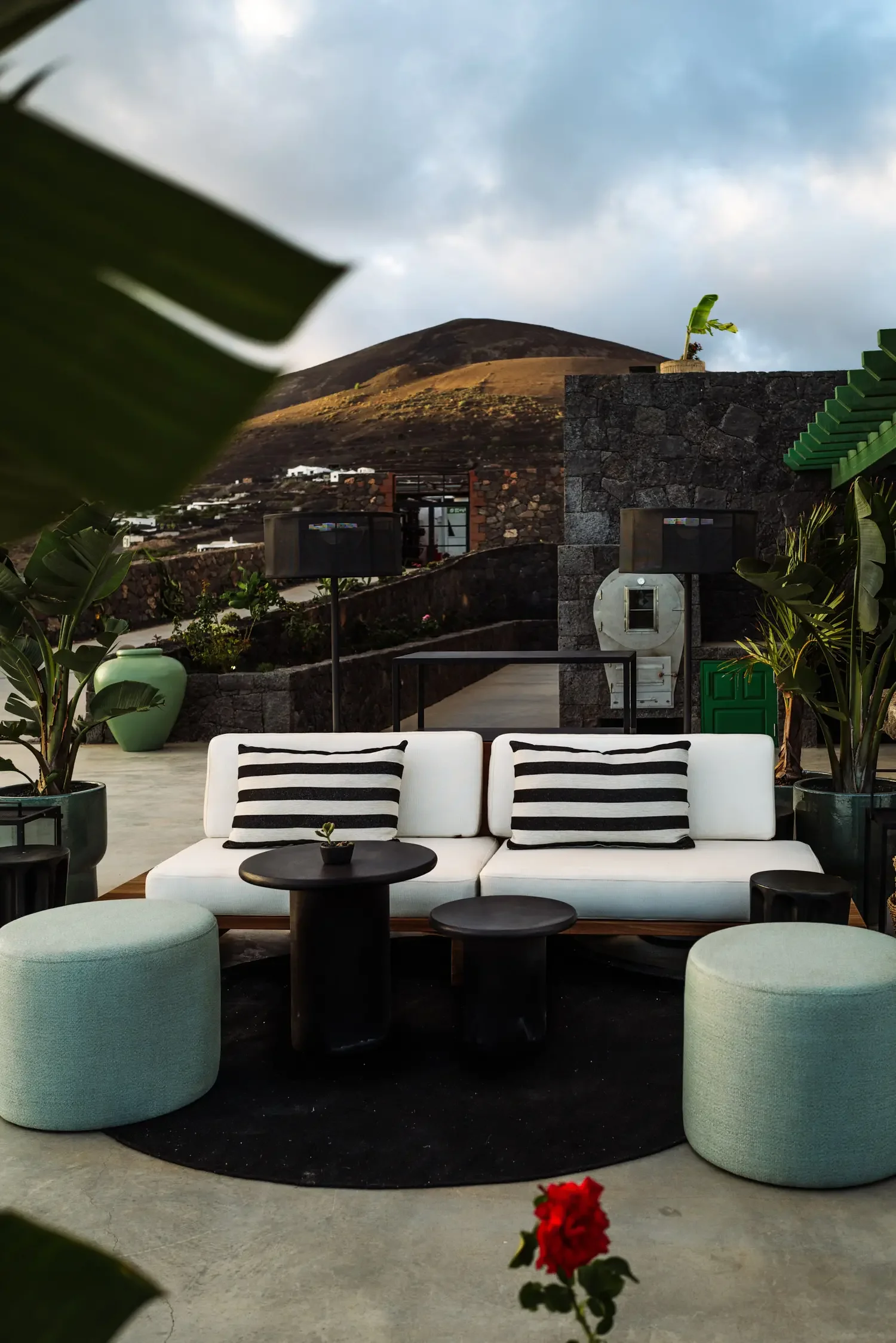
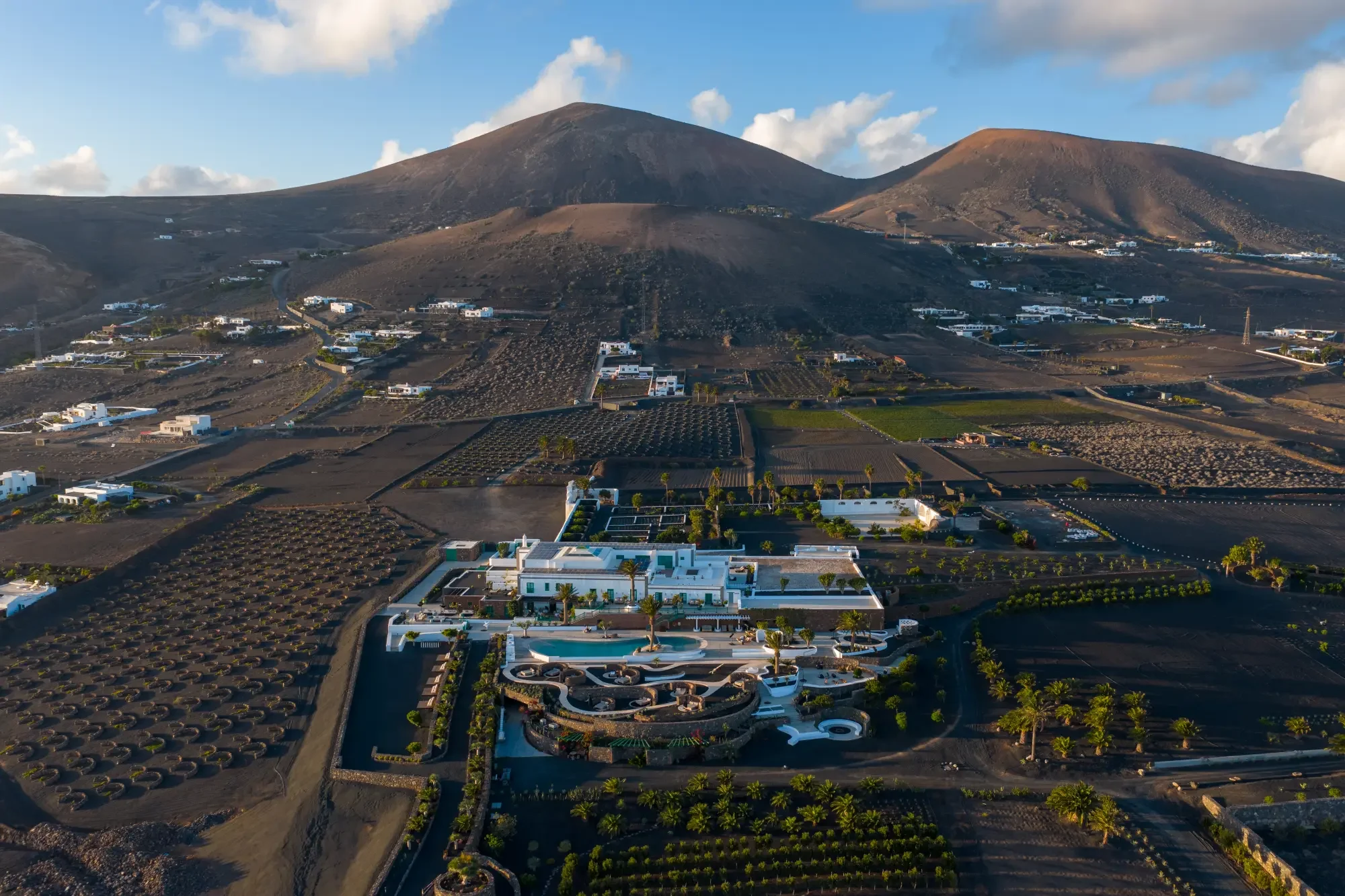
Lanzarote is one of those places that photographs beautifully but really needs to be experienced in person to fully register. It’s a landscape shaped by volcanic activity and has dramatic black lava fields, whitewashed villages, and a light quality that is genuinely unlike anywhere else in Europe. And right in the middle of it sits César Lanzarote, housed in what was once the summer residence of legendary local artist César Manrique.
The property has been thoughtfully restored with architecture that feels native to the island; lava-stone walls, wind-influenced lines, interiors layered with linen and ceramics, and the kind of sun-faded neutrals that are impossible to replicate anywhere else. It’s the kind of place that feels like it grew there. The vineyard surrounding it produces Malvasía grapes, a variety with deep roots in the Canary Islands, and the hotel is already producing small-batch wine from the estate. For anyone who loves art, volcanic landscapes, design, and drinking wine steps from where it was created? This belongs at the top of your list.
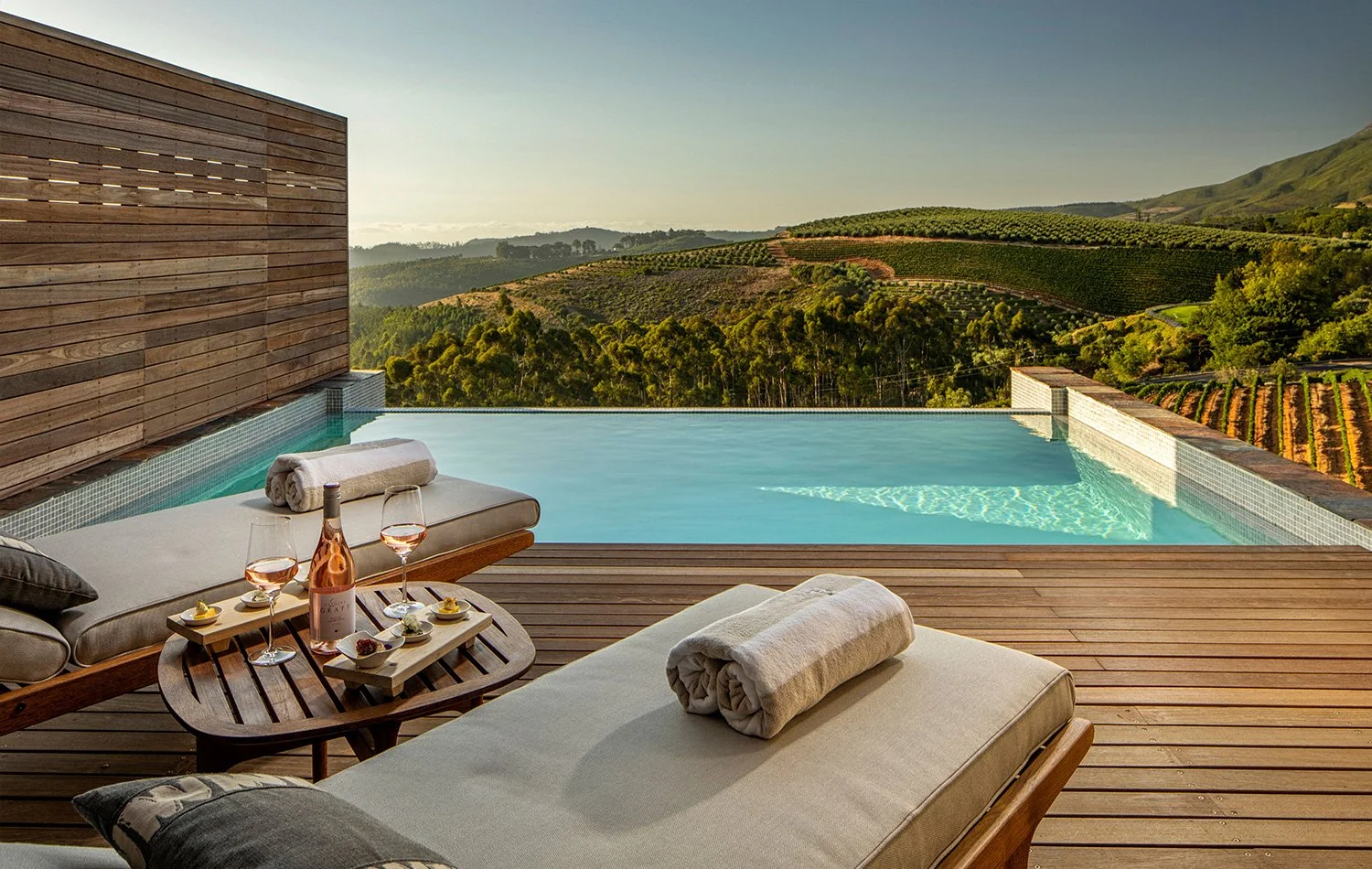
Delaire Graff Estate
Stellenbosch, South Africa
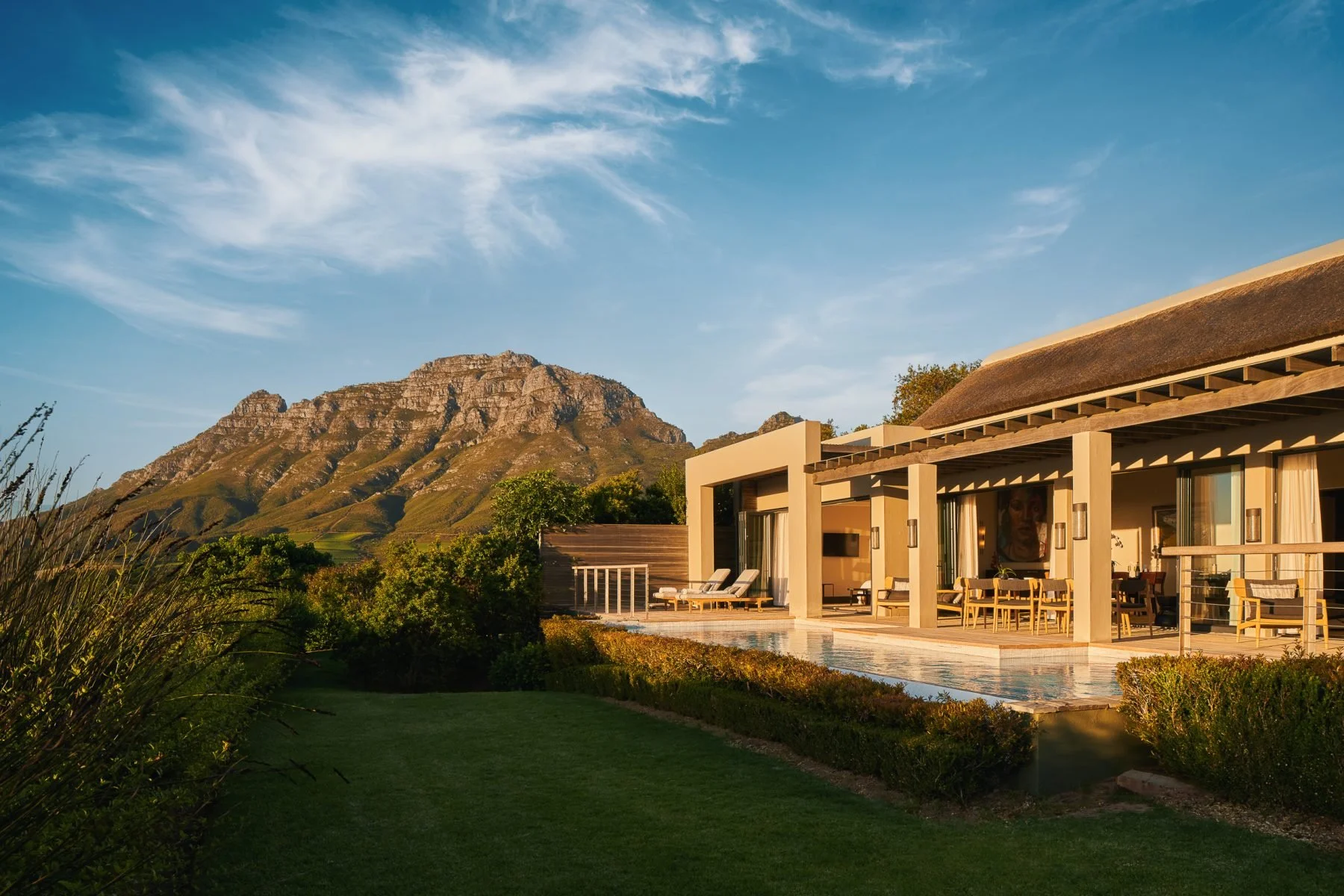
The Cape Winelands were already considered one of the most scenic wine regions in the world, and Delaire Graff somehow manages to be one of the most beautiful spots within them. Backdropped by vineyards growing Bordeaux varieties and Chardonnay, the estate gazes out over the Stellenbosch Valley toward Table Mountain, with the Helshoogte Pass creating a pretty cinematic sunset background.
Beyond the views, Delaire Graff offers botanical gardens, a swimming pool, and an impressive wine portfolio that has won international recognition. It’s the kind of place that feels equally suited to romantic getaways and solo trips where you plan to do very little except eat well and stare at scenery. South Africa, as a wine destination, is still underrated by many travelers, and Delaire is a good argument for fixing that immediately.
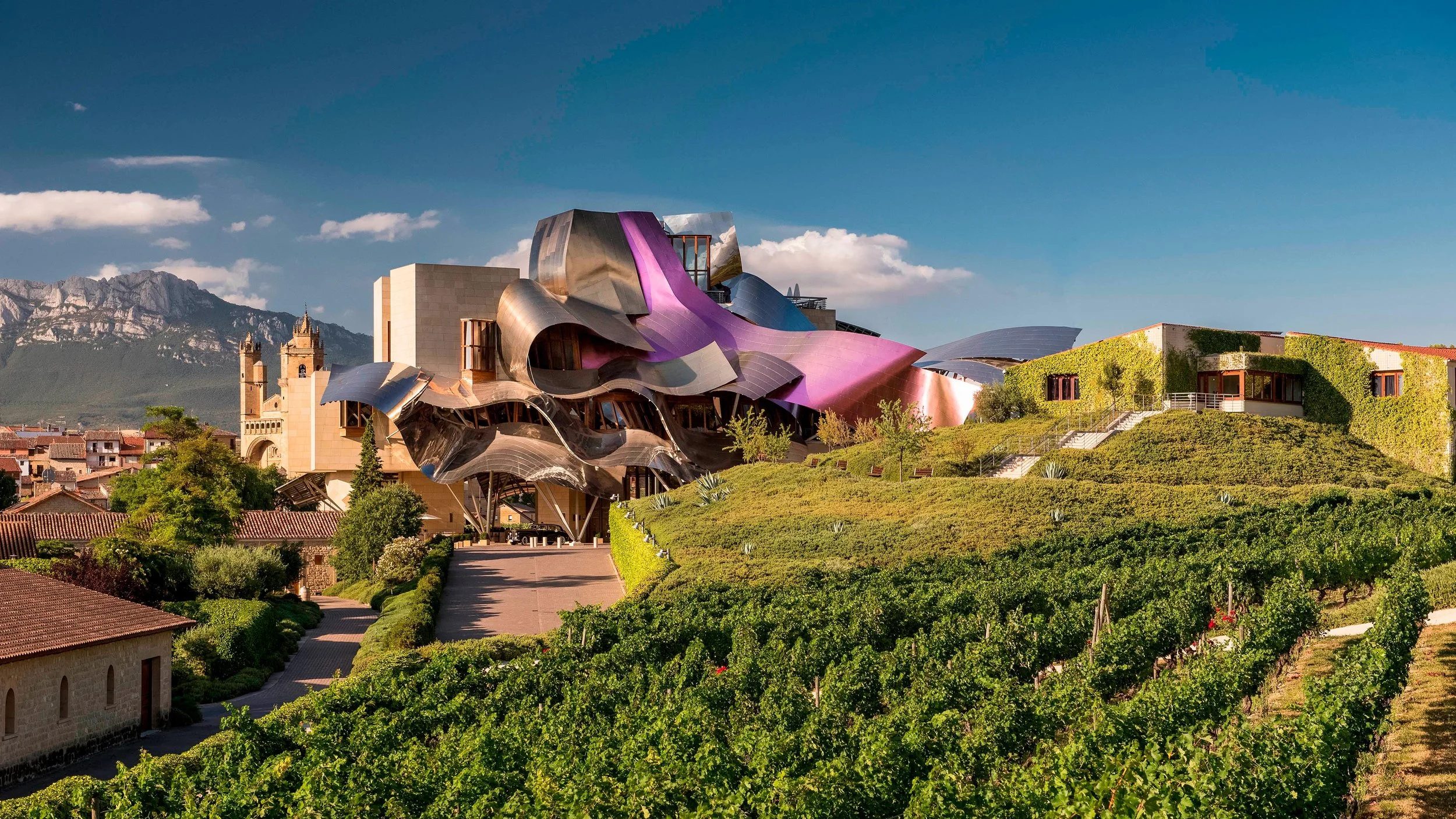
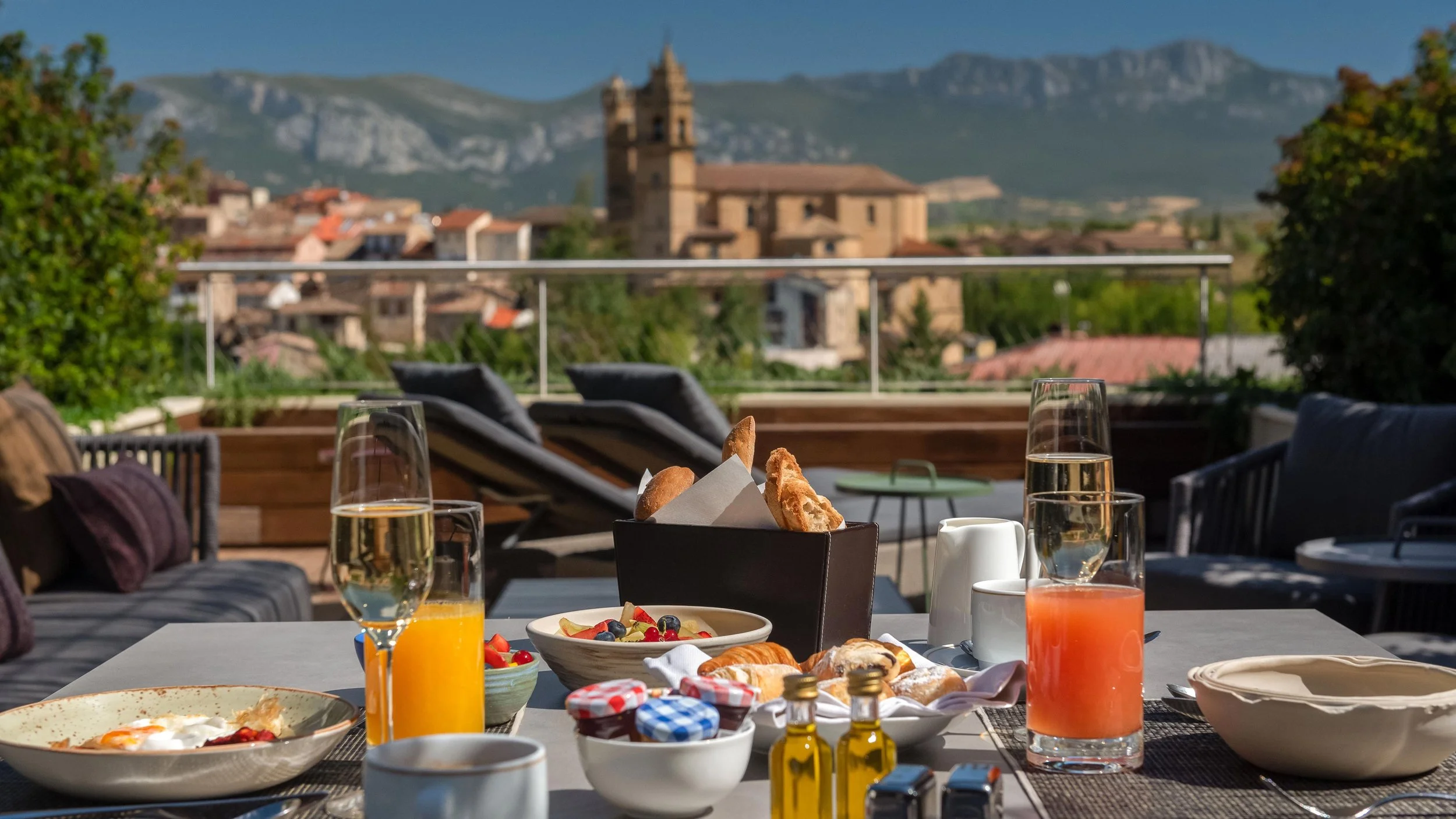
Hotel Marqués de Riscal
Rioja, Spain
There is no missing Hotel Marqués de Riscal. The titanium roof, a Frank Gehry signature, catches the light and commands attention from literally every angle. The rippling wave of metal is over the 19th-century stone buildings of the winery that has been producing Rioja wines since the 1860s. It is, without question, one of the most architecturally striking hotels in the world, and it absolutely earns every ounce of attention it gets.
Inside, the interiors are contemporary luxury personified with rooms where windows lean outward over the vines, giving the impression of floating above the vineyard itself. There’s a Caudalie vinotherapy spa with an indoor pool, a Michelin-recommended restaurant offering molecular gastronomy, and unlimited access to the Marqués de Riscal wine cellar through tours that feel like a privilege rather than a hotel amenity. Rioja as a region is magnificent with rolling red-soiled hills, medieval villages, and a wine culture that runs deep. This hotel is the most dramatic way to experience all of it.
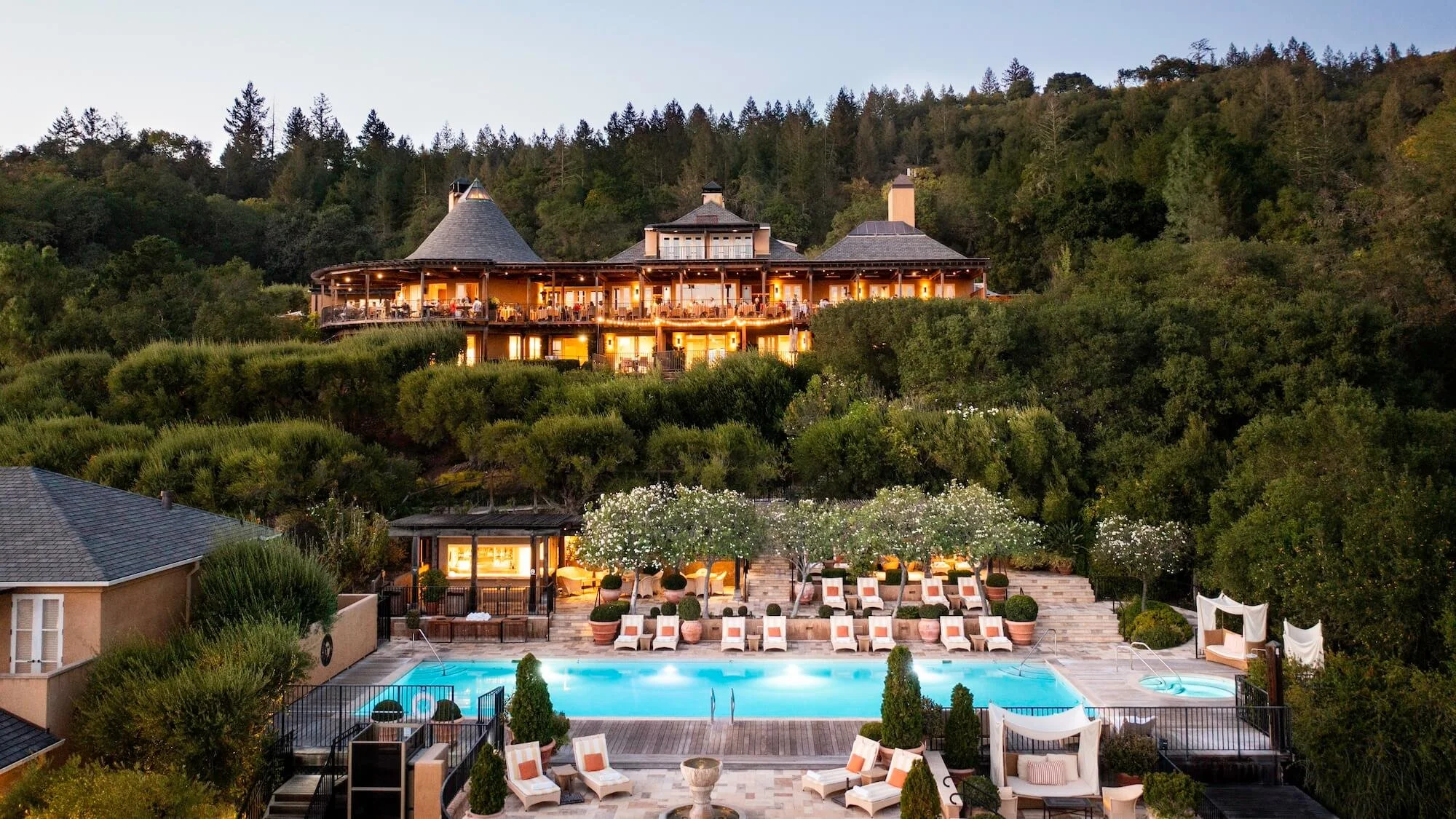
Auberge du Soleil
Napa Valley, California
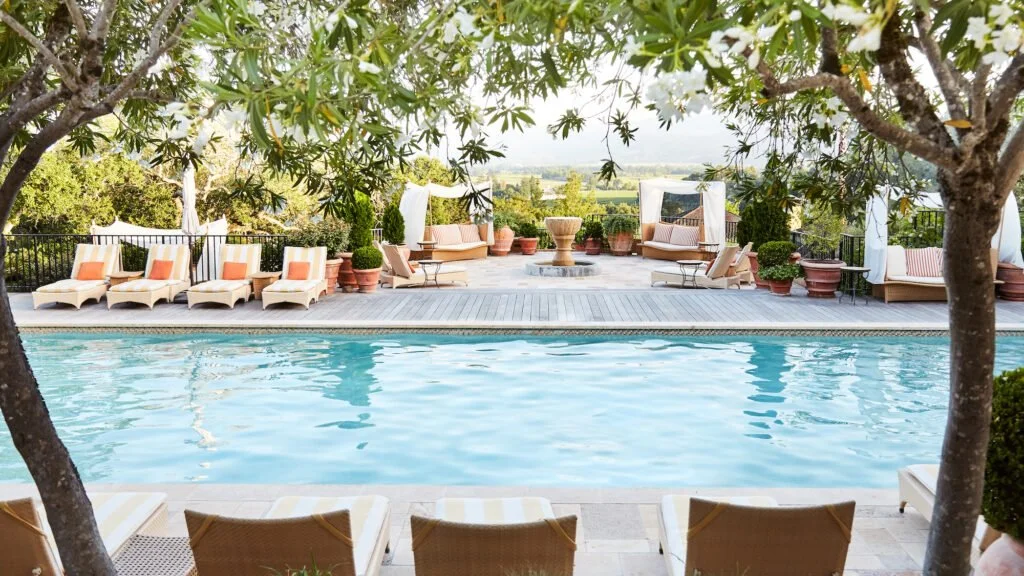
Napa Valley earns its reputation every single time, and Auberge du Soleil has been one of its most beloved landmarks for decades. Set on 33 acres of heritage olive and oak trees above the valley floor, the vibe here is distinctly French Provençal. It’s warm, sun-drenched, and refined without being stuffy. It’s the kind of place where everything feels a little more golden.
The terrace at Auberge is the real hero. A panoramic perch where you can sit with a glass of Napa Cabernet and watch the valley stretch out below you, which honestly is probably one of the best ways to spend an afternoon anywhere. The rooms are elegant and pared-back in the right ways, making them a comfortable home base for exploring one of America’s most concentrated fine-wine destinations. Whether you’re new to Napa or you’ve been going for years, Auberge du Soleil is the move.
Viña VIK
Millahue Valley, Chile
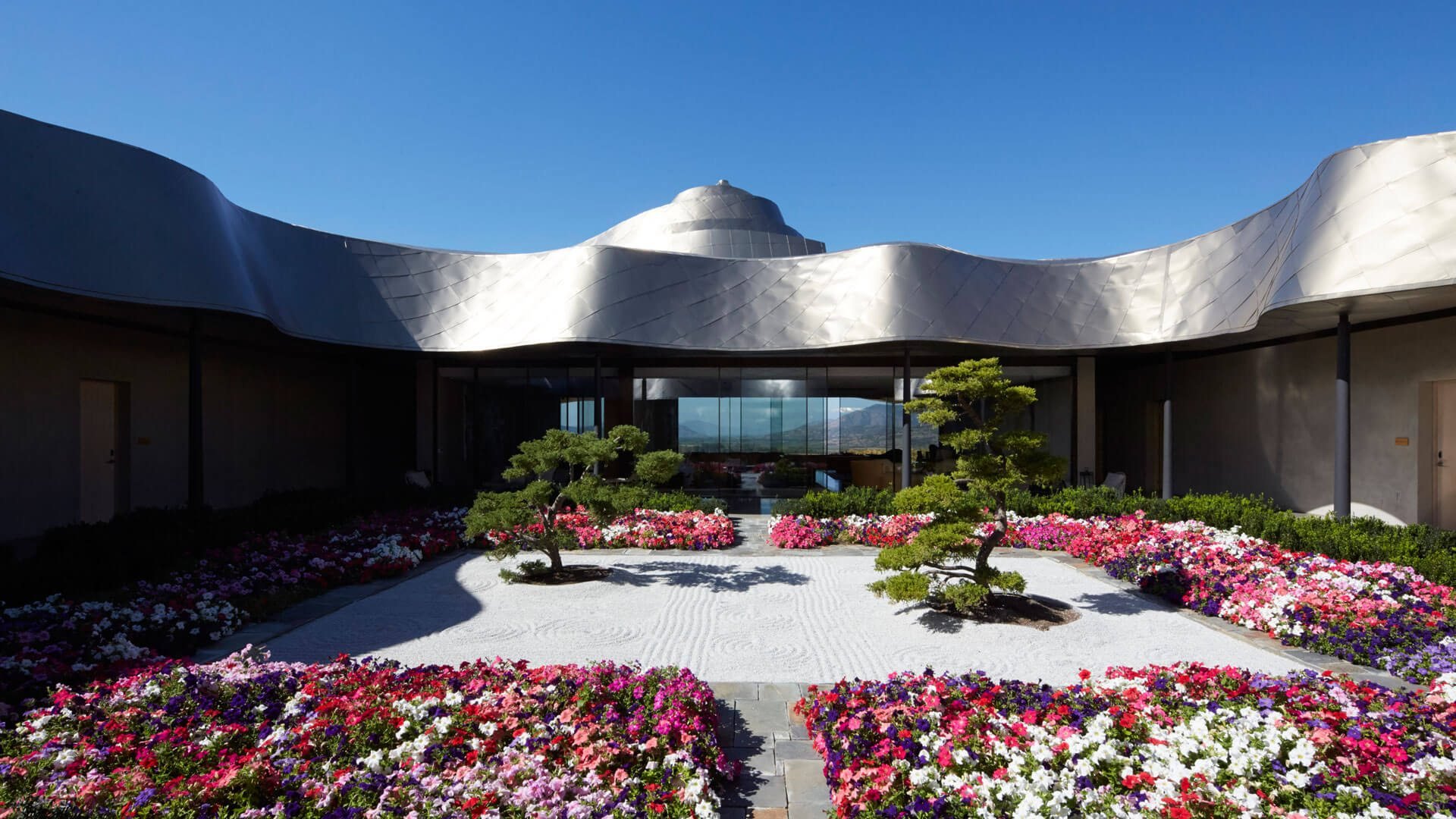
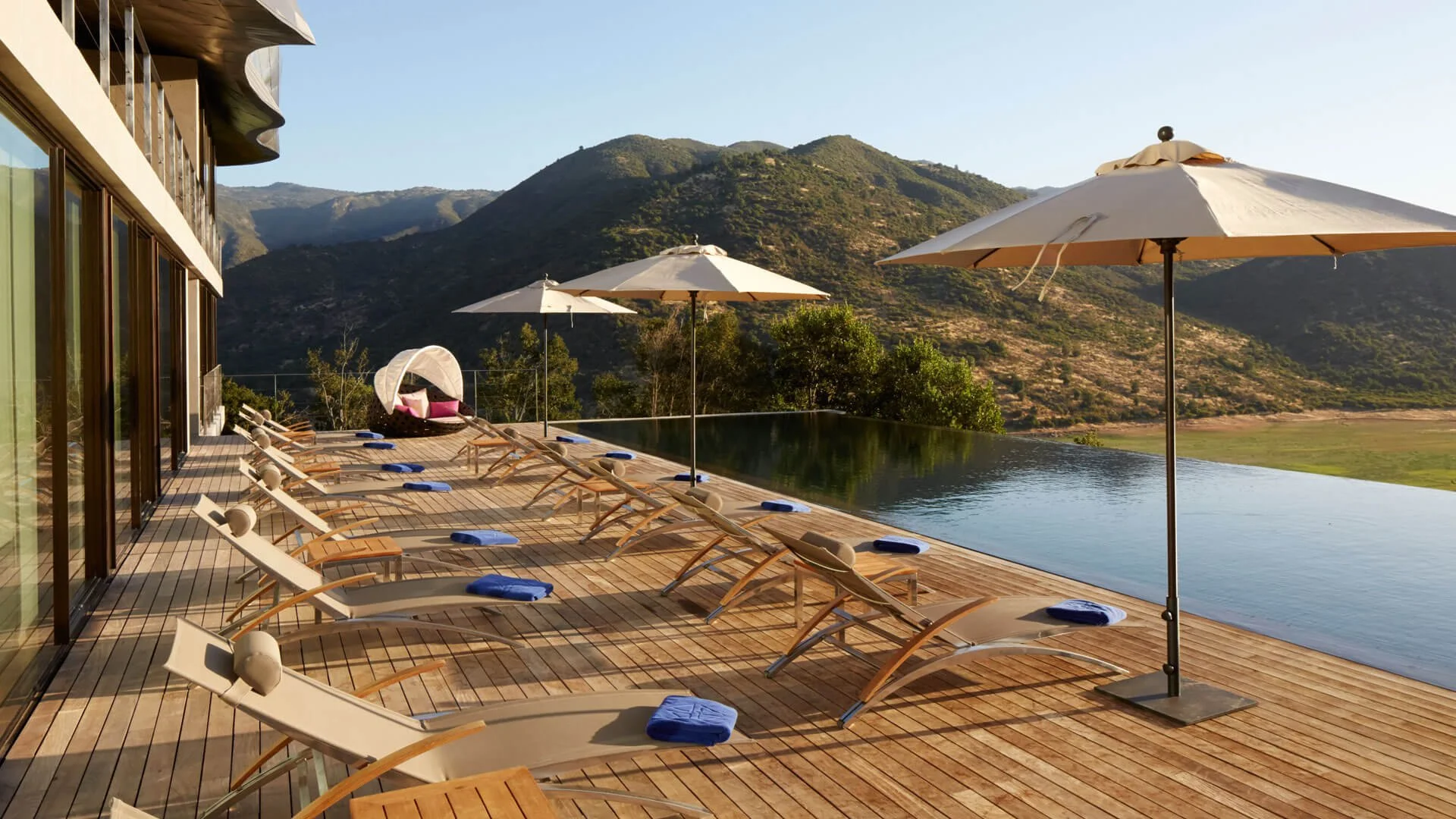
The name Millahue comes from the Mapuche language and translates to “place of gold,” which honestly feels like a pretty accurate piece of marketing, especially in the wine world. Located two hours south of Santiago in the foothills of the Andes, Viña VIK sits on over 4,400 hectares of vineyards and natural reserves. The property itself looks like something an architect dreamed up after a few good glasses of red wine.
The hotel is a sculptural building with a floating, curved roof of bronzed titanium inspired by the surrounding mountains. Every one of the 22 suites has floor-to-ceiling windows framing 360-degree views of the vines, the valley, and the Andes beyond. The interiors are an art collection in their own right, with each suite individually designed with original works by Chilean and international artists. The design is genuinely doing something, not just being decorative. Now, the wine program focuses on Bordeaux varieties, Cabernet Sauvignon, Merlot, Cabernet Franc, Carmenère, and Syrah in particular, with a winery building that is yet another architectural event. Beyond that, there is a holistic spa, stargazing, and a glass-walled restaurant called Milla Milla, where the food is built around local and seasonal produce paired with the wine made steps away. Chile as a wine destination is still flying under the radar for most, but Viña VIK is a pretty compelling argument for changing that.
São Lourenço do Barrocal
Alentejo, Portugal
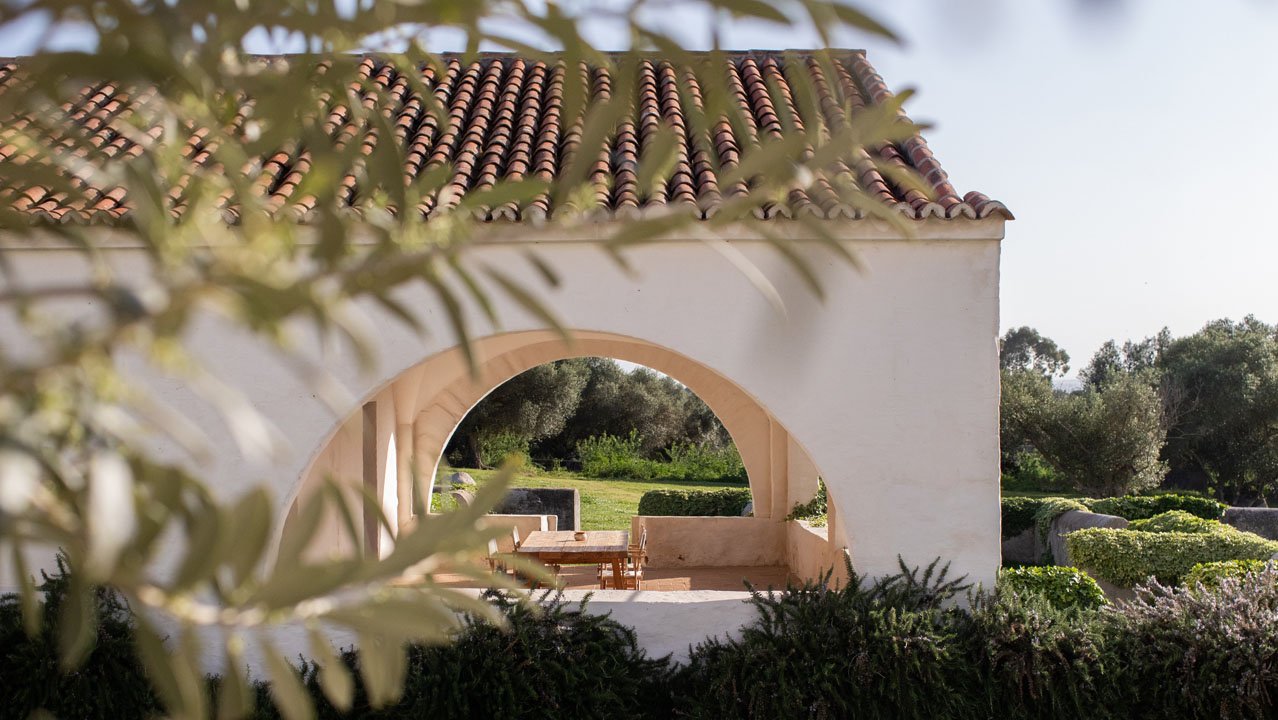
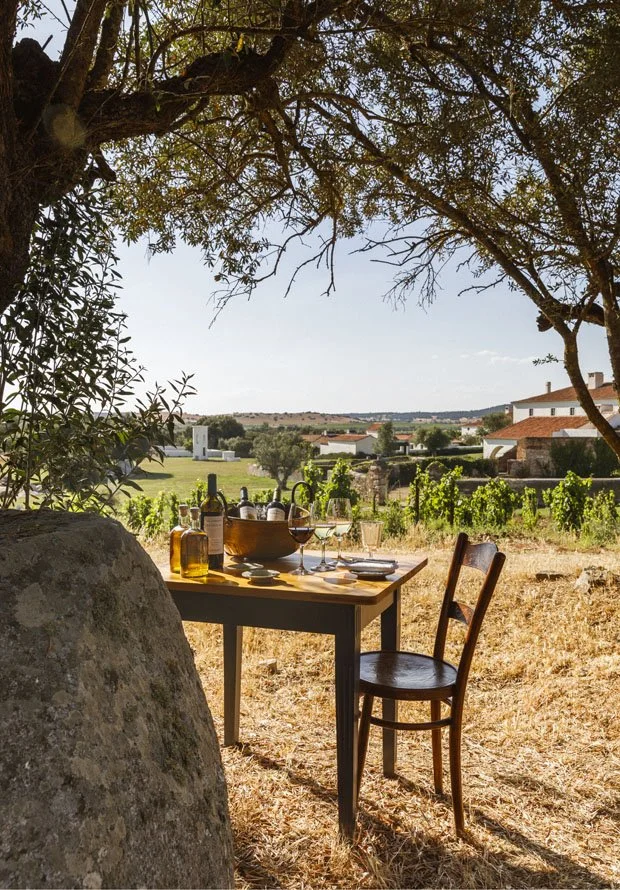
The Alentejo is one of those regions that keeps getting discovered and somehow stays unhurried. It’s golden, warm, and quiet, with an agricultural beauty that feels ancient yet completely alive. São Lourenço do Barrocal has been in the same family for over 200 years, and you can feel the continuity the moment you arrive. The original whitewashed monte, once a working farming village, has been gently restored by its 8th-generation custodian into something that manages to be both simple and stunning.
The estate stretches over enormous ancient oaks, olive groves, and 150,000 square meters of vineyards that sit above granite and Monsaraz shale. These geological features give the wine its particular character. Everything is organic, hand-harvested (!), and made with indigenous varieties like Touriga Nacional and Roupeiro alongside carefully selected international blends. If your ideal vacation involves long dinners, complete silence, really good wine, and waking up to views that have barely changed through the centuries, Barrocal is it.
Jackalope
Mornington Peninsula, Australia
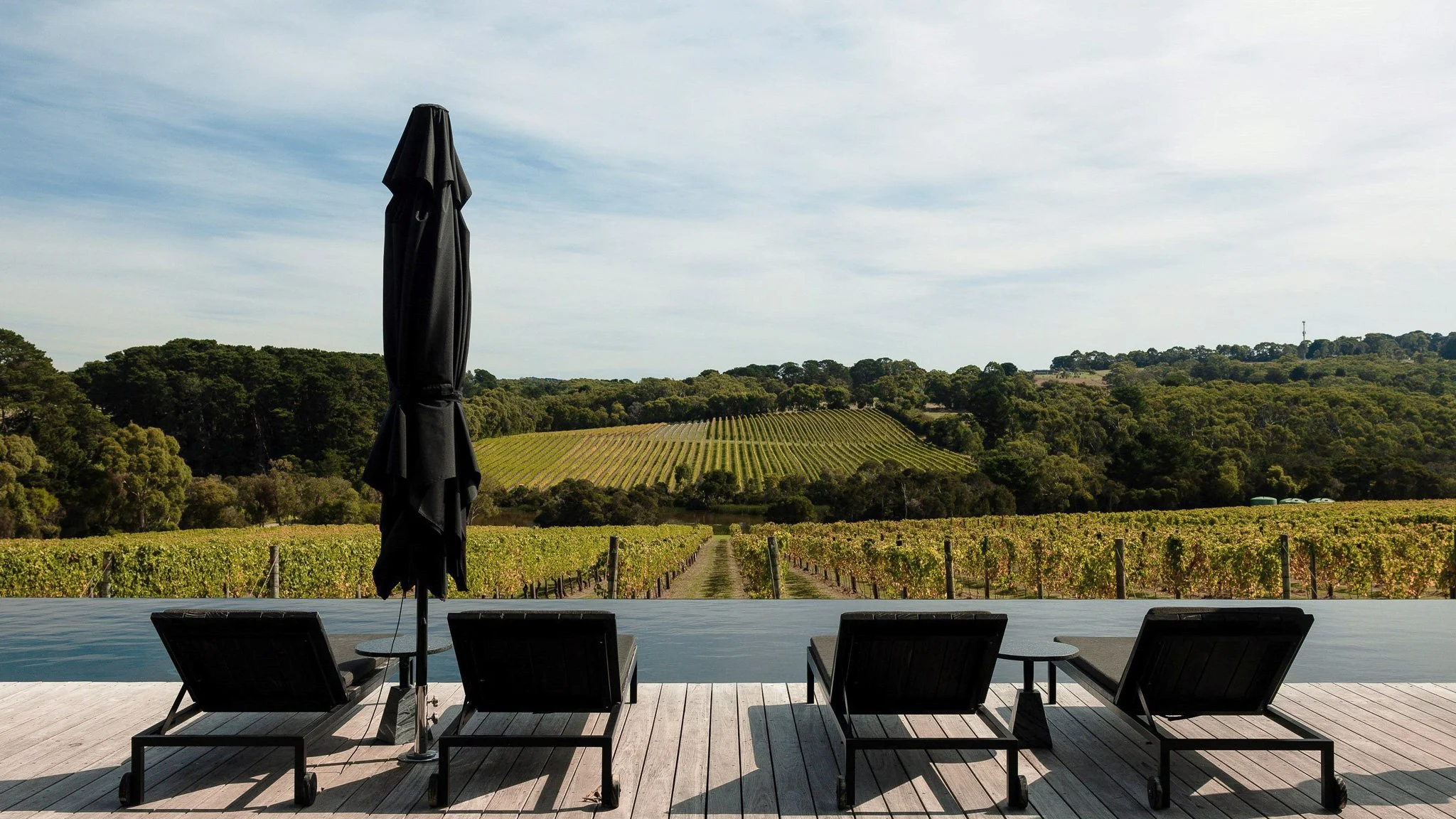
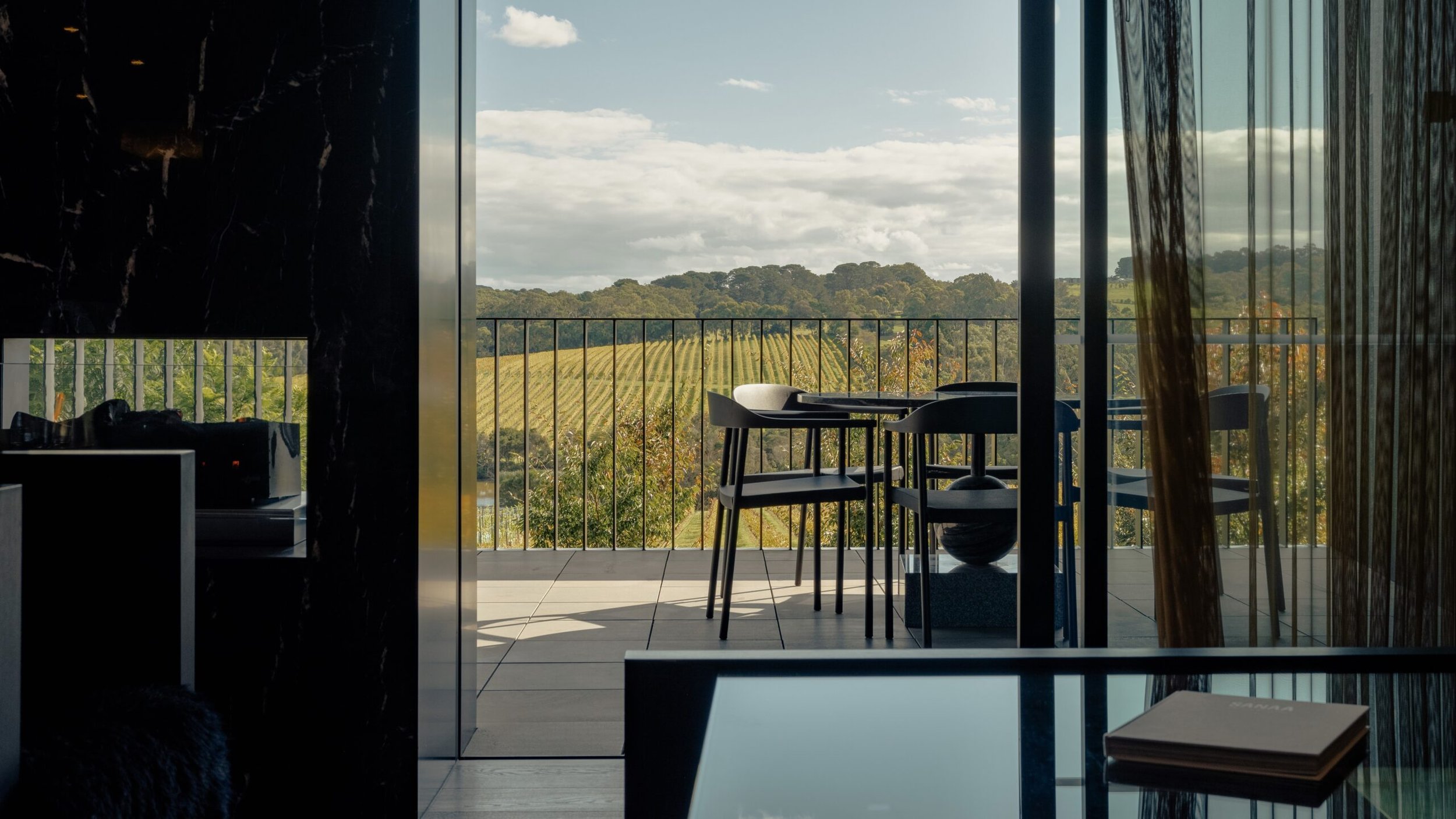
The Mornington Peninsula, about an hour south of Melbourne, is one of Australia’s most beloved cool-climate wine regions. It’s especially known for its Pinot Noir and Chardonnay, which thrive in deep volcanic soils. Jackalope brings something unexpected to the landscape: a design-forward, genuinely sleek boutique hotel that feels like it just landed from another planet. Obviously, in the best way…
Floor-to-ceiling windows frame the rolling vineyard views, and the aesthetic throughout is bold. Far from the rustic farmhouse you’d expect. It’s a place that makes you feel like wine tourism just got a serious upgrade, and it pairs that visual impact with the substance to back it up: excellent wine, thoughtful dining, and a setting that is quietly stunning. For anyone traveling in Australia who wants to see wine country beyond the Hunter Valley or the Barossa, the Mornington Peninsula and Jackalope specifically are very worth the detour.
Villa La Coste
Provence, France
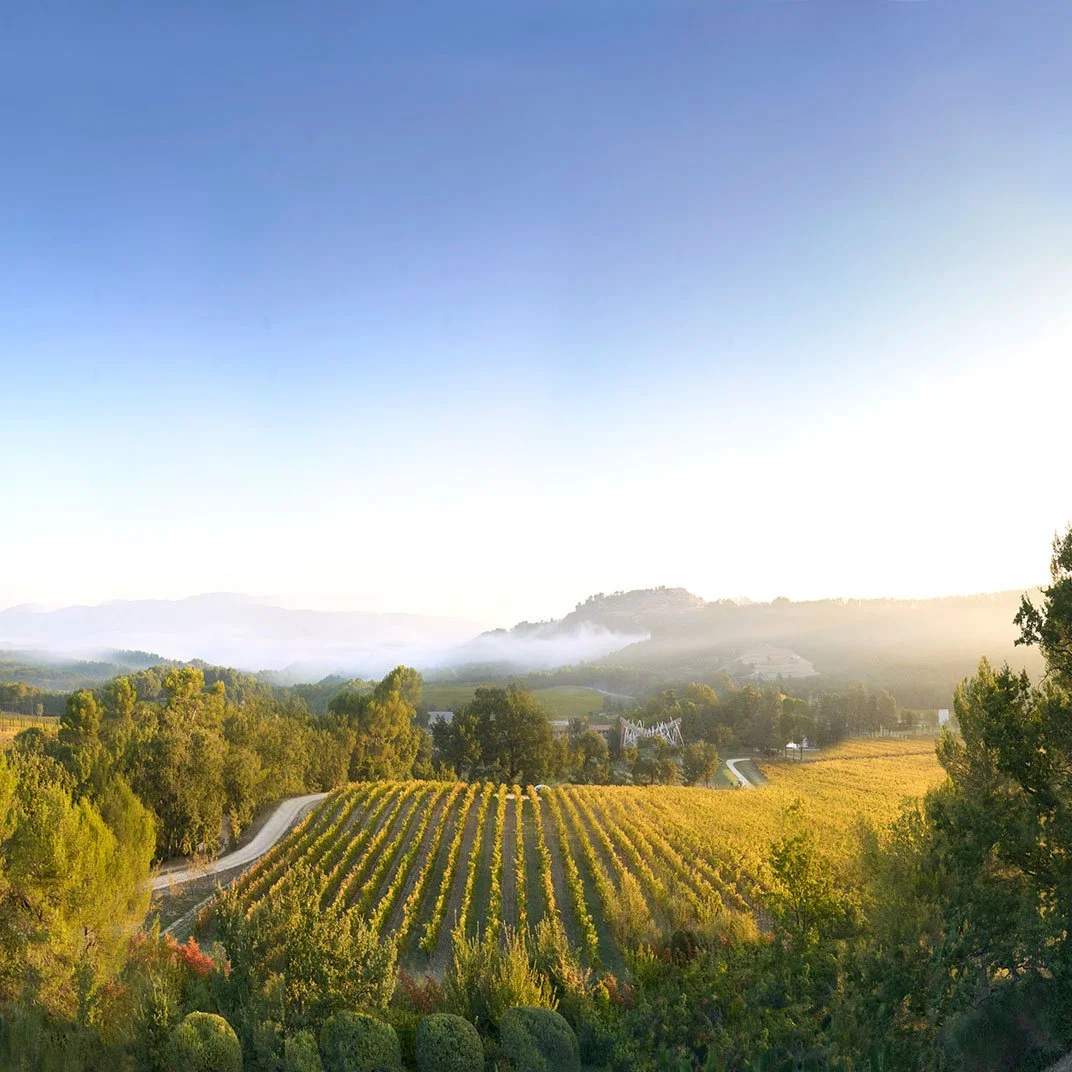
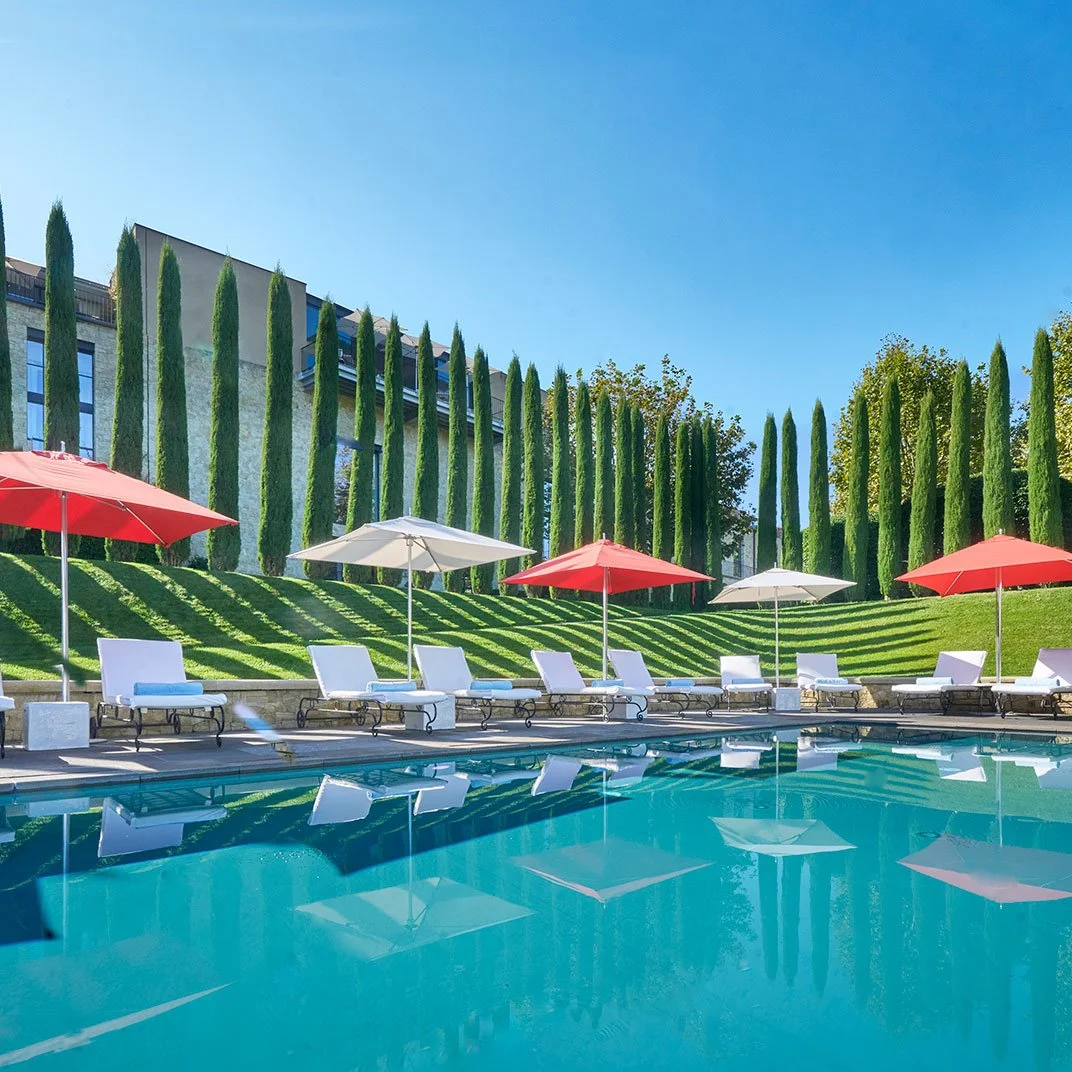
This one is the most unfair. Villa La Coste, located about 20 minutes from Aix-en-Provence, sprawls across 200 hectares and reads less like a hotel and more like an experience with somewhere to sleep at the end of it. The architectural lineup alone - Tadao Ando, Frank Gehry, Jean Nouvel, Oscar Niemeyer - makes it worth visiting as a day trip. The fact that you can stay here makes it something else entirely.
Thirty open-air monumental art installations are scattered throughout the property, featuring some of the most significant names in contemporary art. The 28 suites, including multiple with private pools, are set into the hillsides with views of Mont Ventoux that make it difficult to leave. Then there is the Michelin-starred restaurant by Hélène Darroze, wine tasting workshops, and the 800-square-meter spa. The wine production is focused on organic whites, reds, and, duh, rosés of Château La Coste. If you are the kind of traveler who finds the intersection of serious art, serious wine, and serious beauty irresistible (and I do), this is the one.
Monaci delle Terre Nere
Mount Etna, Sicily, Italy
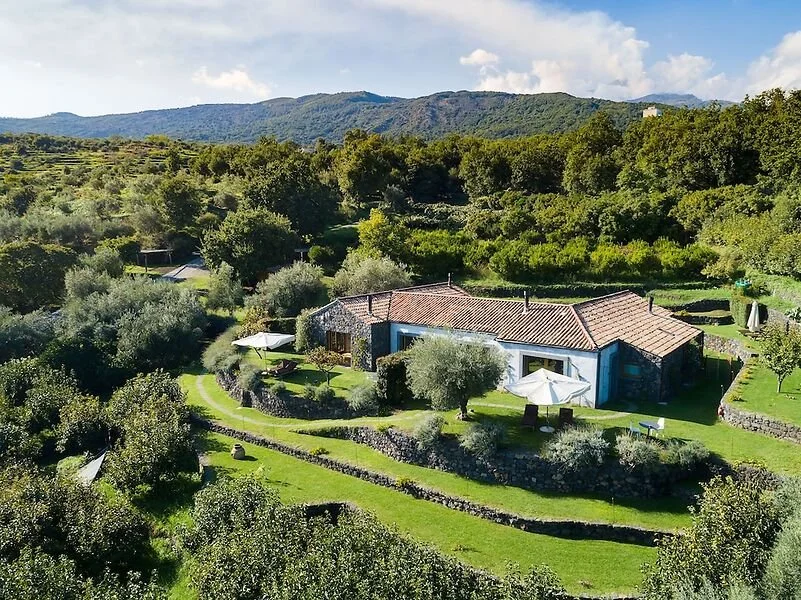
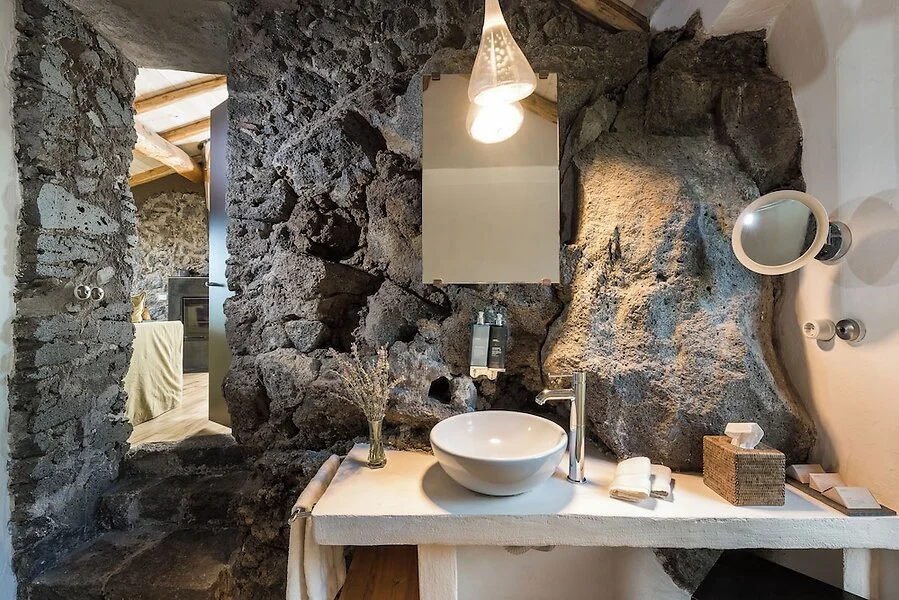
Mount Etna is one of the most active volcanoes in Europe, and the wine it produces is some of the most exciting on the planet right now. The volcanic soils on Etna’s slopes give the wines, particularly the Nerello Mascalese reds, a mineral intensity and wild energy that wine people are so obsessed with. Monaci delle Terre Nere is a beautifully restored 18th-century monastery on the volcano’s eastern slope and puts you right in the middle of it. No, seriously, their website has an image of the volcano erupting.
Set within 15 hectares of vineyards and olive groves, the property offers a range of accommodations like standard rooms with sea views, suites with fireplaces and hot tubs, and private outbuildings for uber exclusive secluded experiences. The restaurant draws on organic produce from the estate’s own gardens, with a terrace that looks out over the vines and the mountain. Sicilian cooking classes and Etna wine tasting round out an experience that feels rooted in the land in a way that is genuinely hard to replicate. Sicily is an extraordinary destination with ancient history, stunning coastlines, and food that makes you truly rearrange your priorities. I mean, the view from this hillside doesn’t seem to hurt either…
Château & Village Castigno
Languedoc, France
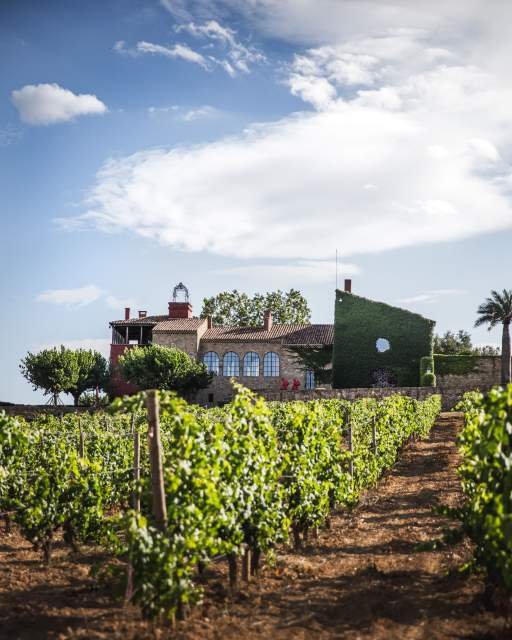
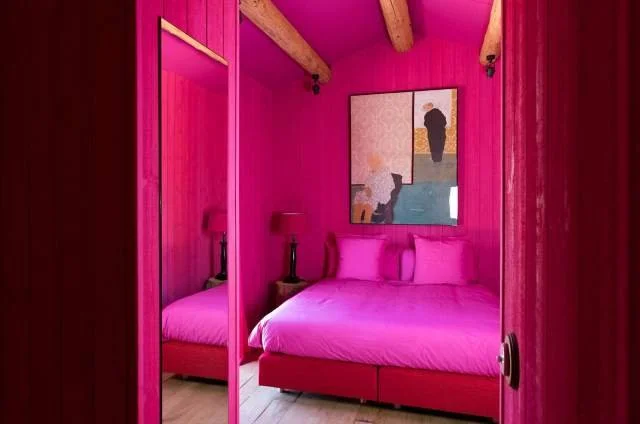
This one is an entirely different feel from the others on the list. Château Castigno is a working organic producer of Saint-Chinian wines in the Languedoc-Roussillon region, and it has turned the village of Assignan into something genuinely one-of-a-kind. This is an atypical hotel where the rooms aren’t contained in a single building, but spread throughout colorful village houses, each one with a unique character.
Some accommodations, like the standalone Villa Rouge, come with multiple bedrooms, a kitchen, a garden, and a private pool. There are yoga classes, vineyard tours, and a winery shaped like an enormous Castigno bottle (seriously!), and several restaurants woven throughout the village. It’s the type of place that encourages you to slow down and actually inhabit a place for a few days rather than just checking in and checking out. If your travel style leans toward the lived-in, the offbeat, and the genuinely local, Castigno is one of the most interesting options on the entire list.
Castello di Vicarello
Maremma, Tuscany, Italy
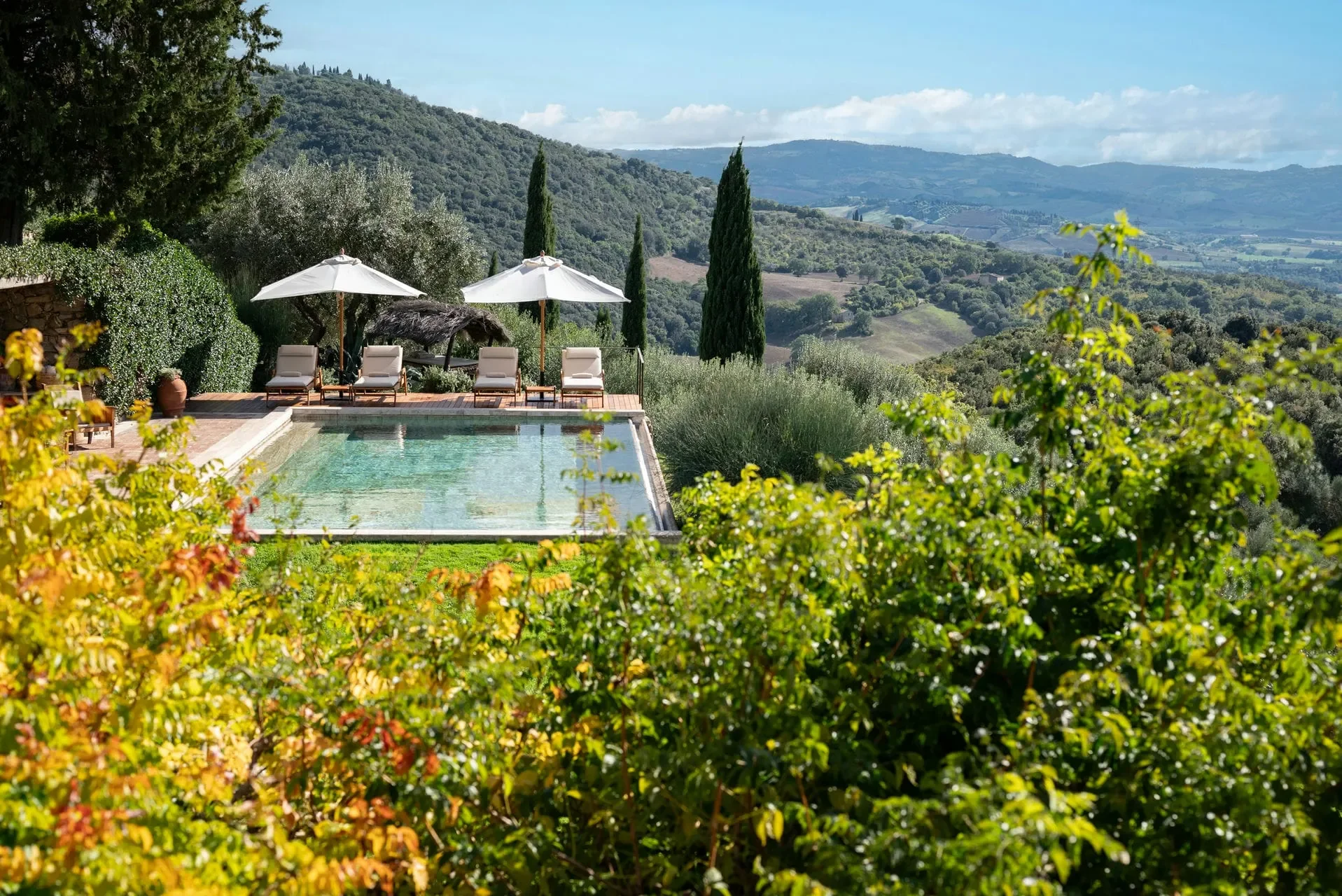
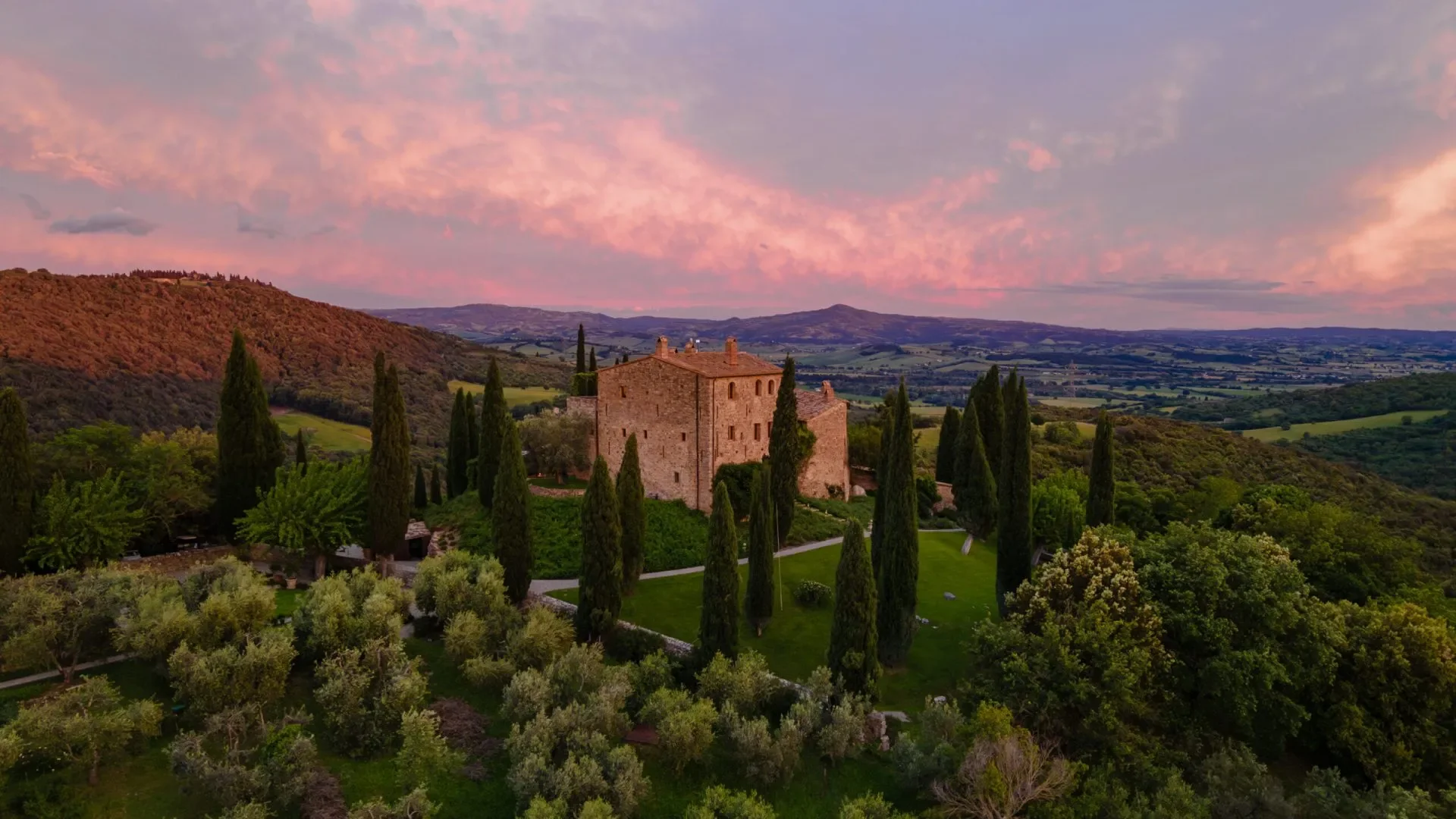
Most people have a version of Tuscany in their heads with rolling hills, cypress trees, and charming farmhouses. The Maremma is slightly wilder and less-visited, and Castello di Vicarello fits in pretty perfectly. This is a 12th-century castle that has been artfully restored into a boutique hotel with just ten suites, each entirely unique. It’s intimate in the way you feel like the guest of the family rather than a check-in number.
The property sits surrounded by organic vineyards and olive groves, and the food reflects that proximity beautifully. Fresh ingredients come straight from the estate’s gardens, and the wines produced here have earned serious recognition. Maremma is also a region with its own distinct character, so if you’ve done Florence and Siena and are looking for a quieter, slightly rugged destination, Vicarello is a very compelling reason to make the trip to Maremma.
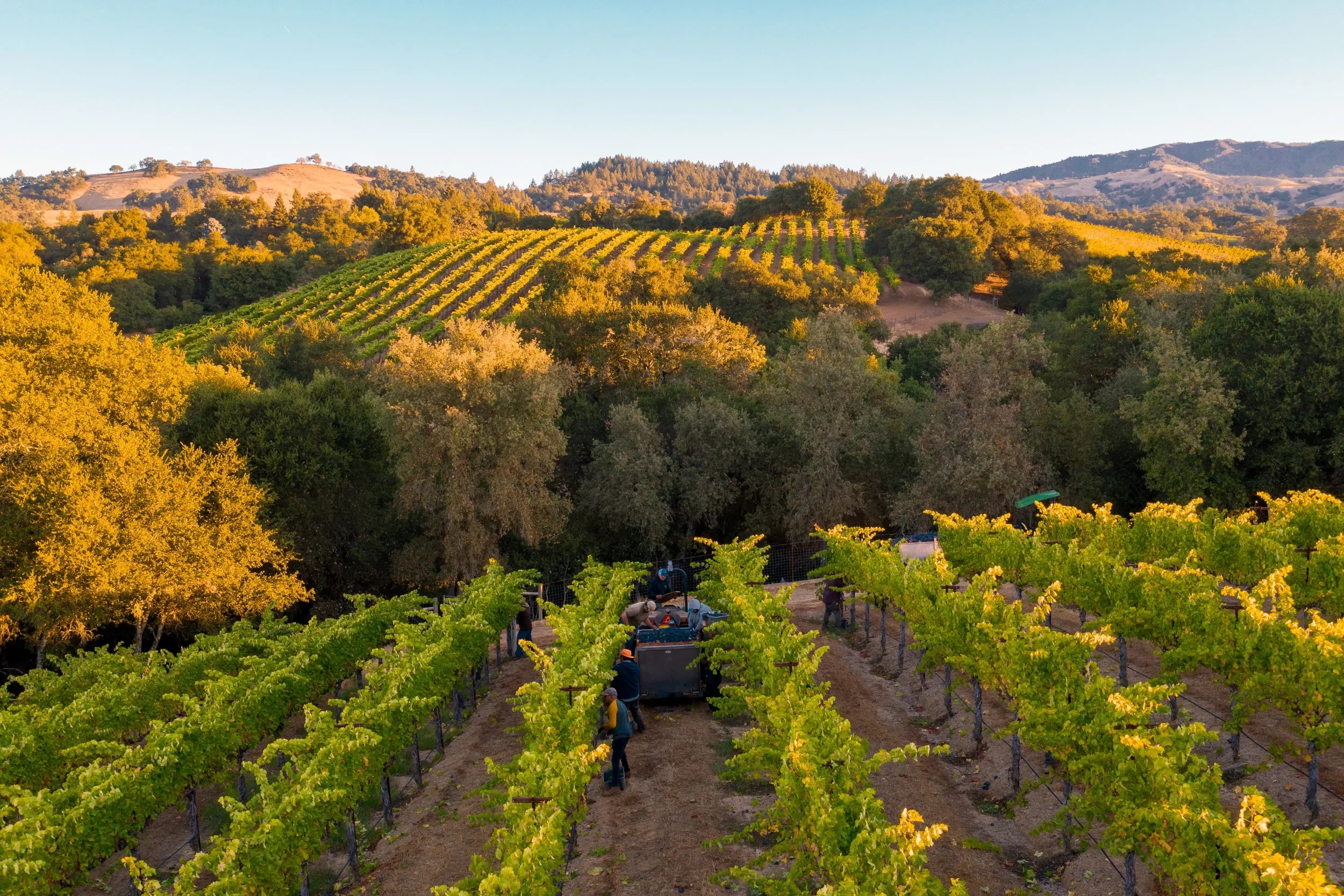
Jordan Vineyard & Winery
Sonoma, California
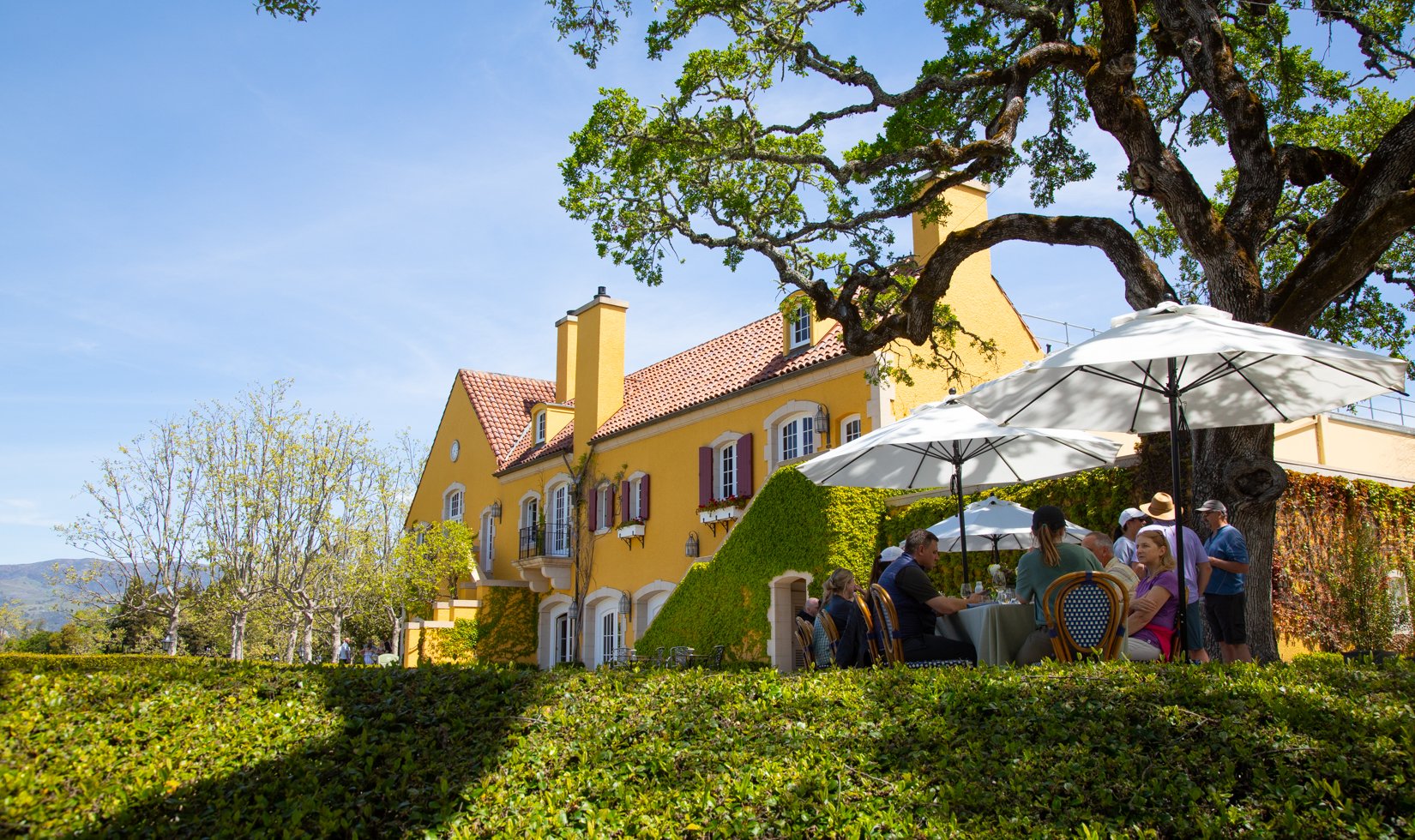
In Sonoma’s Alexander Valley, Jordan Vineyard & Winery has been producing French-inspired Cabernet Sauvignon and Chardonnay since the 1970s. The French-inspired chateau at the center of the estate remains one of California wine country’s most beautiful settings. It’s a place with history and elegance but without fuss. Warm, welcoming, and genuinely connected to the land it’s on.
Overnight guests get access to the kind of estate experience that feels rare, with morning hikes through the vineyards before anyone else is up, private tastings, chef-prepared breakfasts, and long evenings on the terrace. Sonoma tends to feel a bit more laid-back than Napa, and Jordan captures that spirit perfectly. It’s serious about wine, relaxed about everything else. If you’re looking for a California wine country experience that feels personal rather than packaged, this is a very good answer.
The Bottom Line
I think what all of these properties have in common, beyond the wine, views, and architecture, is that they are about so much more than a place to sleep. They are experiences built around a product that asks people to slow down, pay attention, and be present. Wine asks you to notice the light, temperature, what you’re eating, and who you’re with. A vineyard hotel just takes that invitation and extends it to a 24-hour experience.
Whether you’re planning a big international trip or looking for a new take somewhere a little closer to home, I hope something on this list sparked something. Maybe it’s the volcanic drama of Lanzarote, maybe it’s the art-saturated hillsides of Provence, and maybe it’s the fact you can be sleeping in a 12th century Italian castle surrounded by organic vines and wake up with a view that hasn’t really changed in over 800 years. Either way, start planning. The wine will be waiting.