DESIGN DIARY 021
The Municipal Grand Hotel
A couple of dream houses, a few hotels worth mentally checking into, one brand HQ that made me rethink what an office can be, and, of course, Ferrari.
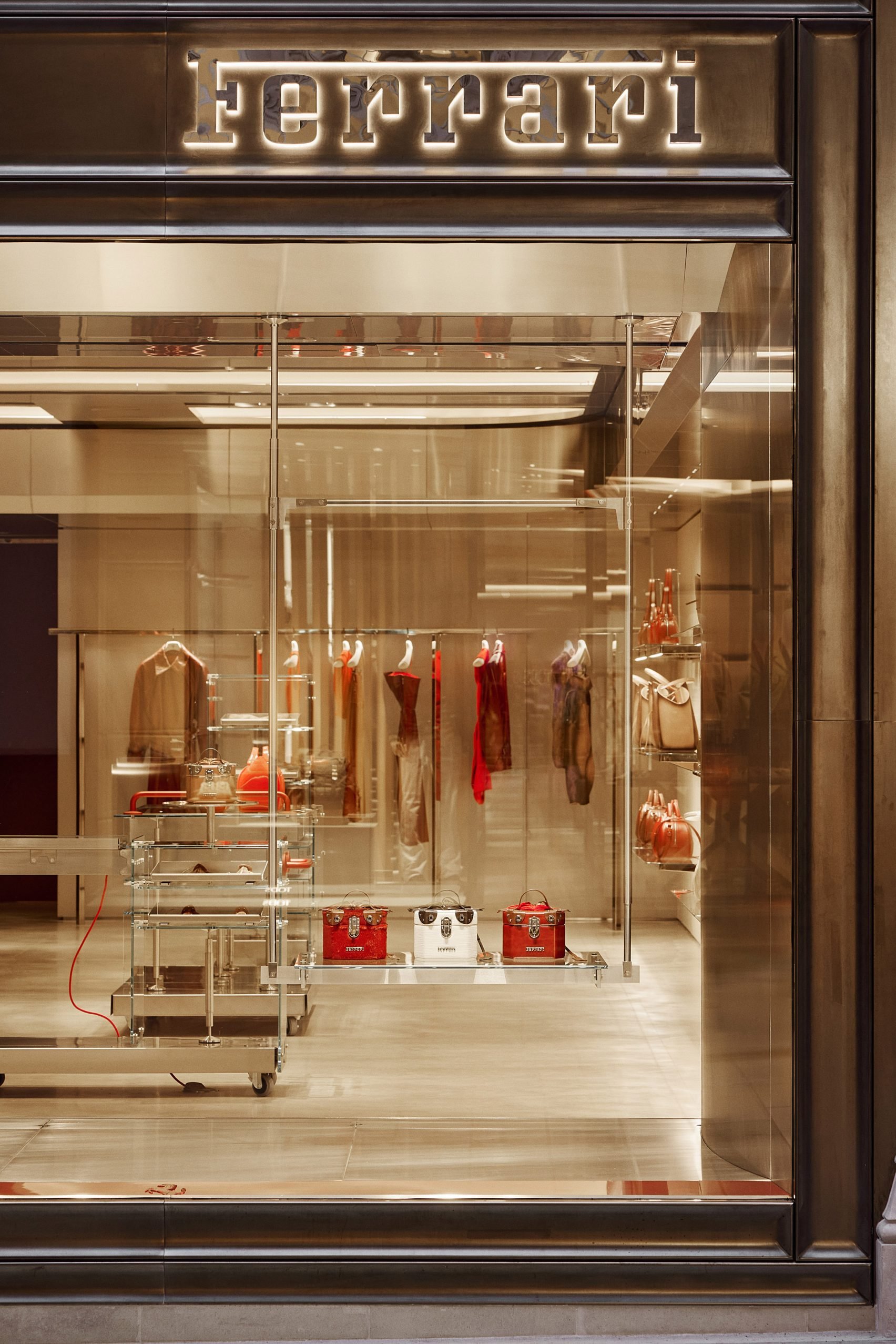
Ferrari Style’s London Flagship
Rocco Iannone, Gonzalez Haase AAS and Formafantasma
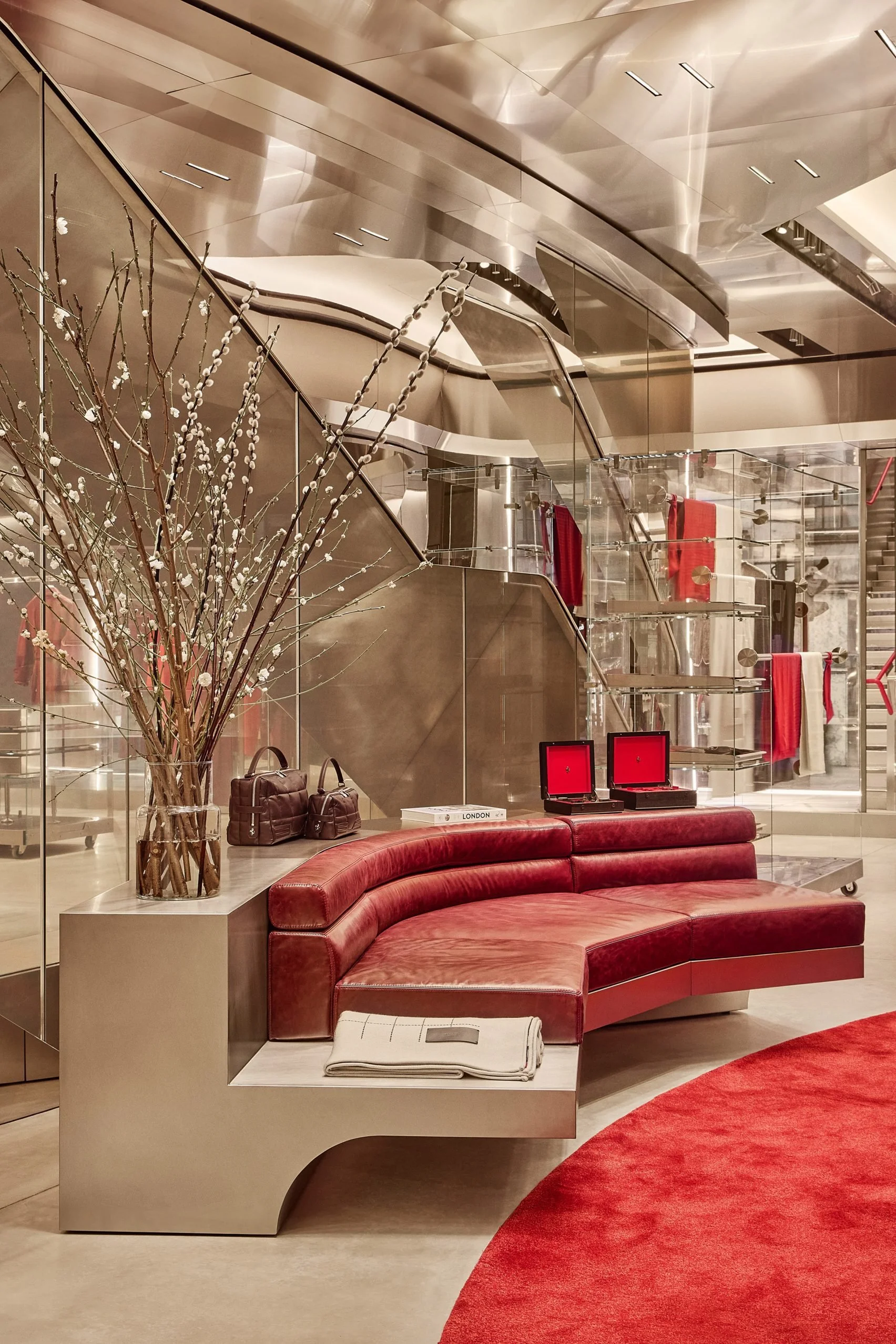
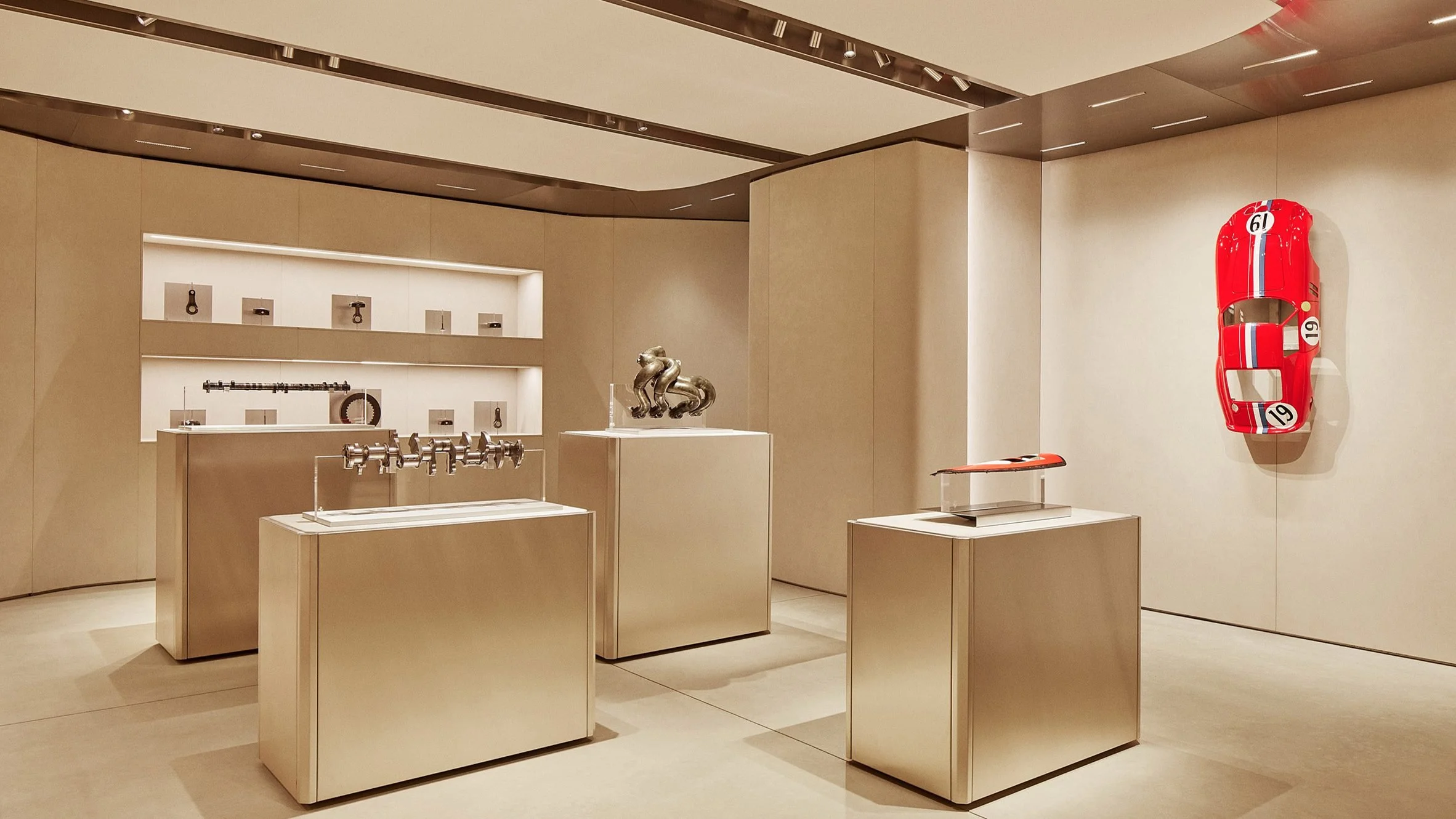
Ferrari opened a fashion flagship on the corner of Old Bond Street and Piccadilly, and the interiors by Gonzalez Haase AAS and Formafantasma are sharp. Hand-brushed stainless steel walls, raw concrete floors, pops of Ferrari red on handrails and cushions, all with an industrial feeling but considered. The building itself dates to 1905, with a Queen Anne-style Portland stone facade that gives away nothing about what’s inside. The basement “Caveau” displays rare Ferrari components and collectibles like a gallery. It’s a story that’s trying to feel like something more, and it incredibly pulls it off. Of course, I’d visit for the fashion, but I’d definitely stay for the rare Ferrari components and collectibles.
Municipal Grand Hotel
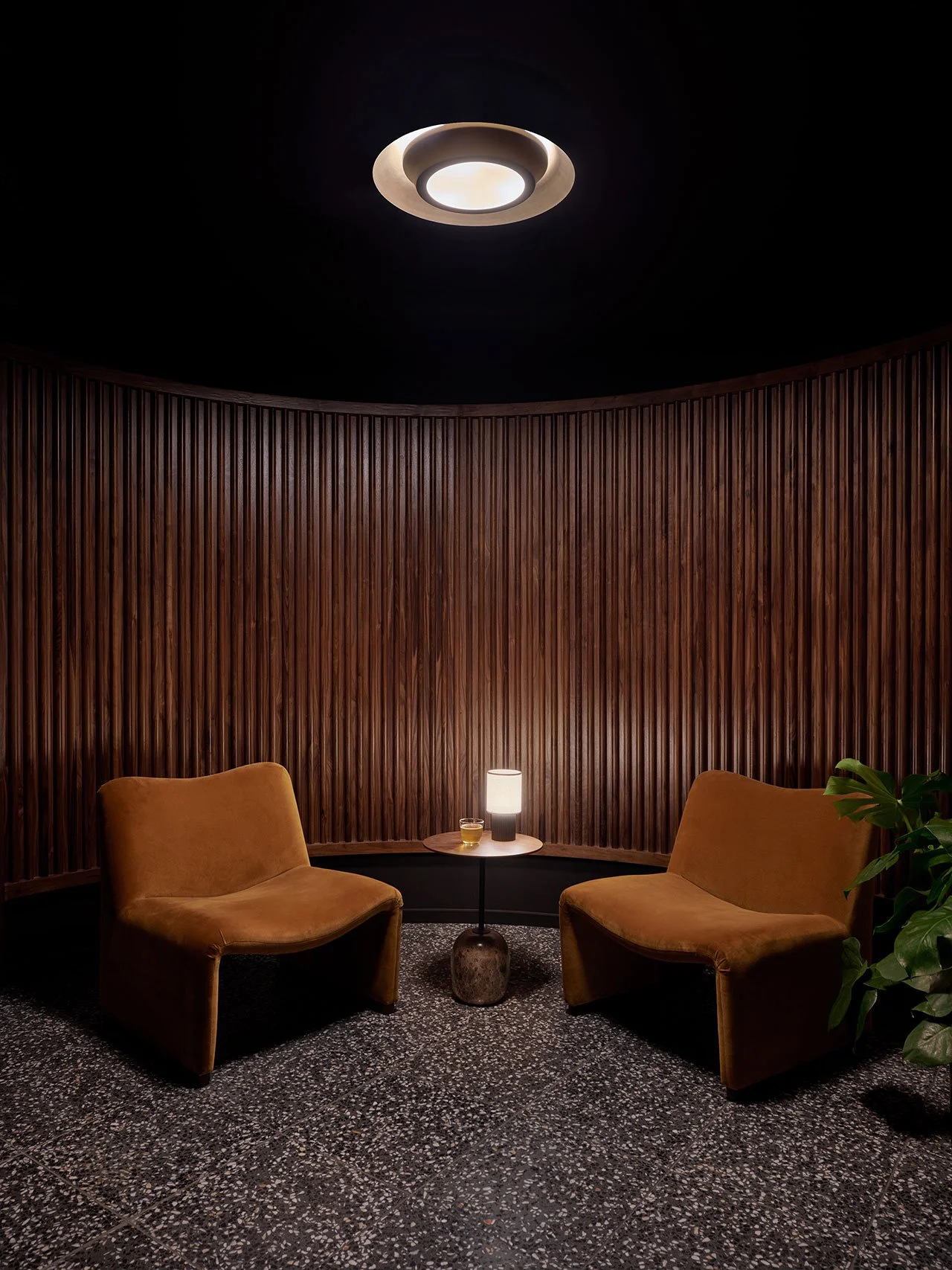
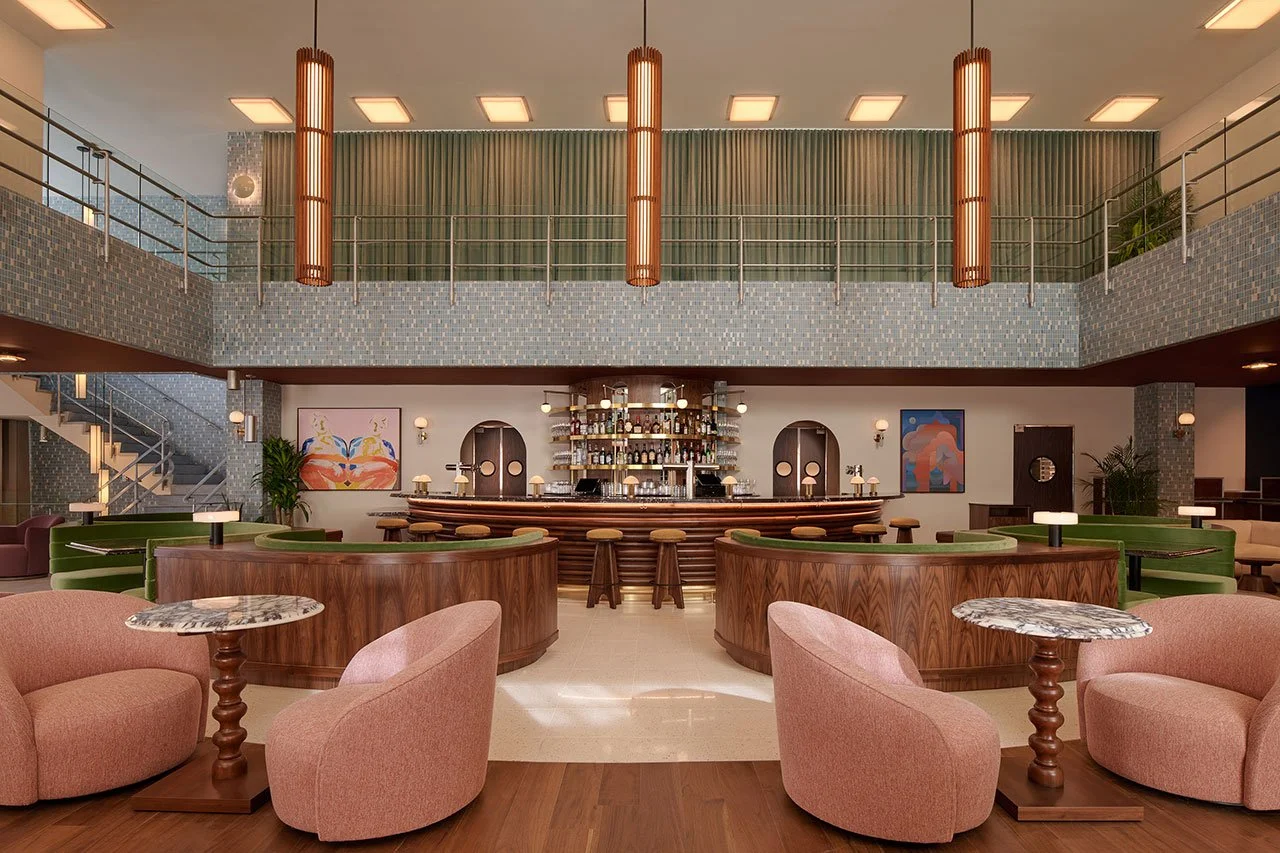
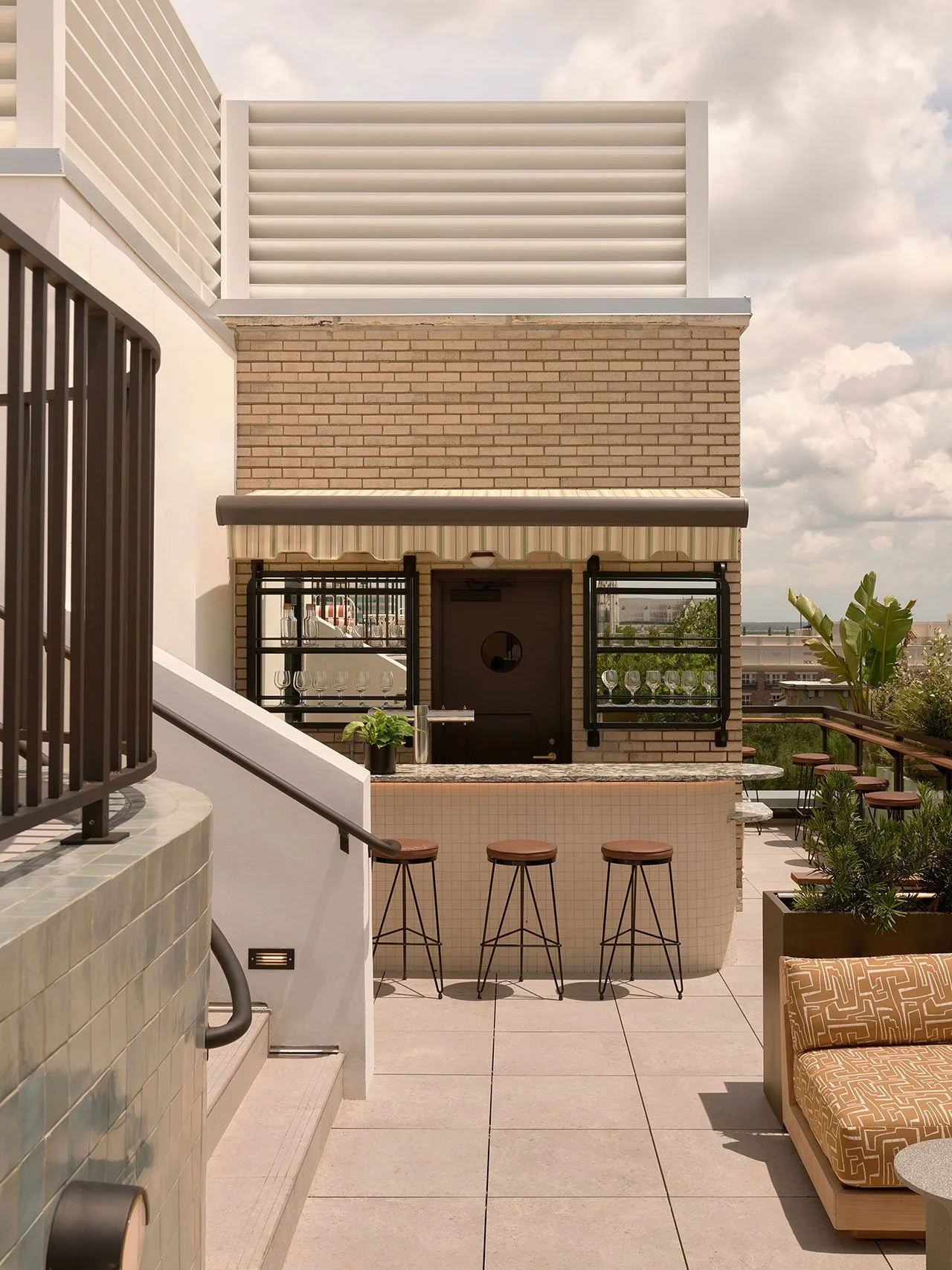
A 1960s midcentury modern bank building in Savannah was converted into a 44-key boutique hotel by AAmp Studio, pulling from both tropical modernist and Nordic design traditions. The original gray granite, white concrete frames, and blue mosaic tiles were preserved and even exaggerated. Guest rooms nod to Alvar Aalto with green-toned vestibules, curved mirrors, and terrazzo flooring. There’s also a hidden cocktail lounge called Hot Eye.
Seaside House
Studio Razavi | Bordeaux, France
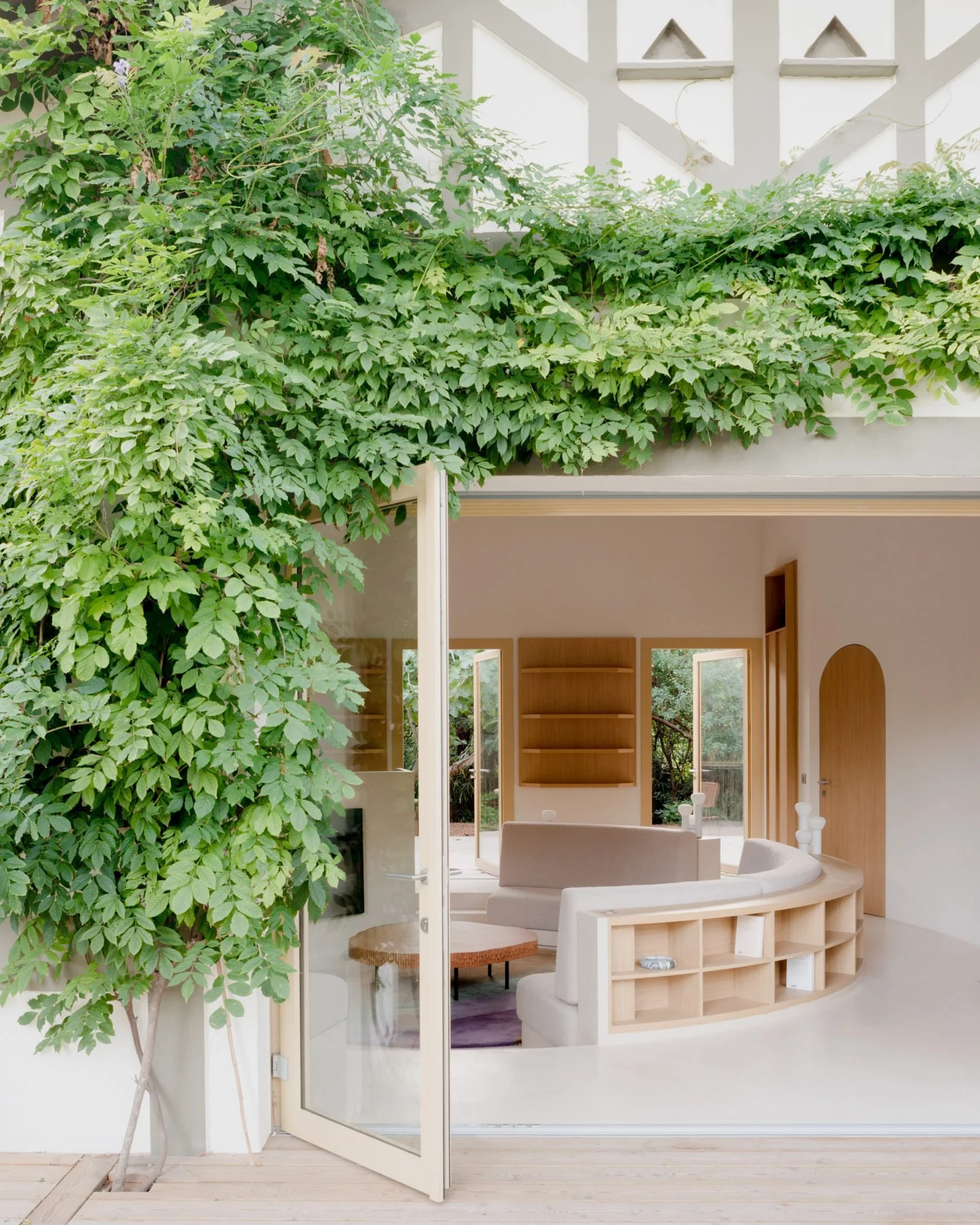
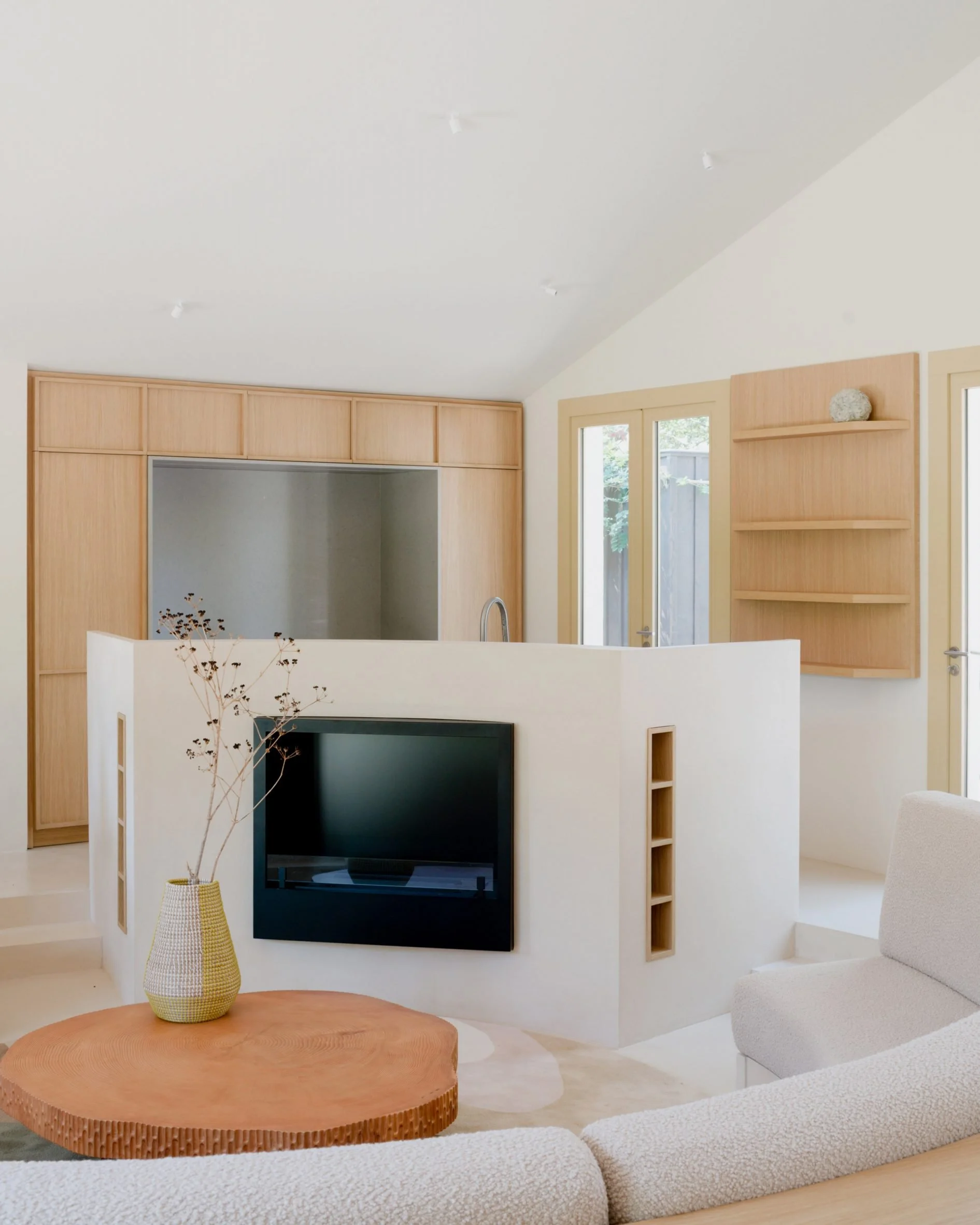
Studio Razavi renovated a 1930s cabin on the tip of the Cap Ferret peninsula by gutting the interior walls and placing a circular, sunken conversation pit right in the center of the house. The local lifestyle is all about moving constantly between inside and out, so the whole space flows with bedrooms on each side, open living in the middle, and terraces at both ends. Floors are poured-in-place concrete built directly on sand, and the furniture is mostly solid wood from the region. Everything about this feels effortless, which usually means someone thought about it very carefully. And, well, I love a good conversation pit.
La DoubleJ’s Headquarters
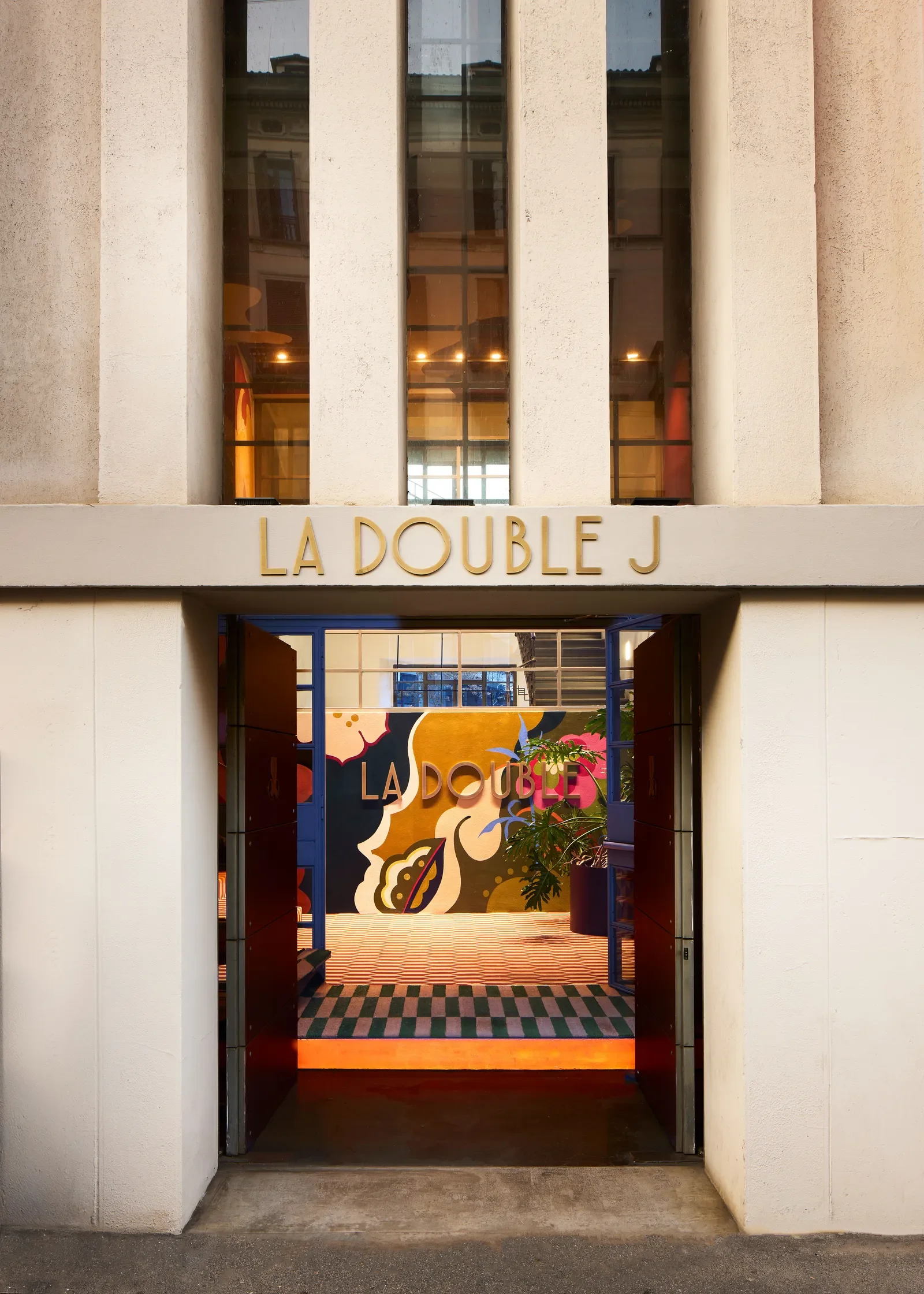
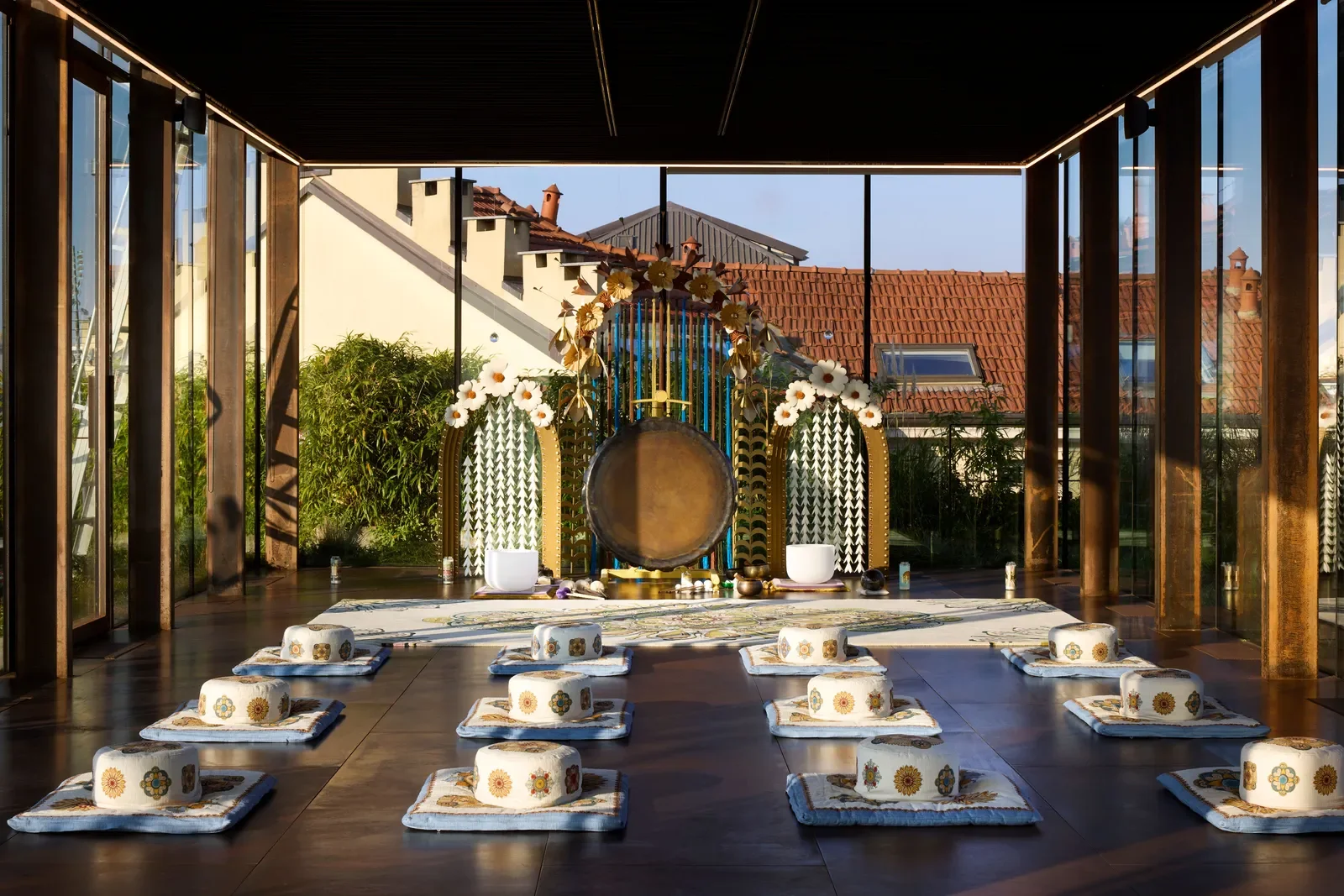
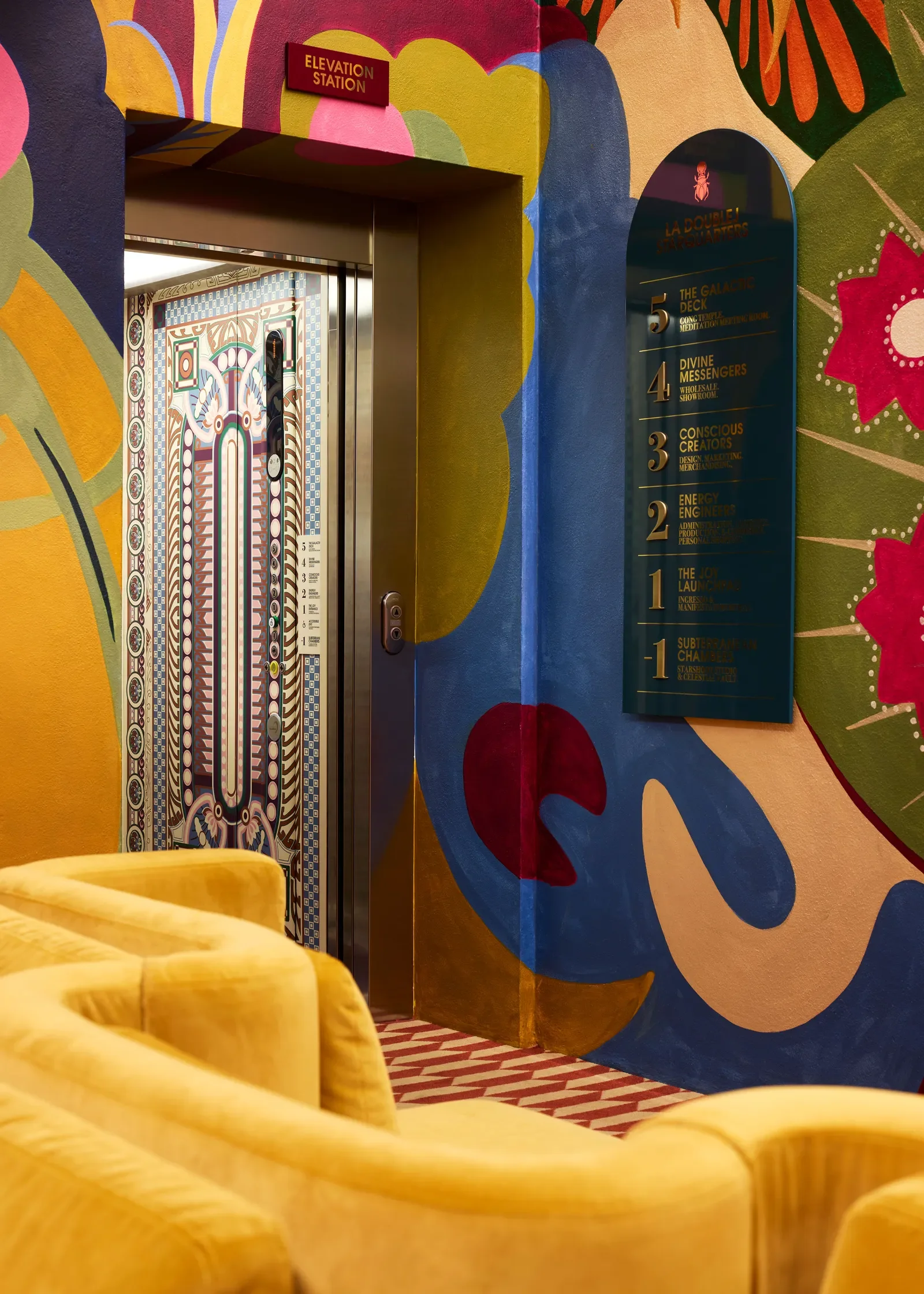
J.J. Martin’s new five-story headquarters, or “starquarters” as they call it, for La DoubleJ in Milan, is fully unhinged in the best way. There’s a 360-degree psychedelic floral mural at the entrance, which took eight days to paint, a rooftop “Galactic Deck” with a meteorite-encrusted gong for sound healing sessions, and floors named things like “Conscious Creators” and “Energy Engineers.” It’s maximalism with a distinct point of view. It’s part office, part wellness hub, part creative fever dream, and still entirely on brand for La DoubleJ. I respect anyone who commits to the bit this hard, and I’d be lying if I said I didn’t want to work here.
Mason & Fifth Westbourne Park
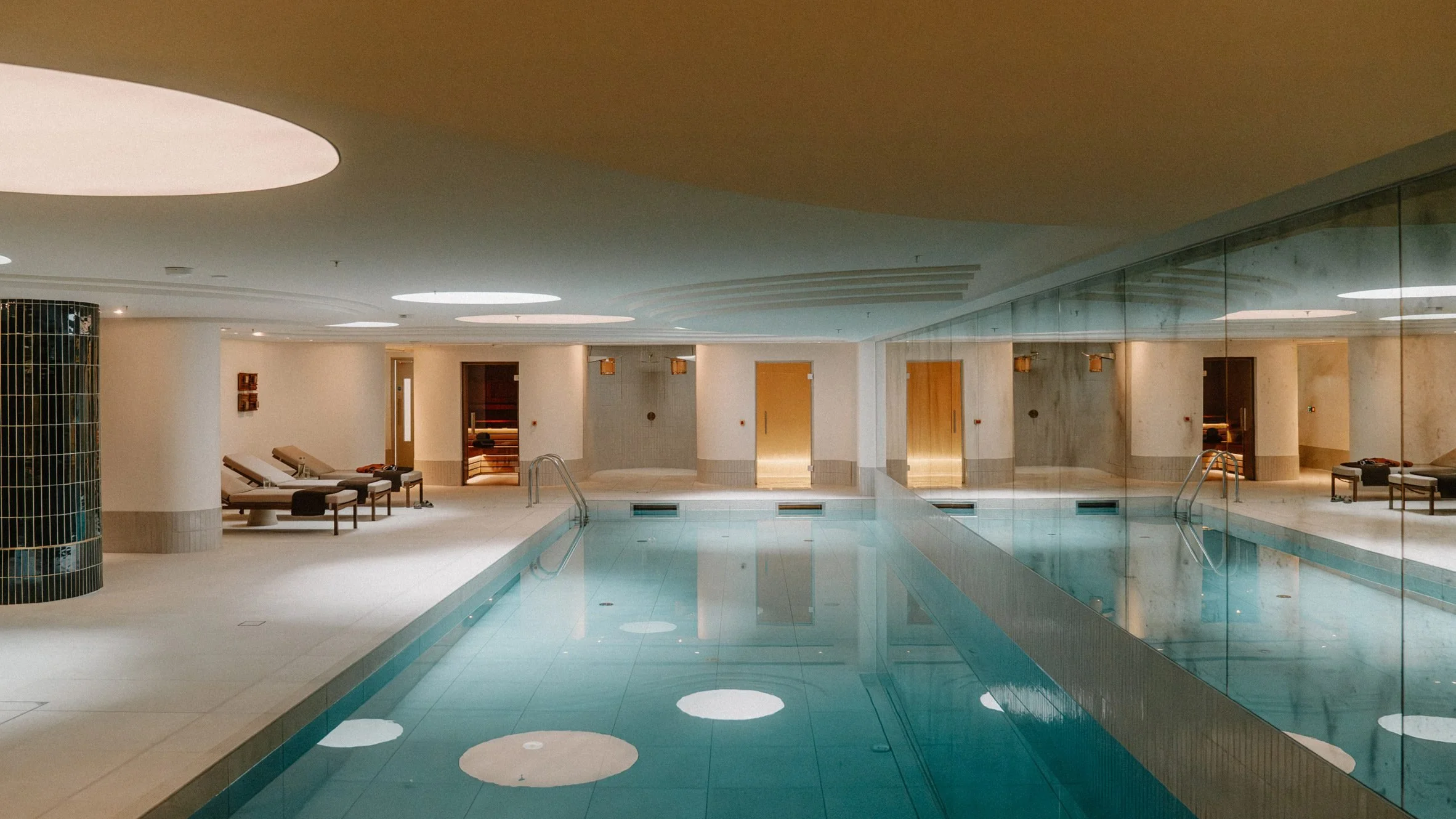
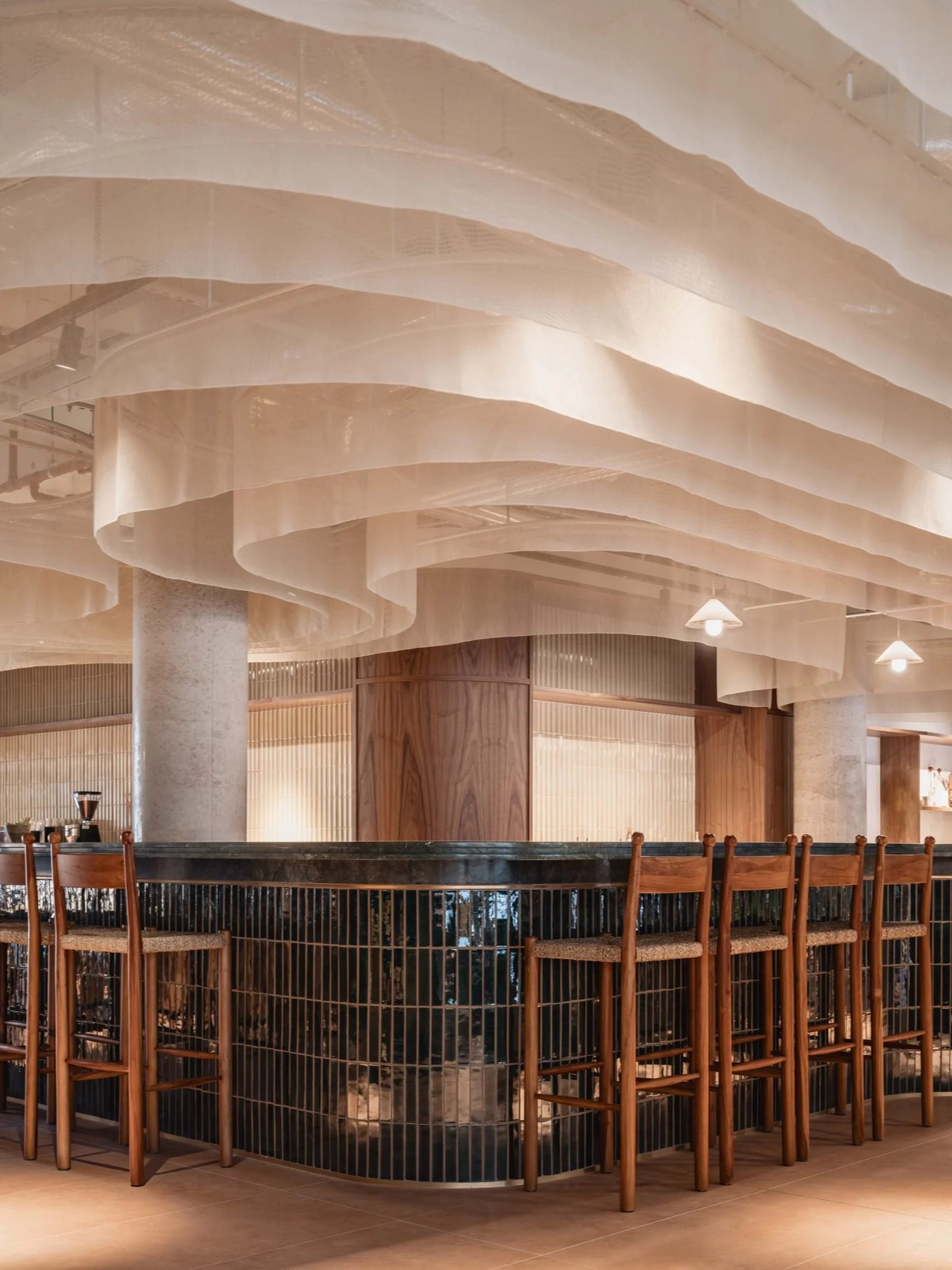
Honestly, you’d never guess this used to be a taxi drivers’ association headquarters on London’s Grand Union Canal. Now it’s a 332-studio flexible living building with a pool, cinema, rooftop lounge, and a canal-side restaurant. The exterior is a gorgeous mix of bricks, polished steel, and green-glazed terracotta tiles. The interiors by TiggColl pull from the area’s industrial history while keeping things warm and livable. It’s co-living done with actual taste, which is rarer than it should be.
A Reimagined Brutalist Concrete Wonder Near Milan
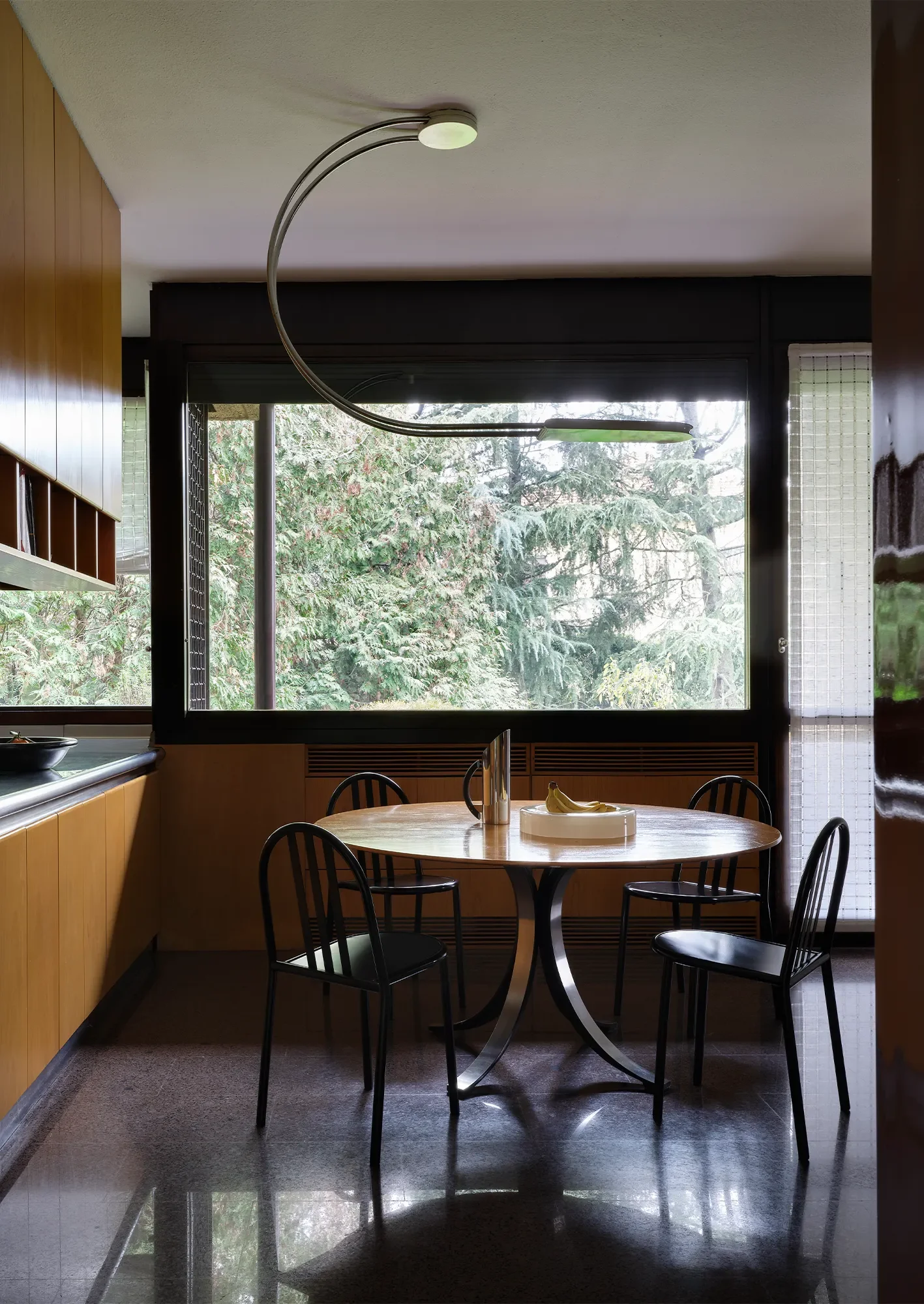
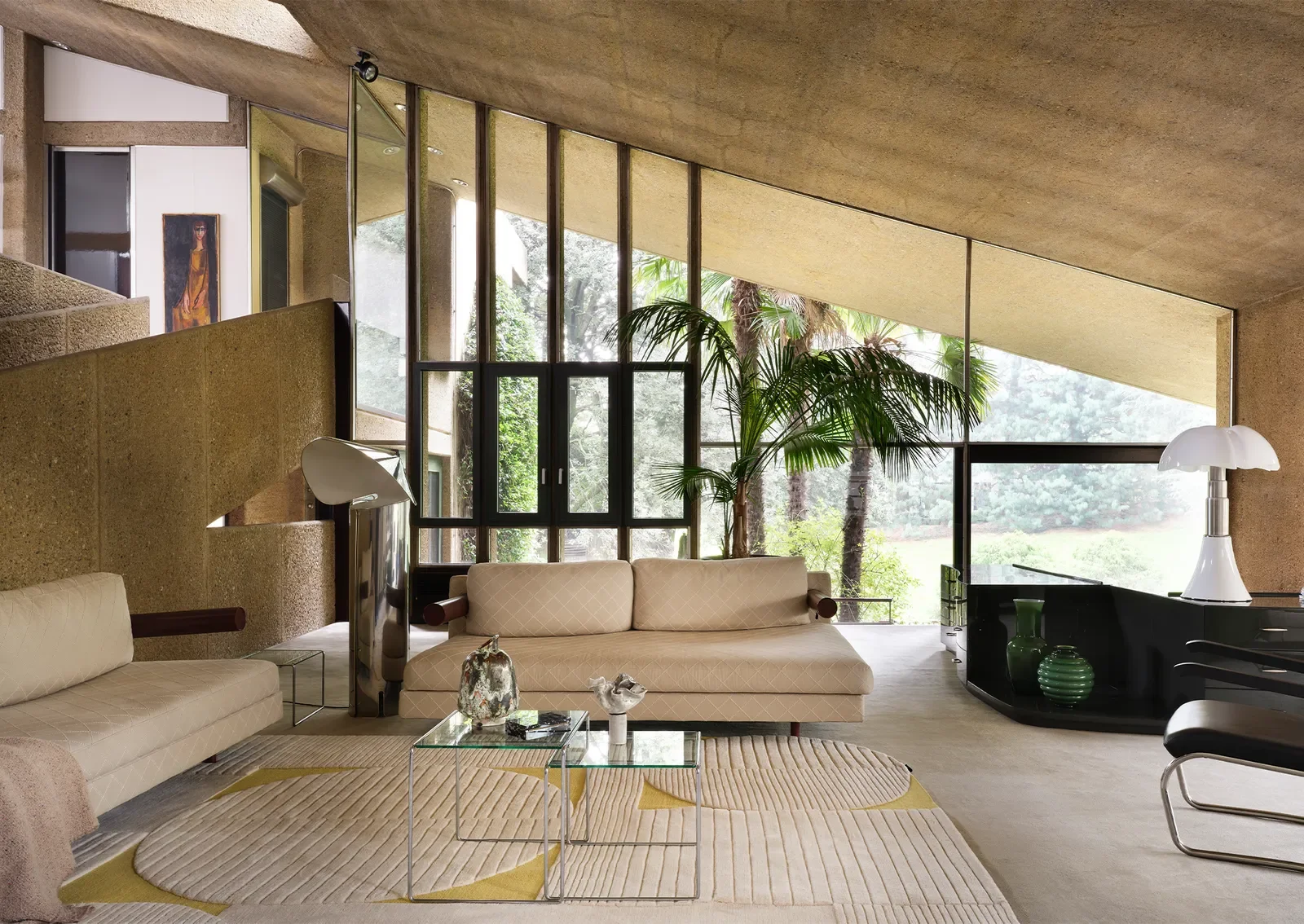
This AD feature stopped me in my tracks. Not only do I love Brutalism, but I love anything that embraces family roots and brings them new life. Giada Nava, a young Italian designer, returned to her childhood home in Italy and completely reimagined what it could be. She honored the rawness of the brutalist concrete while making it feel fresh and personal. There’s something so deeply cool about taking a space most people would find cold and bulldoze and finding the beauty in it instead.
A Young Italian Designer Reimagines Her Childhood Home, a Brutalist Concrete Wonder
House Oskar
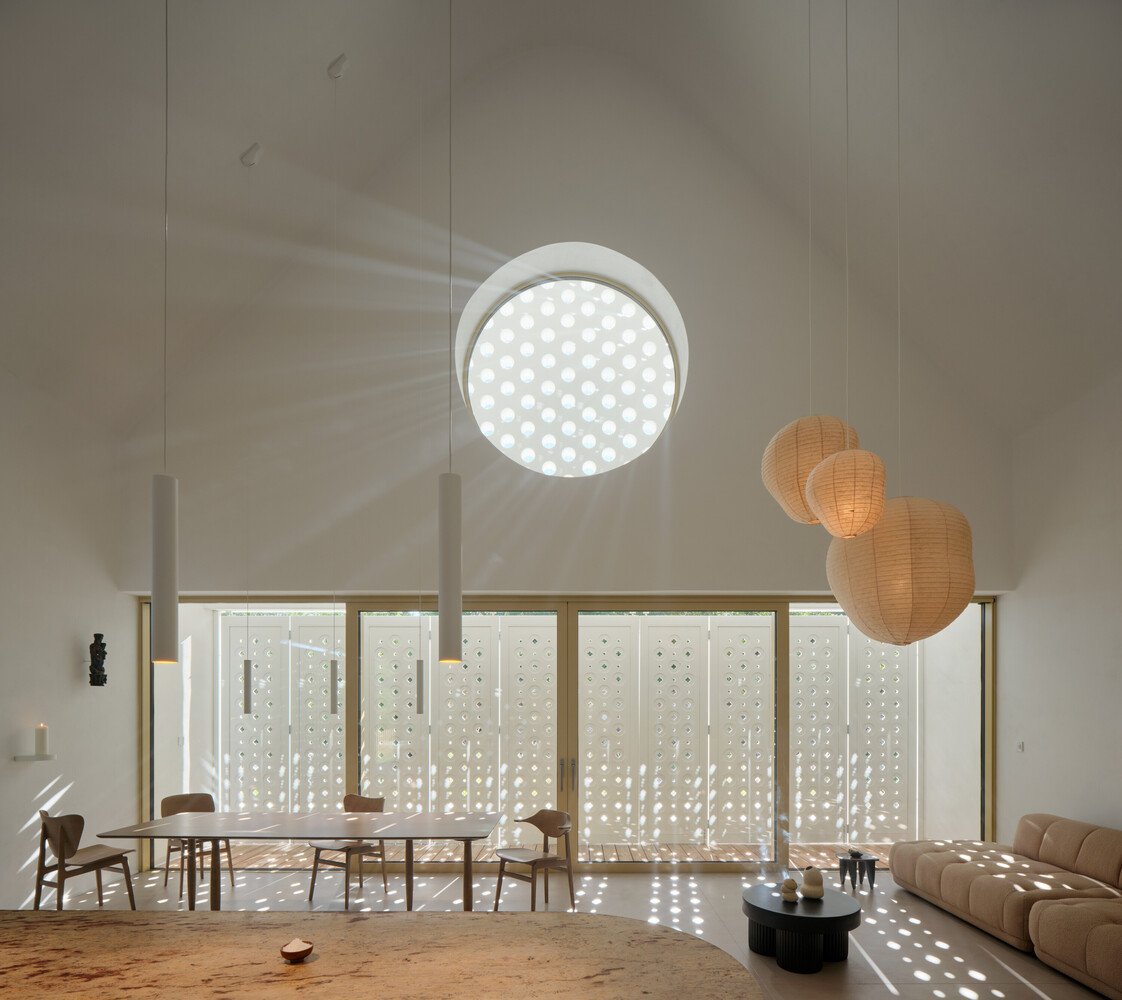
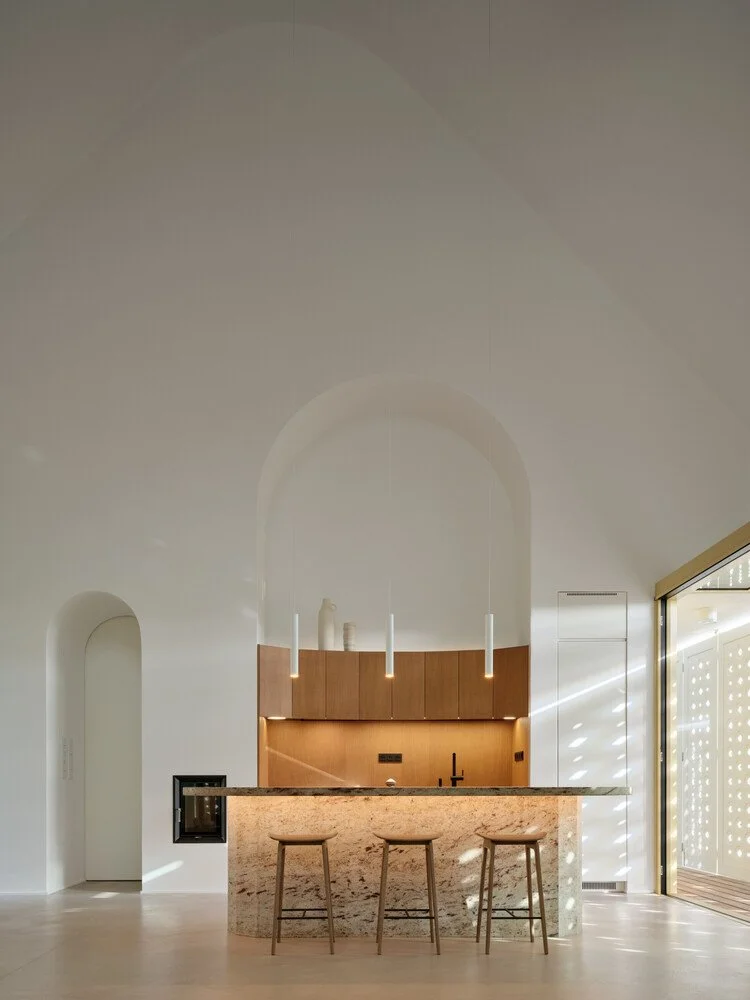
An architect builds a home for himself and his family in the Czech countryside, inside a baroque garden that once belonged to a neighboring château. The home is inspired by the shape of a chapel, which the town lacks, and the perforated masonry that filters air and sunlight serves as the defining feature. The interiors are filled with art ranging from Czech Modernism to Isamu Noguchi lamps and even a ceremonial mask from Gabon. It honestly reads less like a house and more like a living gallery someone actually sleeps in.
The PURO Hotel in Warsaw
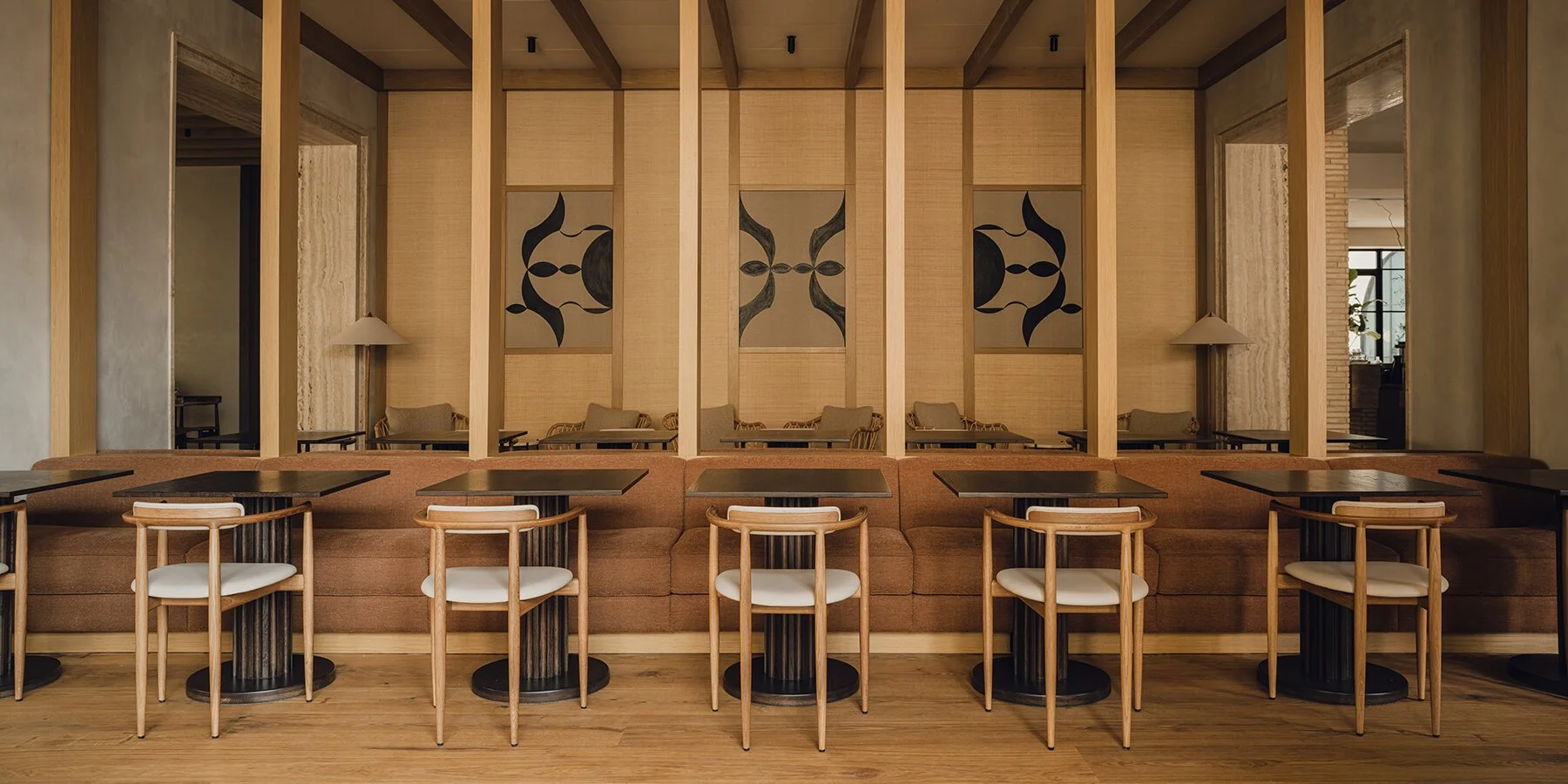
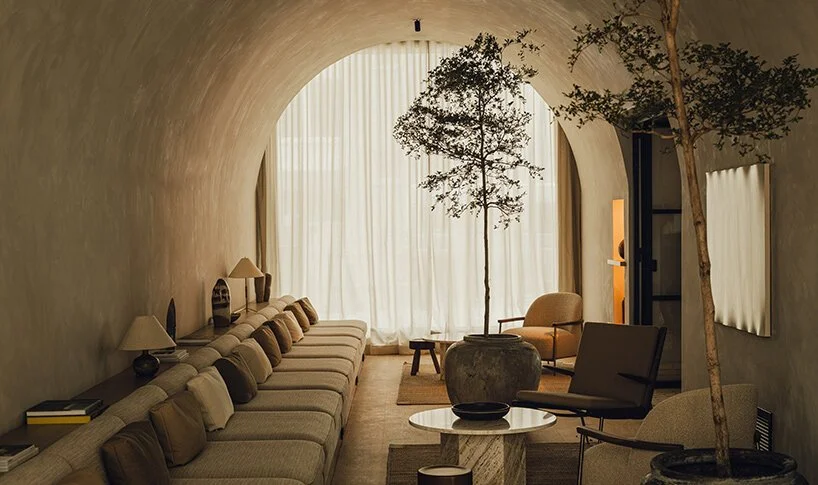
Copenhagen-based duo GamFratesi designed both the architecture and interiors for this 192-room hotel in Warsaw’s Old Town. The results are an incredibly calm, warm space that still feels exciting. Dinesen wood floors, travertine, and custom furnishings were chosen to age well rather than photograph well, which is a really interesting distinction. The color palette nods to Canaletto’s paintings of Warsaw, and the coolest part is a tunnel-like lounge with a curved ceiling that opens into an interior courtyard.
Not a Hotel Setouchi
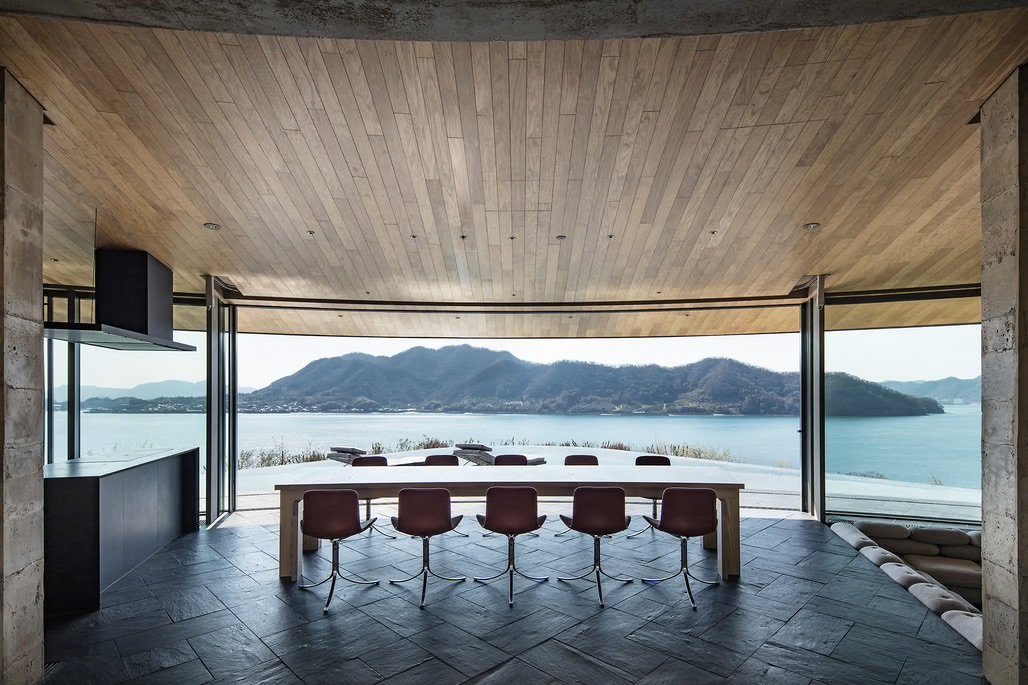
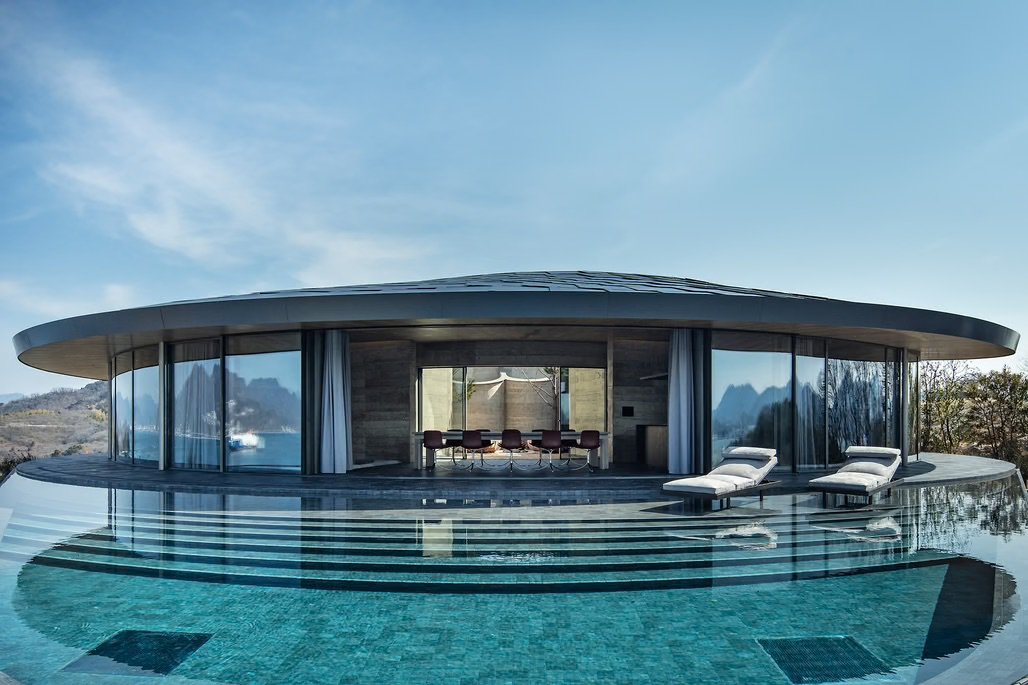
BIG’s first completed project in Japan and its three rammed earth villas on the remote island of Sagishima in the Seto Inland Sea. The walls are made from soil excavated directly on-site, the glass facades reinterpret shoji screens, and the black slate floors reference tatami mat layouts. Each villa is named for its panoramic view angle - 360, 270, 180 - and the ring-shaped 360 at the summit is the kind of thing that makes you reconsider what architecture can do with a hillside. It’s Scandinavian minimalism meets Japanese tradition, and it actually works.
Malvern House
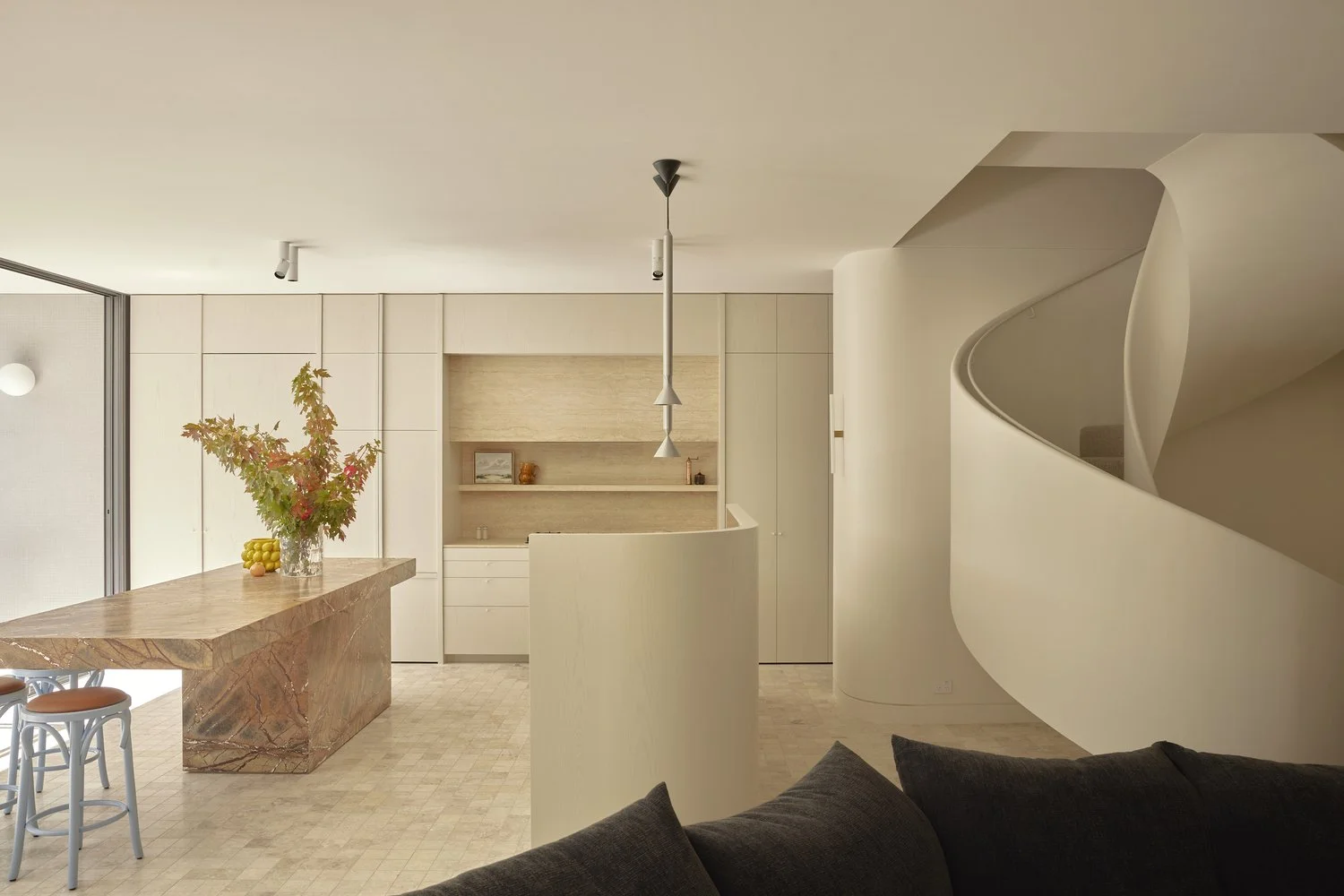
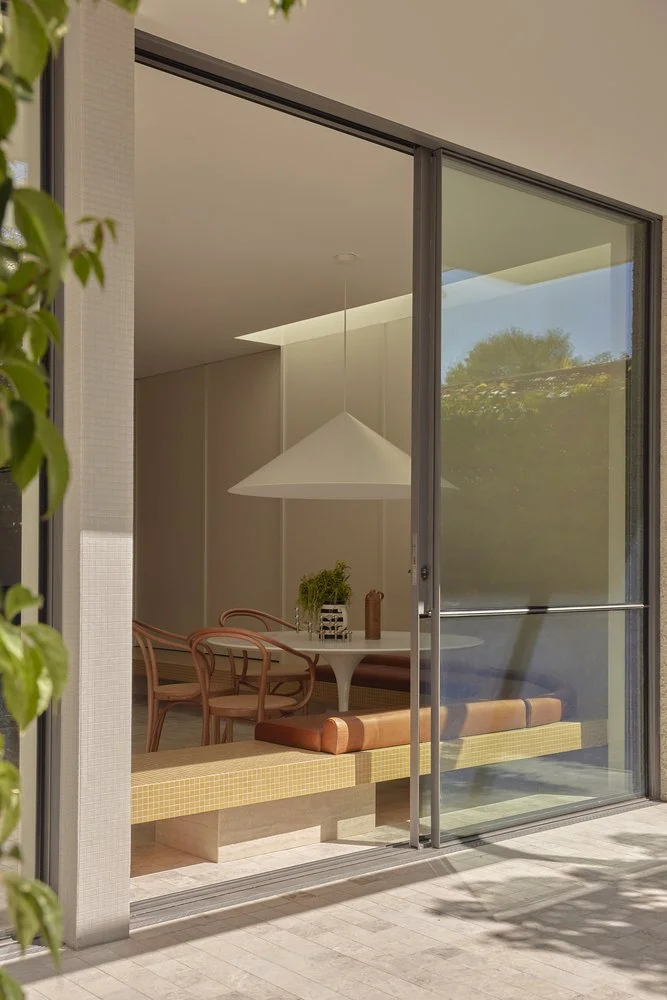
A Federation-era heritage home in Melbourne, redesigned by Studio Ceravolo for a couple whose kids have grown and moved out. Instead of a typical timber floor renovation, they laid over 60,000 small-format stone pavers throughout to create a continuous “carpet” that blurs the line between indoors and the garden. The vibe is chic Milanese apartment meets leafy Melbourne suburb, with Eames lounges, Thonet Bentwood chairs, and ceramics by local artists. It’s the kind of renovation where someone clearly said, “This is the next chapter,” and meant it. And I can’t stop staring at that staircase…
1930s Restoration in Mexico City
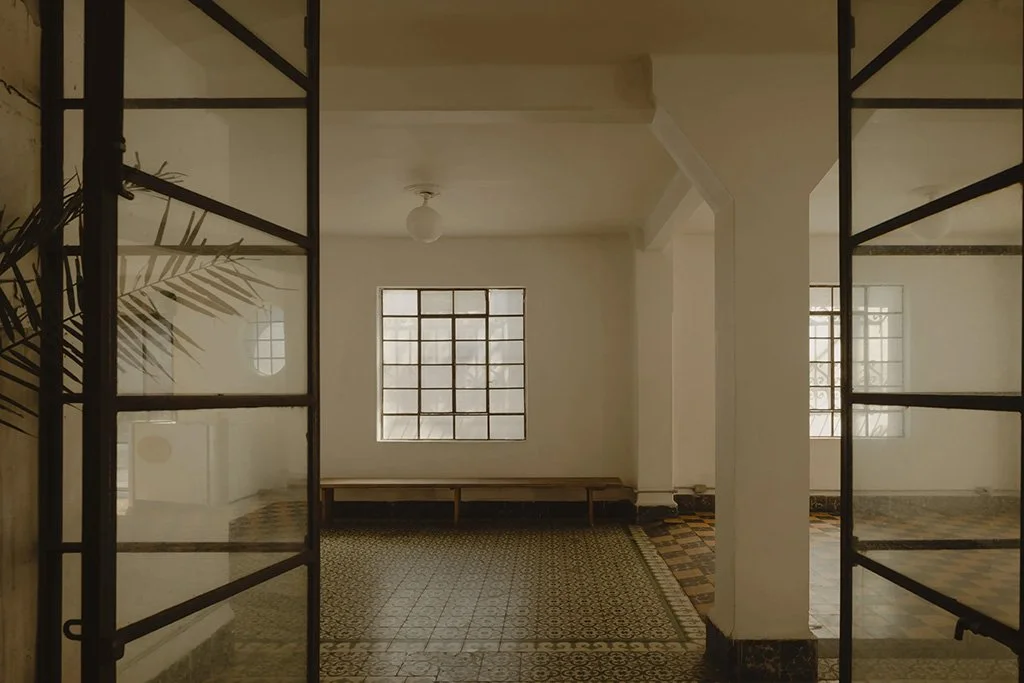
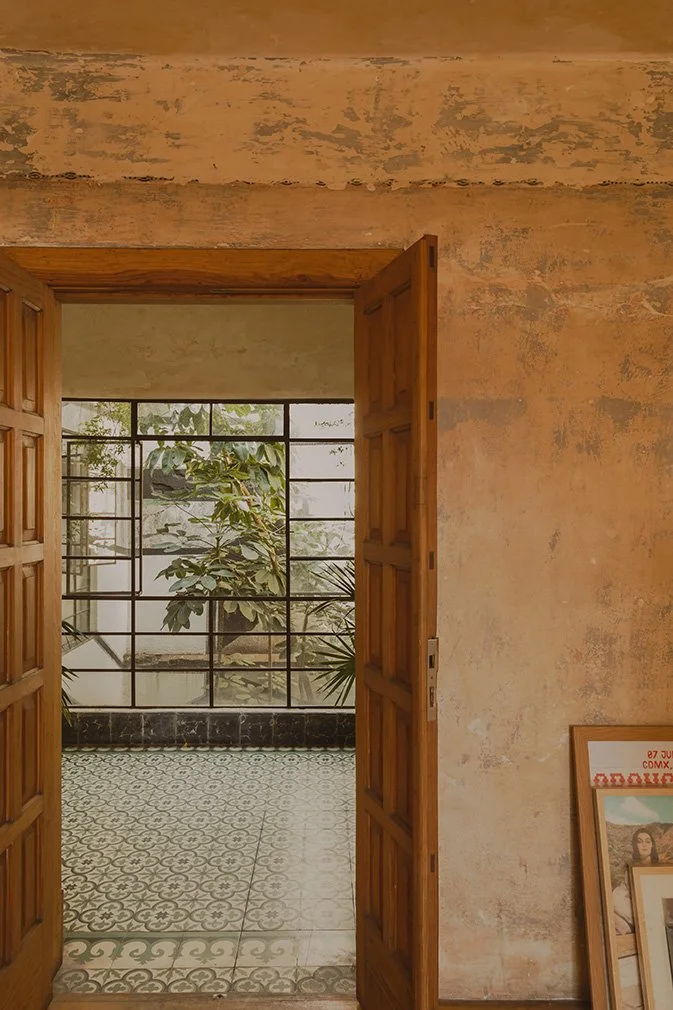
Alberto Kalach restored a 1930s mixed-use building in Mexico City’s Santa Maria la Ribera neighborhood, stripping away later additions and reopening the original interior courtyards. The art deco details, zigzag motifs, mosaic floors, and textured plaster were preserved rather than smoothed over. What I love is that the building’s original rhythm between commercial and residential is still visible in the flooring. Kalach didn’t erase history; he just brought it back to life and let it breathe.
Rosa Maria House
delavegascanolasso | Madrid, Spain
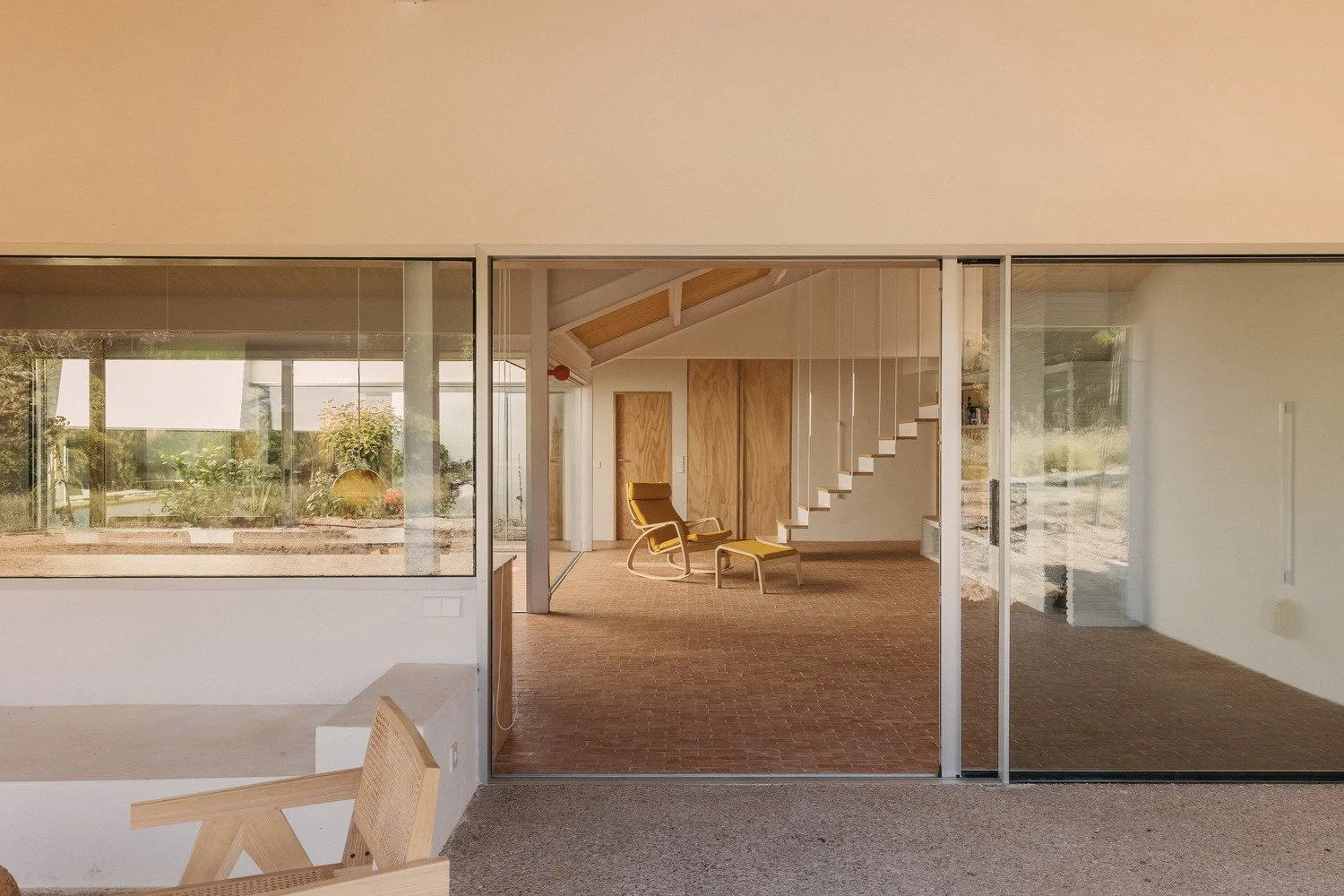
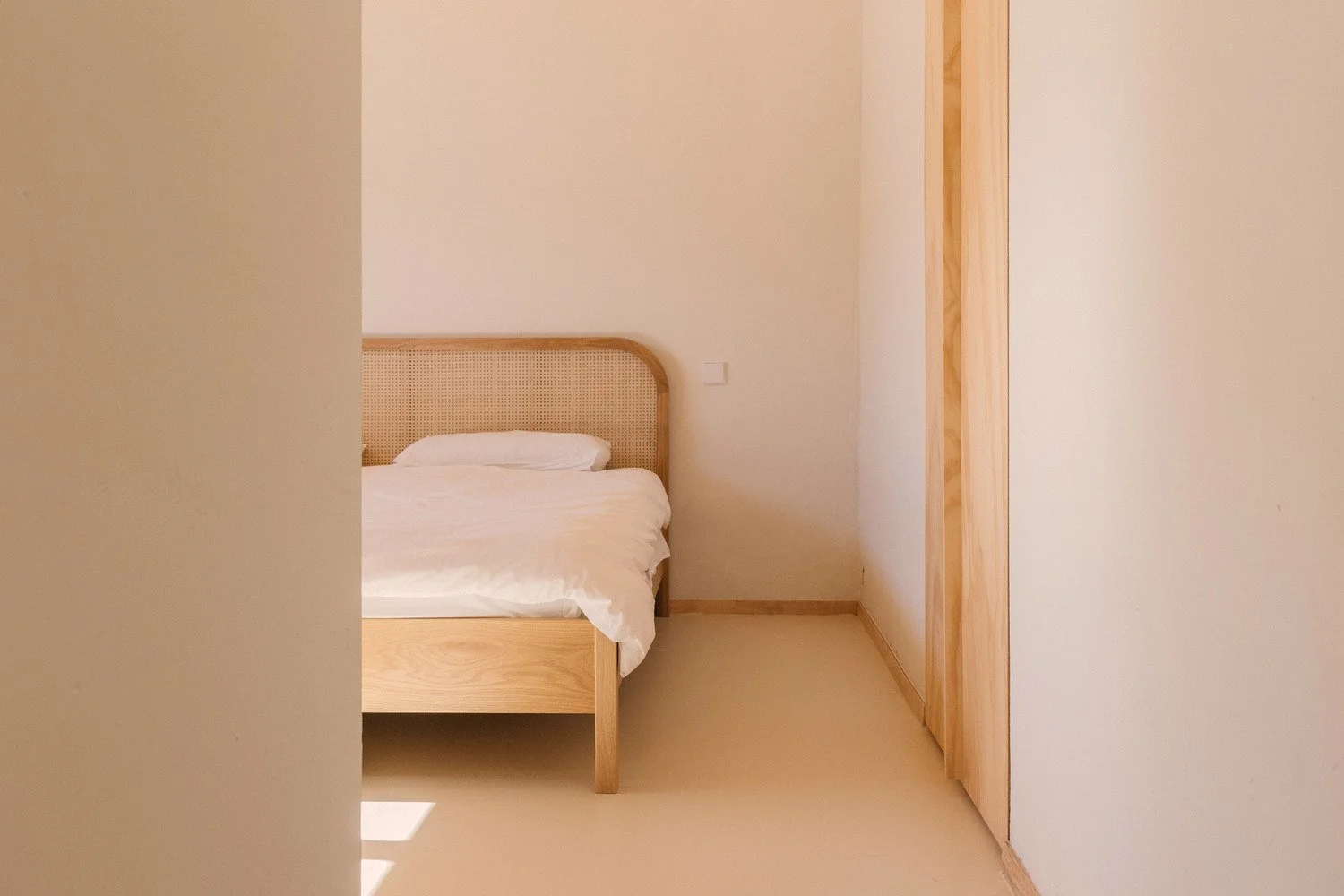
This Madrid home is organized around two courtyards, and the entrance alone sold me. A long white wall guides you to a shaded porch, then a gentle ramp ascends as the light gradually dims before the main space opens up and floods with sun. The floors are hand-fired Moroccan clay tiles, each one unique, laid by artisans over several weeks. The floor took longer to install than the entire pre-fab steel roof structure, and I think that’s one beautiful, well-thought-out detail.