design obsession: conversation pits
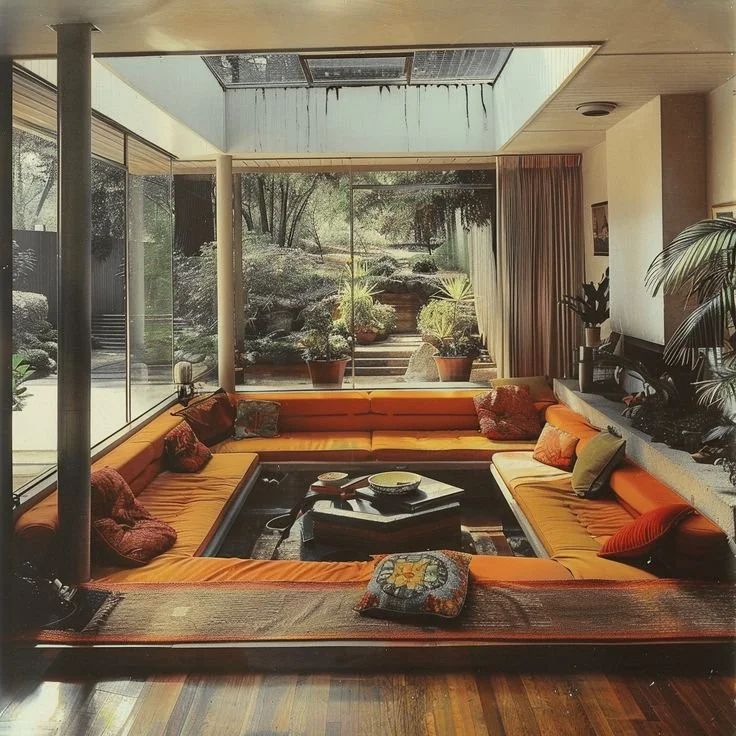
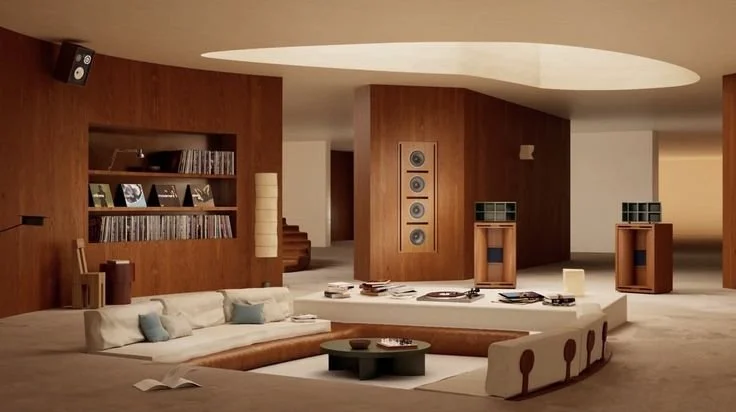
There is something cinematic about stepping down into a living room. Slightly dramatic, like you’re entering a scene instead of just a space.
The conversation pit, also known as the sunken living room, isn’t just a retro architectural detail. It’s a mood. It’s a design that says: sit down, stay awhile, actually talk to each other. It’s genuinely one of my favorite aspects of late-1960s and 1970s interior design. In a world of open-concept layouts, oversized cloud sectionals, and TVs mounted at eye level in every single room, the conversation pit feels slightly rebellious. And honestly? I get the appeal.
Since I’m currently obsessed, let’s get into what it actually is, where it came from, why it disappeared, and why it is suddenly starting to feel cool again.
IMAGE
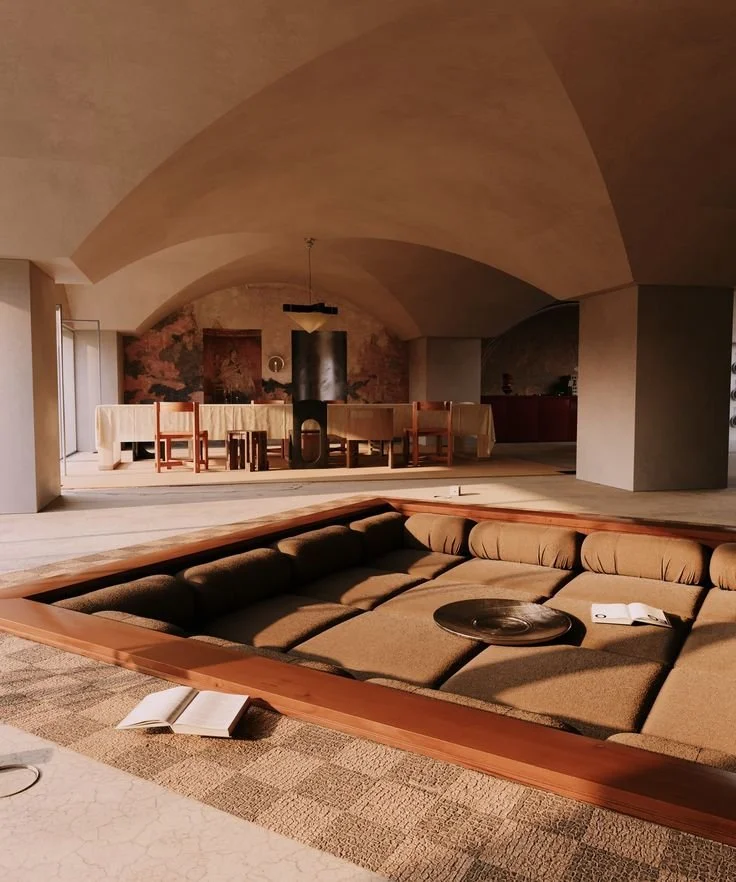
What is a Conversation Pit?
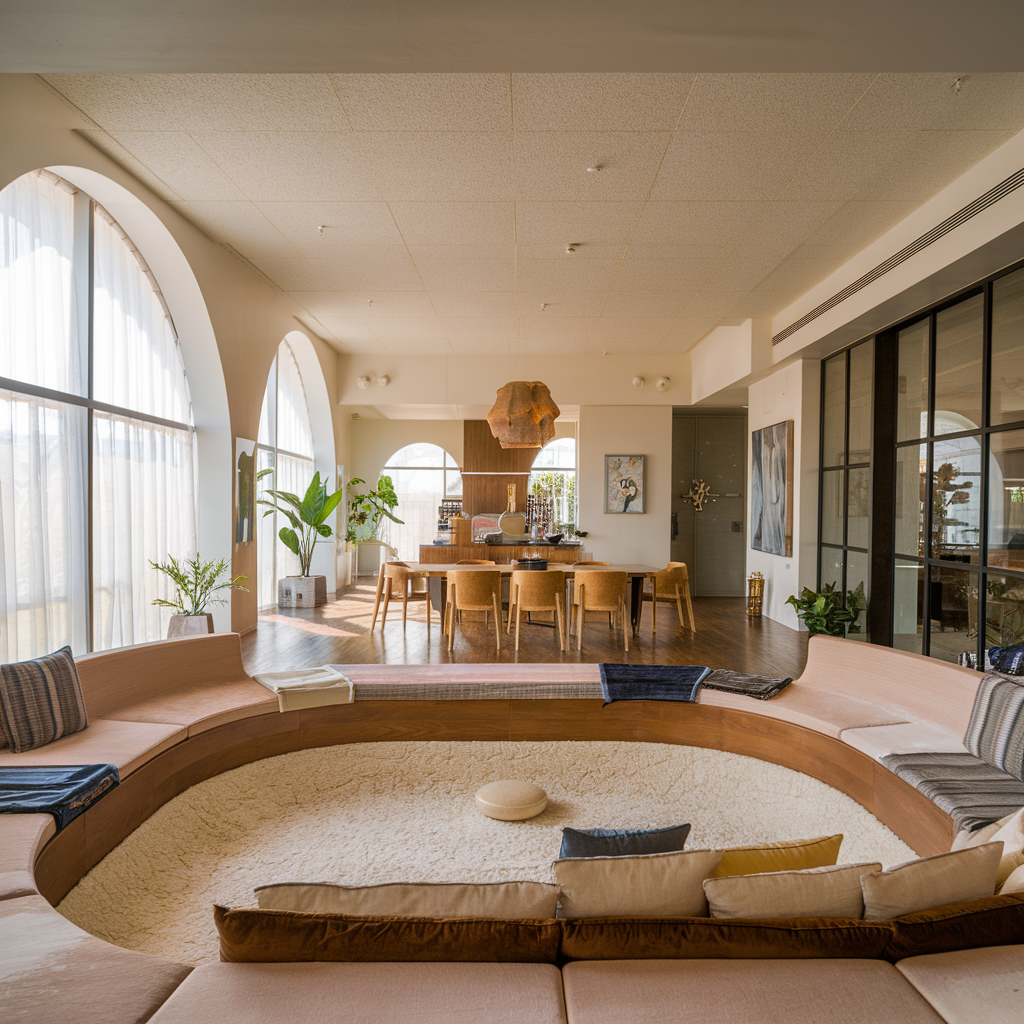
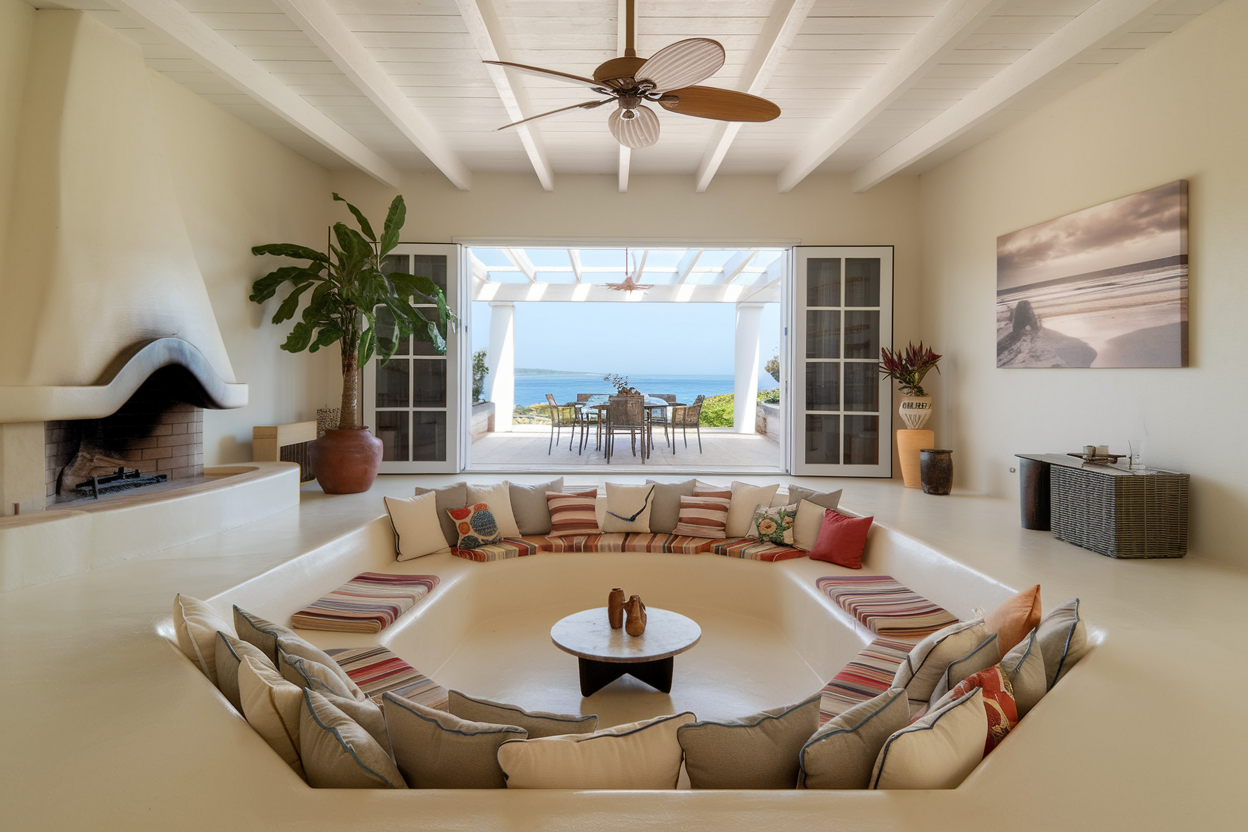
At its core, a conversation pit is a recessed seating area built directly into the room. The floor is lowered by a few steps, and built-in seating wraps around the space. Just like other living room set-ups, it is often centered around a coffee table, fireplace, or even a fire pit. But it’s not just furniture placement, it’s architecture doing the work.
Instead of chairs scattered around the room, continuous seating naturally pulls people closer together. You can squeeze in, stretch out, perch, or lounge. It’s flexible and intimate at the same time.
Conversation pits can be indoors or outdoors, curved or angular, plush or upholstered, or sleek or concrete. No matter what you choose, the point is they are always the same: a space designed for gathering and, in theory, conversation.
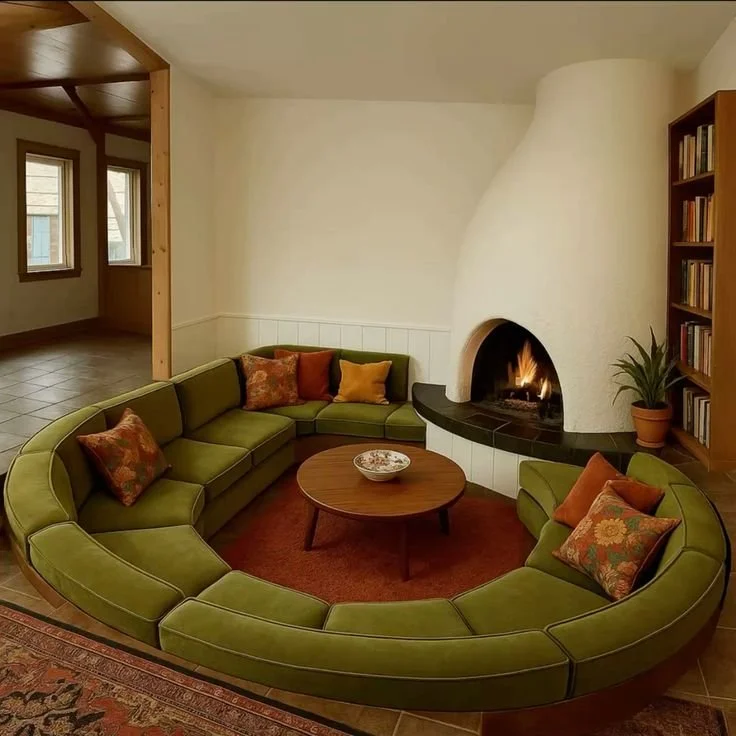
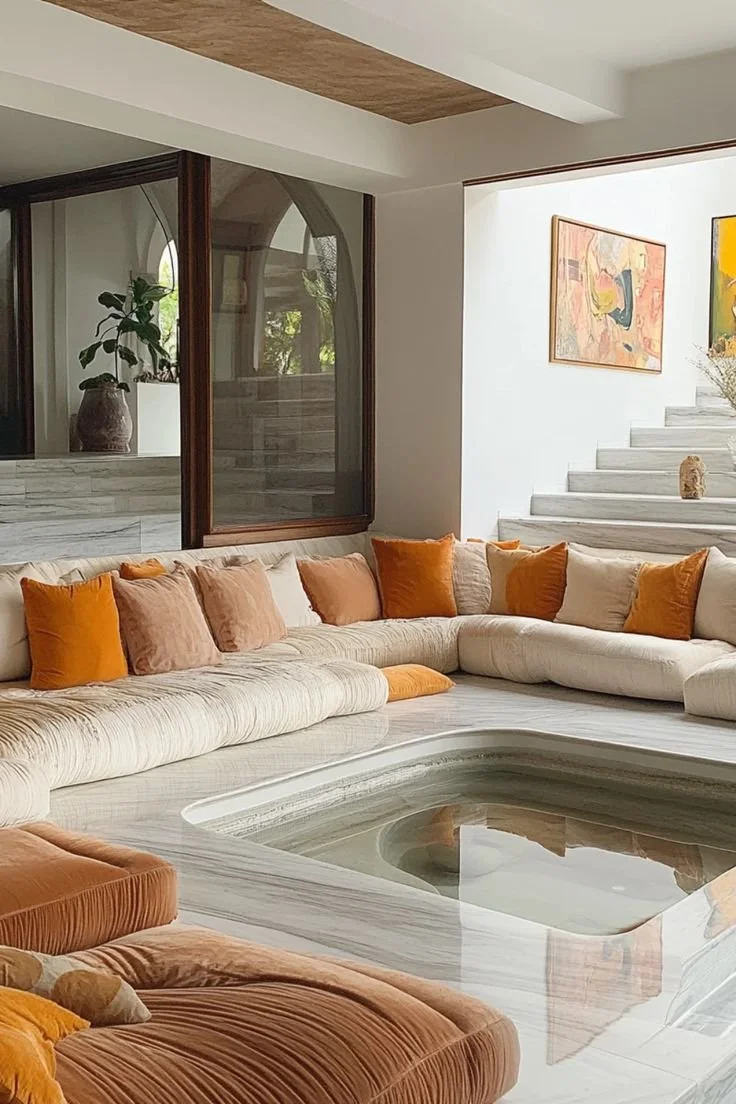
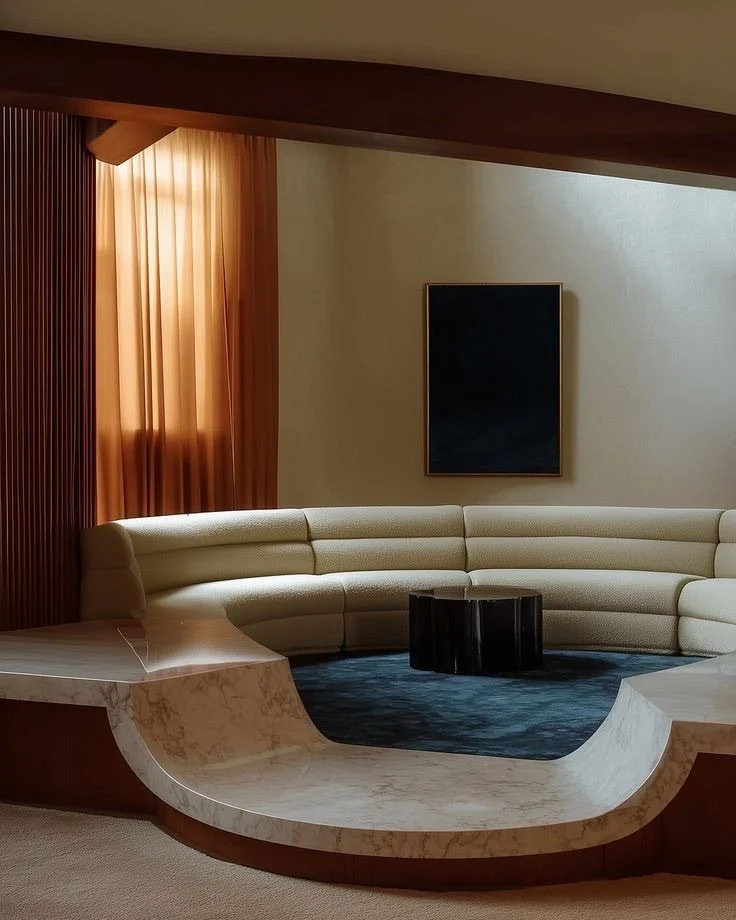
Where do they come from?
Sunken spaces aren’t new. Versions of them have existed in cultures from Ancient Rome to Japan. Humans, for centuries, have understood the power of communal spaces. In American architecture, one of the earliest modern examples is often credited to Bruce Goff in the 1920s, who designed a Tulsa home with a semicircular sunken seating area wrapping around an Art Deco fireplace. It was considered dramatic, intimate, and ahead of its time.
But it was mid-century modern design that made conversation pits truly iconic.
Eero Saarinen leaned into the concept with several projects, most famously the TWA Flight Center at JFK Airport. He enlarged the sunken lounge and gave it sculptural curves, lining it with white tile, bold red carpeting, and curved seating, including his pedestal-based tulip designs. It felt futuristic and glamorous. Everything passengers wanted was stepping into the Jet Age.
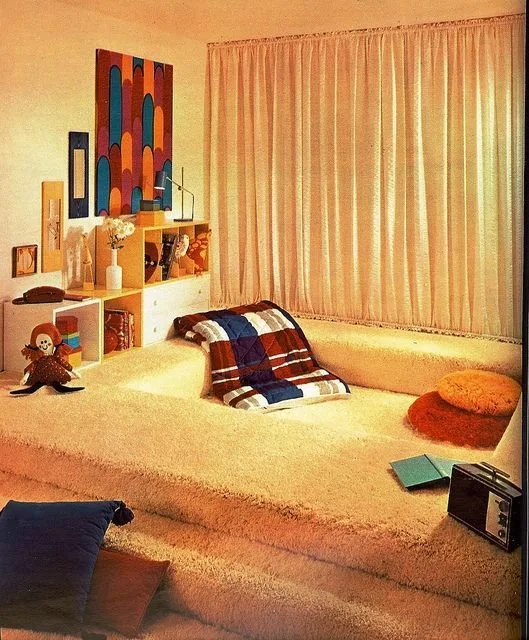
By the late 1950s and throughout the 60s and 70s, conversation pits were everywhere, from homes and offices to airports and even restaurants. They symbolized modernity and sophistication. They were even marketed as surprisingly attainable with magazines publishing how-to guides encouraging homeowners to build their own.
Why are they popular?
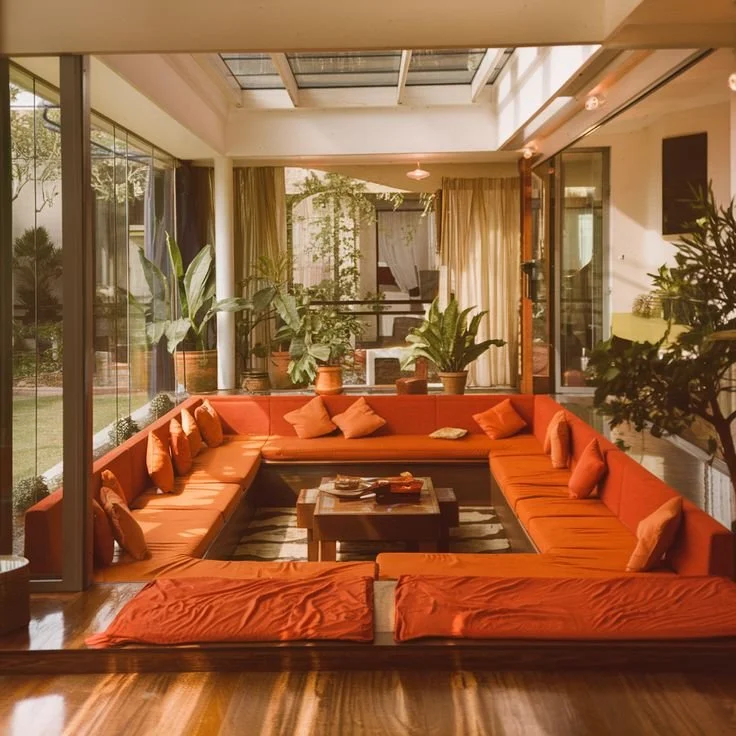
Sunken living rooms peaked from the late 50s through the late 1960s. This time period fueled bold design experimentation, and entertaining at home was central to lifestyle culture. Everything from cocktail parties to dinner gatherings at home became part of a host’s identity.
Conversation pits worked because they:
Seated a crowd efficiently
Created intimacy without walls
Felt modern
Gave homes individuality
An architect in the early 1970s once described them as an intriguing feature that added personality without blowing a budget. And honestly, they photograph beautifully.
The Downfall
By the late 1970s, conversations slowly started to go from cool to commonplace. People eventually started noticing their downsides. Standing near the edge at a crowded party? Super risky chance to misjudge a step down. The novelty of “stepping into a room” can wear off greatly when you inevitably stumble.
Accessibility became a concern when built-in seating limited flexibility. As tastes began to shift toward open-concept, level-floor layouts centered around televisions in the 80s and 90s, conversation pits just felt more and more impractical. Many homeowners chose the simplest solution: fill them in and create a flat floor.
The Great Comeback
Fast forward to the 2010s. Enter Mad Men.
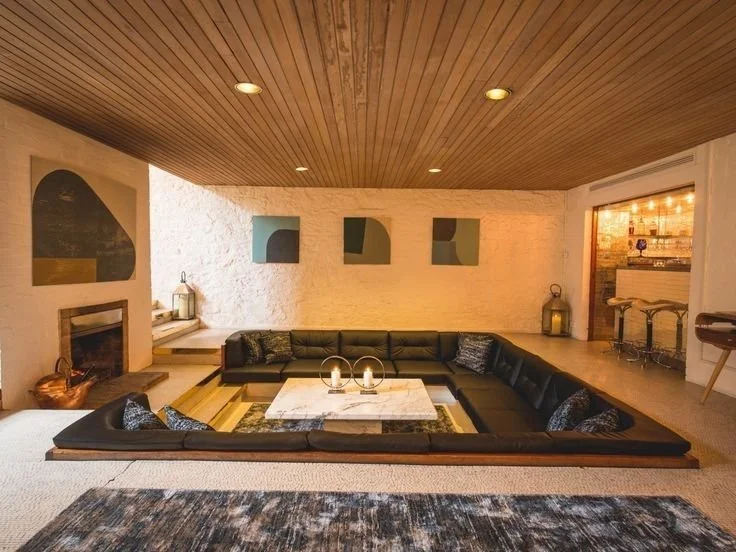
Don Draper’s gorgeous renovated New York apartment, complete with a sunken living room and a built-in L-shaped sofa, reignited widespread obsession with mid-century interiors. Suddenly, conversation pits were back on design boards everywhere.
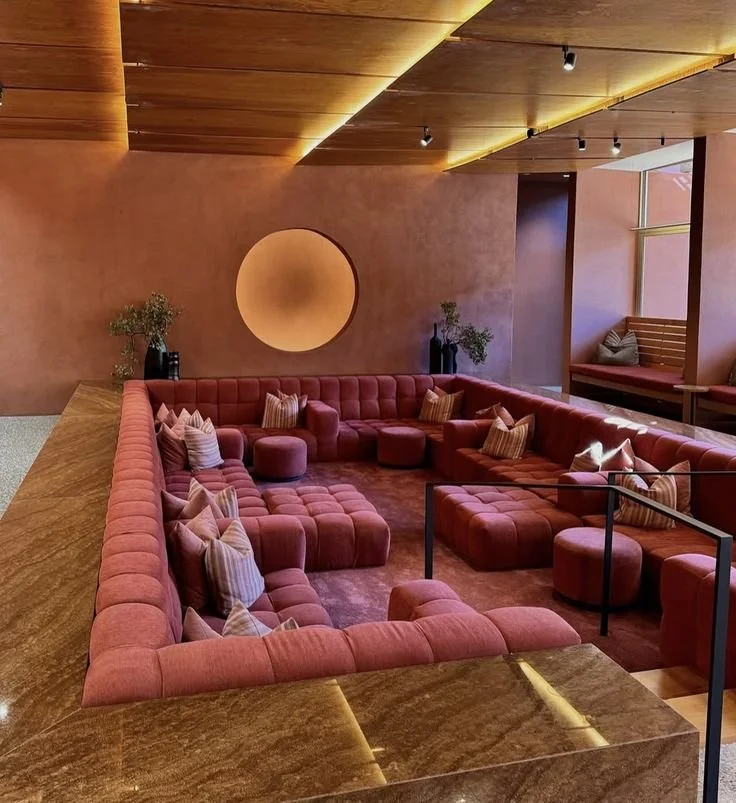
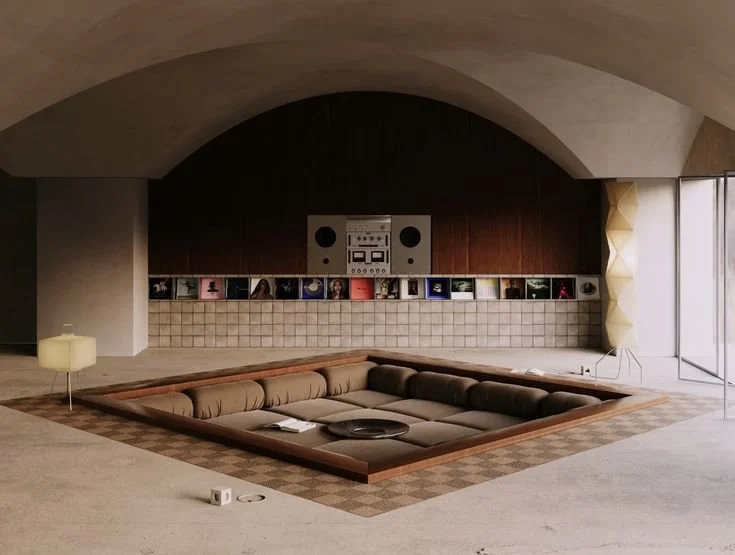
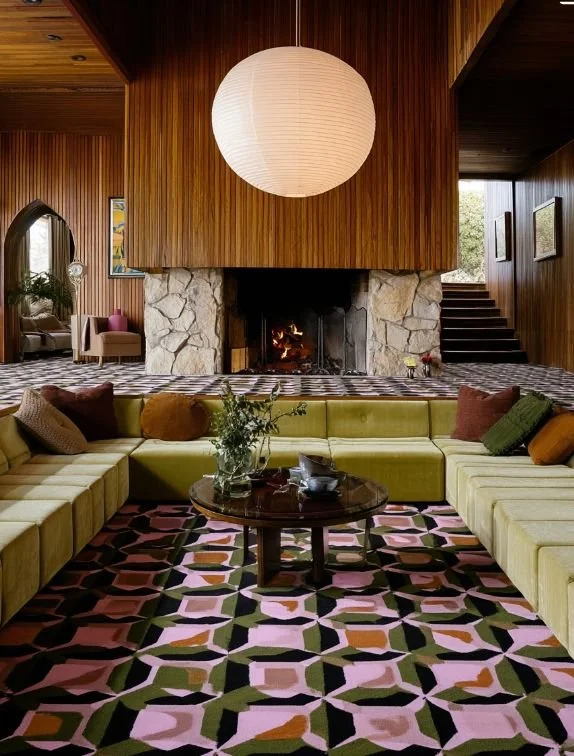
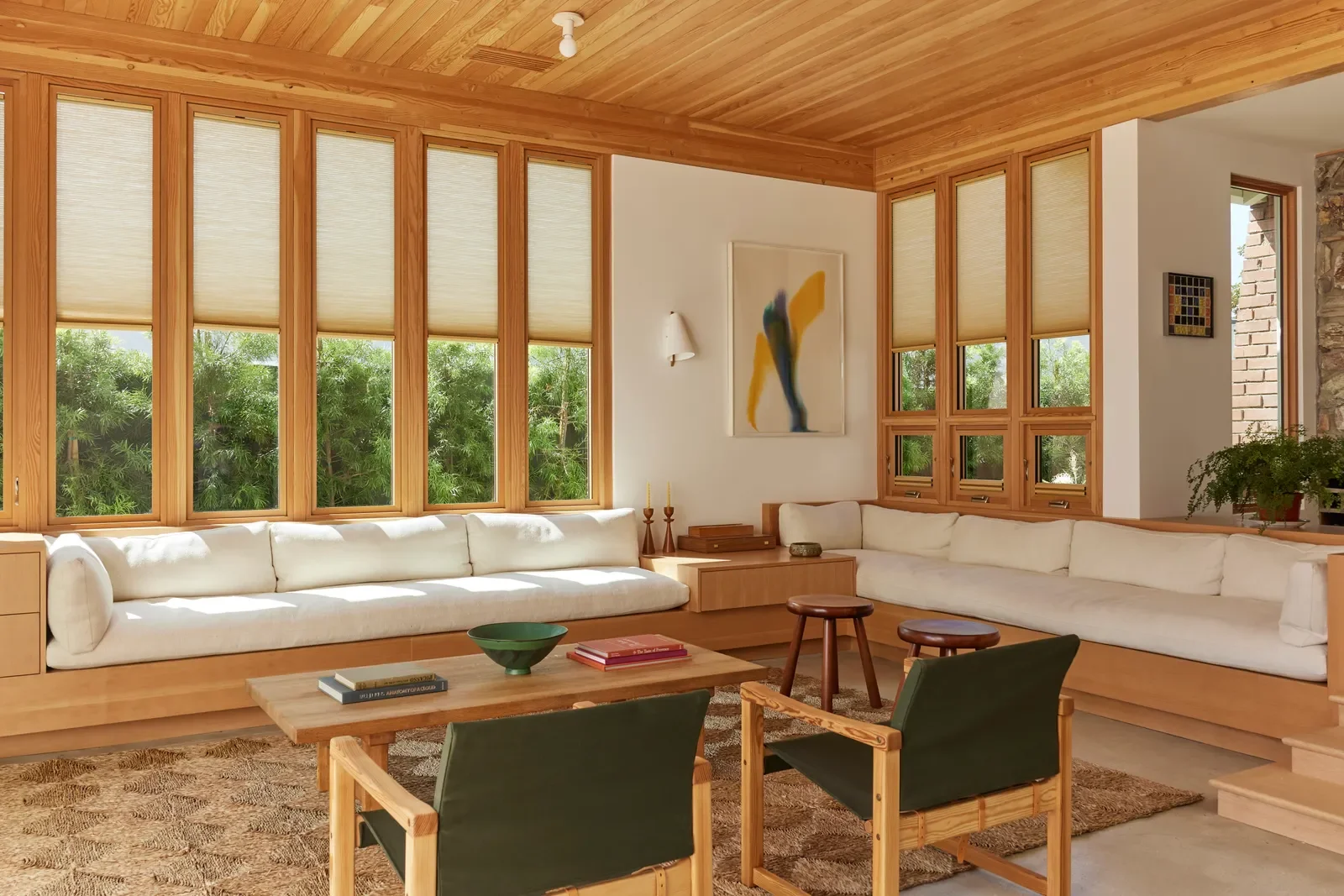
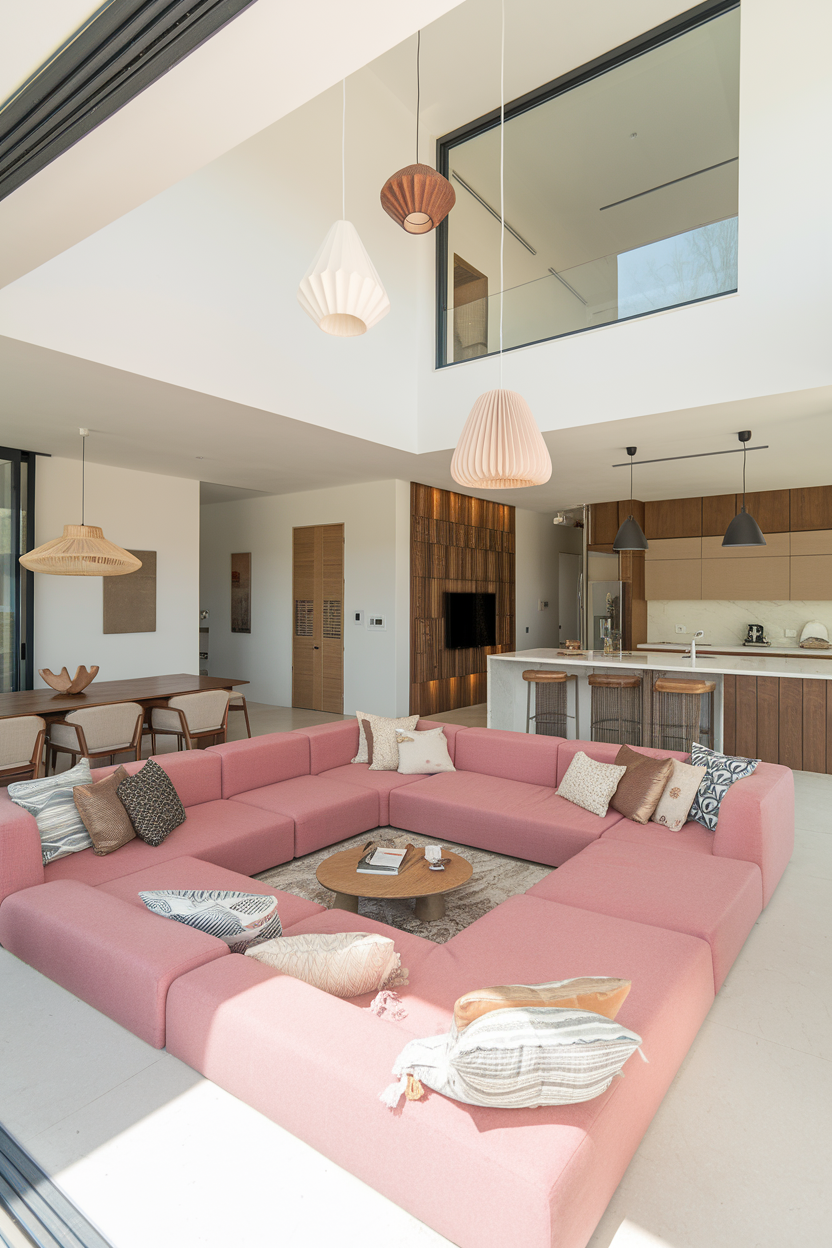
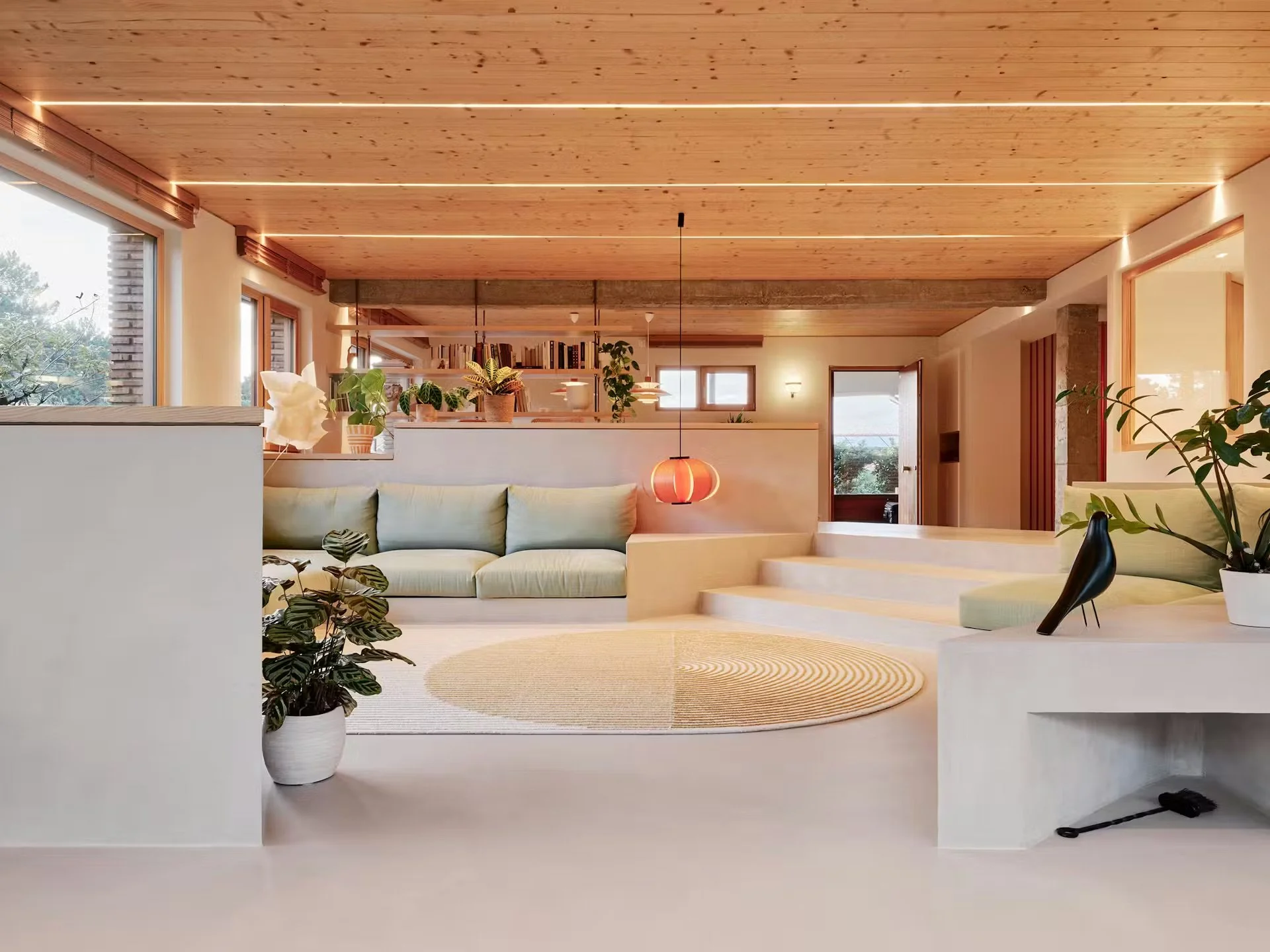
Today’s versions feel slightly elevated. Think more ivory bouclé instead of brown tweed, soft curves instead of boxy angles, and minimalist concrete over wood steps. Designers have also started adding sculptural lighting overhead and addressing other previous concerns, like subtle railings or wider steps, to avoid safety issues.
Is there a deeper reason for their return? Post-pandemic, we’re craving intimacy again. In a hyper-digital world, a space designed purely for gathering almost feels luxurious. It feels less about nostalgia and more about intention and connection.


Why I’m Obsessed
The conversation pit isn’t just about the retro aesthetics. It’s also about how design shapes behavior. Lowering the floor subtly shifts energy. It creates a boundary without walls and signals to everyone that this is where we gather. And at a time when so much connection happens through screens, that little callback feels meaningful. Would it suit every house? Probably not. But in the right space with the right materials, it feels less like a cheesy throwback and more like a statement.
A little dramatic. A little nostalgic. Very intentional. And honestly, I love that.
GET THE LOOK