GOOD VIBRATIONS: WHY I GAVE INTO THE VIBRATION PLATE HYPE
I’ll be honest, if you told me a year ago I’d be standing on a shaking platform first thing in the morning and swearing by it, I would have given you major side eye. The side eye worthy of Jade Eggs and weird toe-spacer socks. But here we are. I was recommended a vibration plate by my lymphatic drainage practitioner, and because I trust her completely with my wellness and lymph nodes, I ordered one. That was the very beginning of the vibrate-y chapter of my wellness journey, and I have zero regrets.
If you’ve been anywhere near wellness content lately, you’ve seen them. They are literally all over Instagram and TikTok right now. People are using them while watching TV, during their morning routines, and even while fully working out. But before you dismiss this as another influencer-driven wellness trend meant to aggressively push affiliate links, let me break it down.
What Is a Vibration Plate?
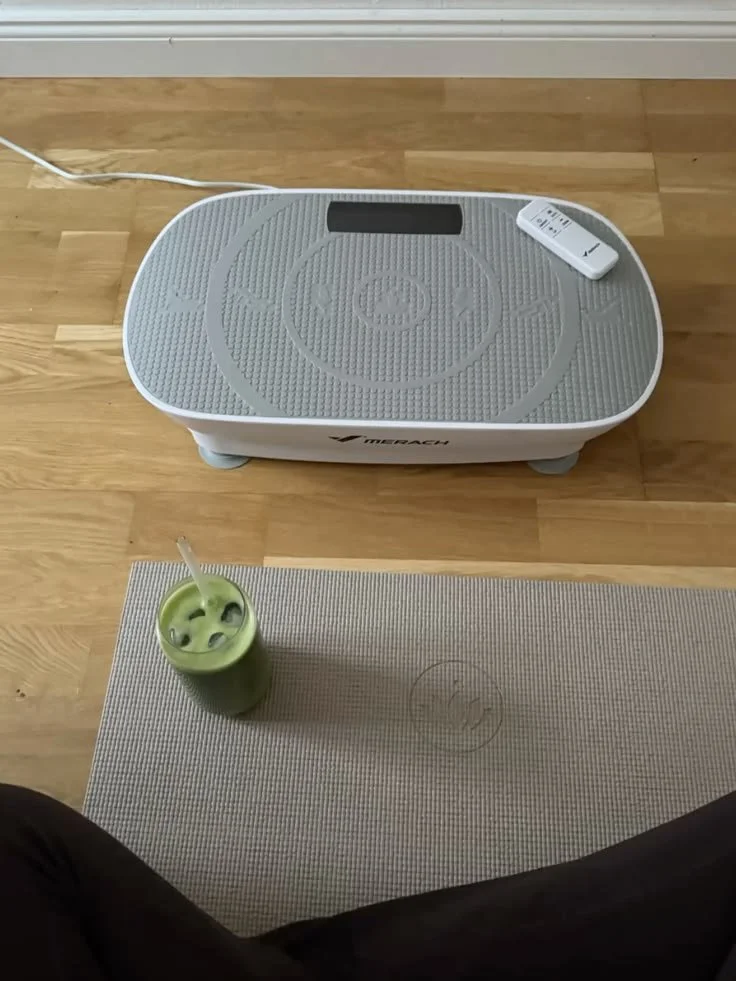
At the most basic level, a vibration plate is exactly what it sounds like: a platform that vibrates. You stand, sit, or even do exercises on it, and the machine generates rapid rhythmic vibrations that travel throughout the body. The vibrations cause your muscles to contract and relax multiple times a second, which is the whole point. It’s like the modern version of those shake machines from the 1950s that women swore by.
They’ve actually been around gym floors for years. Machines like the Power Plate have been used for athletic recovery for a long time. What has changed is that now there are affordable at-home versions widely available, ranging from a budget-friendly $70 to well over $3,000 for premium models. So the barrier to entry on this trend has dropped significantly, hence why they are everywhere.
How Do They Work?
When you stand on a vibration plate, the rapid back-and-forth movements (measured in hertz) force your muscles to react. Because the movement occurs at a faster rate than the muscles can consciously process, the body essentially pulls in muscle fibers to stabilize you. The involuntary muscle engagement is doing quiet, low-effort work throughout the session. There are two main types of vibration plates you may encounter: oscillating, where the platform moves side to side, and linear or vertical, where the platform moves up and down. Each activates muscles differently, and the intensity can be adjusted by speed settings. Most of the at-home models start with gentler settings that you can increase as needed, which makes them less scary if you’re new to the whole thing.
Why Would You Use One?
This is where things get interesting and also where you have to pump the brakes on some of the more fantastical claims people can make. I’ll start with the main reason I have one: Lymphatic Support. The lymphatic system is basically the body’s drainage network, responsible for moving waste, toxins, and excess fluid from tissues. Unlike the circulatory system, there isn’t a pump, so it relies on movement and muscle contractions to keep things moving. The gentle vibrations from the plate stimulate movement, supporting the lymphatic system’s natural process. I was recommended the plate to complement my manual lymphatic drainage sessions and to combat a lot of the inflammation, bloating, and annoying swelling that comes along with my Hashimoto’s. Not to mention the tight muscles I get from working out. I’ve found it genuinely helpful for the puffiness-reducing, circulation-boosting effect she’s after. It’s worth noting: if you don’t really have lymphatic concerns, the system is probably doing just fine on its own.
Circulation and Recovery: Vibration plates are useful for improving blood flow and circulation, supporting muscle recovery. This is probably the most well-supported benefit. That’s why they have been in professional athletic training spaces. Post-workout soreness? A few minutes on the plate can help.
Low-Impact Movement: For people who can’t do traditional exercise due to injuries, mobility limitations, or recovery sessions, vibration plates offer a way to get the muscle activation and circulation benefits without the impact. A real, meaningful use case for those who need it.
Nervous System Regulation and Stress Relief: A lot of people find the vibrations calming or grounding. There’s something about the rhythmic sensation that people find soothing, kind of like how people find rocking soothing. There isn’t really a clinical claim I could find to share here; however, while being shook all around, it’s pretty hard to focus on literally anything else.
Let’s Keep It Real: What It Isn’t
While I really am a convert and believe in vibration plates, I don’t want to oversell anything. I’m not a professional, and I’m certainly not a medical professional. But there are a few things to be aware of. First, vibration plates are not a weight-loss shortcut. Sure, the 1950s definitely made it seem like the way to thinness, but the calories burned standing on a vibration plate are minimal. If someone is trying to sell it as a fat-loss hack, just keep scrolling. The same goes for building muscle or increasing bone density; you’ll get more lifting weights than balancing on a board. At the end of the day, vibration plates are complements to wellness routines, not a replacement for movement and activity. I like to think of it the way I think of most wellness tools - they are part of a much larger picture, not doing all the heavy lifting on its own.

Is It Worth Trying?
I bet you know it’s a yes from me, especially because it was recommended to me as part of something I was already doing. Having a professional point me toward it made it an investment that felt like a smart addition for me rather than a random impulse buy. If you’re curious, here’s my honest take on who would get the best out of it: anyone who is already into lymphatic health and circulation, people looking for gentle recovery support, and anyone who enjoys the process of building out a thoughtful wellness routine. It’s the kind of thing that fits naturally into my morning routine without requiring a lot of time and effort. There are even lymphatic movements you can do while on the plate to activate the system even more. I won’t lie. At first, the increase in blood circulation is uncomfortable. It makes the skin incredibly itchy, but it doesn’t last too long, and eventually you get used to it, or it goes away. It’s also helpful for reducing the tightness of my neck muscles after sitting and getting tech neck all day. With budget options available, it’s a pretty low-risk try if you’re open to it.
The Bottom Line
Vibration plates are having a moment, and unlike some wellness trends that make me want to close all my tabs and go lie down, this one actually has some basis behind it. It’s not magic. It’s not going to replace your workouts or melt anything away, but as a tool for circulation, lymphatic support, muscle recovery, and a little vibe shifting for the nervous system, it’s earned a spot in my routine. I got here because someone I trust in the space pointed me in this direction, and that’s honestly the best reason to try anything. It made sense for my body and what I’m already working on. As always, a wellness journey is yours. Tune out the noise, listen to the people and practitioners you trust, and do what works for you. Still on the fence? I get it. But don’t be surprised if you end up on a vibration plate by the end of spring.
Note: As always, I am not a doctor nor a wellness “expert.” I am just someone who loves this stuff, does a bit of research, and tries things. Talk to a healthcare professional before making changes to your wellness routine, especially if you have underlying health conditions.