TINY SEEDS, BIG CLAIMS: I WENT DOWN THE EAR SEED RABBIT HOLE SO YOU DON’T HAVE TO
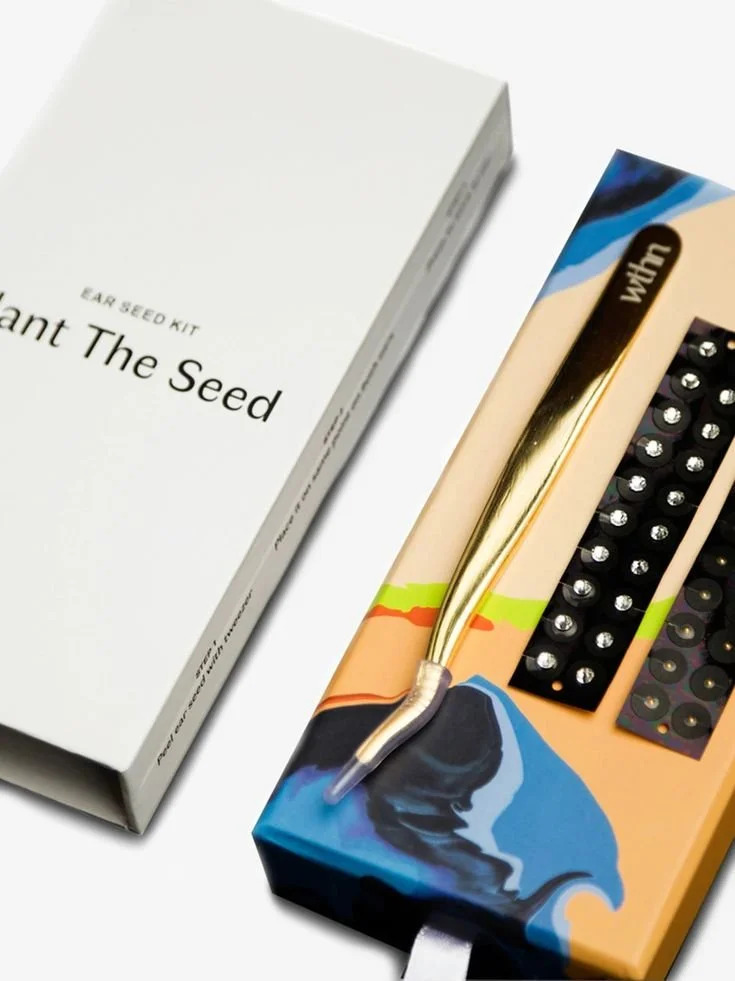
A few years ago, I caught wind of ear seeds and didn’t really think too much of it. Cut to a few weeks ago, late at night, deep in my phone, jaw clenched (obviously), anxiety fully activated, scrolling through content like it’s my job. Then suddenly, there they are again - the tiny little metallic dots affixed to someone’s ear. They have come full circle, but this time accompanied by before and after photos and the claim that Ear Seeds can de-puff your face, calm your nervous system, help your sleep, ease anxiety, and do just about everything except your taxes. Seriously, the list is so long.
Now, everyone knows I’m a pretty big wellness enthusiast, which is why Ear Seeds were vaguely familiar. That said, before you continue reading, be aware I am not a wellness expert, I am not a doctor, I am not an acupuncturist, and not anyone who should be giving medical advice in any capacity, which is why this post is entirely based on research I have done. So before you make any decisions, consult your own doctor.
Despite the disclaimer, I am someone who carries a concerning amount of tension in my jaw. So much so that they were worried about my jawbones at one point. So I guess you could say I was genuinely curious about anything that claims to take the edge off. So I did what I always do: go down the rabbit hole. I read everything I could find, and now I’m giving my honest, non-expert breakdown of what these little guys are, where they come from, what they actually might do, and whether they deserve the hype outside of your For You page.
What Are Ear Seeds?
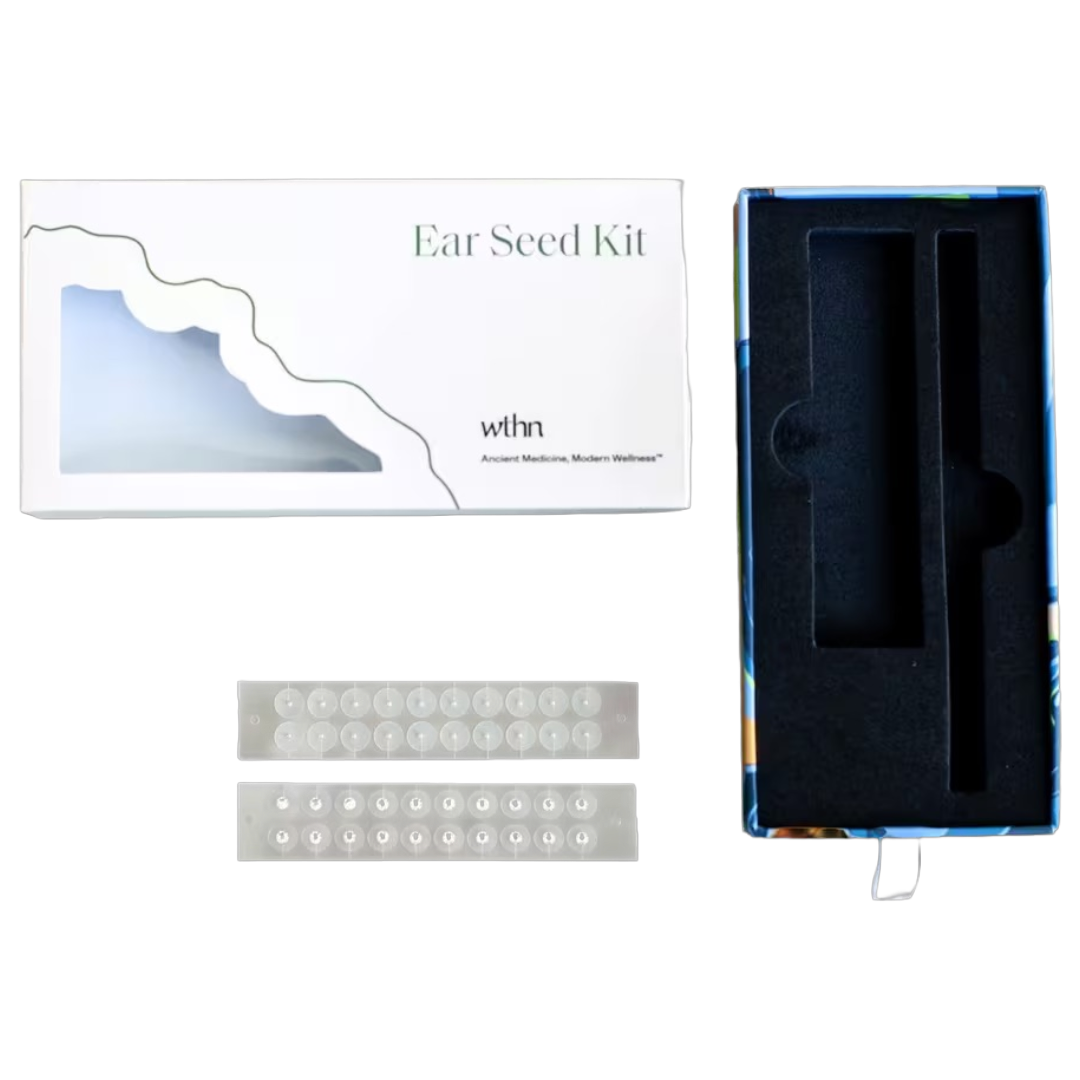
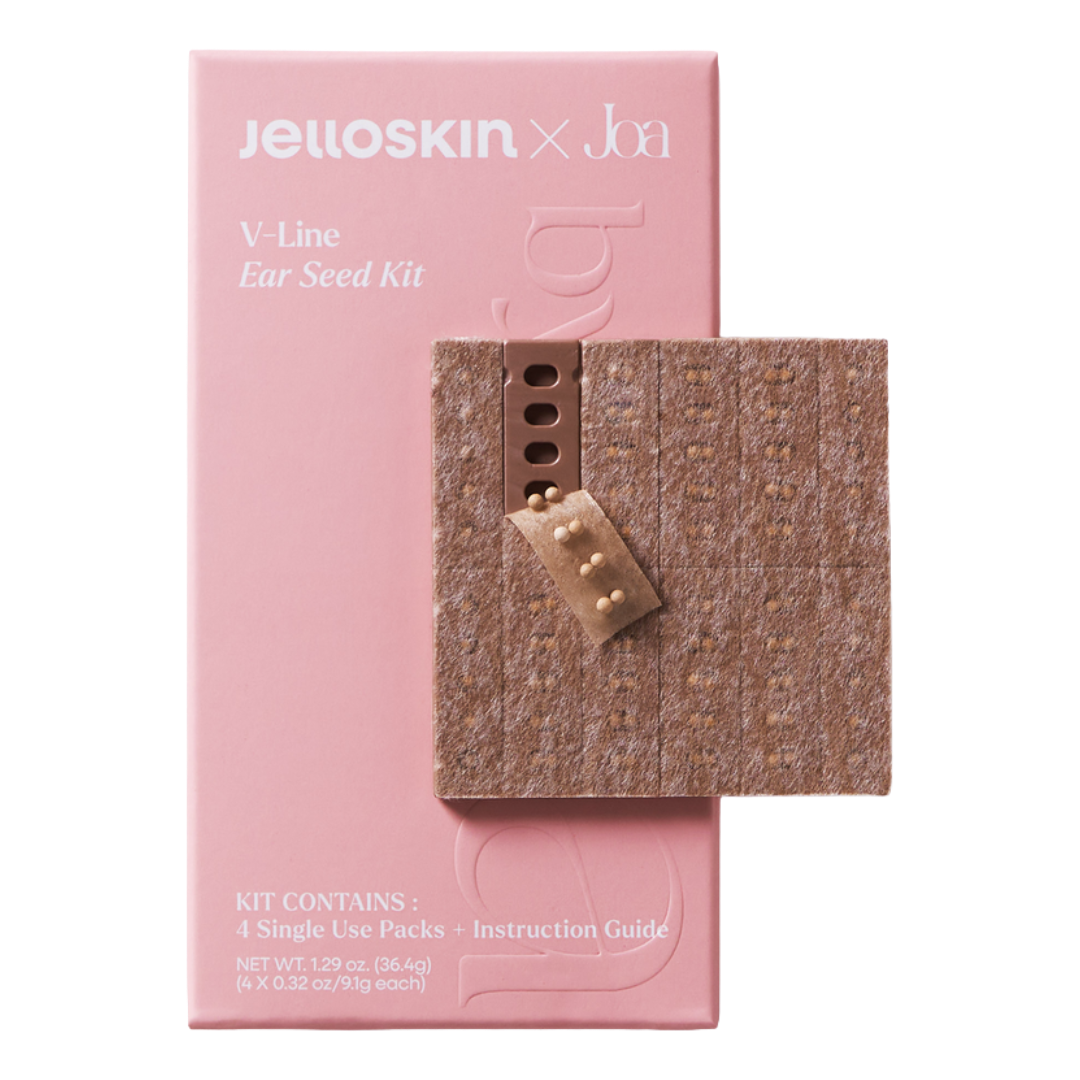
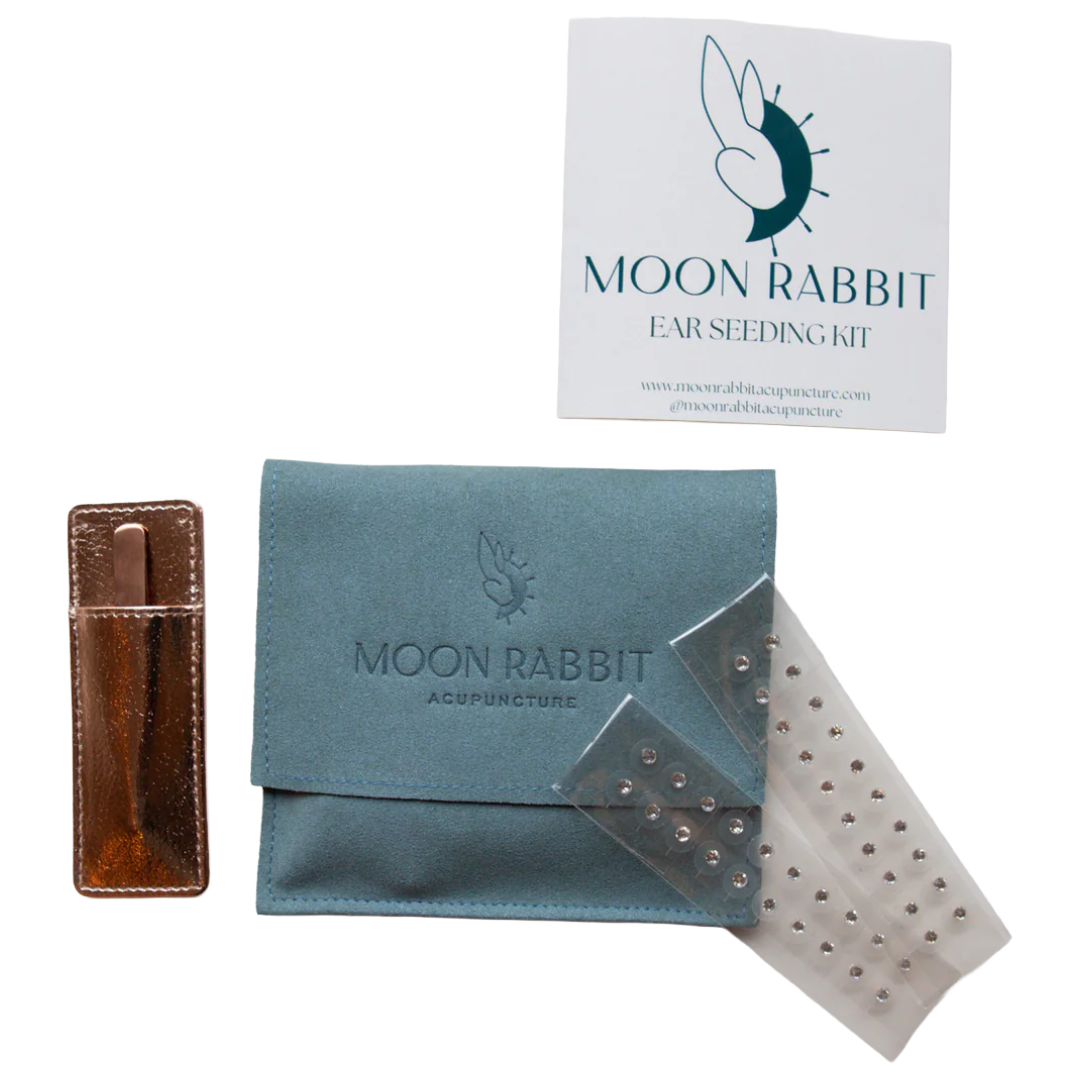
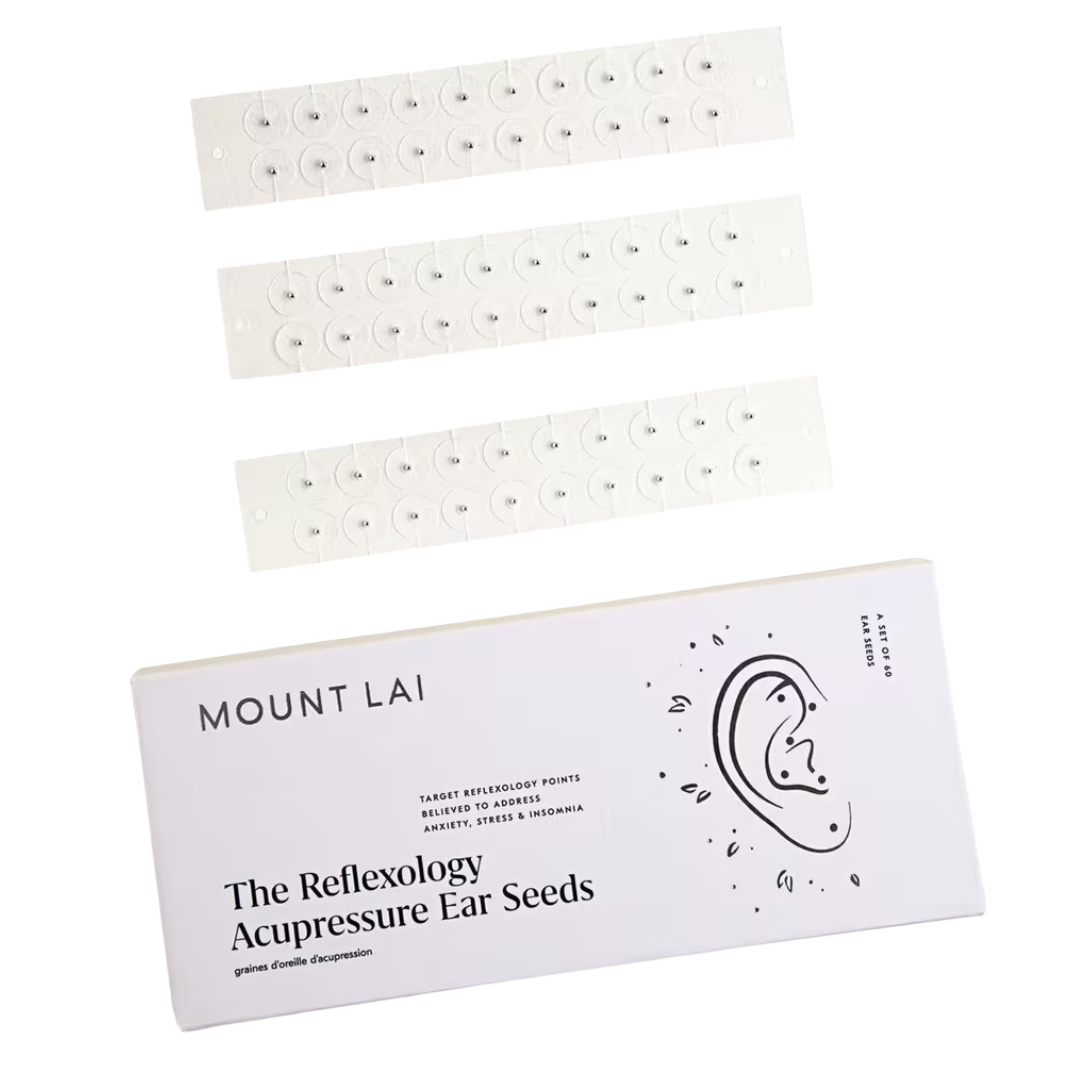
Ear Seeds are little pellets, balls, or magnets applied to specific pressure points on the outer ear using a small adhesive backing. They are like those tiny jewel stickers that used to come in makeup kits as kids, but with a purpose. They’re not pierced in, and they aren’t painful to apply. They are pressed into certain spots and left to just do their thing through continuous pressure. Seems like a simple concept, right? The history is where things get more interesting.
Ear Seeds aren’t a TikTok or social media invention. It actually has roots in traditional Chinese medicine and goes back thousands of years. The general idea is that the ear functions as a microsystem, a map of the human body, and where different zones on the outer ear correspond to specific organs, systems, and emotional states. In the 1950s, a French neurologist named Paul Nogier formalized the concept by mapping the shape of the ear as an inverted fetus, and what became known as auriculotherapy started to gain traction in Western medicine.
The name ‘ear seeds’ comes from the original practice where actual seeds from the Vaccaria plant were used to apply steady pressure to specific points without breaking the skin. It’s like acupuncture’s more approachable, needle-free cousin. Same philosophy, lower barrier to entry, and a lot easier to explain to others.
The Theories Behind How It Works
The history is interesting, but there are multiple theories of why ear seeding might work, each of them fascinating in its own way.
Polyvagal Theory: The theory suggests that the ear can speak directly to the nervous system and shift the body out of stress responses. A big deal for those who seem to live on edge and right in the middle of fight-or-flight constantly.
Embryological Growth: Ears form from multiple developmental layers during fetal growth, meaning it has deep neurological connections throughout life. Stimulation can influence the entire body, not just the ear itself.
Neurovascular and Autonomic Reflex Theory: Suggests the ear’s blood vessels and reflexes can send signals across body systems.
Meridians and Qi: Traditional East Asian medicine idea that working with the ear helps improve the flow and communication that keeps the body in balance.
Are all of these backed by robust clinical studies? To be honest, it didn’t seem like it. In fact, research seems to be growing but is still fairly limited. That doesn’t mean it’s not a worthy practice. What I appreciate is that the whole “why it might work” conversation is multi-layered and spans ancient wisdom and modern science.

What Can Ear Seeds Do - Realistically
This is the part everyone wants to know about, and this is where I have to be pretty real. Of course, I stopped to read about Ear Seeds because of these claims about face slimming, jawline sculpting, and de-puffing transformation content. It just sounded too good to be true, and of course, after looking into it, the dramatic before-and-afters circulating on social media are not a reliable measure of what the seeds actually do. In fact, experts are pretty clear about this. Changes in facial structure, fat distribution, muscle tone, and skin laxity can’t be altered by ear seeds. You need a legitimate plastic surgeon or an understanding of lighting, angles, and timing. Most of the time, those results are in conjunction with facial massages, so if someone is selling you a jawline transformation, be skeptical.
That said, there is a place for ear seeds in any wellness routine. The stress and nervous system connection seems to be the most real of all the benefits. When the body is calmer, cortisol levels drop, inflammation can be reduced, and fluid retention goes down. So technically, there is a mild de-puffing effect, as many point out. However, it’s more likely a downstream benefit of the body just chilling the f out. Certain ear points are also associated with hormonal balance and reducing inflammation, both of which have a very real impact on how skin looks and how bodies feel overall. Something great for people with hashimotos like myself.
For me, other than the calming and inflammation, the most compelling use case is the jaw and stress connection I mentioned earlier. I have chronic jaw tension, whether by choice or just because. From what I’ve read, the specific ear points tied to the nervous system and stress response can help with exactly that. Not as a cure. Not as a replacement for stress management. But as a supportive tool that can work quietly throughout the day. I’m open to it.
The Pressure Points
When it comes to ear seeds, placement matters. Each zone corresponds to different systems and goals. Here are some of the most commonly referenced points.
Shen Men: One of the most well-known calming points associated with calming the mind and regulating the nervous system.
Sympathetic Point: Tied to circulation and reducing inflammation.
Endocrine Point: Relates to hormonal balance.
Point Zero: The spot that brings the body back to homeostasis.
The Heart Point: Offers emotional support.
Kidney Point: Traditionally linked to adrenal function and inner quiet.
Lung Point: Associated with releasing tension and supporting fluid regulation.
For jaw clenching, stress, and overall ambient anxiety, Shen Men and the Sympathetic Point seem to be the ones most commonly flagged as good starting points. However, the experts cited in many of the articles I read recommend working with a practitioner if you have specific or complex symptoms, especially for placement.
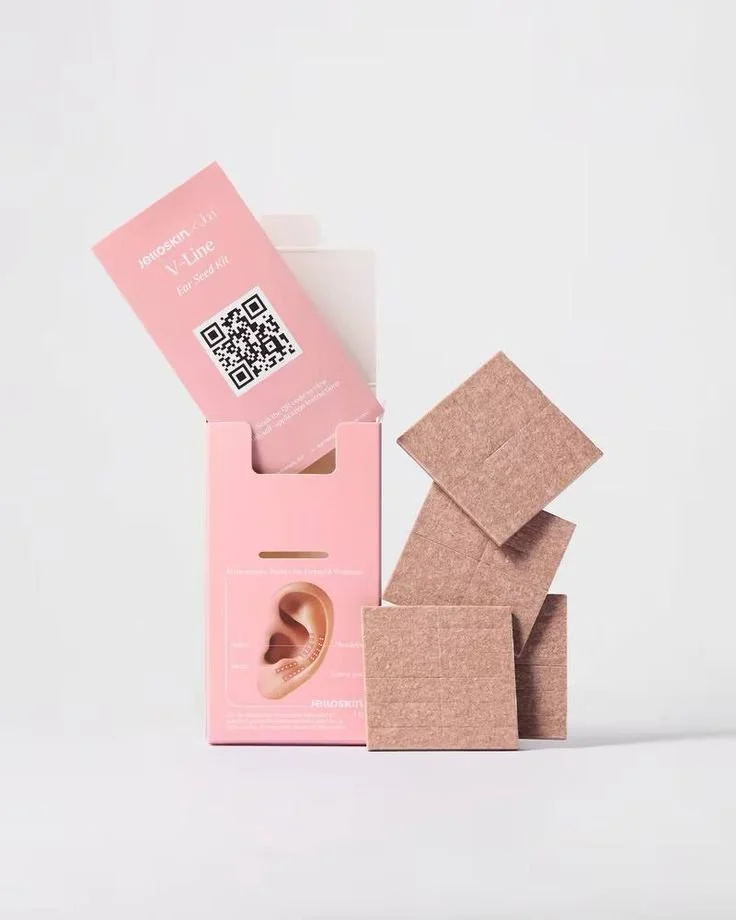
Can you do this at home?
One of the things I love about ear seeds is how genuinely accessible they are. Unlike acupuncture, where you need a licensed practitioner and well needles into the skin, ear seeds work passively over time. You apply them, go about your life, and just let them do their thing. You can also press on them intentionally throughout the day for an added boost. At-home kits have come a long way and are now designed with clear point charts and highly detailed instructions. Still, placement accuracy does matter. A good diagram or a practitioner consultation to get started will make a meaningful difference in the results versus just sticking them on and hoping for the best.
In terms of wearing them, practitioners recommend a few days at a time in general, with removal and a short break after three to five days. Any longer and the point can start to become desensitized, ruining the entire purpose. Of course, they should be removed early with any signs of irritation. There are also real medical considerations to be aware of. People with sensitive skin, metal allergies, and other issues should be cautious about using ear seeds. Plus, you can’t forget proper hygiene. Without proper cleaning, in rare cases, infection can occur.
What to look for in a kit
Not all kits are created equal, and in this case, quality matters. When shopping, look for sterile and hypoallergenic seeds, kits with clear point charts, and simple instructions that make the process straightforward. Ideally, there will be a medical-grade adhesive that is gentle on the skin. AVOID anything or any brand making miraculous or ‘guaranteed’ claims. Remember, these are a big red flag in wellness. Skip any kids with cheap materials and harsh adhesives. A skin reaction is not the vibe.
My Honest Take
Here’s where I landed after all this research: ear seeds are not a magic wand, and anyone selling them as one is just really oversimplifying in a way that discredits an interesting, ancient practice. They aren’t going to restructure your face or completely eliminate anxiety, but as one tool in a larger wellness practice? They have real merit.
For me, there are a few reasons I want to give them a shot, even if the jaw connection is what drew me in to begin with. The idea is to apply something non-invasive, low-commitment, and get help with my nervous system. That’s worth experimenting with. And like most other things in wellness, they work better when part of a broader picture, paired with hydration, movement, sleep, and everything else holding the foundation together. Consistency matters. This isn’t a one-and-done situation. Practitioners recommend consistent, regular use over time and note that is where the meaningful results start to show up.
As always, I’m not a doctor, not a practitioner, and this is just a wellness enthusiast’s deep dive into something that has caught my curiosity multiple times now. If you’re dealing with a complex issue or anything chronic, loop in someone who is actually licensed to assist you. But if you want to get a new addition to a wellness toolkit? This might be worth a try. Now, if you’ll excuse me, I have some ear seeds to order.
shop ear seeds