INTERIOR WISDOM FROM MILAN DESIGN WEEK
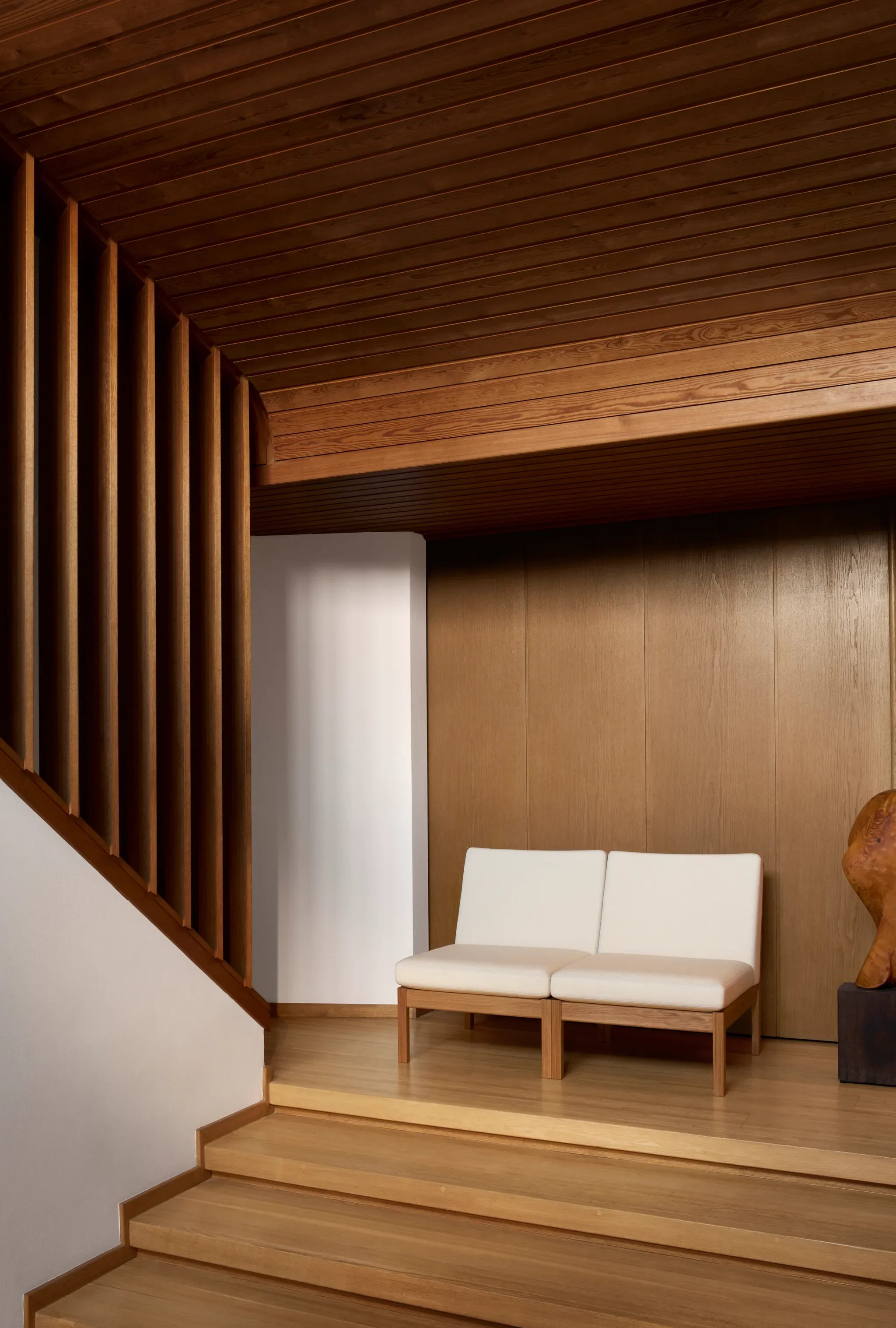
CH280 modular sofa by Hans J. Wegner
Every April, Milan stops being just a city and becomes something closer to a collective mood board. The kind you don’t plan, but the kind that happens because you’re paying attention. I’ve been following Salone del Mobile long enough to know it’s one of those rare events that deserves the hype. This year’s edition did not disappoint. Below you’ll find why this event matters, a little context if you’re new here, and the six trends I think are genuinely worth talking about (and living with).
Why I love Milan Design Week
It’s the only design event that escapes the design bubble. Most industry weeks stay within their lane - architects talk to architects, furniture brands talk to furniture buyers, and the rest of us miss it entirely. Milan doesn’t work that way. Salone del Mobile has this specific ability to pull fashion houses, artists, cult beauty brands, and legacy furniture makers into the same conversation, and somehow it’s all cohesive. I love it because it’s where you see what the creatives are actually thinking. Not trend reports, not forecasts, but real installations, real objects, and real collaborations. The kind that tells you something about the cultural moment we are living in. It’s also just genuinely exciting. The collabs that come out of it every year are some of the world’s most unexpected and interesting work happening anywhere in the design world.
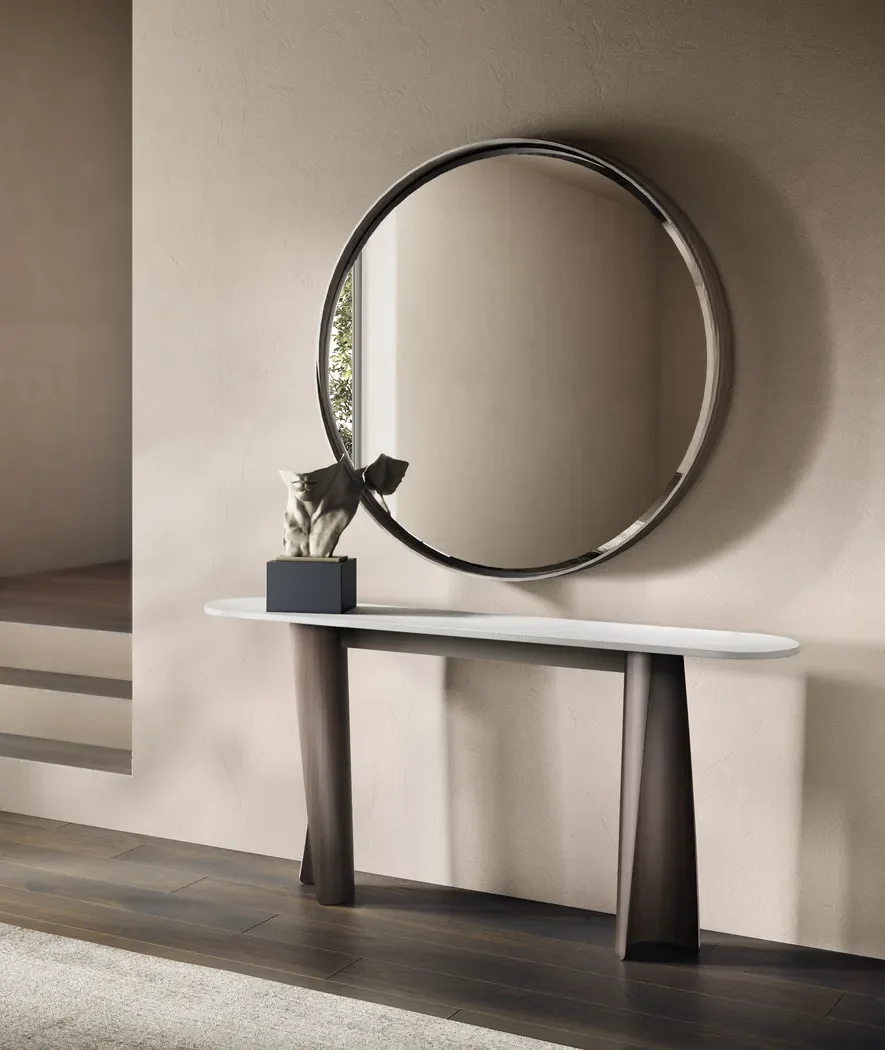
Cantori Ulisse console table by Maurizio Manzoni
Why Milan Design Week Matters
It’s the largest furniture and design fair on the planet, and it sets the tone for everything that will trickle into showrooms, stores, and eventually your living room over the next two to three years. But what makes it more than a trade show is the Fuorisalone - the off-site programming scattered across the city’s neighborhoods, palaces, warehouses, and courtyards. That’s where the fashion houses show up, where the art installations live, where the unexpected collaborations get unveiled. Together, the fair and the Fuorisalone create something that functions less like a convention and more like a city-wide exhibition that anyone can walk through. For people who care about interiors - or just about the visual culture we’re all swimming in - there’s nothing like it.
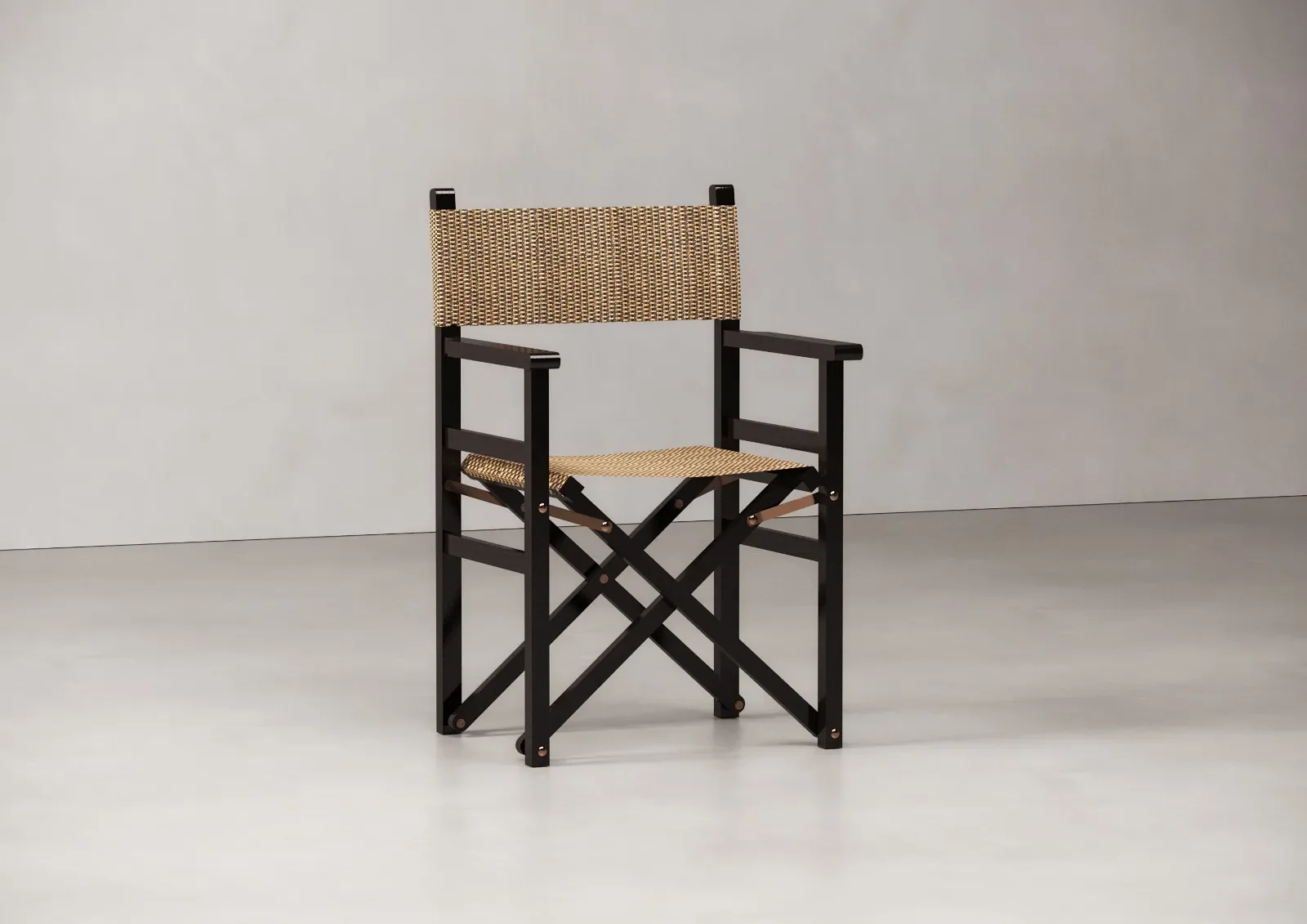
Piastri 1961 chair
A LIL’ Background
Salone del Mobile launched in Milan in 1961 as a way to promote Italian furniture exports, but it has grown into an annual event that draws over 300,000 visitors from more than 165 countries. It runs alongside the Fuorisalone, a series of independent events across the city from the historic Brera design district to more industrial spaces in the Ventura neighborhood. Fashion houses like Chanel, Gucci, and Louis Vuitton have gotten into the game, showing their homeware collections alongside interior designers and contemporary studios. That crossover in particular is what makes Milan Design Week feel like more than an industry event. It’s a place where fashion, art, and interiors all decide together what comes next for us.
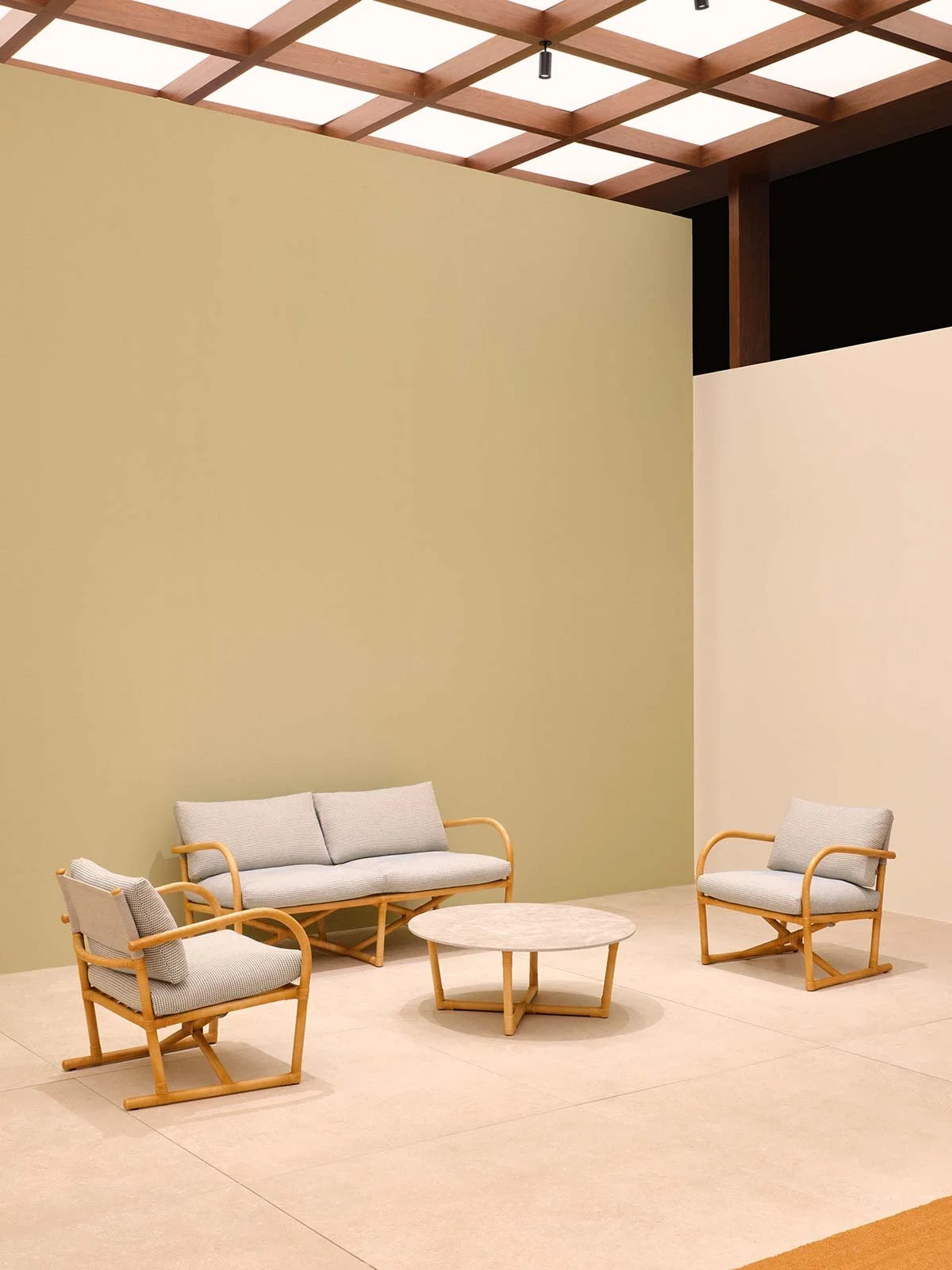
B&B Italia by Vincent Van Duysen
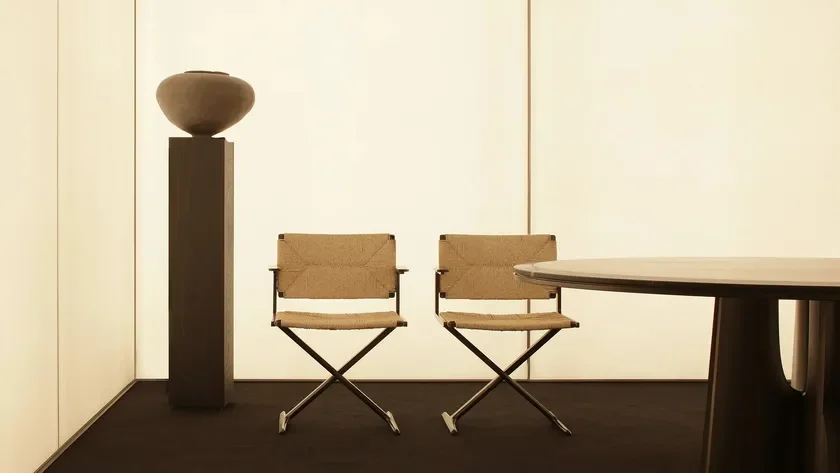
Poliform Auguste dining chairs
The Outdoors Moves Indoors
This one is my personal favorite as someone whose apartment has gotten a more Mediterranean indoor/outdoor vibe over the past couple of years. Rattan, cane, wicker, and bamboo are being welcomed inside rather than being exclusively stuck on the back porch. They are being handled with the same seriousness as marble or walnut. Minotti introduced the Elas family in wicker, and B&B Italia wove cork into a reclining garden silhouette. Gervasoni reissued an armchair by Vico Magistretti that uses vertical rhythm as both structure and aesthetic, and Poliform reimagined the director’s chair in metal and straw rope. Just look at those chairs, ack.
Bamboo showed up in lighting, too. It was sliced into thin strips for soft arched lamps or woven into ceramic surfaces by Neri&Hu for Mutina. Of course, there was the Dior installation where Thai artists built a scenography entirely from rattan and bamboo to evoke the gardens of Monsieur Dior’s childhood home. That’s the moment being captured by the spirit of the whole trend: these aren’t just outdoor materials being used indoors as a novelty. They are being fully claimed and belong there now. I am here for it.
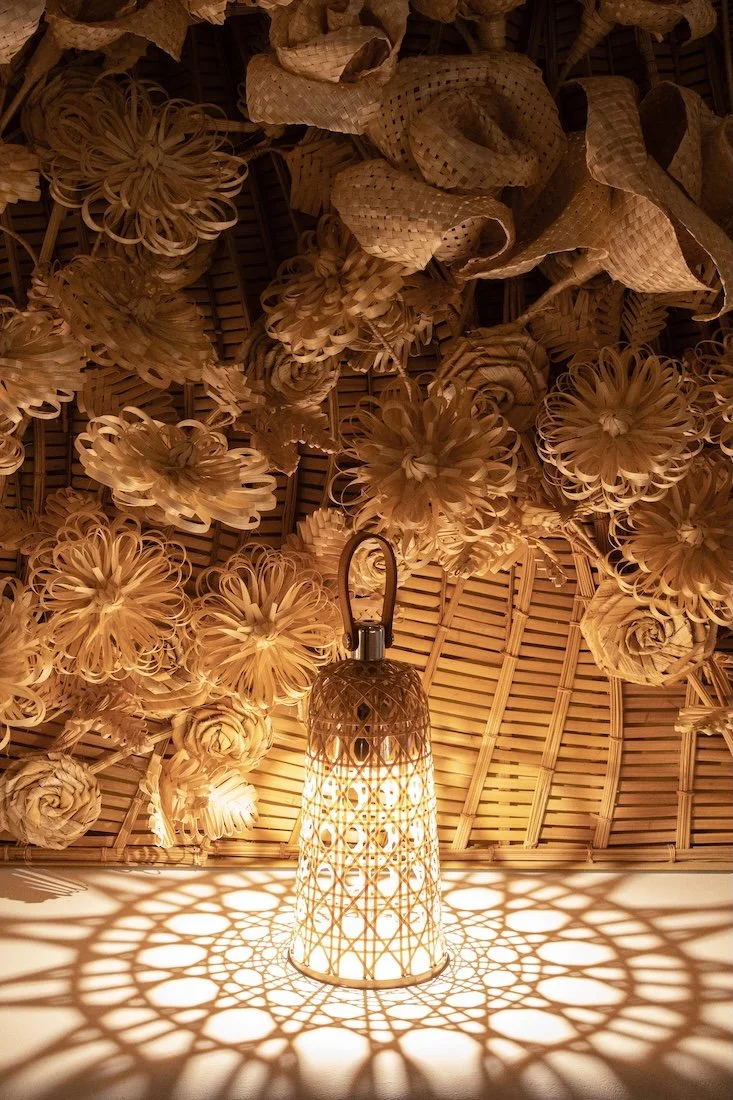
Dior Maison lamp
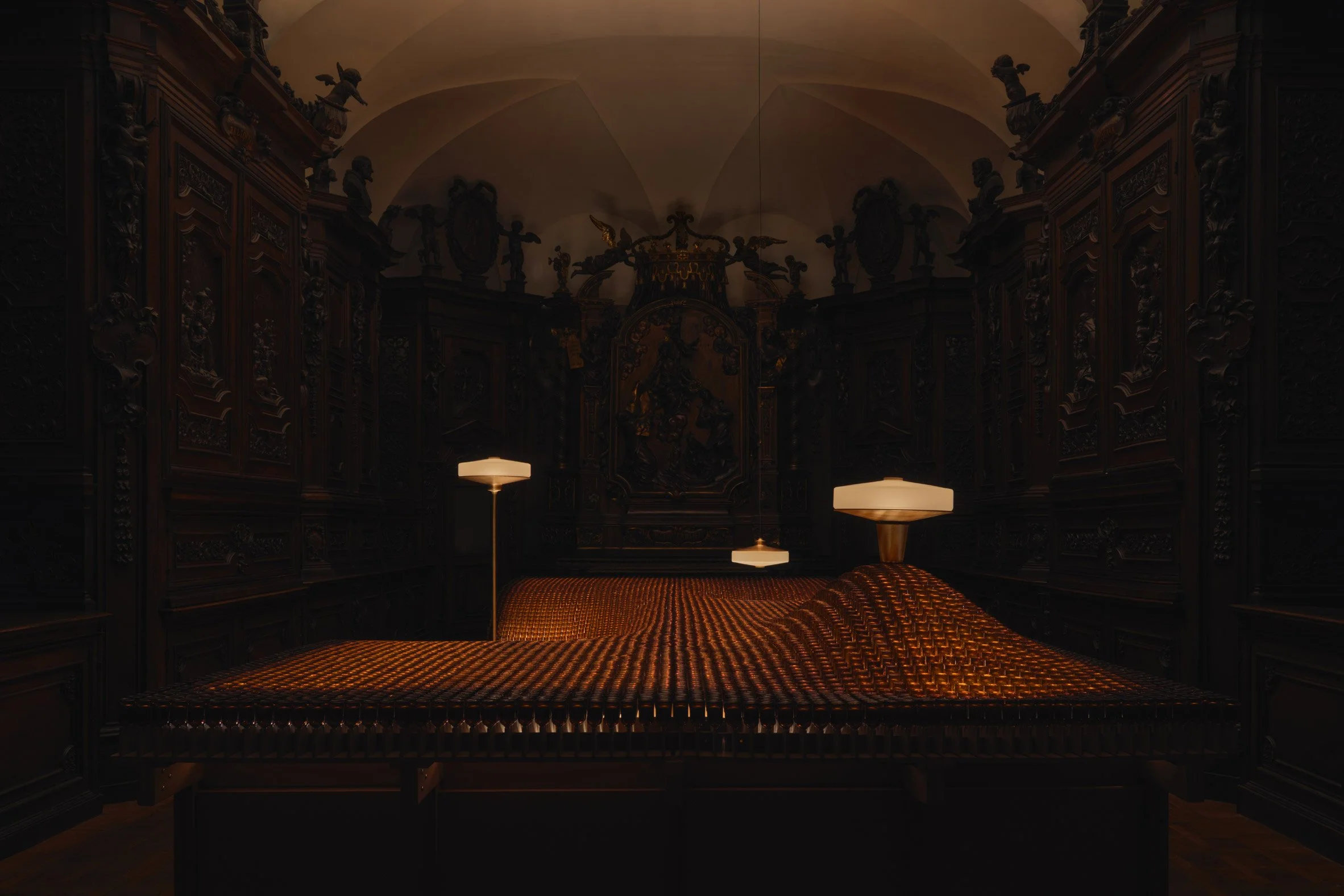
Aesop Aposē lighting
Artful Lamps
2026 is the year lighting stops being purely functional and starts being the main event. The most talked-about lamp at Milan Design Week? Aesop, yes, the skincare brand, launched its first-ever lighting collection. Aposē was created in collaboration with Flos, and the pieces are handcrafted from glass and brass in Italy and Germany. The lamps are limited to 500 sets, and they are based on the shape of the brand’s iconic hand balm tube. Crazy, right? It’s the type of object that somehow nails the intersection of product and sculpture while also hinting at its iconic origins for its hardcore fans.
Elsewhere, Andrea Claire Studio turned shade forms into a vertical architectural installation, and the second most talked-about lamp of the week came from Dior. Dior Maison debuted these new bell-shaped lamps made with Murano glass and woven bamboo that leave a spectacular pattern as light moves through the different materials. Bottega Veneta unveiled a series of limited edition abstract sculpture pieces wrapped in thick leather by Kwangho Lee that were honestly gorgeous. Talk about blurring the line between lamp and art entirely. Luckily, there was also something for the rest of us looking for a more accessible entry point: Kelly Wearstler’s lighting collaboration with H&M Home will drop in September, and I dare you not to want one instantly. I know I do.
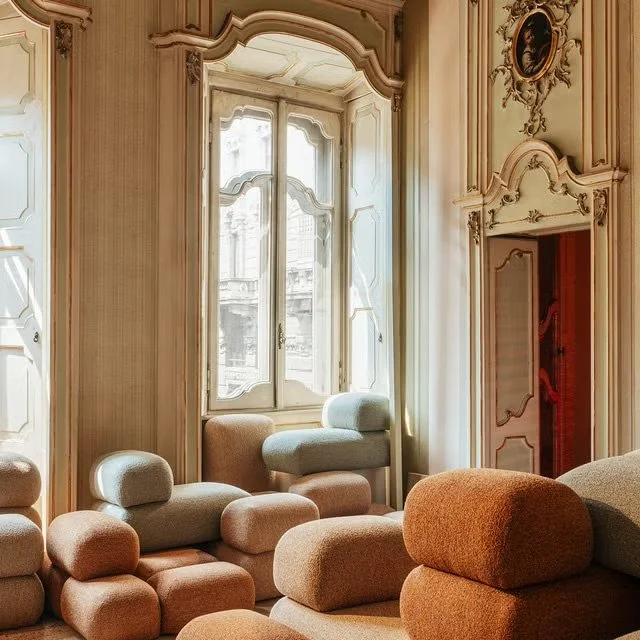
Kelly Wearstler for H&M Home
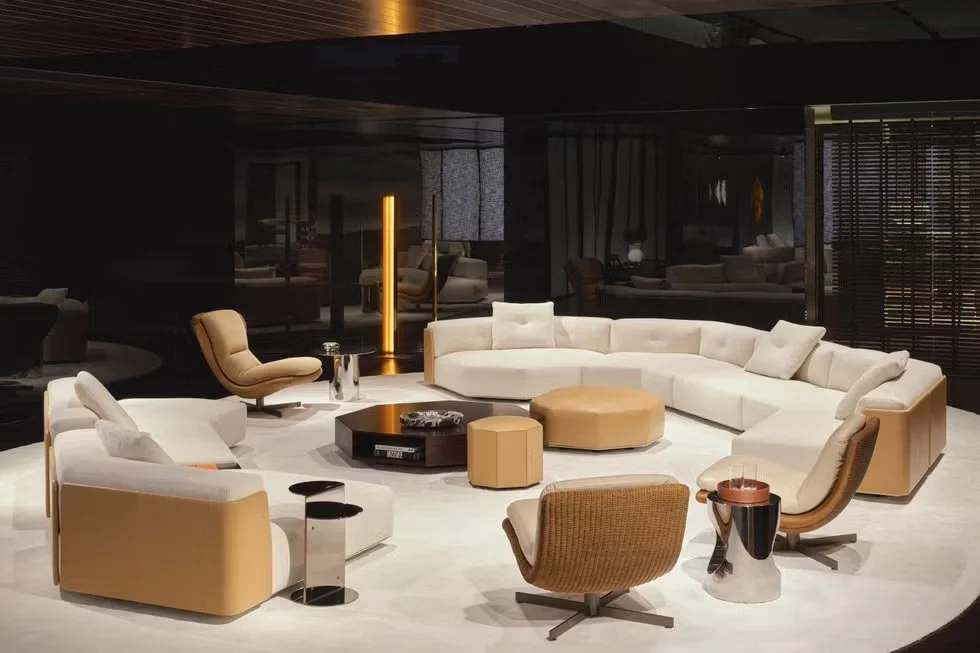
Minotti modular furniture
Puzzle Piece Furniture
You know those monolithic statement sofas everyone has? Well, they are losing ground to something more interesting: furniture as composition. Minotti led the conversation with its modular seating built from faceted components like crisp-edged ottomans, wedge inserts, and geometric forms that can be arranged and rearranged depending on what you want a room to look and feel. The pieces were still plush and clearly luxurious, but the logic behind them isn’t just “big impressive sofa.” It’s more choreography that lets you build different configurations based on moods, occasions, and uses of the same space. The luxury isn’t in the price tag or the silhouette, but rather in the adaptability. It’s furniture that actually responds to how you live in a room rather than trying to organize a room around it.
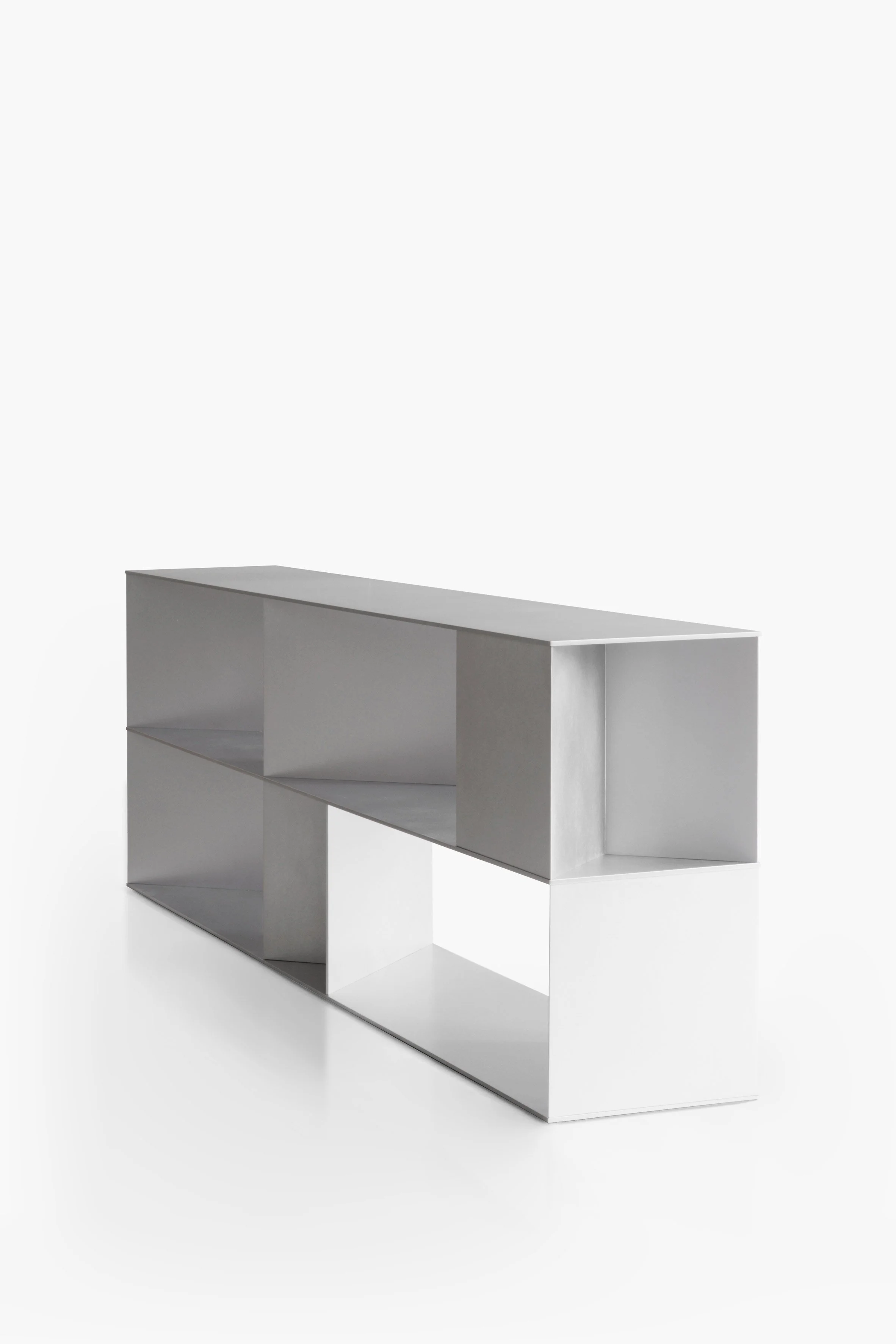
Porro’s Ryo Bookcase
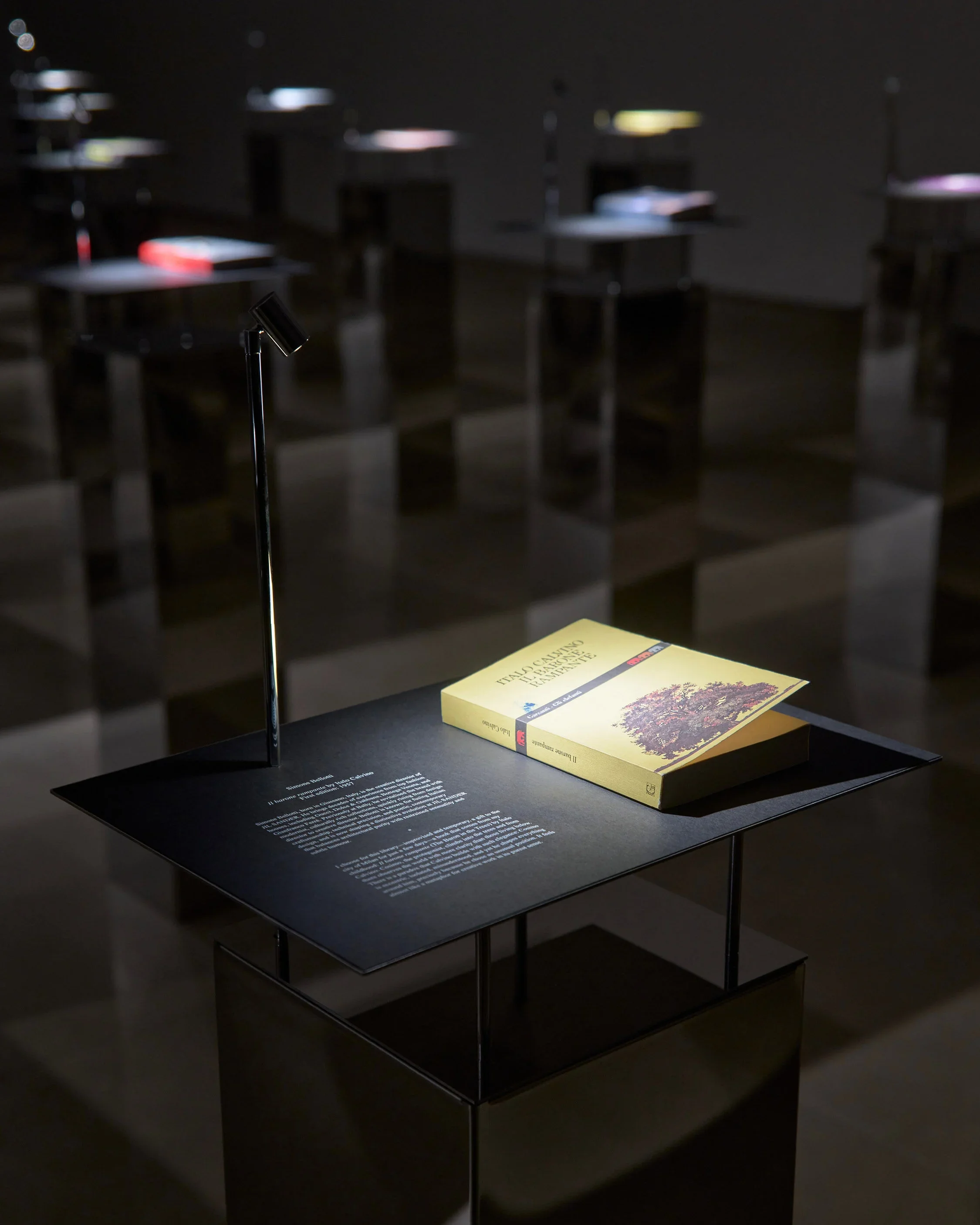
Jil Sander’s Reference Library
Books, Books, and More Books
As the kindergartner with the longest bookworm, I was completely enamored with Jil Sander’s installation, which became the most radical statement at Milan Design Week. Jil Sander partnered with the Copenhagen-based magazine Apartamento to create the Reference Library, a carefully constructed space where 60 writers, directors, designers, and thinkers each contributed a book that had shaped them. We’re talking the likes of Sofia Coppola, Celine Song, and journalist Mona Chalabi sharing books important to them? Yes, please. The volumes sat on chrome lecterns under warm lighting, and each visitor was given white gloves before they could even touch a single page. It became one of the most anticipated events of the week.
On the furniture side, we’re going to need somewhere to store all our literary gems, so there was no shortage of units ready for the taking. USM’s Haller system, Porro’s sculptural Ryo bookcase made of folded aluminium by Nao Tamura, and Lago’s updated Air series all made the argument that whatever you put on display and what you choose to keep should be just as expressive as anything else in the room.
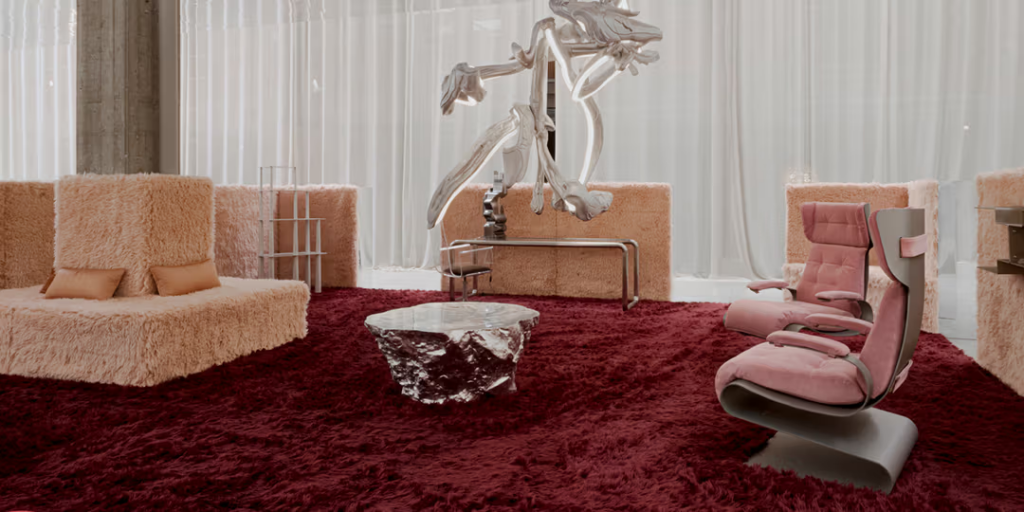
Silver Lining installation by Nilufar Gallery
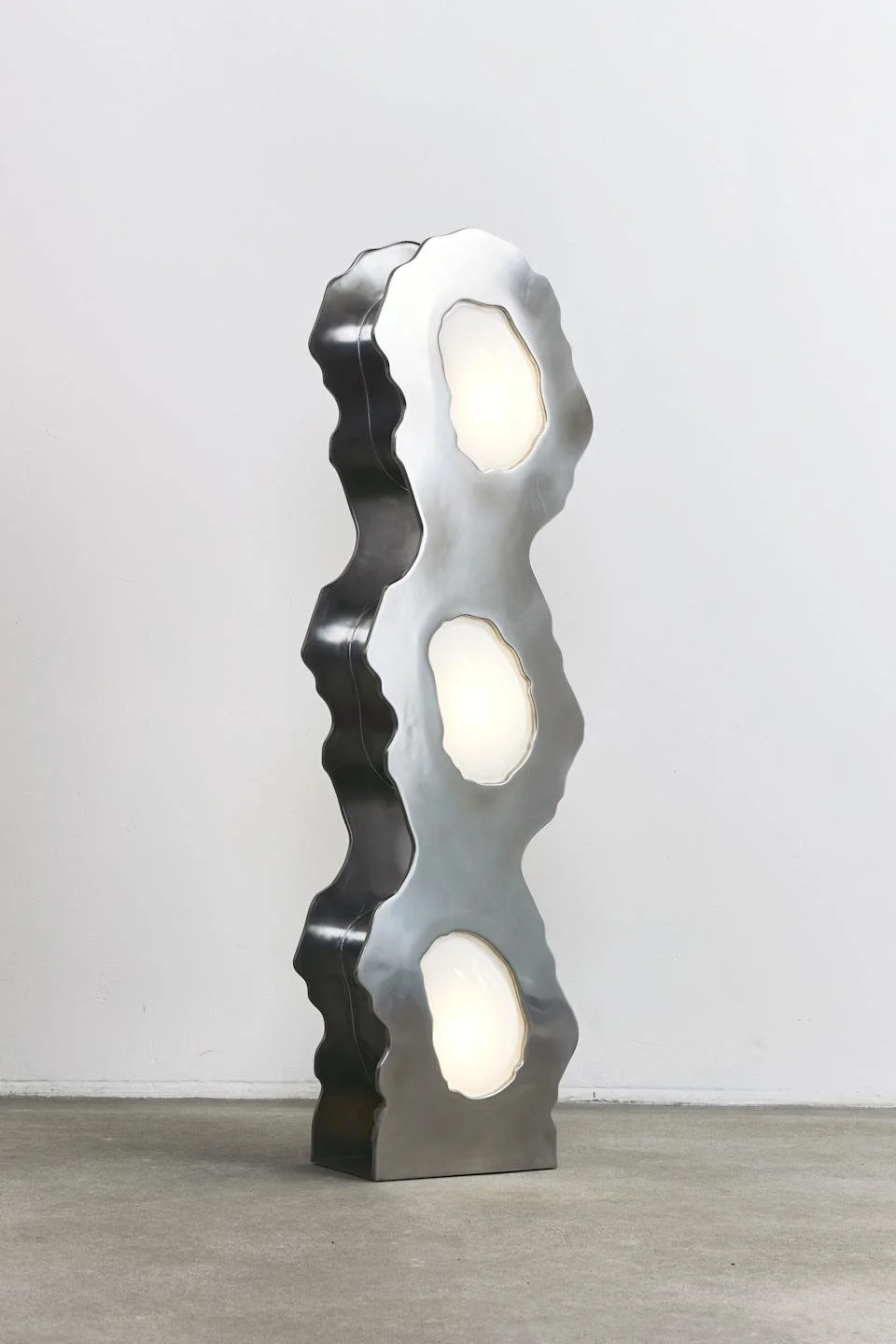
Furn Object Glimpse Floor Lamp
Soft Industrialism
Those two words don’t really feel like they should go together. I know. But metal has been having a moment, and it’s not tired yet. We just keep changing things up. This year at Salone, that was the approach. The hard-industrial we are used to is giving way to something more sculptural and playful - metal that bends towards softness rather than leaning into its coldness. Enne paired cool metal forms with deep bouclé in the Lien sofa. Arflex put chrome next to curly sheepskin in the Botolo chairs, which somehow just works. The Lantern Stack lighting fixture at the Nilufar Depot exhibition brought metal and ivory fiberglass into an object that felt more like jewelry than hardware. What’s the through line here? Raw materials can be and are being handled with a lighter touch. Industrial can have more appeal and doesn’t have to be cold. It’s not a small shift, but it’s one I find fascinating.
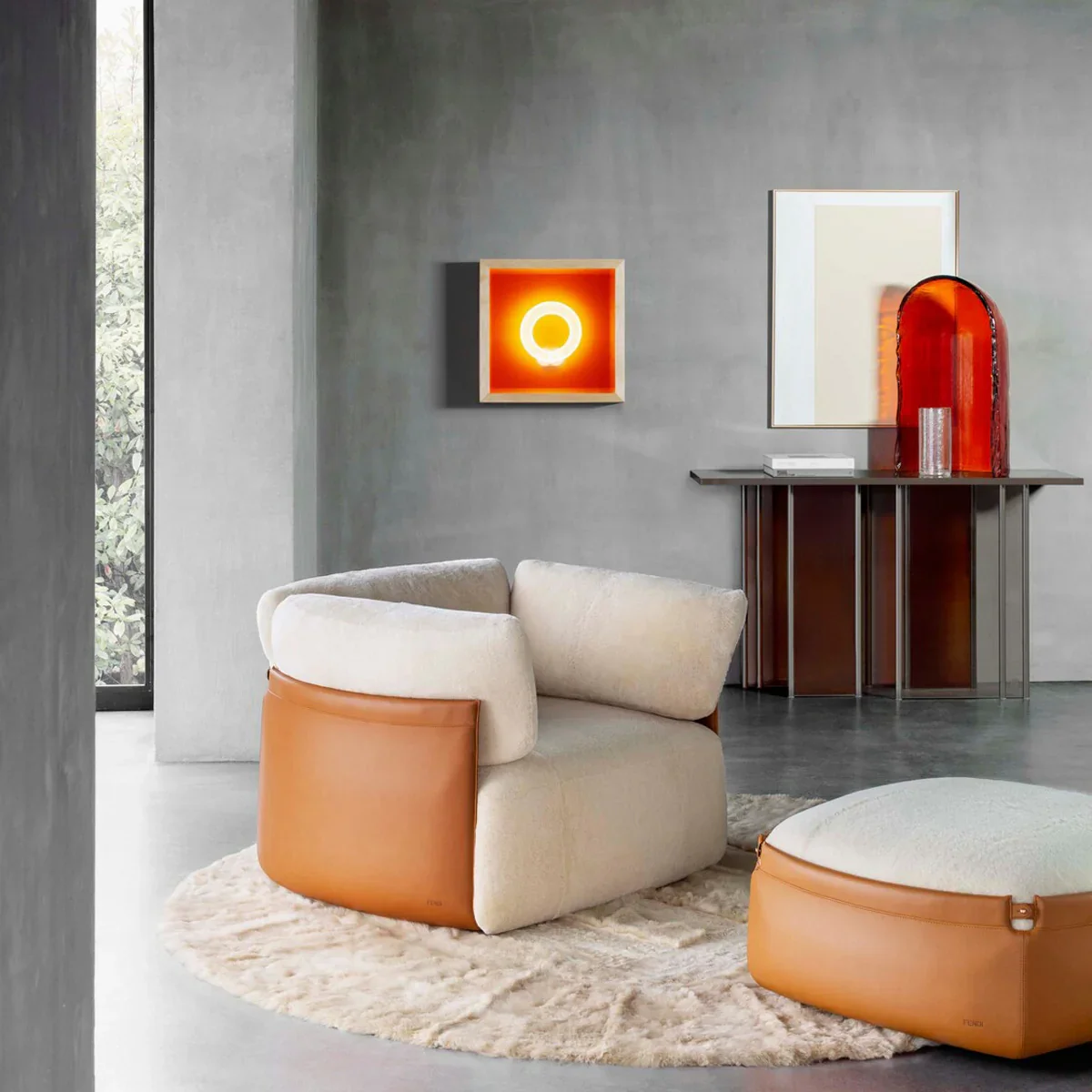
Fendi Casa’s Peekachill chair
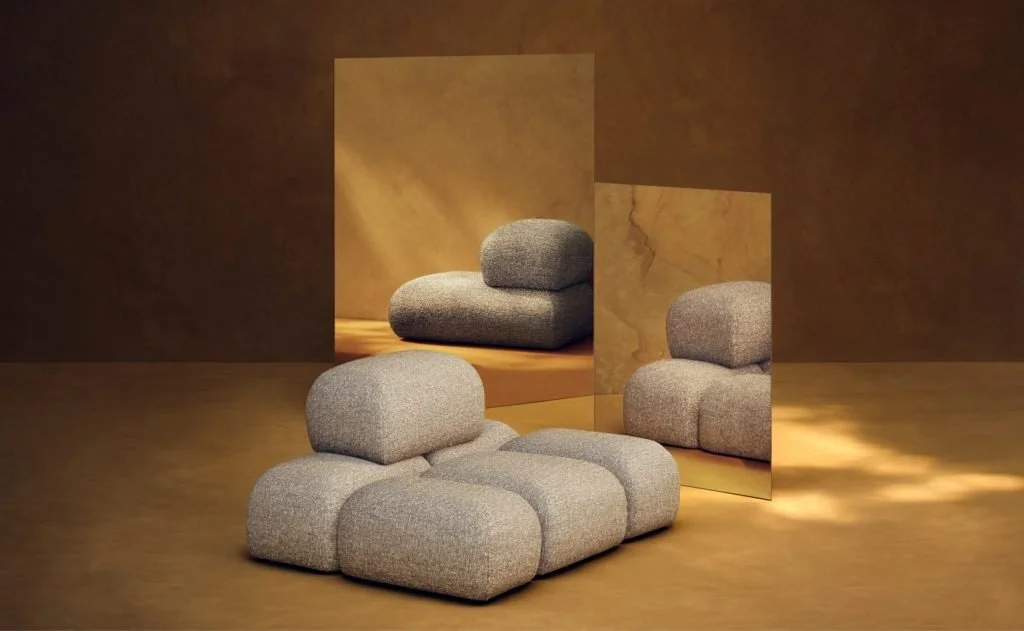
Kelly Wearstler for H&M Home
Cocoon Seating
I really don’t love the term ‘cocoon seating,’ however, it really does fit this trend, so I can’t complain too much. There’s a very specific kind of comfort this trend is after. It’s not just soft but fully enveloping. The kind of sofa or chair you sit down in and immediately makes you feel less overwhelmed about everything. Faye Toogood and Tacchini’s Butter sofa system was the defining piece: deep, generous, and the type of seating that makes other furniture look uptight. Fendi Casa’s new Peekachill armchair (I love this name) is a sculptural leather shell that houses insane cushioning and became one of the most photographed objects of the week. Studio Ashby’s Speak Back chairs continued with the same design thesis. Whether this is a reaction to what’s happening in the world or just great design meeting the moment, I don’t need to speculate. The collective instinct toward softness is clearly something all of us need right now and not just comfort for comfort’s sake. A lot of these pieces looked like a pain in the ass to get up from, but I guess that’s the point. It’s furniture forcing you to relax.
Where this all lands
2026 Salone told a pretty coherent story: we want our homes to feel layered and genuinely comfortable, not in a trend-chasing way, but in a way that reflects the real way we want to live right now. Sculpture isn’t just decoration, warmth isn’t just added with sentimental pieces, and materials have history. Furniture earns its place in our homes and fits our lives. That’s not a bad set of principles for a room or anything else, really.