LIVING IN GLASS: THE ARCHITECTURE THAT REFUSES TO HIDE
We all know the famous antidote that is often misattributed to many wise people, which goes something like: people who live in glass houses shouldn’t throw stones. But honestly, the people living in glass houses are too busy being obsessed with their interiors to bother throwing stones at anyone. And frankly, I don’t blame them.
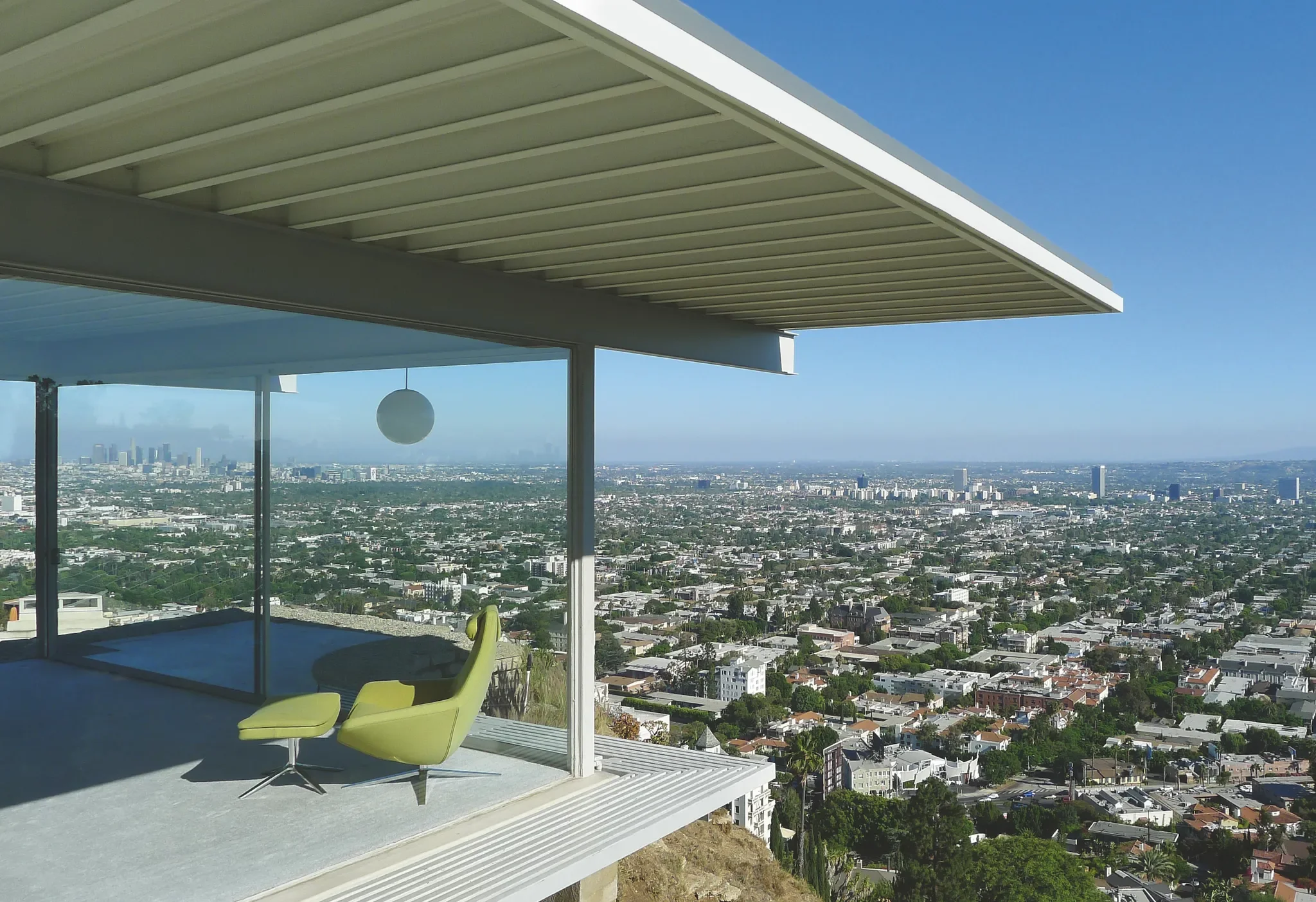
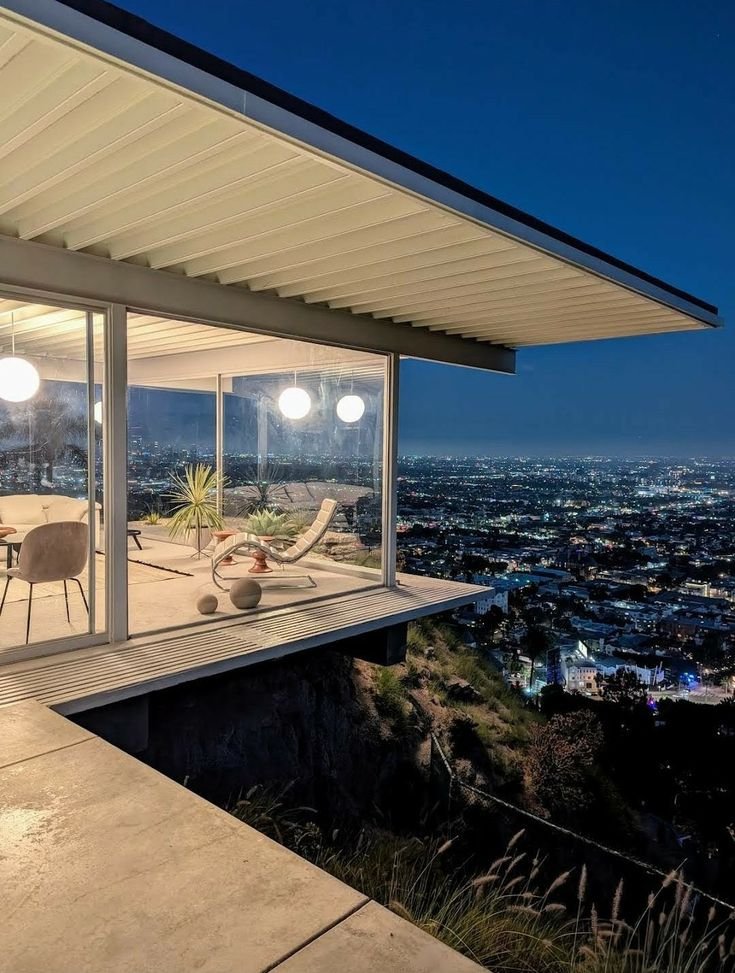
Glass houses have been living rent-free in my head for years, and part of that is because of the Stahl House in Los Angeles. It’s just one of my favorite landmarks/homes/pieces of architecture. If you’ve ever seen a photo of it perched above the city at night, glowing glass and steel cantilevered into the Hollywood Hills with the entire sprawl of LA laid out below it, you definitely get it. It’s one of those images, no matter how many times you see it, that stops you completely. It made me realize that a house can be so much more than a house. It can be a statement, a philosophy, and even a love letter to light and landscape.
So consider this my deep dive into the glass house obsession. Because once you start looking at them, it’s really hard to stop. They show up in the most fascinating places and forms, from pre-war Paris to minimalist Japan to the Hamptons.
Panov-Scott
The one that started it all:
Stahl House, Los Angeles
Designed by Pierre Koenig and completed in 1960, Case Study House #22 (better known as the Stahl House) is hands down the most photographed house in Los Angeles history. The images of it suspended over the city, especially at night, are practically iconic at this point. It’s glass, steel, and a ton of nerve, just hanging over a cliff in the Hollywood Hills like it’s daring gravity to try something.
What makes the house extraordinary isn’t just the view. It’s the audacity. The whole concept of the Case Study House Program (commissioned by Arts & Architecture magazine in the 1940s and 50s) was to explore what modern American living could look like using industrial materials and open floor plans. Koenig took the idea and went right off the edge of a cliff. Literally.
The Stahl House is why I find glass houses so compelling. They demand you become one with your surroundings. There is genuinely nowhere to hide. Not from the landscape, not from the light, and certainly not from yourself. Every room is a conversation with the outside world. It’s just a level of design that doesn’t exist in a traditional home.
Mark Lyon
The Original Rebel: Maison de Verre, Paris
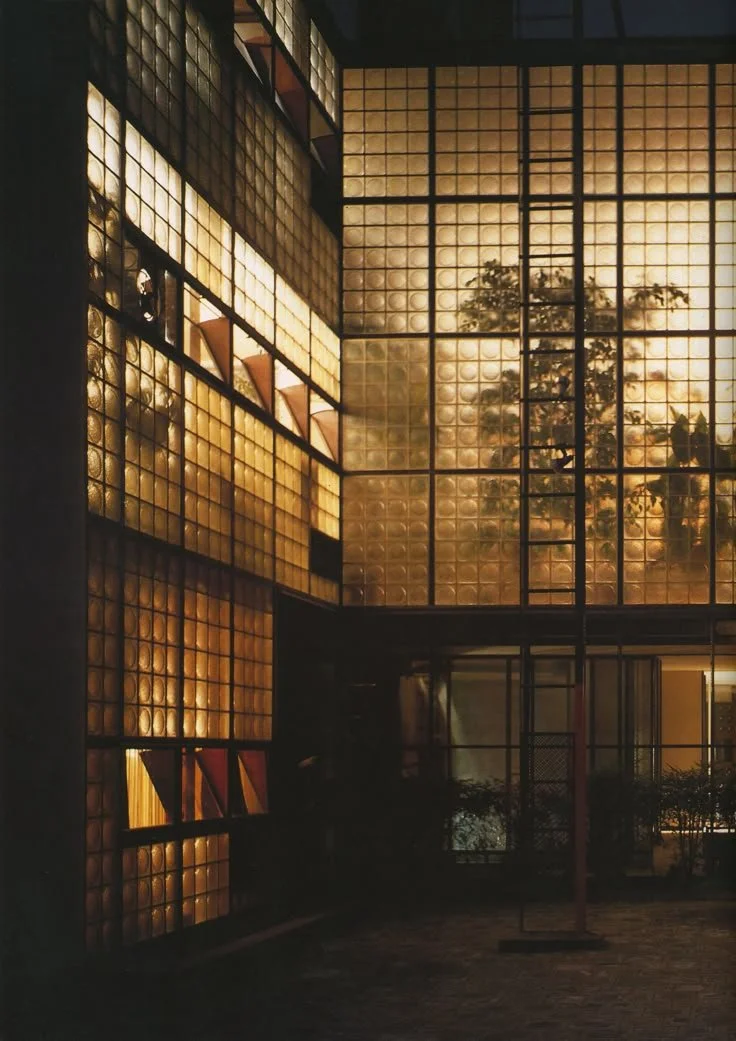
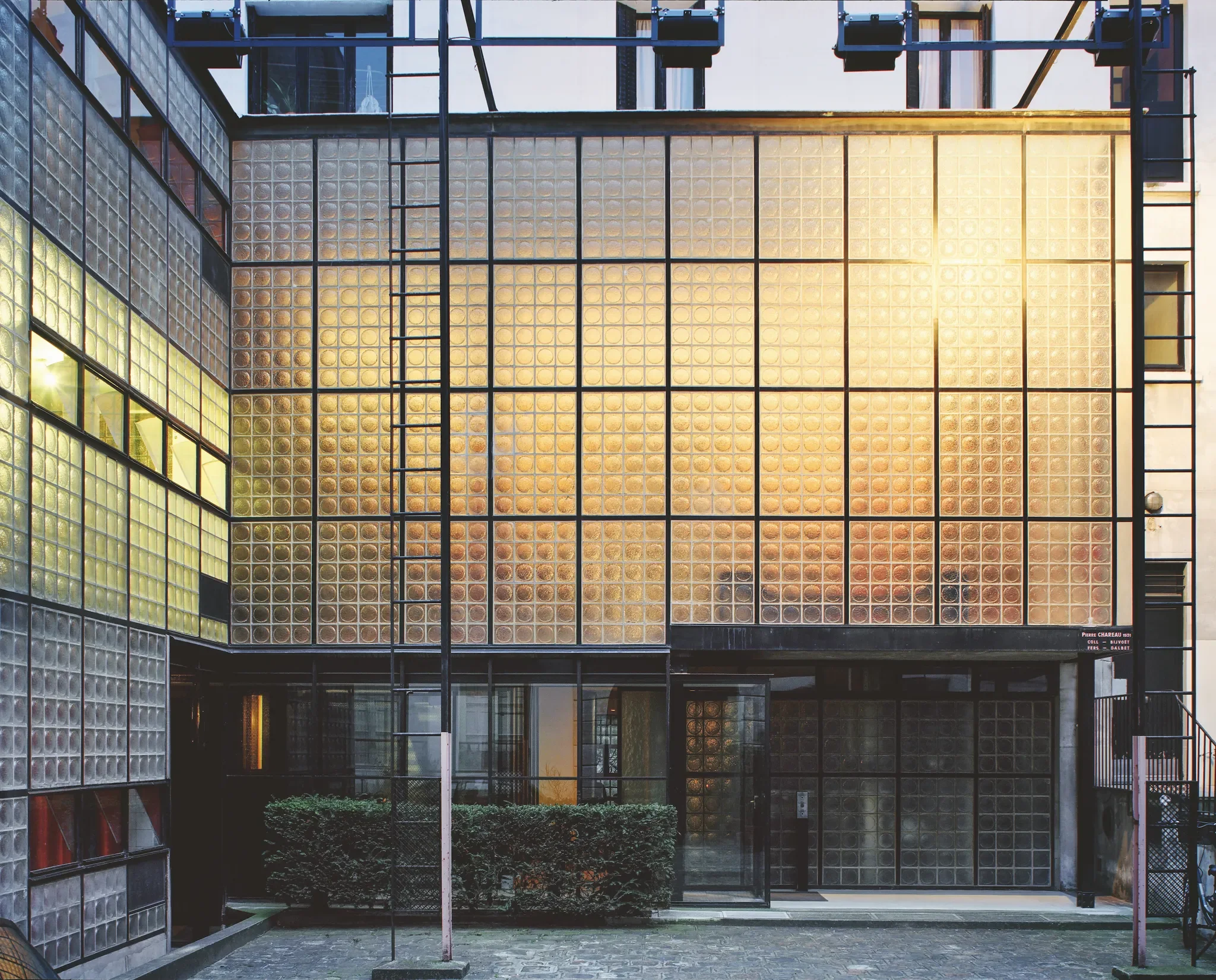
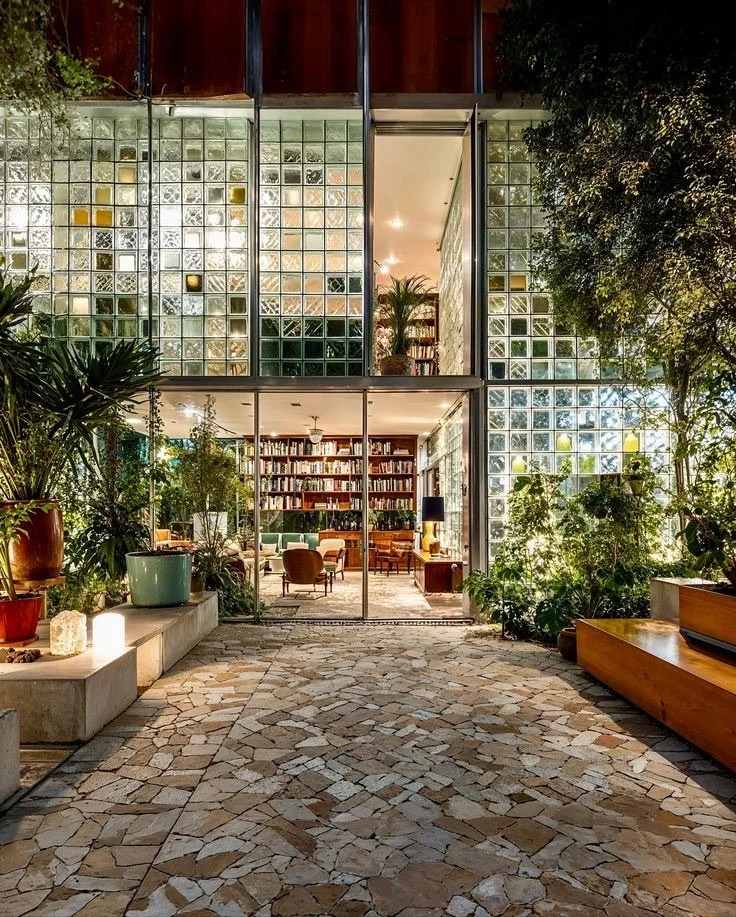
Before glass houses became a modern architecture fantasy, there was Maison de Verre. A building that was doing things that still feel radical even today. Built between 1928 and 1932 by Pierre Chareau and Bernard Bijvoet in the 7th arrondissement of Paris, it translates to “The Glass House.” The facade is an extraordinary grid of glass blocks set in black steel. It’s luminous, industrial, and completely unlike anything else on its cobblestone street.
What I love about it is that it didn’t come from a place of wanting to show off. It was designed as part home and part medical practice, and Chareau was obsessed with solving real-life problems in beautiful ways. How does the light move through the space? How will the rooms flow into each other? How can one single building serve completely different purposes? The result feels more like a high-tech machine than a home.
The glass brick facade glows from within at night like a lantern. During the day, it diffuses soft, even light through the interior. It’s never harsh, never dark, and always alive. It’s the kind of design that makes you want to understand the mind of the person who spent all that time creating it.
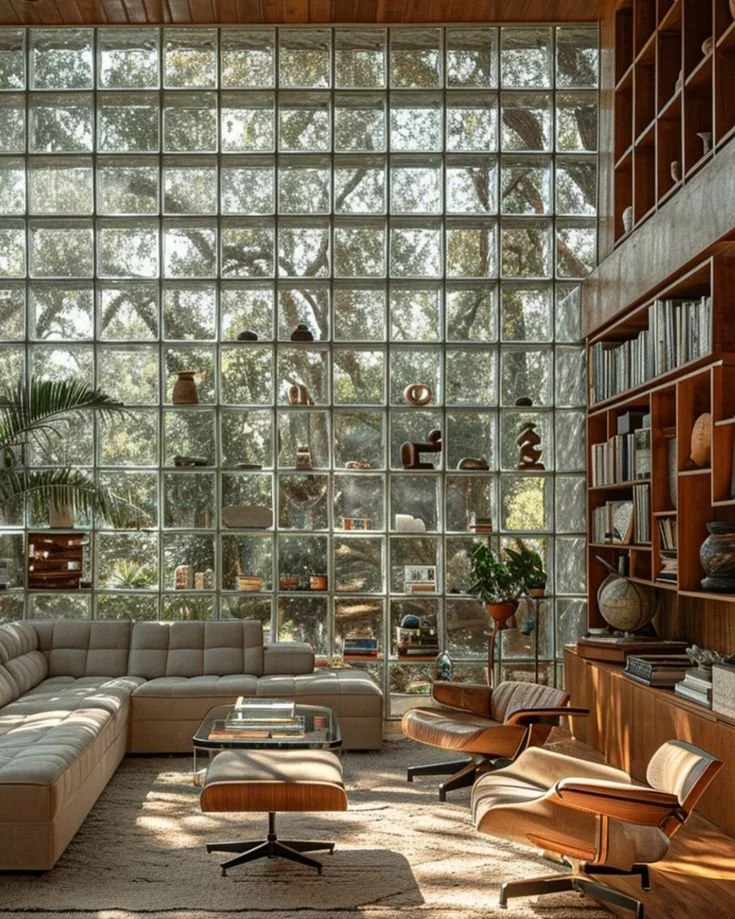
When Glass Becomes a Wall
Something specific happens when you use glass blocks as an interior element rather than standard windows. Glass blocks diffuse light in a beautiful, almost atmospheric, impressionist way. It creates privacy without darkness and keeps a connection without full exposure. It’s like the architecture equivalent of being social but on your own terms.
This living room wall rises two stories and is the perfect example of what glass blocks can look like at their absolute best. Paired with warmer tones and the Holy Grail of chairs, it has a look that was made to be sat in for an entire Sunday. The glass blocks don’t just let in light, but make the exterior feel like a painting. A delicate balance of being cocooned and connected at the same time. The texture of the blocks adds interest and depth in a way that a regular floor-to-ceiling window simply can’t.
This is the type of approach that makes glass houses feel livable rather than just performative or like pieces of art. It’s not about being seen. It’s about the vibes.
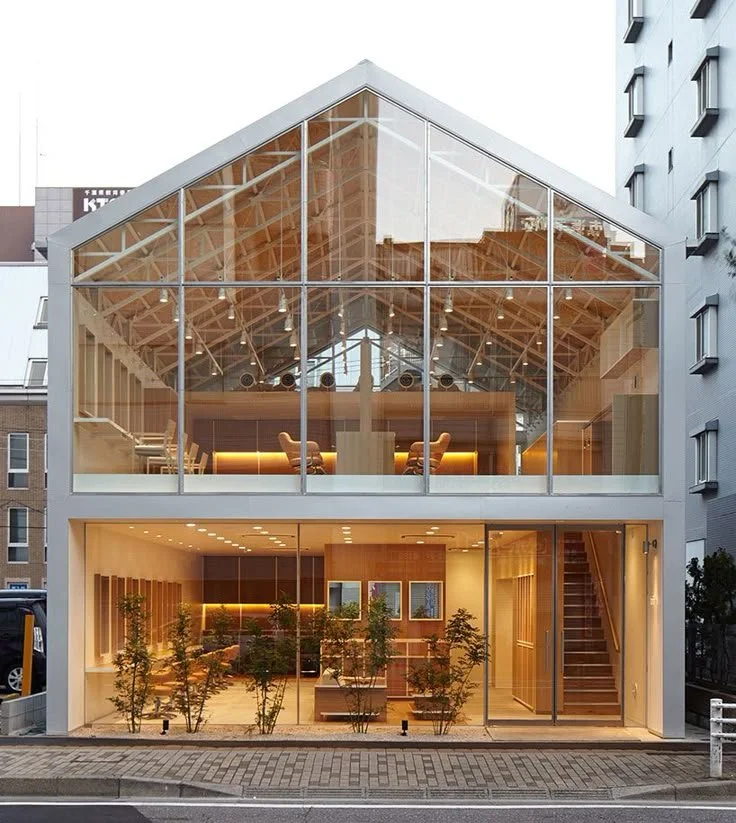
The Non-Glass House:
Japanese Commercial Space
One of the most fascinating things about glass architecture is how it can escape residential spaces entirely. For example, this Japanese space. The barber shop/salon space has a fully glazed facade with traditional house form: a pitched roof, a domestic scale, and is made entirely of glass, steel, and warm wood glowing throughout.
It’s disarming in a really interesting way. You walk by expecting a regular building and get a display instead. Everything is visible from the plants to the warm amber lighting and the ceiling structure. It creates a unique sense of intimacy with the street that typical commercial architecture rejects. It’s confident, open, and, honestly, delightful.
Japan, in particular, has a fascinating relationship with glass architecture. Primarily because there is a tension between transparency and privacy, their culture navigates in interesting ways. The results often mean buildings that feel like small, perfect worlds that are consistently inviting visitors in.
Eirik Johnson
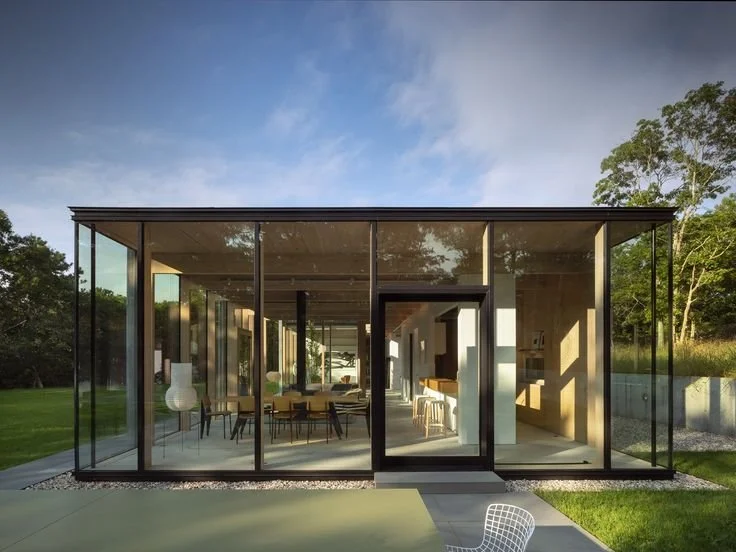
The Pavilion: Disappearing Into Their Setting
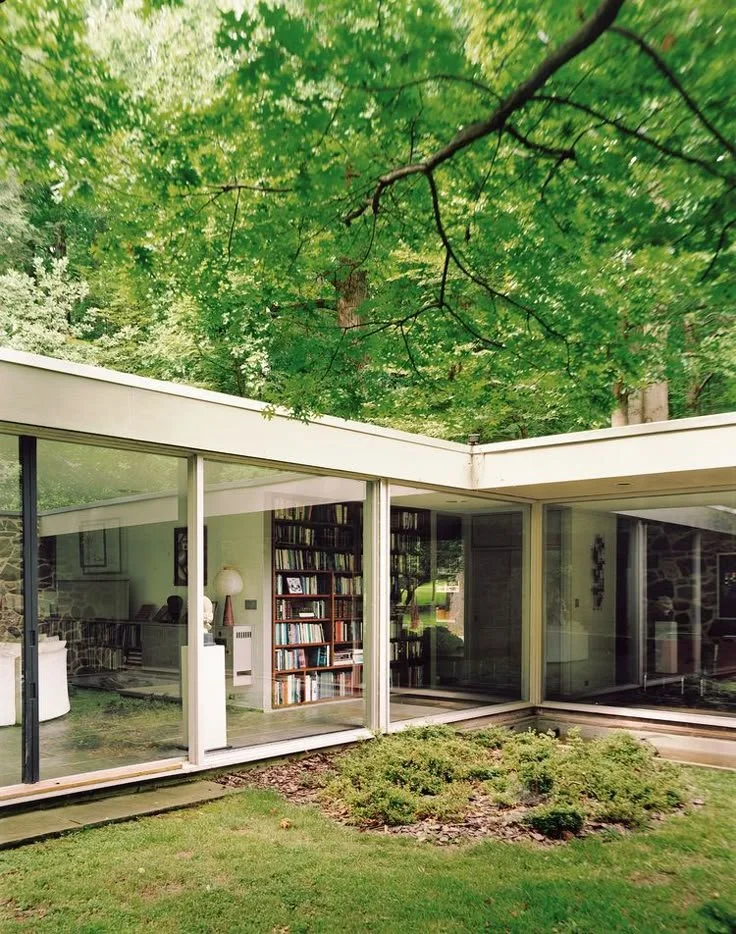
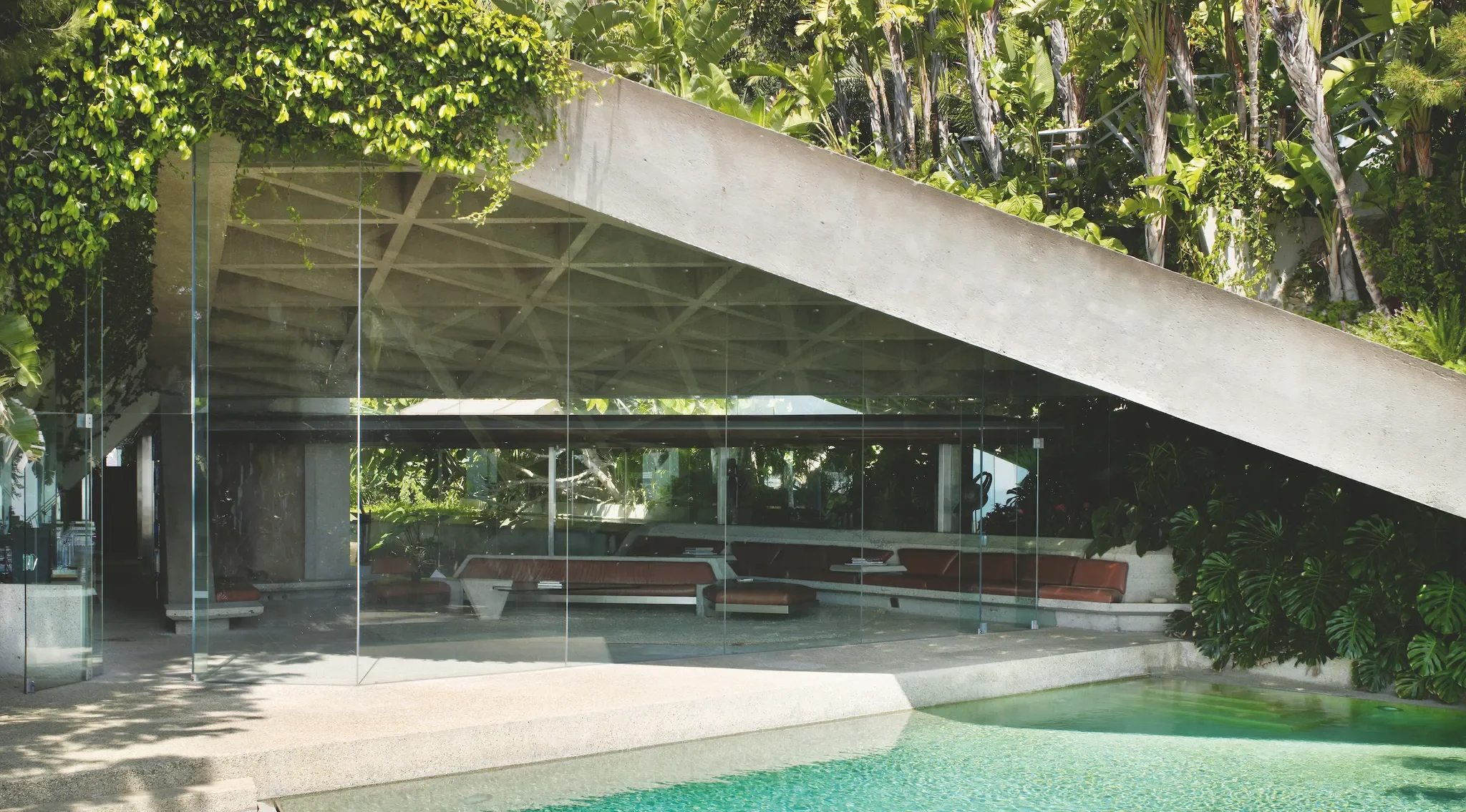
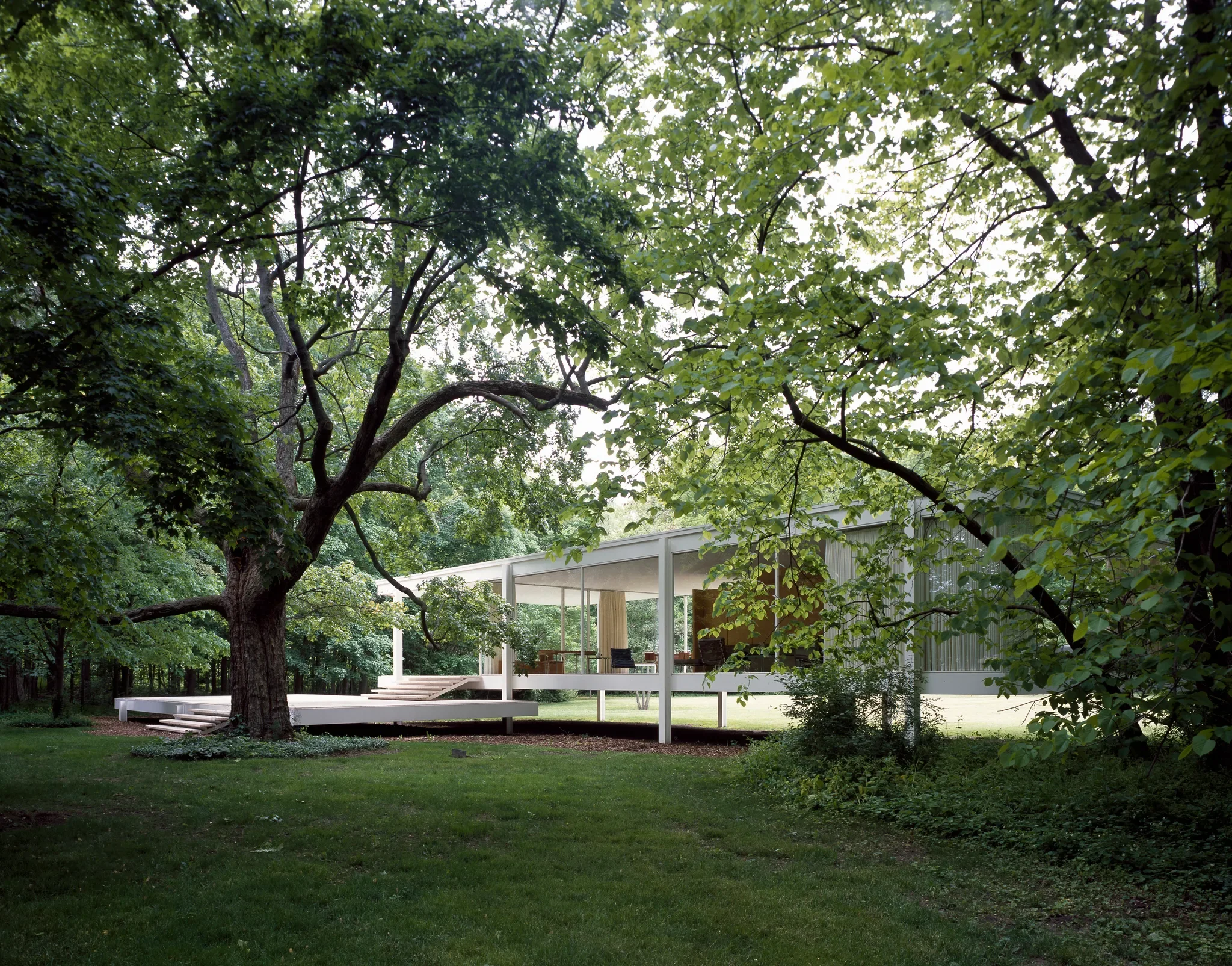
At the other end of the spectrum from Maison de Verre’s industrial drama is the glass pavilion. A low, horizontal, clean structure that is so embedded in its landscape that it almost disappears. The Wuehrer House in the Hamptons is everything I love about this approach. Dark steel frames, full-height glass on all four sides, a flat roof, and warm wood inside. The surrounding meadow becomes the wallpaper.
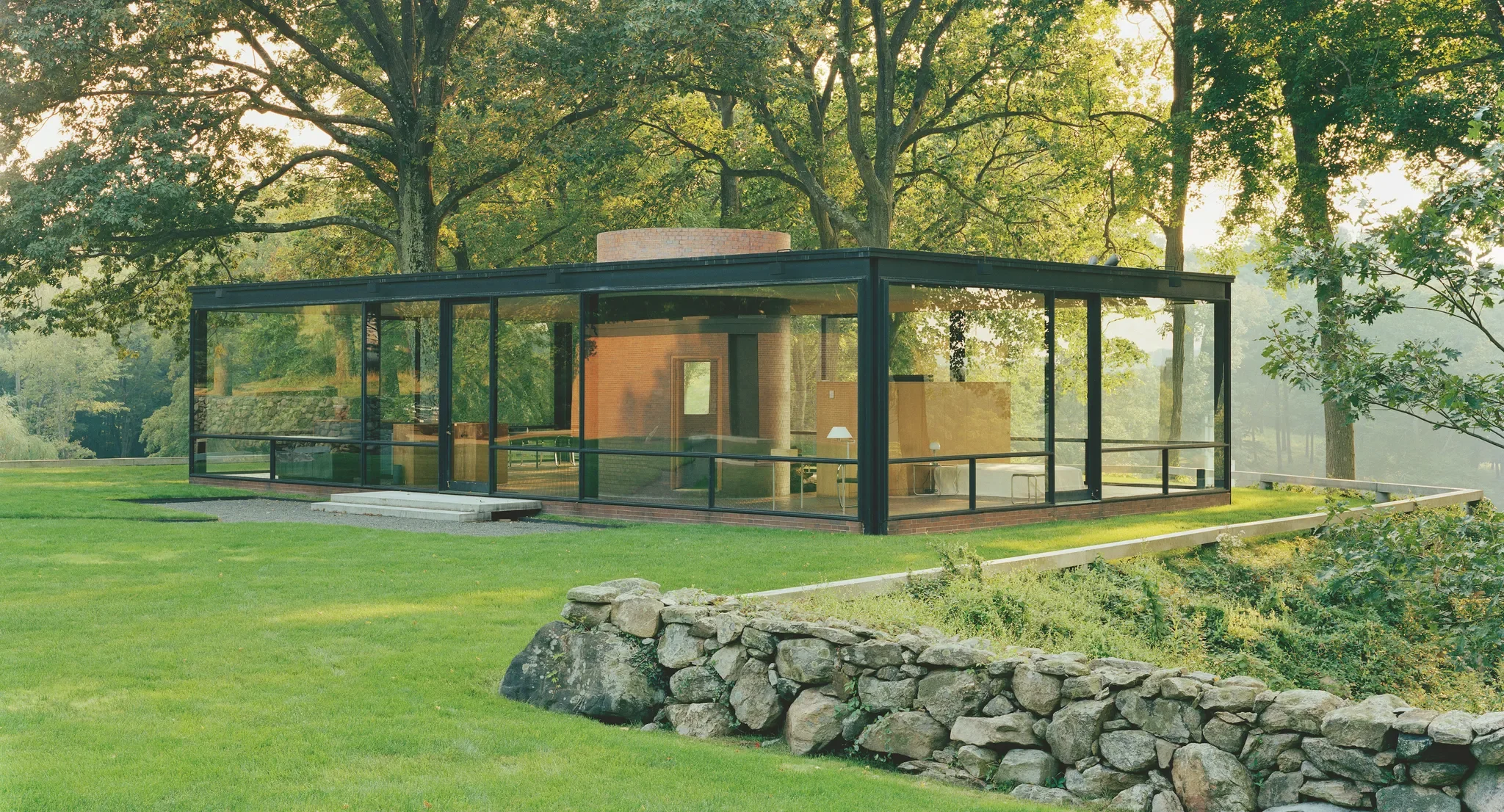
These structures work because they’re humble about themselves and everything about the setting. They exist to frame a view, to let seasons change around you, and make the most of every ordinary morning. Philip Johnson’s Glass House in Connecticut is the godfather of this type of house, and it holds up completely. There is a reason these images are everywhere and never go out of style.
What I think gets underappreciated about these homes is the discipline they require. When everything around you, especially the walls, is transparent, every single object in the house is on display. There is nowhere for clutter, and the furniture has to earn its place. The landscaping has to be well thought out. It’s a commitment to living with intention that I find admirable and inspiring.

Glass houses have always been for people who want more from their space than just shelter. They’re for people who want to live inside the light, who find comfort in connection rather than being enclosed, and who believe that architecture should be in conversation with where it sits, not despite it.
From Chareau’s groundbreaking Paris experiment to Koenig’s Hollywood Hills masterpiece to the quiet perfection of a glass pavilion in the Hamptons. There is so much range and so many answers to the same question: what does it truly mean to live inside your surroundings? The Stahl House will always be my favorite. The city glittering below, the warm iconic globe pendants, and the hanging over the hillside. It is proof that a building can make you feel something specific, real, and unforgettable. That’s the whole point of great architecture, isn’t it? And likely the reason I’ll never stop looking at glass houses.
Ngọc Minh Ngo
Misha de Ridder