AMERICAN DESIGN: THE SPACE AGE
Continuing with the history of American design, it’s time to enter the Space Age.
In the last one, every designer and object was hiding something. The 1930s approach was to build the machine, then draw a beautiful cover and set it on top. That stops here. By 1950, the materials themselves could hold a shape. Fiberglass, polyethylene, molded plywood, vinyl, phenolic laminate - you didn’t wrap a chair in a nice surface anymore. You poured the chair.
That’s the single biggest difference between our first era and our second, and once you see it, you can’t unsee it.
The Era - Briefly
Every material in this post came out of a war. Fiberglass was developed for aircraft radomes. Polyethylene was a byproduct of oil refining. Formica had been insulating airplane propellers and bomb components since WWI. Molded plywood was used to make splints for wounded soldiers. When the contracts ended in 1945, American factories were sitting on production lines that could form complex curves cheaply, but with nothing to form.
Meanwhile, 11 million people came home and needed somewhere to live. Between 1945 and 1960, the country built suburbs at a pace it hasn’t been able to match since. Every one of those houses was smaller, lower, and more open than what came before. There was no formal parlor or dining room that you weren’t allowed into. One room did everything. Heavy furniture certainly didn’t work in that room, and neither did anything fragile.
So the design brief for 15 years was essentially: make it light, make it easy to clean, make it cheerful, and most importantly - make it fast to produce. That brief honestly produced some of the most beautiful objects this country has ever made and even some of the dumbest in the same year.
Now there is one caveat here. A couple of these aren’t American inventions, but that isn’t the goal of this series. I kept them anyway because they were part of an era that changed America. This was a time when Americans started deciding what things mattered, and I think they deserve to be included for that reason. They are just part of American design history in one way or another.
PART 1: The Living Room Revolution
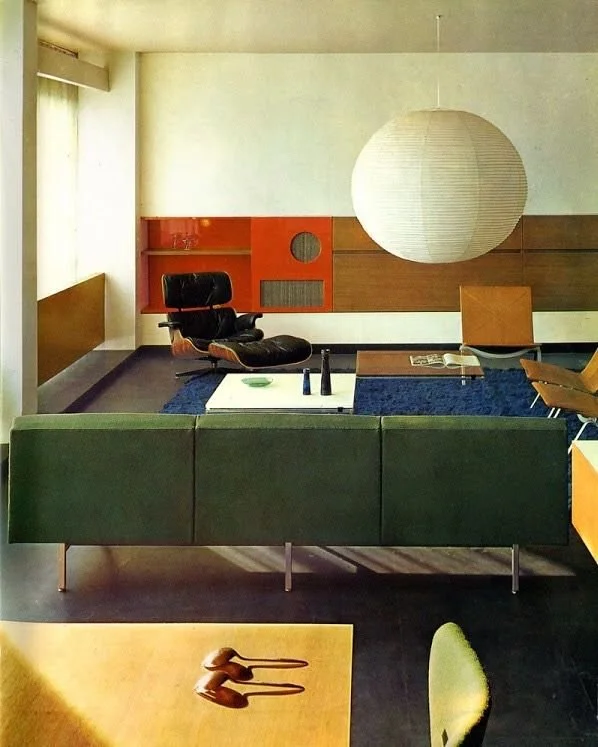
Three chairs. All molded. All sculptural. All are trying to solve the same problem - traditional furniture is heavy, formal, and hostile to a room where people are watching television.
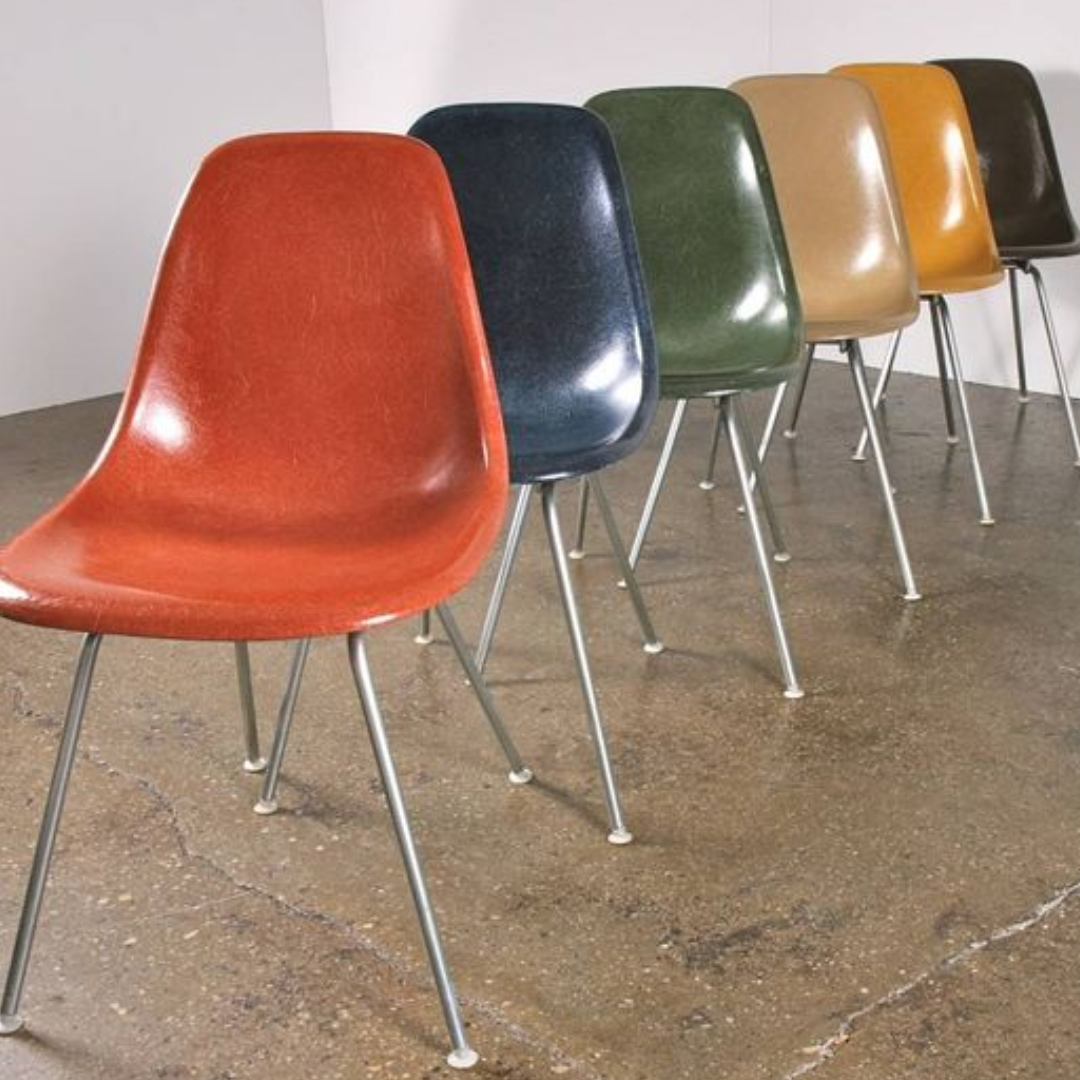
Eames molded fiberglass shell chairs, 1950
It lost a competition before it won everything.
The first one was a gift. Billy Wilder was a friend, and the Eameses built it for him.
Charles said he was after “the warm, receptive look of a well-used first baseman’s mitt,” which is the best description of a chair anyone has ever written, and a refuge from the strains of modern living. Three shells of molded plywood, leather cushions, and no attempt at severity. It made the case that modernism didn’t have to be punishing.
It debuted on Arlene Francis’ Home Show in 1956, which I love. The most serious piece of American furniture ever made was introduced on daytime television.
Here’s my problem with it, and it’s entirely affectionate: The Eameses spent their careers on cheap, democratic, mass-producible design, and their most famous object became the universal shorthand for a corner office. However, I still love this chair more than I love most things.
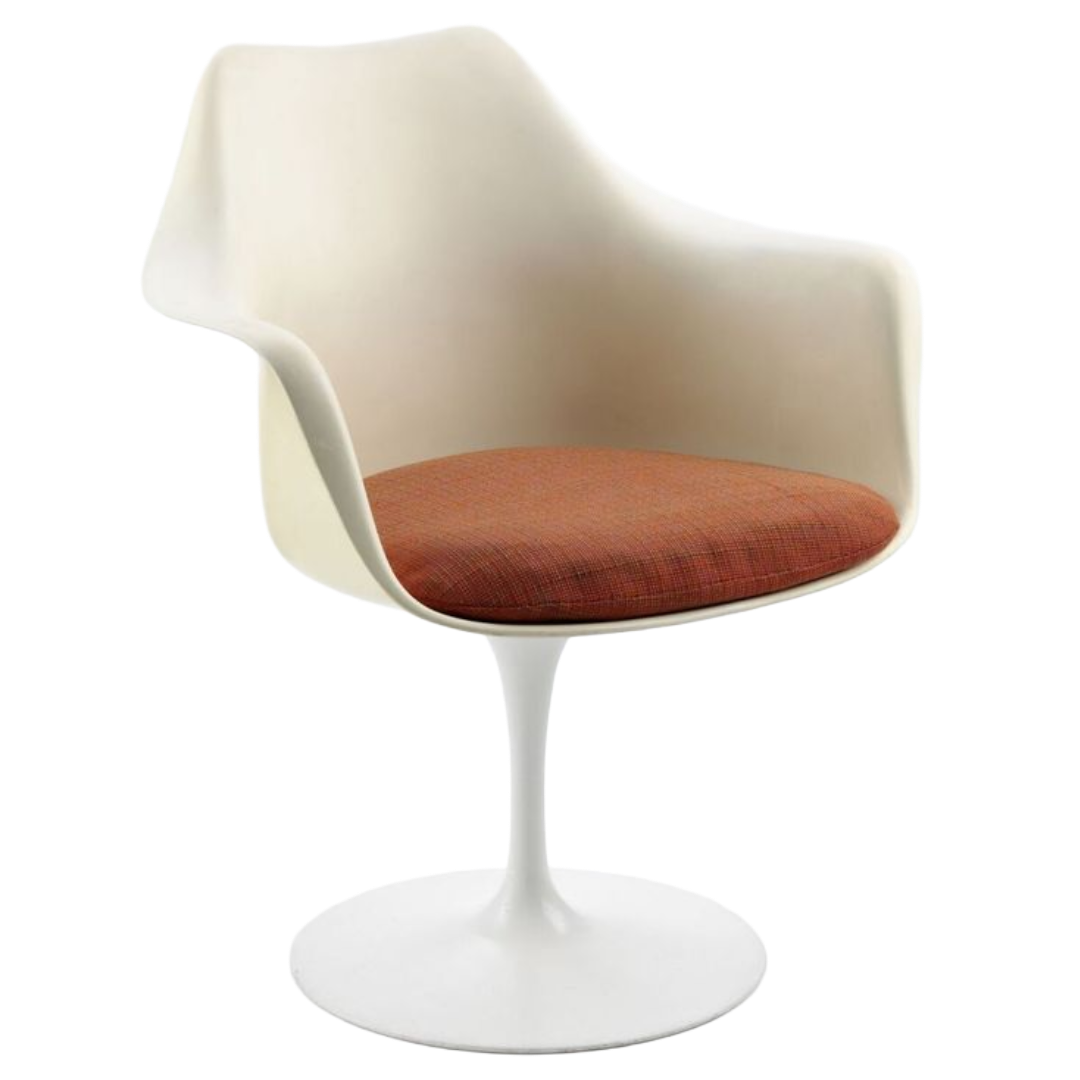
Saarinen Tuplip Chair, 1957
Saarinen considered it a compromise.
Charles Eames entered MoMA’s 1948 International Competition for Low-Cost Furniture Design with a stamped metal shell. It took second place. Metal was expensive to form and unpleasant to sit on, and the jury noticed.
By the time the winning designs went on display in 1950, Ray & Charles Eames had thrown the metal out and come back in fiberglass. Zenith Plastics produced it for Herman Miller, and MoMA put it in the permanent collection the same year.
What makes it the most influential chair of the century is the split between the shell and base. One molded seat, a dozen different legs - wire, wood, rockers, stable racks. Change the base, change the whole room.
The Eamses described what they wanted as “the most of the best to the greatest number of people for the least.” It’s the only mission statement in design history I’ve seen a company actually hit.
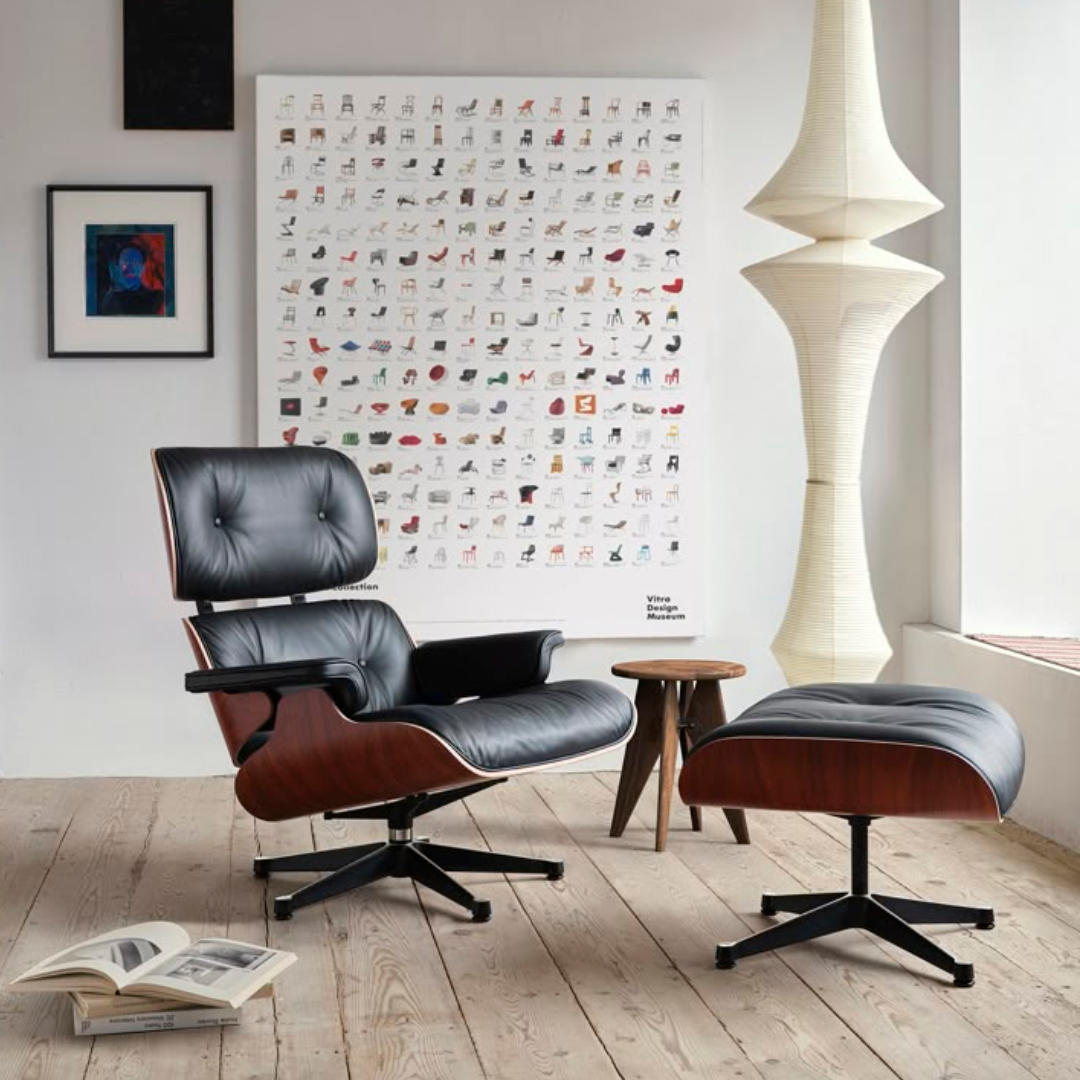
Eames Lounge Chair & Ottoman, 1956
Charles Eames wanted it to feel like a baseball mitt.
Eero Saarinen was bothered by what he called the “slum of legs.” The visual mess under a dining table where four chair legs meet four table legs, and the whole floor turns into scaffolding. His fix was a pedestal. One stem, one shell, and no clutter.
He wanted it from one material, but he couldn’t do it. Plastic in 1957 wasn’t strong enough to carry a person on a single, slender stem. The base is actually cast aluminum, coated to match the fiberglass shell exactly. Saarinen saw that as a failure of manufacturing rather than a design decision, and even said so.
He was too hard on himself. Illusion is the whole point.
Now, you may have heard this chair was the inspiration for the chairs on the bridge of the original Star Trek. Apparently, those were actually inspired by the Tulip Chairs Maurice Burke created for Arkana. Inspired by Saarinen, but has a four-pronged base.
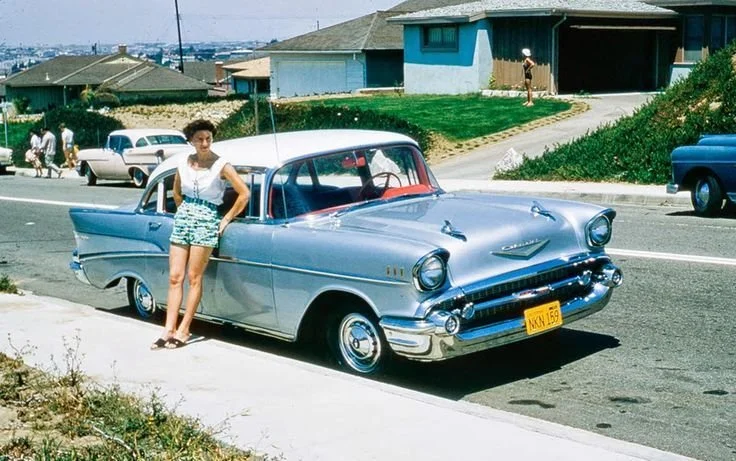
Part 2: The Atomic Highway
Detroit spent the 1930s pretending its cars were aerodynamic. In the 1950s, it stopped pretending and just built the fantasy.
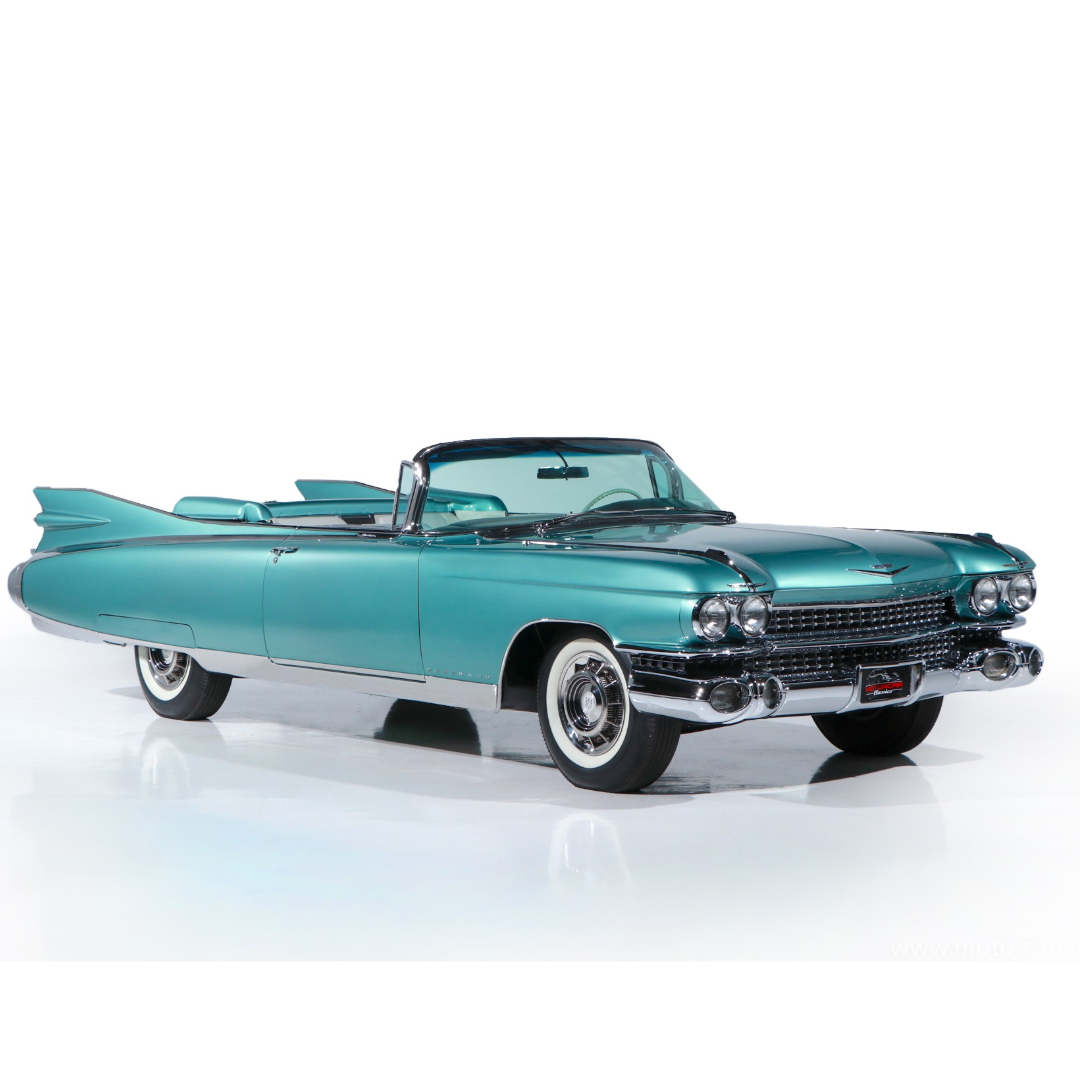
1959 Cadillac Eldorado Biarritz
The fins are taller than the windshield.
Bill Mitchell kept a mounted shortfin mako shark in his office, and you can see it in this car. The creased belt line, the pointed nose, the hidden headlights, and the whole tapered wedge.
Then there’s the split rear window. A vertical spine down the middle of the glass, purely for looks. Zora Arkus-Duntov, the engineer responsible for making the Corvette actually drive, was furious about it. The coupe already had a blind spot at the B-pillar, and Mitchell made it worse on purpose.
Mitchell outranked him and got his way for exactly one model year. The split was gone in 1964.
The postscript is the good part. For decades owners cut the divider out to see better. Now the 1963 split-window is the most collectible Corvette ever built, and restorers put the bar back in.
The tailfin arrived on the 1948 Cadillac after Harley Earl took his design staff to see a Lockheed P-38 Lightning and came back obsessed with its twin rudders. For eleven years the fins grew. In 1959, they reached the tallest ever fitted to a production car, capped with twin bullet taillights, riding above the grill wearing more chrome than some kitchens.
None of it does anything. That’s what separates this from Era 1. The 1930s streamlined a locomotive because air resistance is real. The ‘59 Eldorado was more theater and embraced it.
1959 was also Harley Earl’s last year. He turned 65 and GM retired him, handing the studio over to Bill Mitchell. So the most excessive car America ever built is a man’s exit music.
I don’t think the ‘59 Cadillac is beautiful. Frankly it’s magnificent which isn’t the same thing. I’d rather look at it than most modern cars anyway.
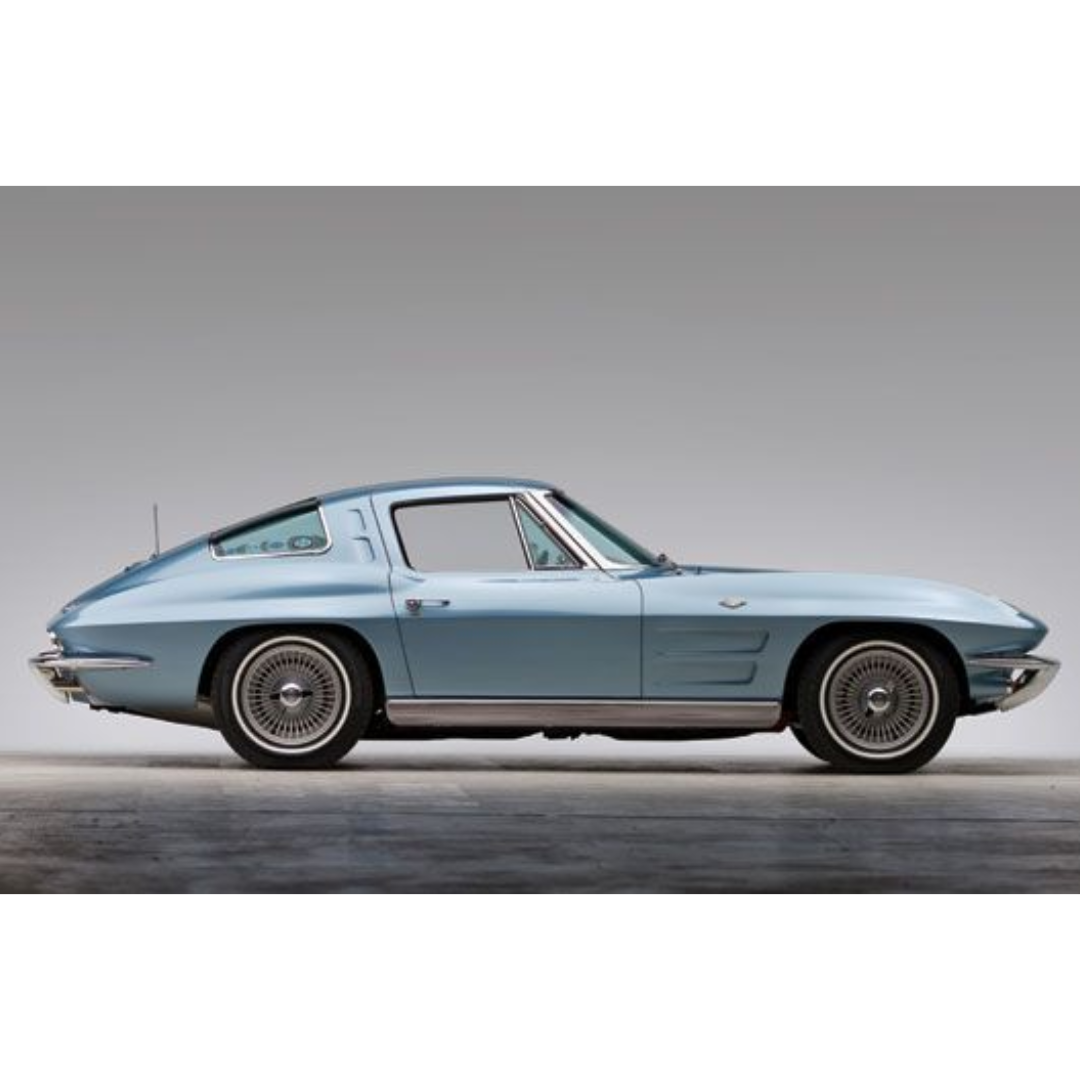
1963 Chevrolet Corvette Sting Ray
The engineer hated the best part.
IMAGE
Part 3: The Suburban Kitchen
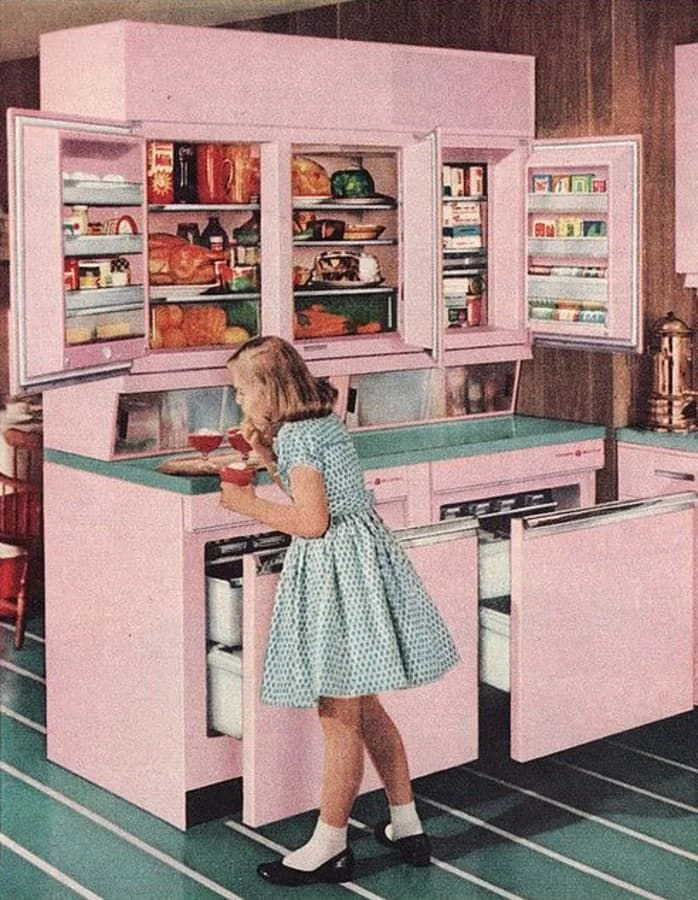
Era 1’s kitchen got styled. Era 2’s kitchen got chemically re-engineered, and then somebody figured out how to sell it at a party.
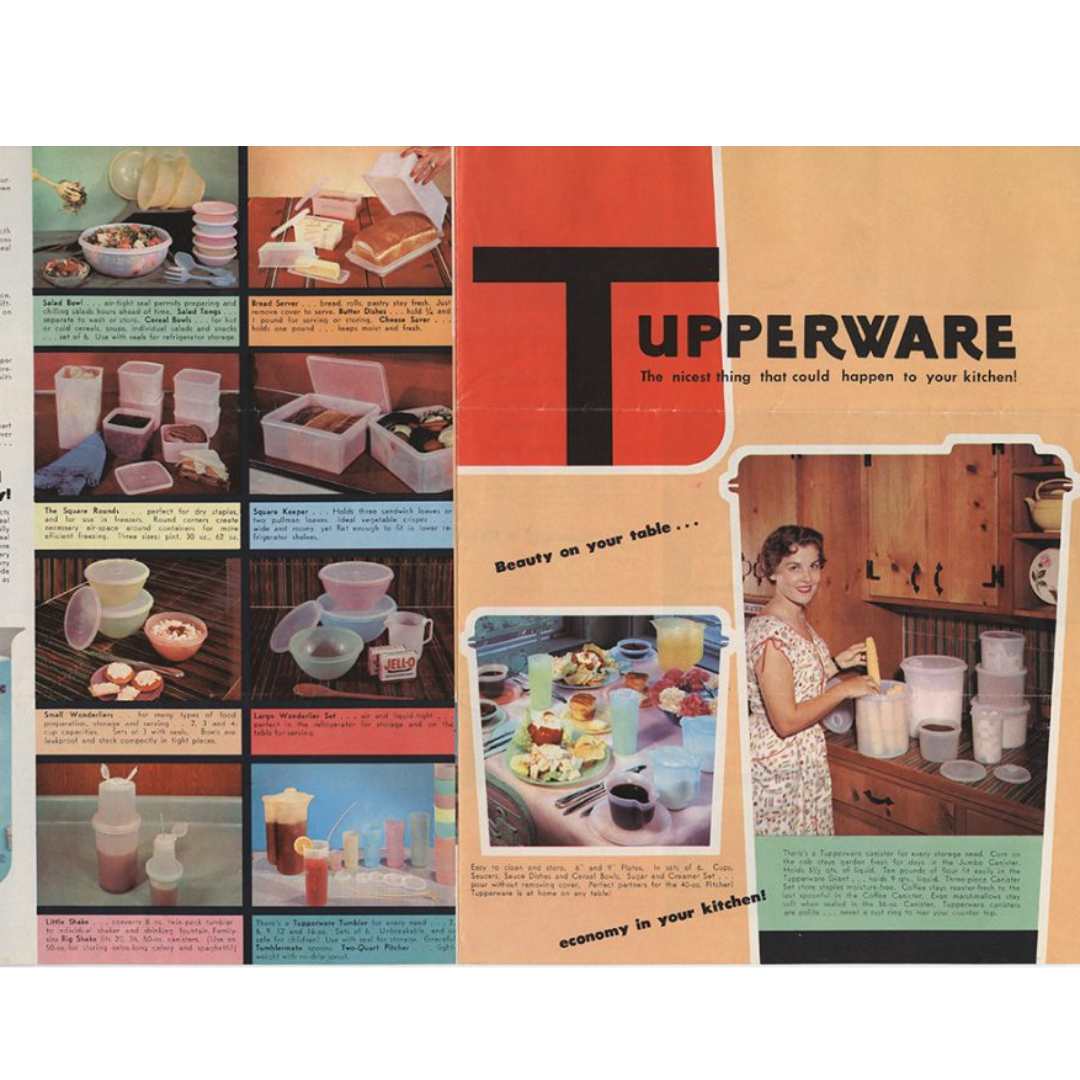
Tupperware, 1946-1958
It completely failed in stores.
Two Westinghouse engineers were trying to replace mica - a mineral used to insulate electrical equipment, with something manufactured. Resin-soaked paper pressed under heat did the job. They filed the patent in 1913 and named the company after what it substituted for.
For forty years it insulated things. Airplane propellers, bomb components, automobile timing gears. Nobody was thinking about kitchens.
Then the suburbs arrived and a material that is waterproof, heatproof, and impossible to stain turned out to be exactly what a room full of children needed. In 1950 Brooks Stevens designed a pattern called Skylark, all loose atomic squiggles, later renamed Boomerang. Raymond Loewy turned up in 1954 to do the colors, because of course he did.
I’d probably take a Formica dinette over a farmhouse table. At least it’s being honest about being a surface.
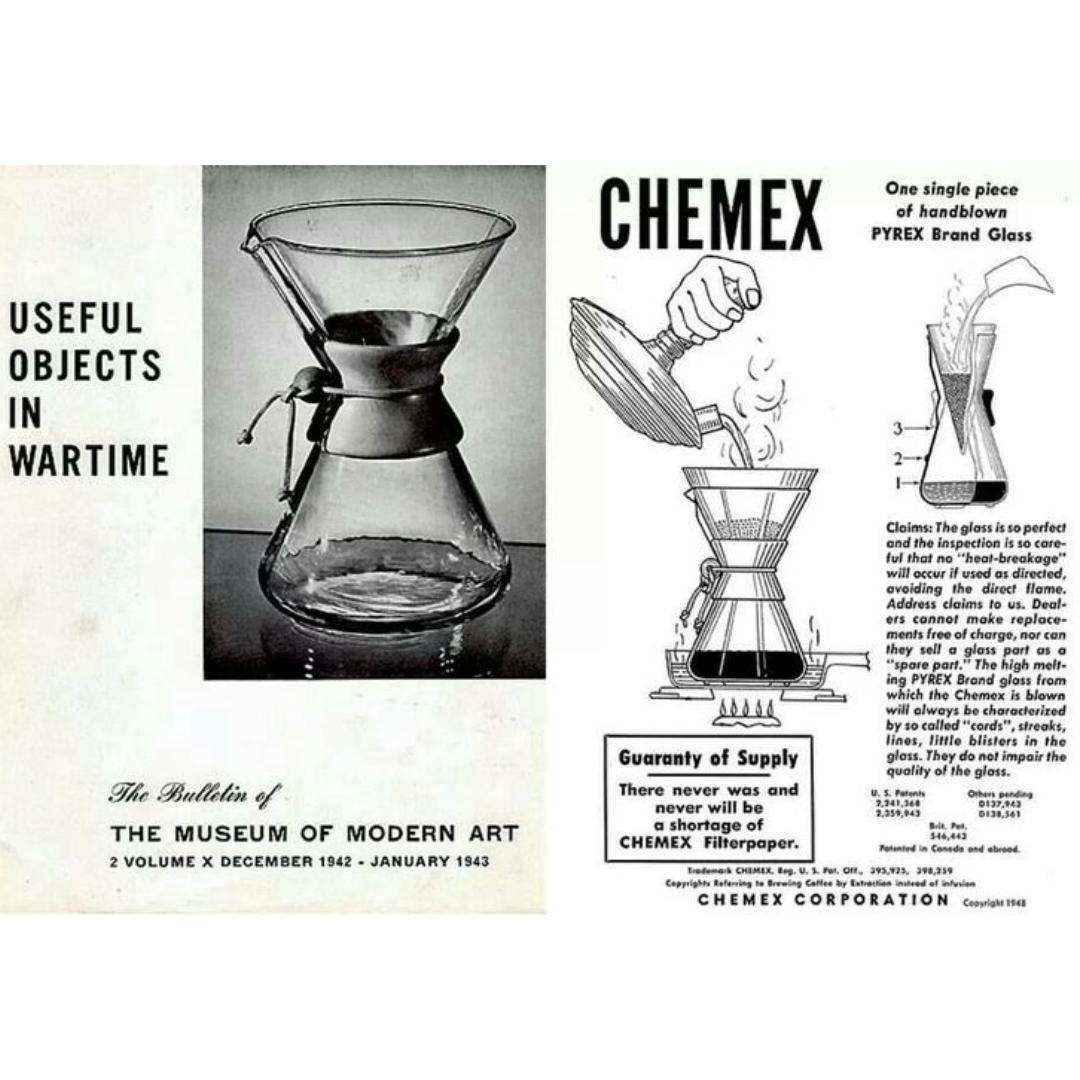
Chemex, 1941
A German chemist’s Bauhaus object, sold to Americans as taste.
Earl Tupper made his plastic from polyethylene slag - a black, greasy oil-refining waste product nobody wanted. He purified it into something flexible and translucent and called it Poly-T, then invented a double-lipped rim that pushed the air out and sealed.
Then he put it in hardware stores, where it sat. Shoppers picked up a bowl, saw a bowl, and put it down. The entire value of the product was a seal that had to be shown.
Brownie Wise understood that immediately. Her fix was to pull Tupperware out of retail completely and sell it in living rooms by women to women, with a demonstration built into the pitch. It worked so well that the company had no other sales channel. It put commission income into the hands of thousands of women who had no route to their own money.
Tupper fired her in 1958. She held no stock and left with one year’s salary. He sold the company that year for $16 million, renounced his citizenship, and bought an island in Costa Rica.
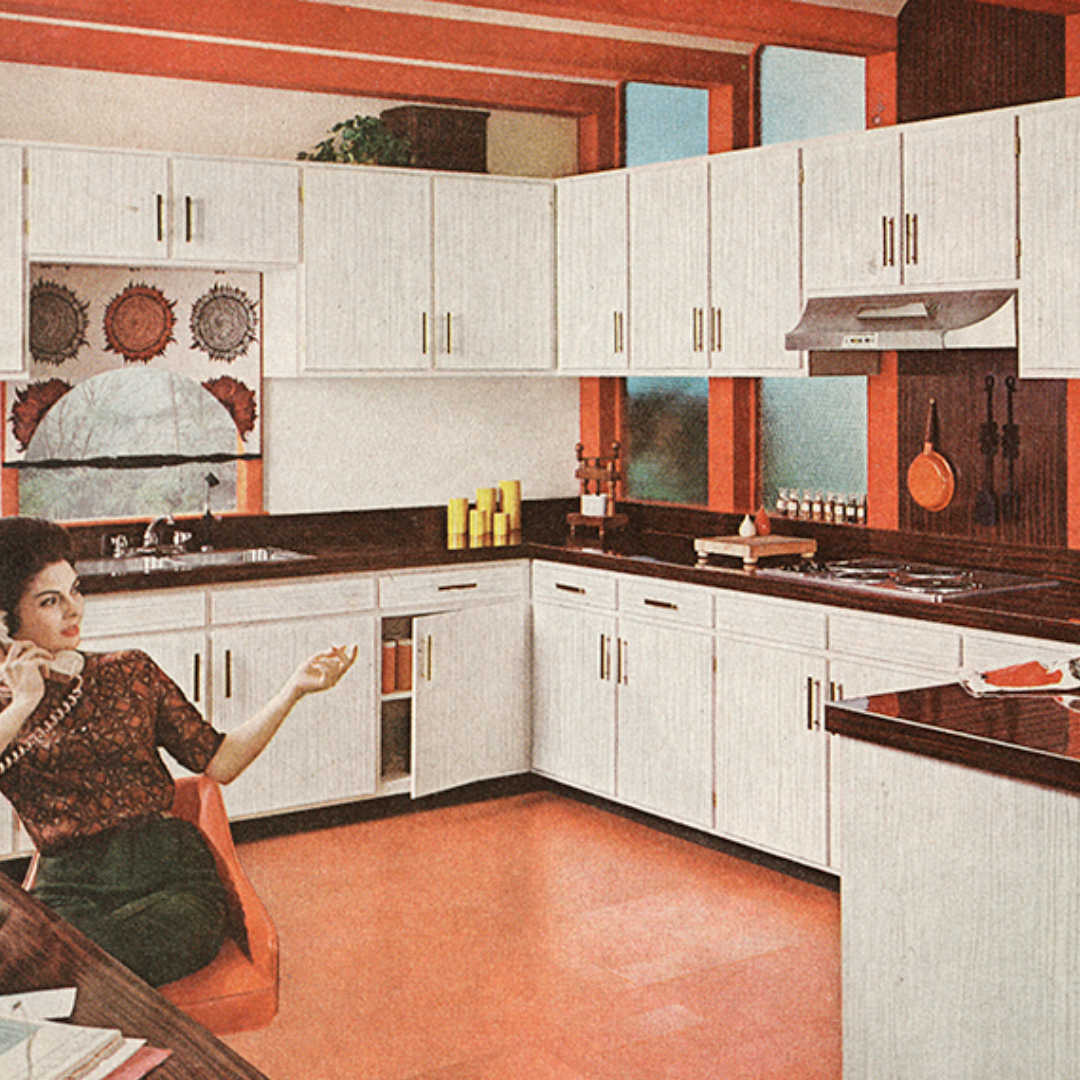
Formica
The name means “for mica.”
Peter Schlumbohm trained as a chemist in Berlin, came to the US in 1936, and held over 300 patents by the end of his life. He built the Chemex out of two things already on his bench: a laboratory funnel and an Erlenmeyer flask fused into one piece of borosilicate glass. No metal, no plastic, and nothing to affect the taste.
The wood collar and leather tie are the whole trick. Without them, it’s just lab equipment. With them, it’s a household good. He put a belt on a beaker, and MoMA collected twenty-three of his inventions.
I’m calling this one out because it complicates the story. In Post 1, I set up American design as the emotional, commercial answer to European rigor. The Chemex is a Bauhaus object, made by a German, that Americans adopted so completely that it now reads as mid-century American taste.
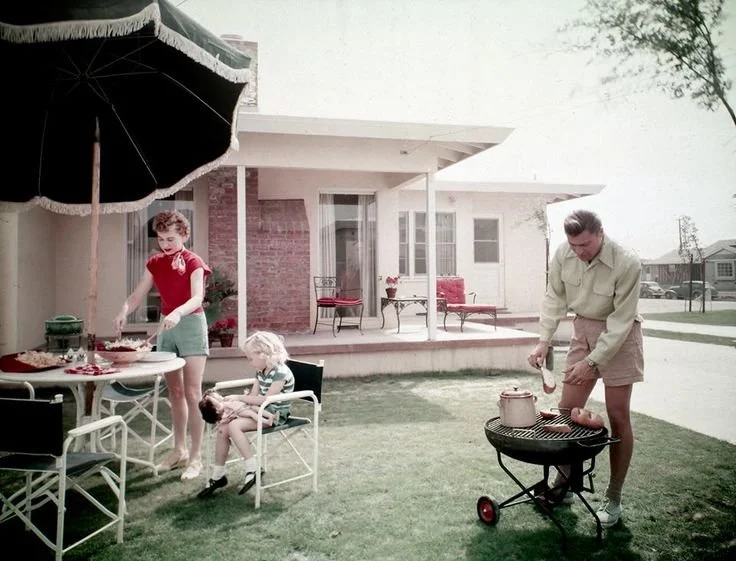
Part 4: Suburban Kitsch
Cheap plastic, bright color, and zero shame. My favorite section to research is the one where the origin stories are the strangest.

Pink plastic lawn flamingo, 1957
Sold in pairs with one head up and one head down.
Ruth Handler’s stated reason is true and I believe it. She watched her daughter ignore baby dolls in favor of adult paper dolls, and concluded girls wanted to play at being grown up rather than simply being mothers. It was a genuinely new read on the market.
The part Mattel doesn’t lead with is this: on a 1956 trip to Switzerland, she found a doll called Bild Lilli, and bought three of them. Lilli was a West German cartoon character from Bild. She was a knowing, sharp-tongued cartoon drawn for adults, and the doll was a novelty sold mainly to men as a gag gift. Barbie’s body is that doll. Mattel bought the rights to Lilli in 1964 and shut her down.
Design-wise, the changes matter: vinyl instead of hard plastic, rooted hair instead of a wig cap, shoes and earrings that come off rather than being molded on. That last bit built an entire economy.
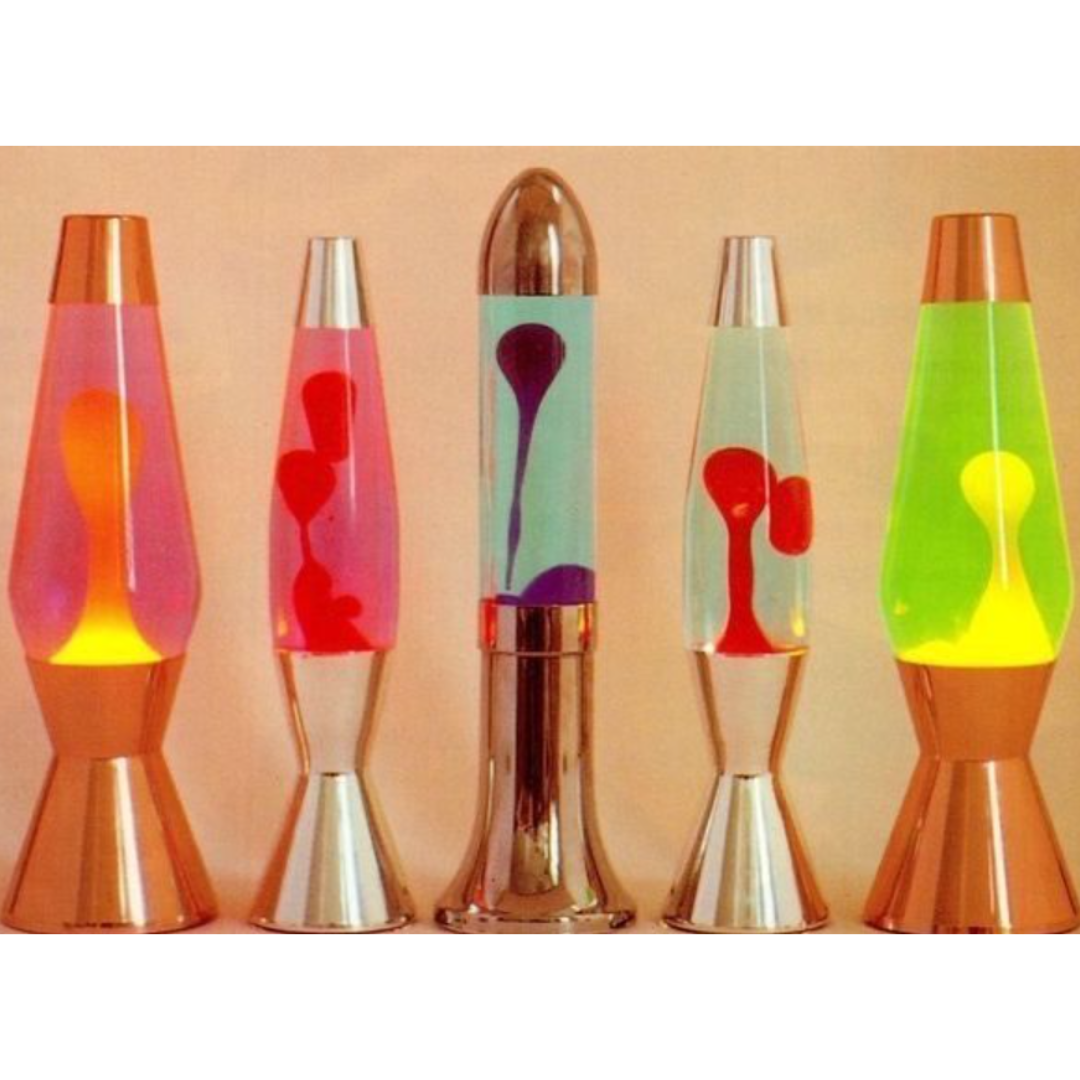
Lava Lamp, 1963
Not American, barely a design.
Don Featherstone was a trained sculptor which a lot of people forget. Union Products hired him right out of art school, and when they asked for a flamingo, he couldn’t find one to work from. So he did what any sculptor would do: use National Geographic photos.
The detail that makes it design rather than junk: they were sold as a pair. One standing alert and one bent to feed. It’s a composition. People were meant to arrange them.
They ran $2.76 a pair in the 1957 Sears catalog, which put a personality on a tract-home lawn for the price of a lunch. That’s the entire appeal. Every house on the street was the same.
He signed the mold and his signature appears on the bird’s rear end. He also won an Ig Nobel Prize in 1996, accepted it in good humor, and by all accounts never got tired of the joke.
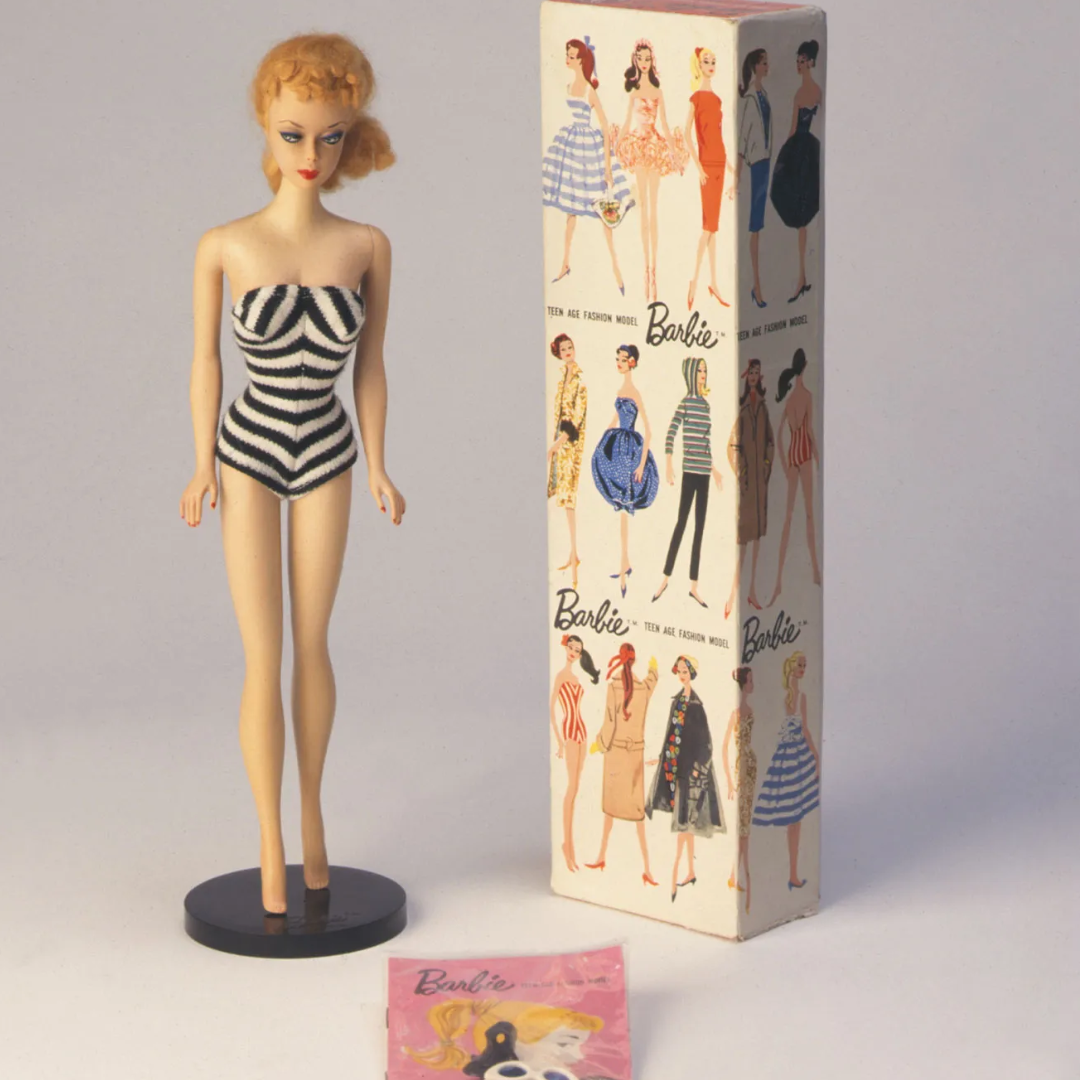
Barbie, 1959
She’s a copy of a German novelty doll for men.
A British man in Dorset saw a homemade egg timer in a pub. A jar of wax in a liquid that a regular had built, and he thought it was beautiful. He hired a chemist to work out a mixture that would rise and fall over a bulb, and he sold it to Astro in 1963. In 1965, two Chicago businessmen spotted it at a German trade fair, bought the North American rights, and renamed it to Lava Lite.
So America’s contribution here is licensing and a marketing name. I’m including it anyway because what happened next is the thing this era is actually about: the counterculture picked it up and put it in every dorm room and album sleeve of the late 1960s, making it a permanent American object in everyone’s memory - including mine.
Also it’s not even a design. It’s a physics demonstration in a bottle, and the reason it still works is that nobody has ever improved it.

Part 5: Personal Media
Electronics got small, screens got central, and the family stopped listening to the same thing at the same time.
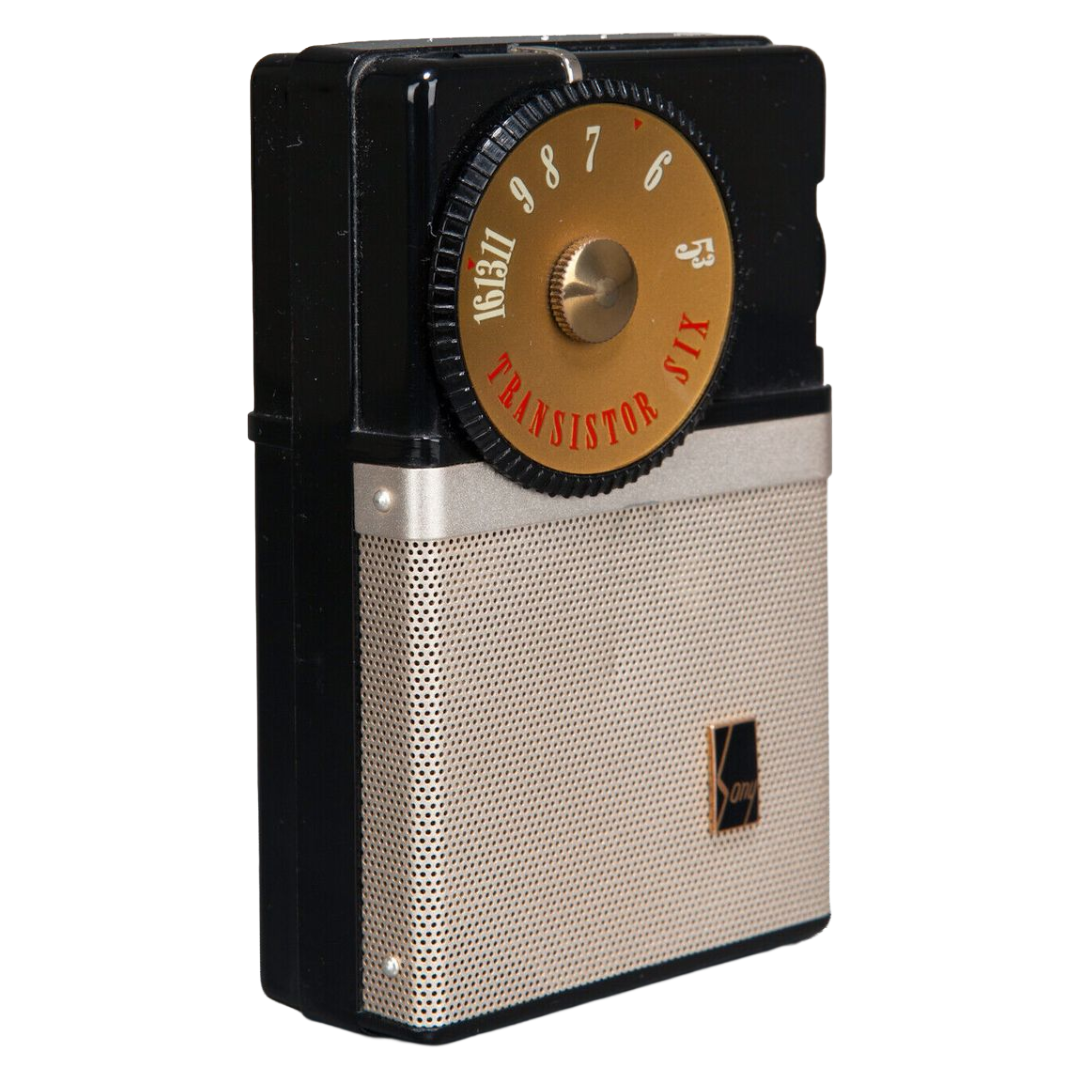
Sony Tr-63, 1957
The pocket it fit in was a lie.
Catherine Winkler, Severin Jonassen, and Richard Whipple did something no one had tried. They detached the picture tube from the cabinet, mounted it on a swivel, and let it turn toward you like a radar dish. One version connected the screen to the base with a cable so you could put it across the room.
There has never been a television that looked more like 1958. There has also rarely been one that worked worse.
The compact tubes and boards overheated, sets came back under warranty in numbers, and the thing was miserable to service. Philco discontinued it in 1960. Ford bought was left of the company in 1961.
I find this one genuinely instructive. The Predicta is one of the most exciting objects here and it was a catastrophe. Both of those facts are about the same decision: they build the shape first and made the electronics fit inside.
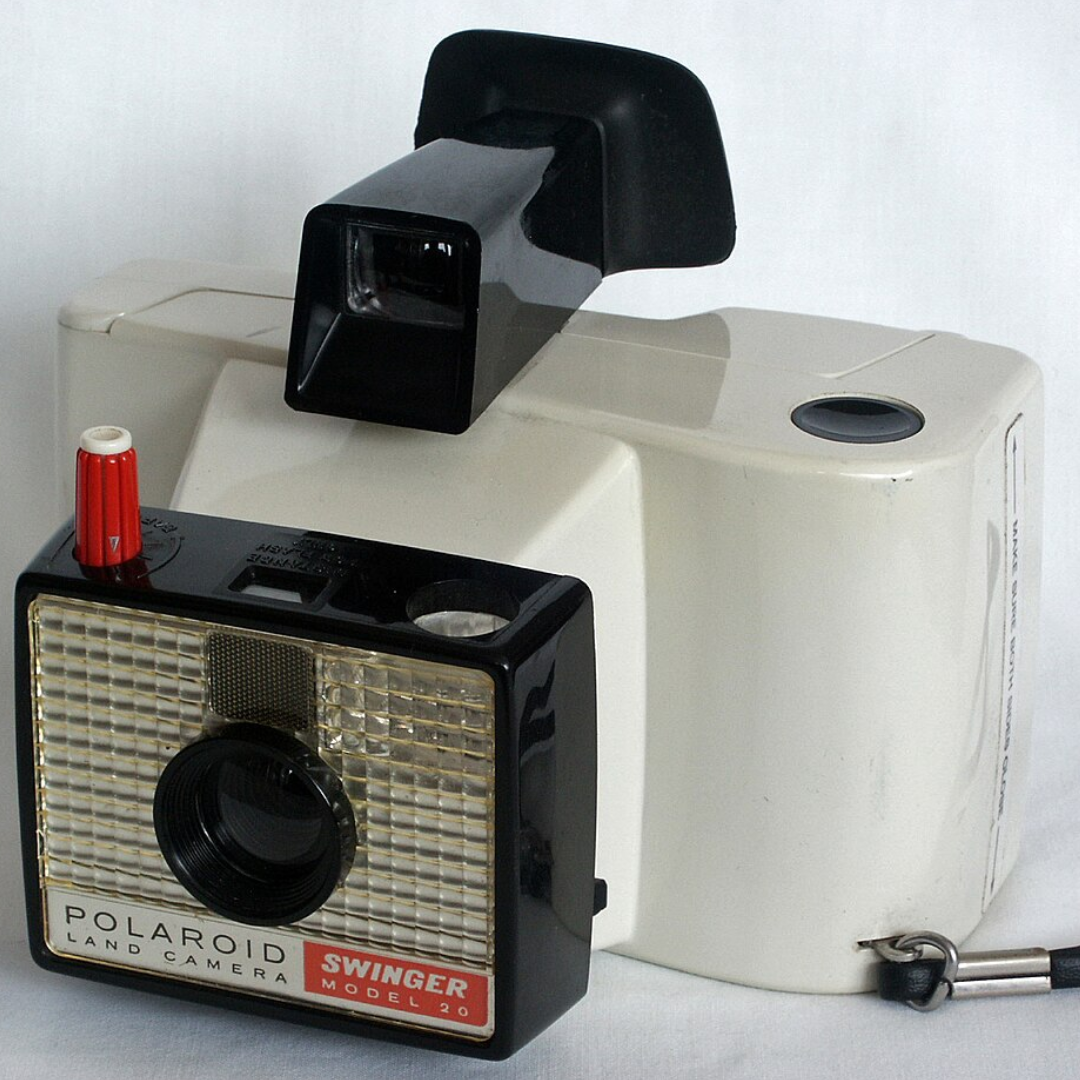
Polaroid Swinger, 1965
Henry Dreyfuss, at it again.
Transistors replaced vacuum tubes which were hot, fragile, and enormous, and the radio collapsed to the size of a paperback. Sony brought the TR-63 to America in 1957 and called it a “shirt-pocket” radio.
There is a beloved story that it didn’t actually fit in a shirt pocket, so Sony issued salesmen shirts with oversized pockets. It’s a great story. It’s also disputed so I treat it as folklore rather than fact. But it’s just such a consumerism driven thing, it wouldn’t be surprising.
What isn’t disputed is the consequence. Once a radio costs little and fits in a hand, a teenager can listen to something her parents aren’t listening to, in a different room, at the beach, alone. Youth culture needs privacy to exist, and this is the object that supplied it.
It’s also Japanese and this is where American consumers started deciding what mattered rather than American factories. Keep that in mind for post 3, because it only accelerates.
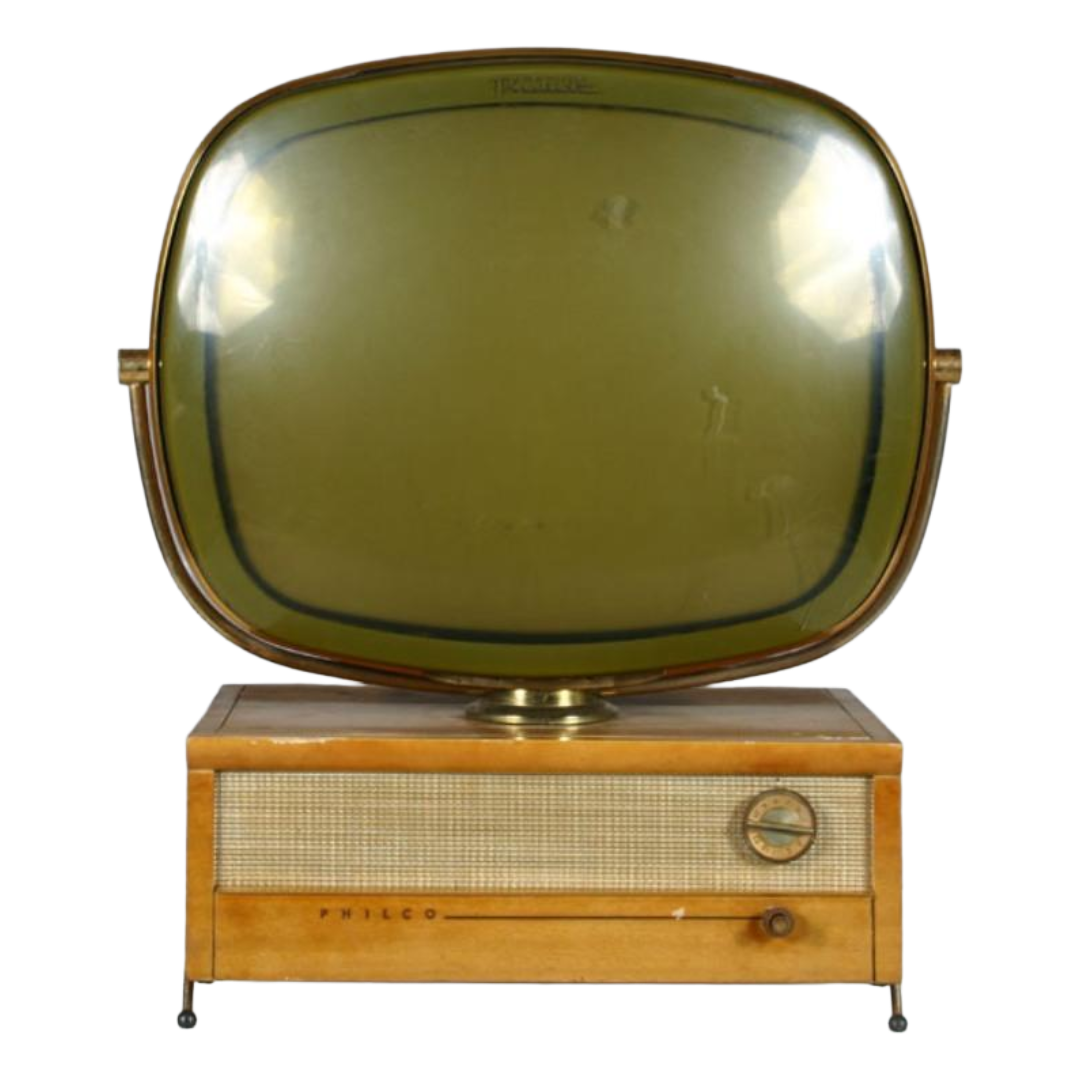
Philco Predicta, 1958
It looked like the future and killed the company.
The same man who shrouded a locomotive in 1938 and measured human faces to shape the telephone handset in 1937, spent 1965 designing a $19.95 plastic camera for teenagers. I didn’t expect that thread, but it’s a pretty fun thing.
The design problem was exposure. Instant film is unforgiving and the target buyer was sixteen. The answer is the best interface decision of the decade: a photometer in the viewfinder that spells out YES when there’s enough light and doesn’t when there isn’t. No numbers, no dial, and no manual.
It became one of the best-selling cameras ever made. The commercial had a young Ali MacGraw on a beach and a jingle sung by a not-yet-famous Barry Manilow.
Cheap, instant, shareable, faintly disposable. You can draw a straight line from this camera to the phone you’re reading on.
Where This Leaves Us
Two things stuck with me while writing this. The first is that the material stopped hiding. Era 1 wrapped machines in beautiful covers. Era 2 had substances that could be the object itself, and the shape you see is just what the stuff did when it was poured, pressed, or blown. A fiberglass shell has no inside or outside. It’s a genuine break, not a style change.
The second is that this keeps happening. Brownie Wise built the entire Tupperware sales model and was fired without so much as a stock. Catherine Winkler co-designed the most radical television ever sold, and almost nobody has heard her name. In Post 1, it was Elizabeth Magie and Better James. I didn’t set out to write a series about women getting written out of design history, and here we are with four now.
And the borders are getting sore. A German chemist’s lab glass, a British bar-room egg timer, a Japanese radio, and a doll from a Hamburg newspaper. All of it feels American now because America bought it, filmed it, put it in the background of everything, and sold it back to the world.
Post 3 picks up in 1970 when objects stop being colorful and start becoming black boxes.