THE OBJECTS THAT INVENTED AMERICAN DESIGN
As we started gearing up for America’s 250th birthday last month, I started seeing more and more articles about objects of American design that are quintessentially American. It got me thinking there are so many objects that have a historical and cultural significance that I wanted to explore more, so I started working on a post. A post that never actually got posted. Why? It just felt impossible to cover the fascinating history of American culture and design without giving each its just desserts. It’s taken me a month, pretty much, but I’ve made this into a series. And we are starting with the Streamline Era.
The Great Depression wrecked American manufacturing and then handed it a brand new profession. By 1932, factories that had spent a decade making things could no longer sell them. The machines still ran, and the engineering was fine, but nobody wanted any of it. As a result, a handful of companies started hiring people out of advertising, theater, and department store window dressing (people whose whole job was to make strangers want things) and pointed them at the product line.
That is the founding story of American industrial design, and it isn’t a noble one. It’s a profession that exists because of a sales problem. What came out of it, though, is most of what we picture now when we picture America.
The Era, Briefly
Europe had the Bauhaus, which was rigorous and moral about it. Form follows function, ornament is a crime, and the object should confess exactly what it does and do no more. America decided to go the other direction and went there relatively fast. The dominant style of the 1930s was Streamline Moderne: teardrops, horizontal speed lines, chrome bands, and rounded corners borrowed wholesale from aviation. It was aerodynamic language applied to objects that never moved an inch. Pencil sharpeners, staplers, and even refrigerators, which sit in one place until they die, got streamlined.
Purists have been annoyed by this for ninety years, and sure, they may have a point. So much of it was cosmetic. But something being cosmetic is not the same as meaningless. A country that watched its economy fall was being sold a shape that meant forward. Raymond Loewy, the era’s most shameless self-promoter and one of its best designers, had a rule he called MAYA: Most Advanced Yet Acceptable. Push people toward the future, but only about as far as they will follow.
Then the war arrived and stripped decoration away. Chrome went to the military, and design got conscripted. What emerged in 1945 was a manufacturing base with nothing to build, sitting on warehouses of surplus material and a national mood that wanted to celebrate.
The objects below span the 1930s to 1950s, and span mobility, everyday tools, what was considered the “modern” home, and a few novelty toys and games, why not?
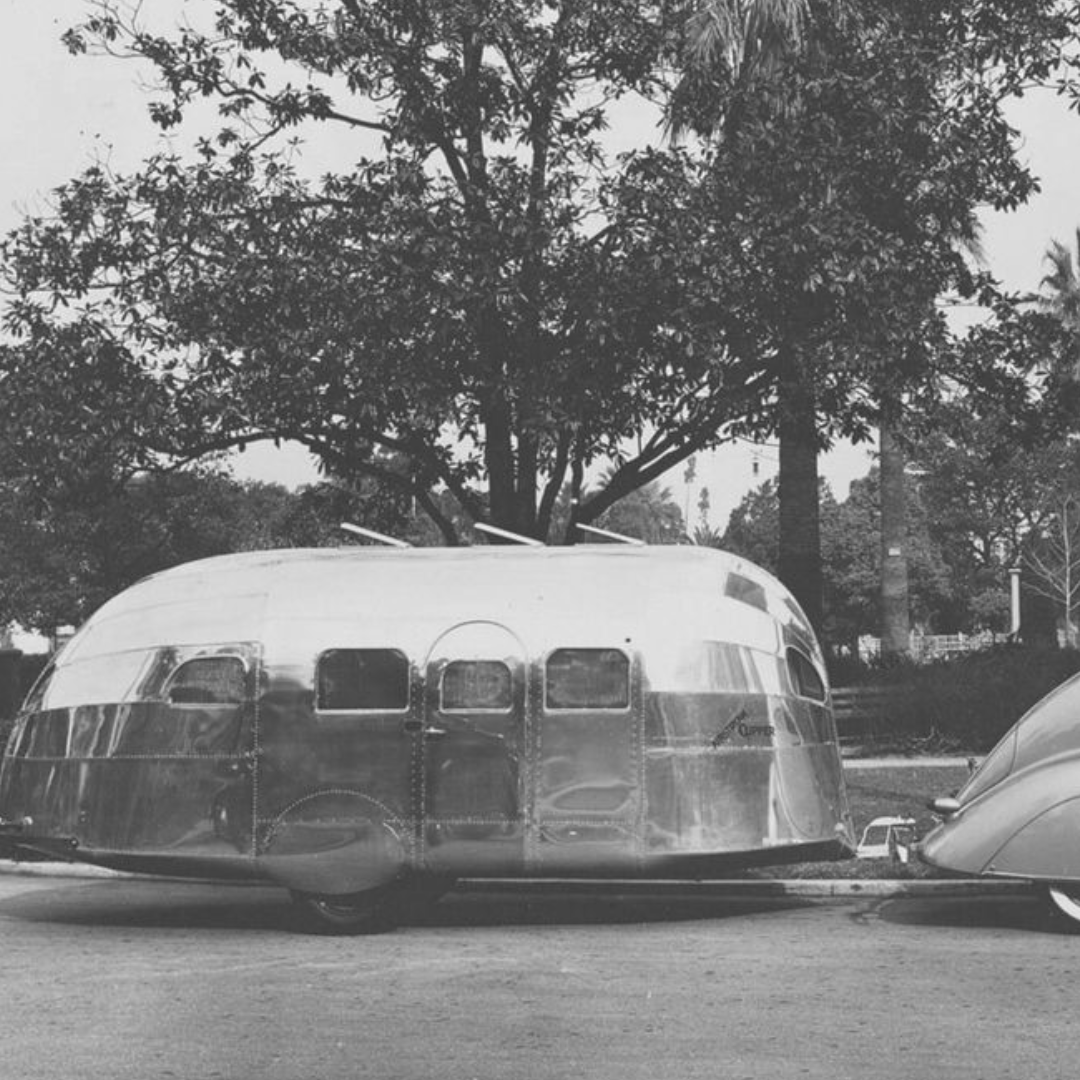
Airstream Clipper (1936)
Wally Byam didn’t design it.
The Airstream Clipper cost $1,200 in 1936. A Ford Sedan that year ran about $500.
It might be time to retire the idea that the Airstream democratized the open road. It did the opposite. It made the road trip aspirational, which is a far more durable business model and one that the brand still runs on today.
The construction was genuinely aircraft-grade: riveted Duralumin skin over a semi-monocoque frame, kapok insulation, and all of it lifted straight from the aviation industry. It slept four on a convertible dinette, carried its own water, and ran electric lights. It also had an air-conditioning system that worked off dry ice. The name came from Pan Am’s China Clipper flying boats, the most glamorous machines in the sky at the time.
Wally Byam gets the credit, but the design was substantially Hawley Bowlus’s 1935 Road Chief, a glider designer’s trailer with the door moved from the front to the side. Byam bought the tooling out of receivership and understood better than Bowlus ever did that he was selling a feeling.
This one started as a medical complaint. Army Air Corps pilots were coming down with blinding headaches and nausea for hours of high-altitude glare, and Colonel John Macready went to Bausch & Lomb about it.
The 1936 prototype, called Anti-Glare, had plastic frames and a green lens tuned to cut glare without shifting color, which mattered because a pilot needs to real instruments and terrain accurately. The teardrop shape was drawn to cover the eye’s full range of downward motion so you could scan the panel without lifting the frame.
A public release of the glasses came in 1937, and the metal frame and Ray-Ban Aviator name landed in 1938.
Then in 1944 a photographer caught Douglas MacArthur wading ashore in the Philippines wearing a pair, corncob pipe clenched, and the sunglasses stopped being equipment and entered the lexicon forever.
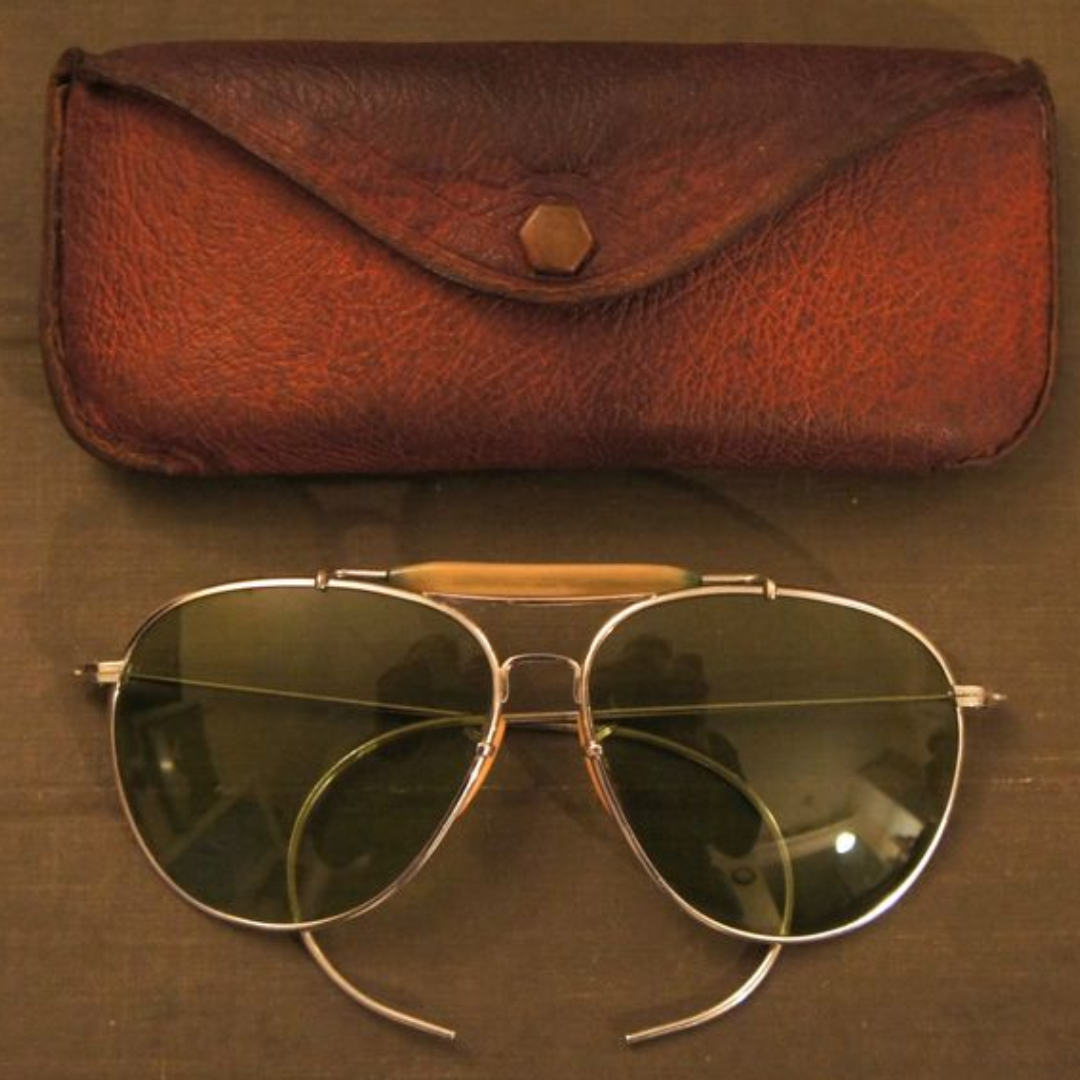
Ray-Ban Aviator Sunglasses (1937)
Invented to stop pilots from getting sick.
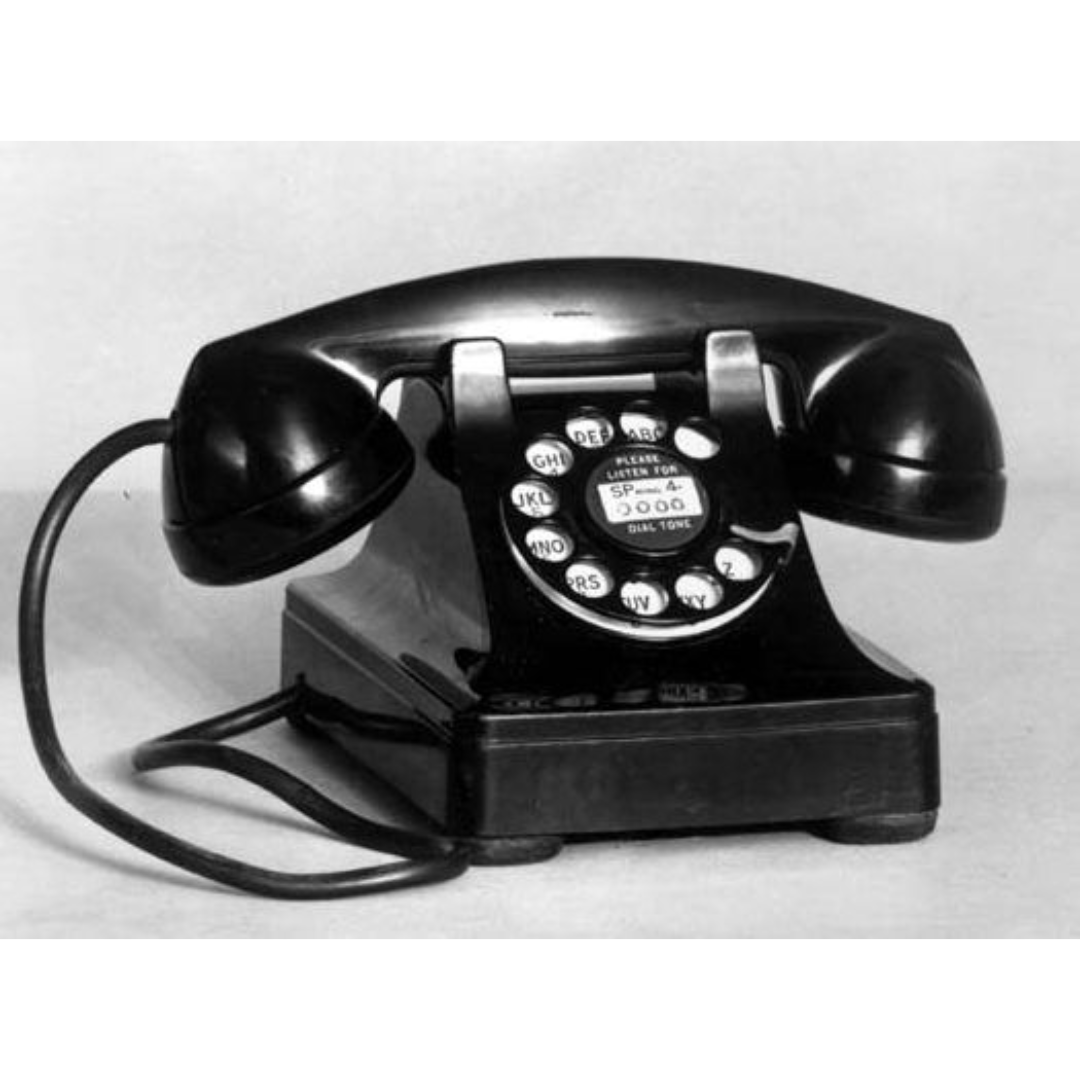
Model 302 Telephone (1937)
A shape achieved from measuring human faces.
Henry Dreyfuss measured people for the Model 302. Ears, jaws, palms, and even the distance from the mouth to the ear and the weight a wrist can hold before complaints begin. He built a whole practice on human measurement decades before anyone called it ergonomics. The result is a shape you can find and use without looking at it.
The 302 was the first Bell System desk phone to put the ringer and induction coil inside the body effectively killing the separate wall-mounted ringer box. It made the telephone a single object rather than a whole system.
Early ones were die-cast zinc and hefty as a brick. During the war, zinc was needed elsewhere and the housing was switched to thermoplastic.
Dreyfuss also borrowed from others. The inward curve of the upper body is a nod to Jean Heiberg’s 1930 Bakelite phone for Ericsson in Stockholm. Unfortunately, it was a detail quietly dropped from later American models.
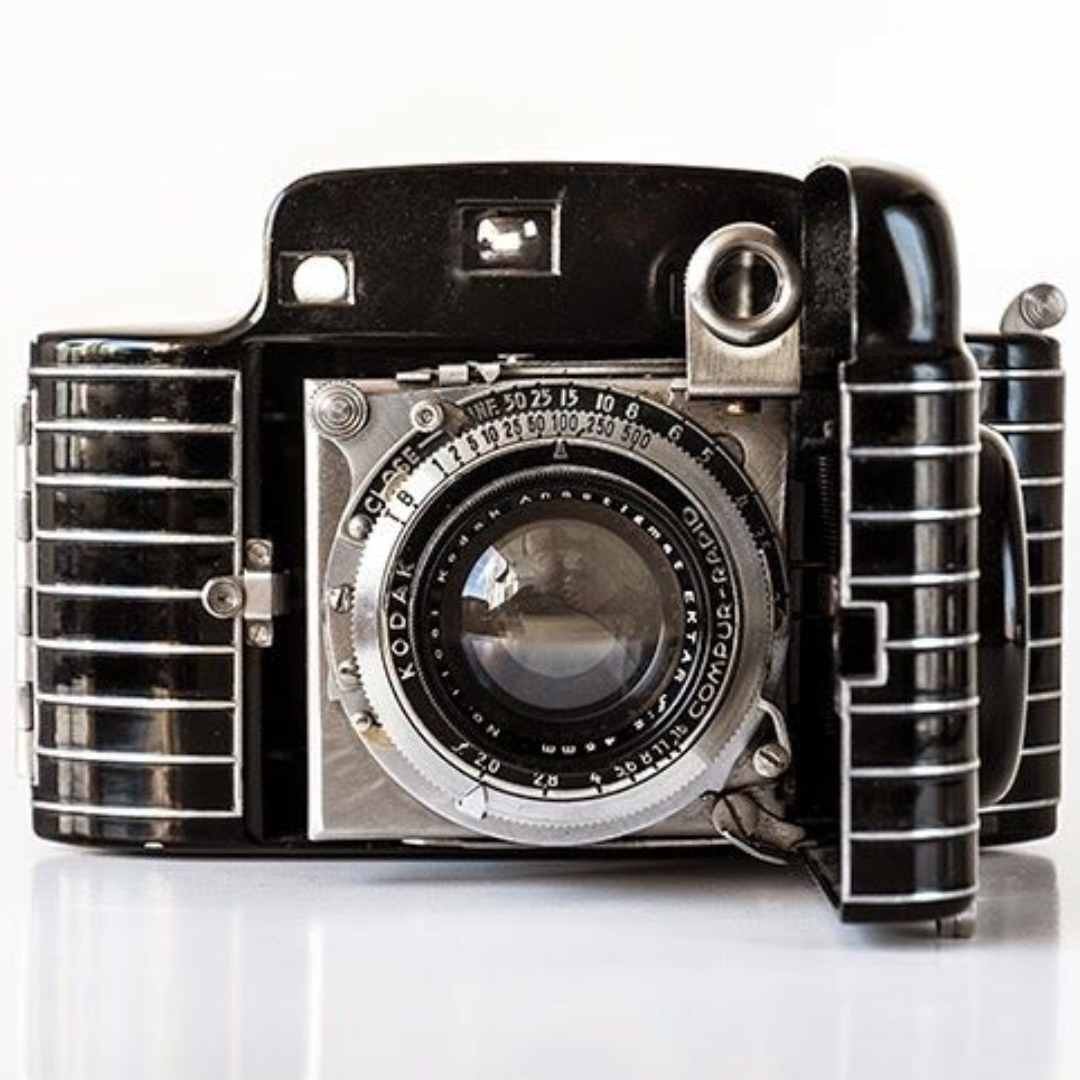
Kodak Bantam Special (1936)
$110 in 1936. Nobody’s idea of a people’s camera.
The Kodak Bantam Special is a beautiful object but a terrible democratizer. The Bantam Special listed at $110 in 1936 which is north of $2,000 today, with a German Compur-Rapid shutter and a coupled rangefinder. Neither of those were typical on American cameras and weren’t really bothered with. It was the halo model that made Kodak’s cheap Bantams look like a bargain.
What it did do is make a camera into an accessory. Walter Dorwin Teague cast the body in aluminum and ran raised polished pinstripes across black enamel. The result was something that catches light beautifully, and more cunningly, hides the seams where the body halves meet. The clamshell folds flat and shuts around the lens so it can live in a coat pocket.
The Kodak Bantam Special is arguably the most gorgeous camera ever made in America, and it belongs to the same design logic as a good watch: precision you wear.
George Blaisdell watched a friend fumbling with an ugly Austrian lighter at a country club in Pennsylvania. The Austrian one worked in the wind because of its chimney, but it also took two hands to use and looked terrible.
He decided to keep the chimney and threw out everything else. He build a rectangular case with a spring-hinged lid you could work with a thumb. That is the entire invention. He named it Zippo because he liked the sound of “zipper,” and swapping -er for -o sounded modern to him.
Zippo lighters sold for $1.95 with an unconditional lifetime guarantee: it works or we fix it for free. Ninety-four years later, that promise is still the product.
From 1941, Zippo stopped selling to civilians entirely and set everything to the military in a black crackle steel case. And that is how a Pennsylvania lighter became the global signifier of the American GI.
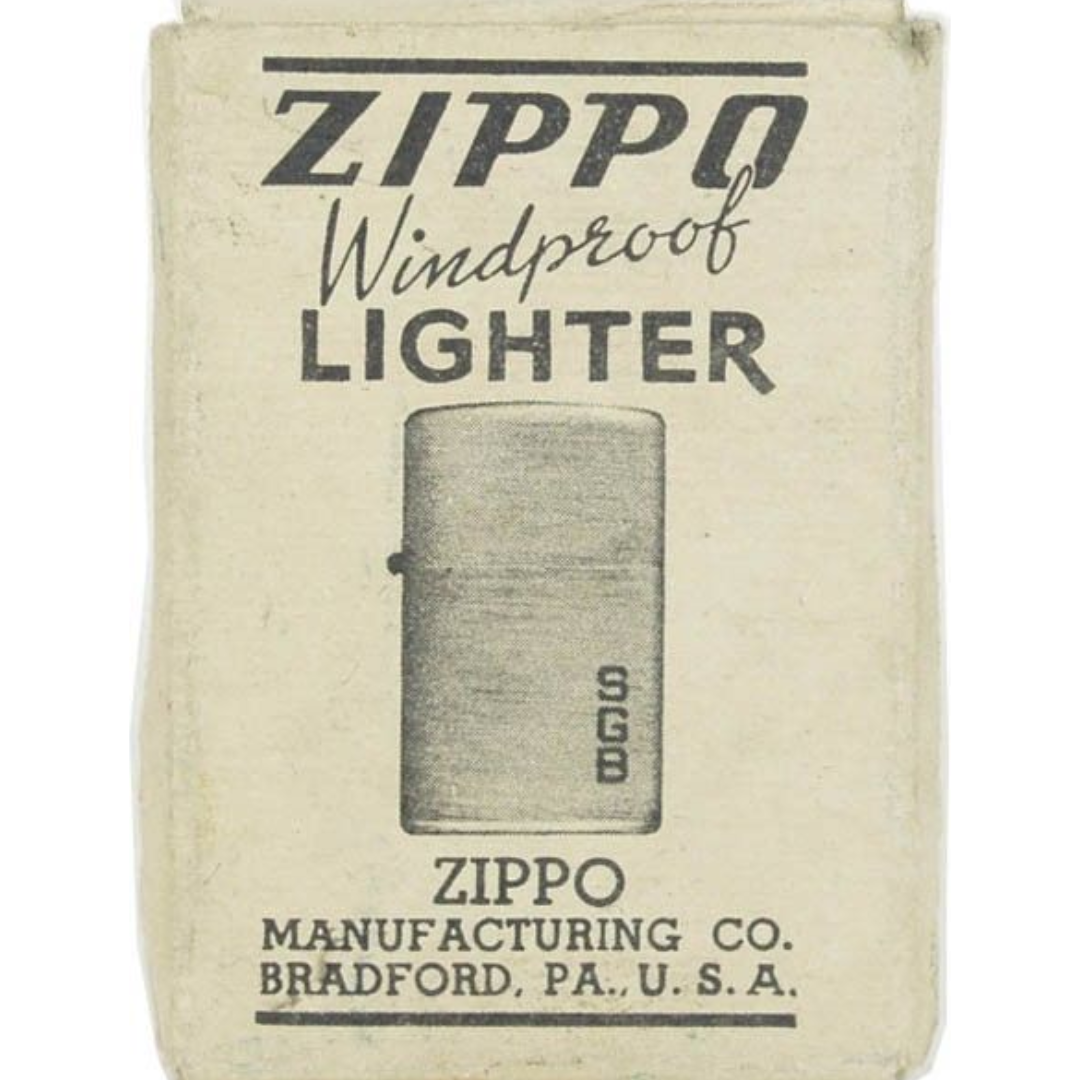
Zippo Windproof Lighter (1932)
A copy of an Austrian lighter.
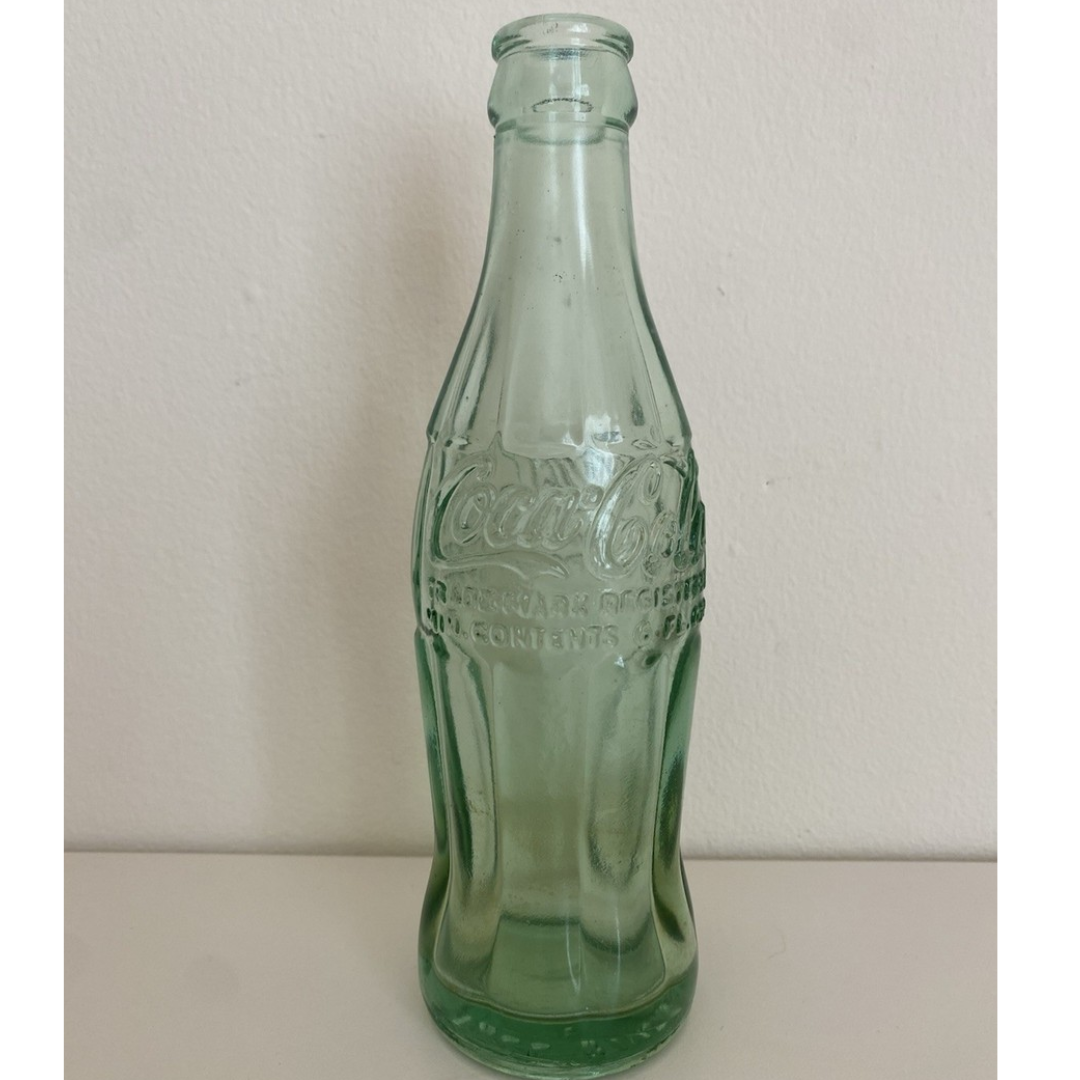
Coca-Cola Contour Bottle (1930s)
It’s not a 1930s design and Raymond Loewy didn’t actually design it, even though everyone thinks he did.
The Coca-Cola Bottling Association in 1915 described their vision: make a bottle you could recognize by feel in the dark or from a single broken piece on the ground. Root Glass in Terre Haute, Indiana, took it on. The shop foreman sent a draftsman to the public library to look up the ingredients.
He couldn’t find useful drawings of a coca leaf or a kola nut, but he did find the cocoa pod. A ribbed, elongated, gorgeous pod not at all related to anything in the drink, and chose to use that instead.
What this time period contributed to the bottle was scale. In the 1930s, they were able to standardize the shape across a national bottling network. The bottles were now able to run through high-speed lines until they became the most reproduced piece of glass in human history. And nothing feels more American than Coca-Cola.
Before Loewy, refrigerators looked like refrigeration with exposed coils, spindly legs, and mechanics in full view. He buried all of it.
The Super Six became one smooth white cabinet with a full-height door, automotive-style chrome hardware, and rustproof aluminum shelving that pulled out. Fewer appliances, more furniture that happened to be cold. Time later called it “a single smooth, gleaming unit of functional simplicity.”
Sears had been selling Coldspots since 1928 to no particular acclaim. After Loewy, sales climbed from roughly 15,000 units to around 275,000 in five years. Same brand, same job, but new shape.
That number is pretty significant. Corporate America had been filing design under decoration and cost. The Coldspot proved it was a revenue strategy, and every board in the country got the memo.
Lowey, never modest, dined out on it for the next 50 years.
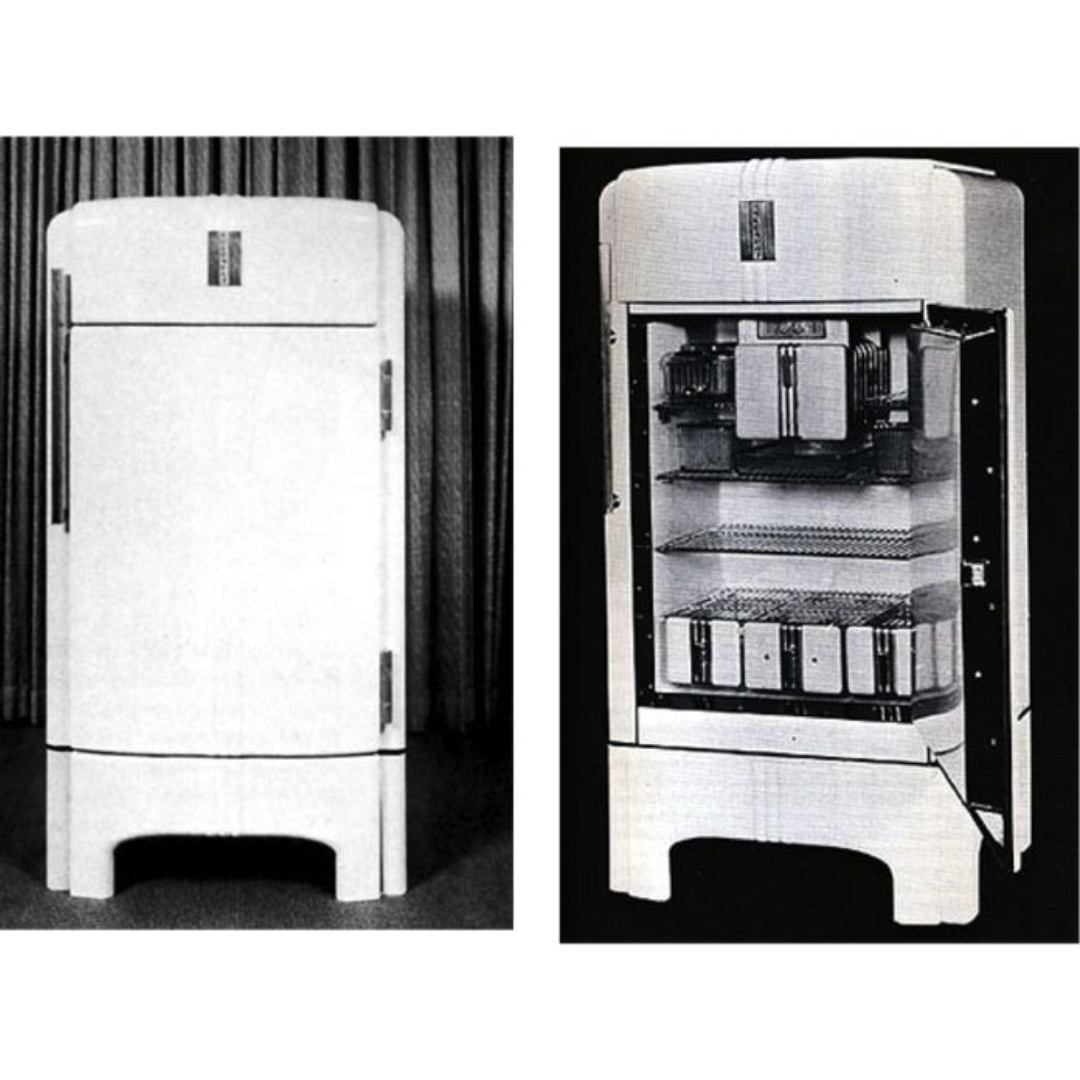
Coldspot Refrigerator (1934)
If you want a single object that created industrial design as a paying profession in America, it’s the Coldspot Refrigerator Raymond Loewy built for Sears.
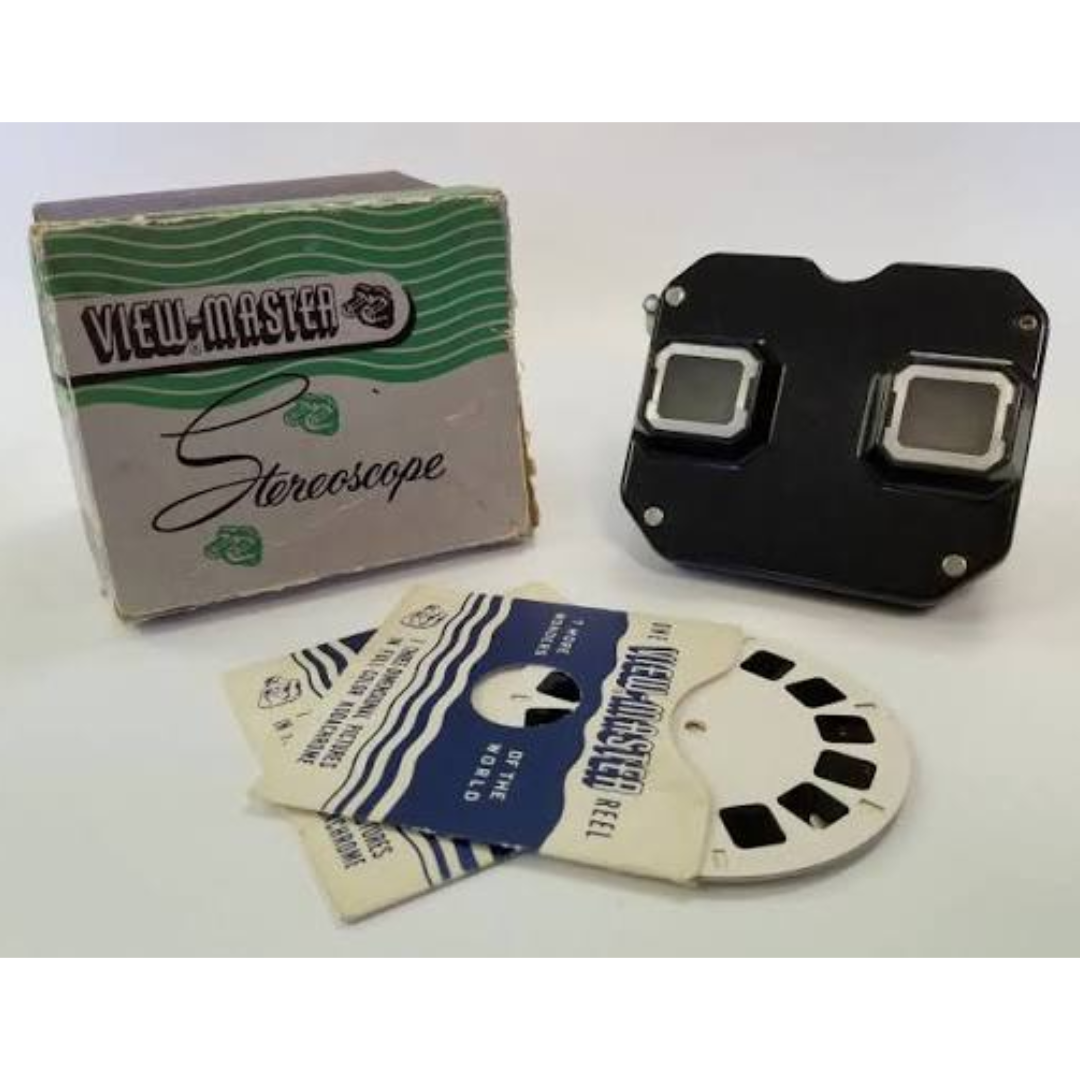
View-Master (1939)
The View-Master wasn’t originally a toy.
William Gruber was photographing Oregon caves in 1938 with two cameras strapped together when Harold Graves, president of Sawyer’s Photographic Services, spotted him. Gruber’s pitch: update the Victorian parlor stereoscope using Kodachrome, which had just arrived and was the first color film worth looking at. They had a deal by morning.
It debuted at the 1939 New York World’s Fair and sold through camera and stationery shops to adults as a scenic travelogue for a country that couldn’t afford to travel. The Grand Canyon for a quarter. The lever is the part people remember. Changing an image became a physical act, which is why the thing is still satisfying to hold. Another interesting use of the View-Master was during the war; the military bought around 100,000 viewers and millions of reels for aircraft and ship identification.
My great-grandparents had one. I remember slides of Hawaii, a place I’m reasonably sure they never went, and the California Redwoods, which I’m certain they saw a thousand times. The Disney licensing came later. That’s the one you owned.
The design does the real work. Flat blocks of primary color, clean type, and four illustrated corners with cat-zinc charms heavy enough to feel like an avatar. You can read the entire ruleset off the board without instructions. The origins, however, are a bit uglier.
Monopoly descends directly from The Landlord’s Game in 1904 by Elizabeth Magie, who built it as a teaching tool against land monopoly. The point was to show players how rent extraction concentrates wealth and ruins everyone else. Charles Darrow found a version of it decades later, adjusted it, and sold it to Parker Brothers, who inturn, marketed him as the sole inventor and made him rich.
In November 1935, they bought Magie’s patent for $500 and no royalties, to clear the field. So yes, the definitive American celebration of getting rich off real estate is a stolen anti-capitalist protest game. It’s the American way.
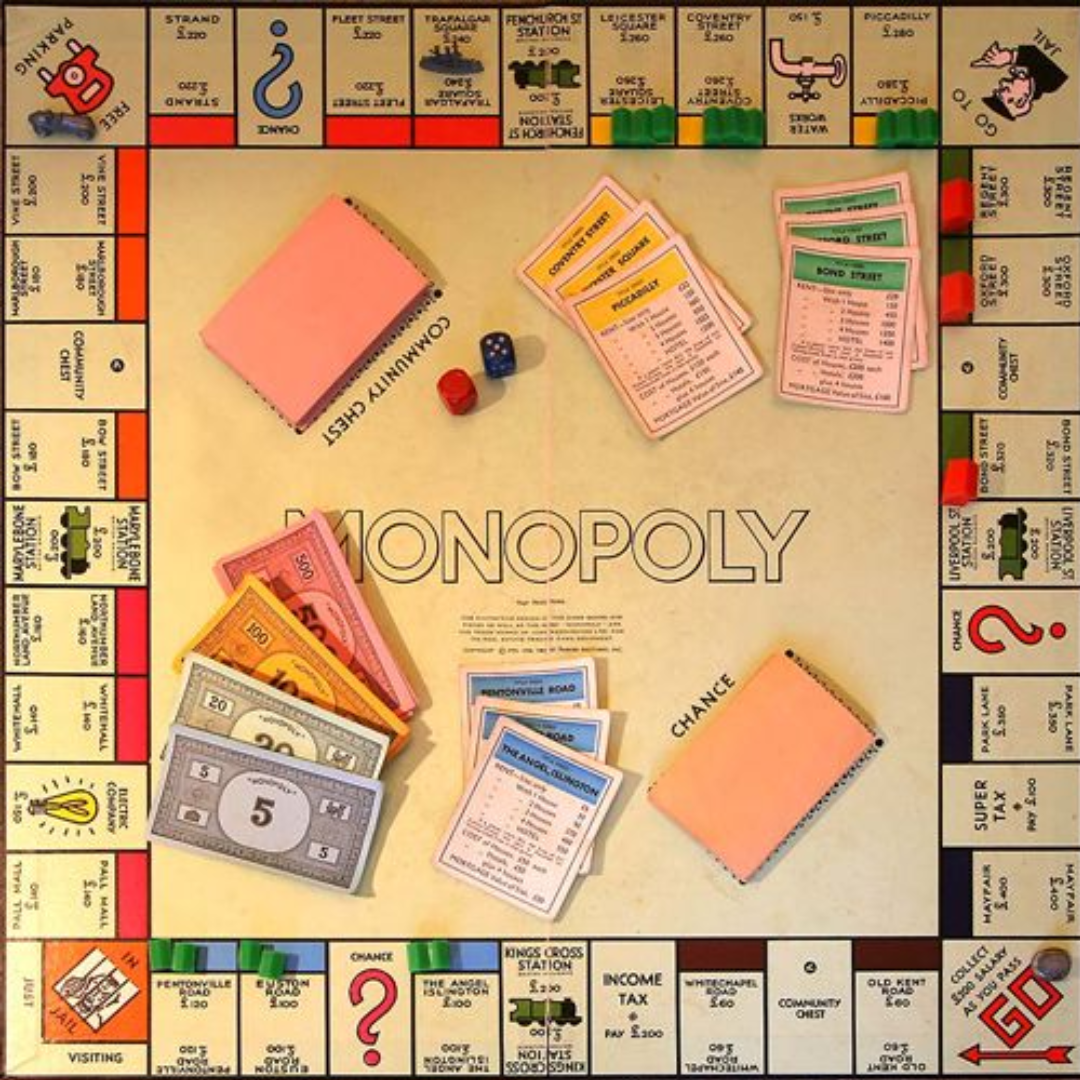
Monopoly Board Game (1935)
Graphically, it’s a masterclass. In practice, it’s a nightmare that doesn’t end until someone throws the board across the room over a questionable purchase or a cheating accusation.
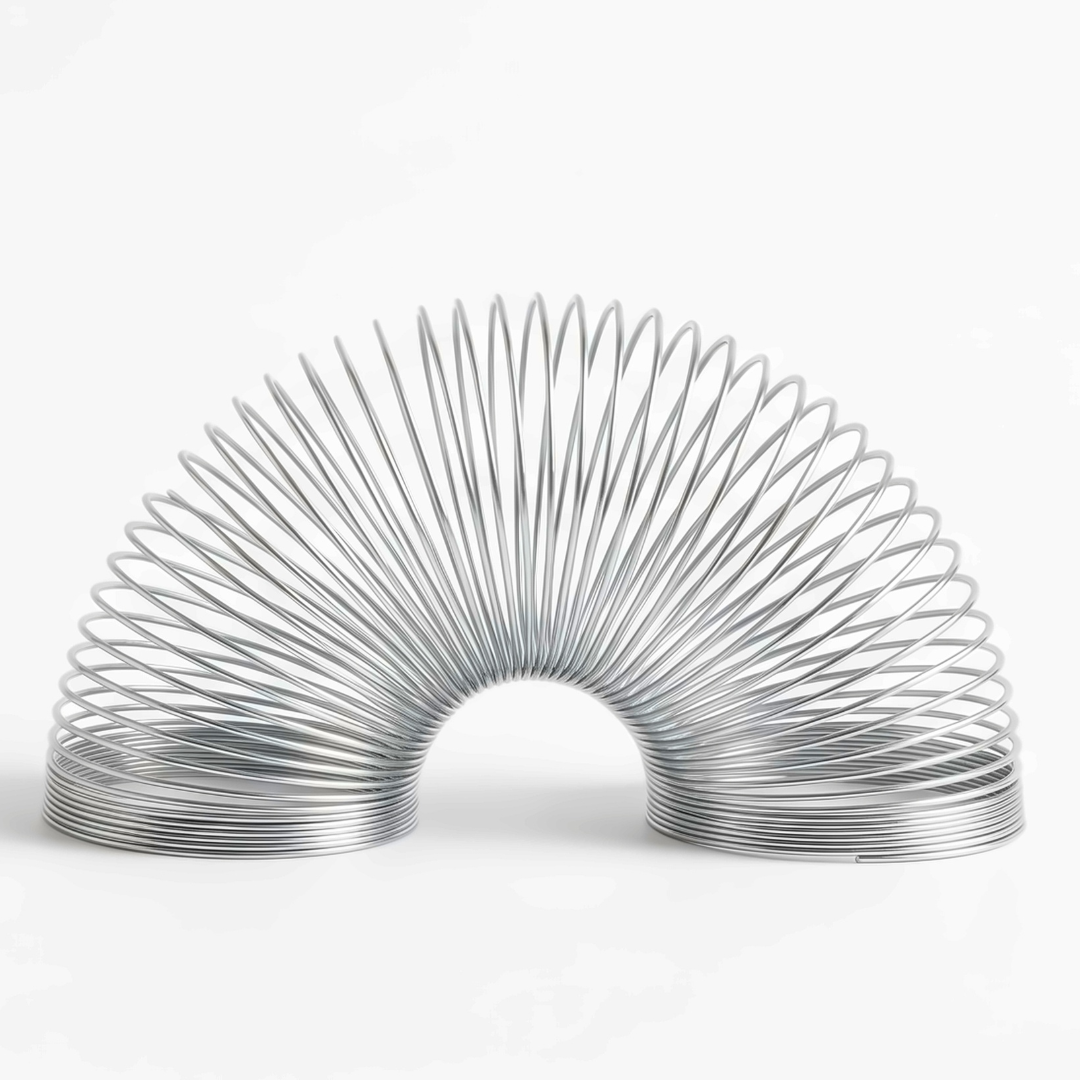
The Slinky (1945)
A navy engineer dropped a spring and watched it walk.
Eighty feet of flat, white steel, coiled. No motor, no paint, and no printing. One material and the behavior of gravity. The most purely minimalist object America has ever mass-produced, and no one involved was thinking about minimalism for a second.
They made 400 by hand for a counter at Gimbels in Christmas of 1945. Sitting still, nobody cared. Richard sent one down a ramp, and the whole run went in 90 minutes for a dollar apiece.
Then there’s Betty. She named the toy and ran the company for forty years after Richard left their family in 1960 for a Bolivian religious sect. She kept the price deliberately low and revived the toy when Slinky Dog showed up in Toy Story in 1995, moving 300 million units. Women get shit done.
Wurlitzer spent the war, much like everyone else at the time, building material instead of what they are known for now: Jukeboxes. When Paul Fuller, their chief designer from 1935 to 1948, got to build again in 1946, he decided not to build something restrained.
The 1015 is an arched cathedral of translucent lucite and catalin lit from the inside by color-cycling neon, wrapped in chrome, with heated glass tubes running up the sides filled with low-boiling point liquid that bubbles continuously. Nothing about these bubbles serves the music, but they exist to pull your eye across a dark room from forty feet away, and they absolutely work. It played twenty-four sides at 78 rpm and moved 56,000 units in eighteen months, making it the best-selling jukebox ever built. Every visual shorthand for a mid-century diner traces right back to this cabinet. It’s post-war American euphoria rendered in plastic.
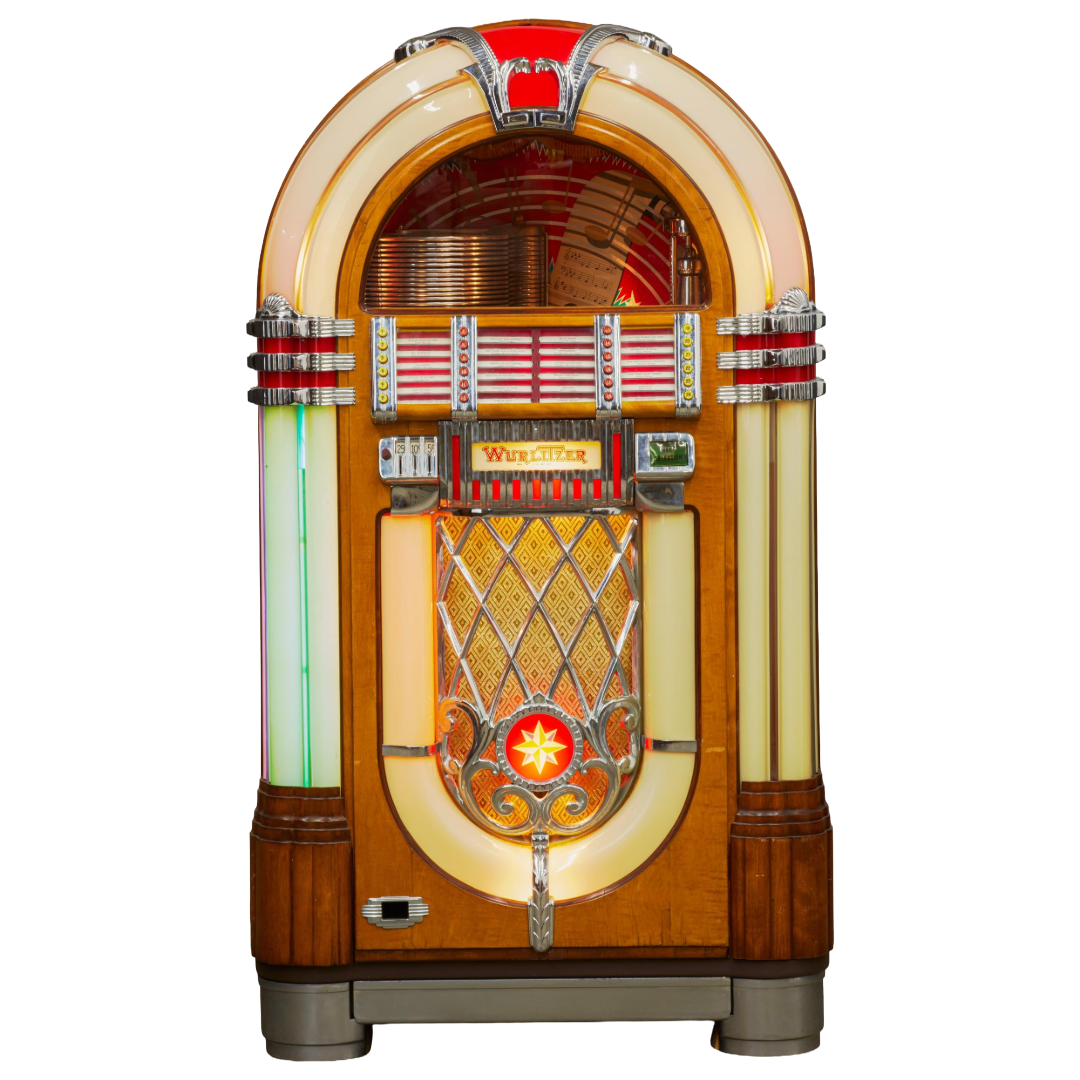
Wurlitzer 1015 Jukebox (1946)
The bubbles serve no purpose.
Where this leaves us
When I started looking into these objects, I thought I’d be writing about history, shapes, and maybe some fun facts. What I found was mostly attribution fights. It happened all over the era. Bantam drew the Jeep, and someone else got the name. Bowlus engineered the Airstream, and Byam got the brand. Magie invented Monopoly, and Darrow got the money. Loewy is credited with a bottle he never touched, while the man who actually drew it looked up the wrong plant in a library. Even Gibson turned down the electric guitar and now sells it.
The tidy version of design history says a visionary had an idea, and the world caught up. The real version is messier and so much more American than that. Someone somewhere solves a problem, someone else notices it can be sold, and the credit lands wherever a marketing budget points it. None of that makes the objects any less good. The Zippo lighter is still going to light in the wind, and the Slinky is always going to walk by itself.
What this era settled was that in America, an object was never going to be allowed to just work. It also meant something as it did.
We will pick this up in 1950, when that exact idea gets a suburb to live in.