Say “brutalism,” and most people see the same picture: a gray Soviet housing block under a gray sky or a government building designed and determined to make you wait in line. Italy had the same concrete and came out with something else entirely. After the way, its architects poured it into medieval towers, tent-shaped churches, and cemeteries that feel like gardens. They paired it with brass and marble. They let it be beautiful.
This is the version of brutalism that we could actually live with now. Here’s where it came from, how to spot it, where to see it, and how it’s quietly shaping the rooms all of us are saving right now.
First, it isn’t brutal
The name has nothing to do with aggression. It comes from béton brut, French for “raw concrete,” the finish Le Corbusier made famous by leaving marks of the wooden molds right on the surface. British critics turned it into a movement name during the 1950s, and the word has been scaring people off ever since.
Italy came out of World War II with a lot of rebuilding to do, but not a lot of money to work with. Concrete was cheap, fast, and endlessly moldable. From the 1950s through the ‘70s, architects there treated it less like a budget material and more like clay. What made the Italians different was their refusal to forget where they lived.
Firms like BBPR and architects like Carlo Scarpa and Giovanni Michelucci found international modernism too clean and too placeless. They wanted new buildings that still looked like they belonged next to the old ones. In 1959, the critic Reyner Banham accused Italy of “retreating” from modern architecture. Looking at what they built, it might be one of the best retreats in design history.

How to spot it
You don’t need an architecture degree. I certainly don’t have one. You just need to look for:
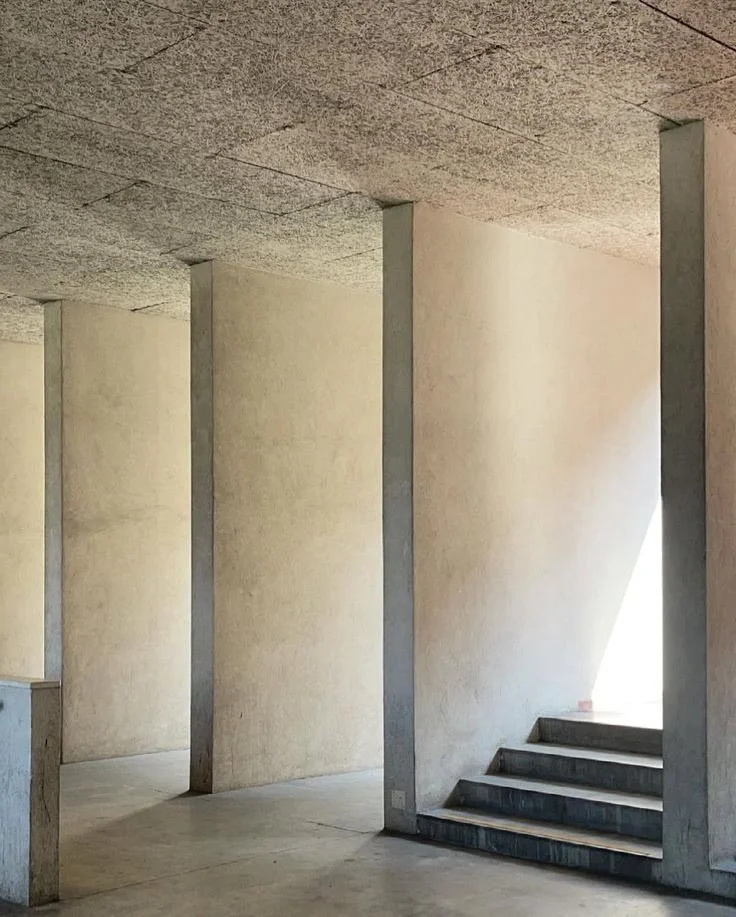
Wood grain in the concrete. Board-formed walls keep the imprint of the planks they were poured against. You can read how the building was made just by looking at it.
Shapes that look carved. Swooping roofs, heavy overhangs, silhouettes that feel closer to a sculpture than to an office park.
Something precious next to something rough. Concrete beside gold mosaic, polished brass, terracotta, terrazzo, or warm wood. The contrast is much of the point.
Light is treated like a material. Deep-set windows, coffered ceilings, and narrow slots that throw hard shafts of sun across the floor. Italians have been doing chiaroscuro since Caravaggio. They just switched mediums.
Part I: The Outsides
The Medieval Skyscraper
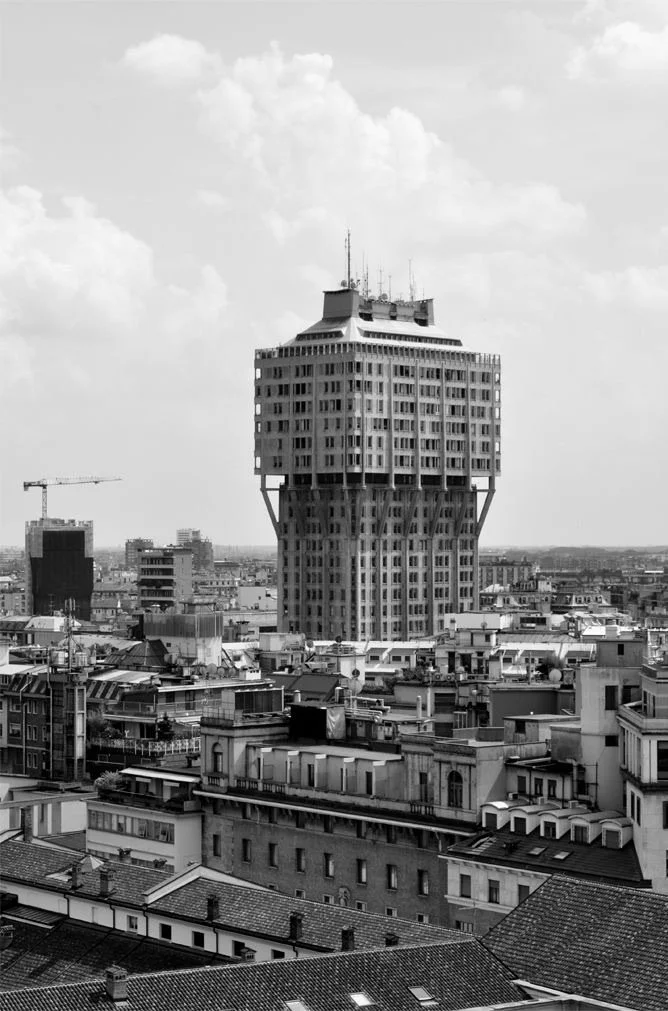
Torre Velasca, Milan
BBPR finished it in 1958, and it’s the building that made Banham so cross. It rises narrow and then flares out near the top like a mushroom, borrowing the shape of a Lombard fortress tower where the upper floors jut out past the walls below. Offices took the slim stem while apartments got the roomy cap. It went up in 292 days and has been protected as a historic building since 2011. Milan has plenty of polite towers, but this one certainly isn’t one of them.
If you get close to this one, choose a point where the vertical ribs on the facade split off into buttresses angling up under the overhang. Notice the cladding, precast panels of marble grit and clinker, which is why the whole tower looks more like weathered stone rather than raw gray.
The Sculptural Landmark
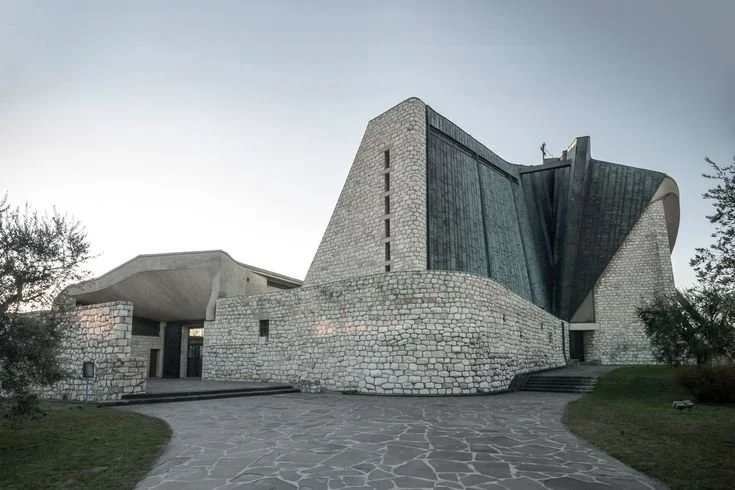
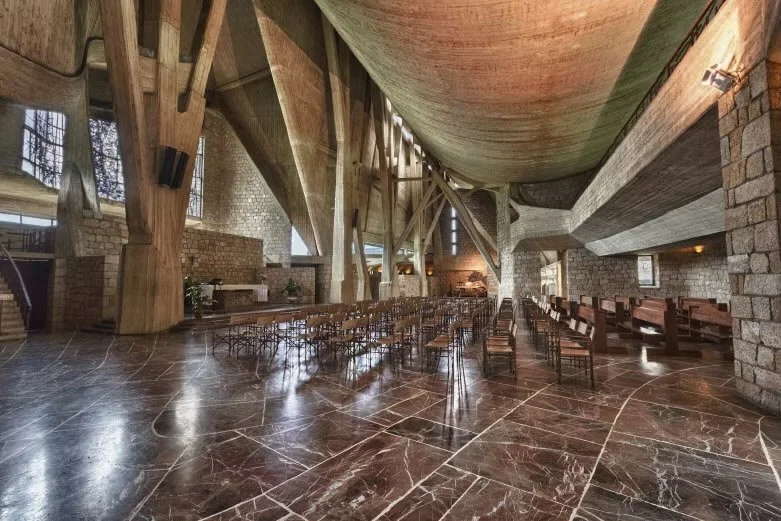
Chiesa dell’Autostrada del Sole, near Florence
Giovanni Michelucci built it in the early ‘60s at a rest stop on the A1, dedicating it to the workers who died building the highway. It’s a church for people on the road, which is an incredibly romantic design brief if I’ve ever heard one. The roof is the showstopper. It heaves and folds like a tent caught in a storm. Sheathed in copper that’s gone green outside and stays burnished blond inside. Underneath, the walls are rough stone, and the floor plan curves in on itself.
In your photos, capture the roofline from the outside. The forest of concrete supports holds it up from within.

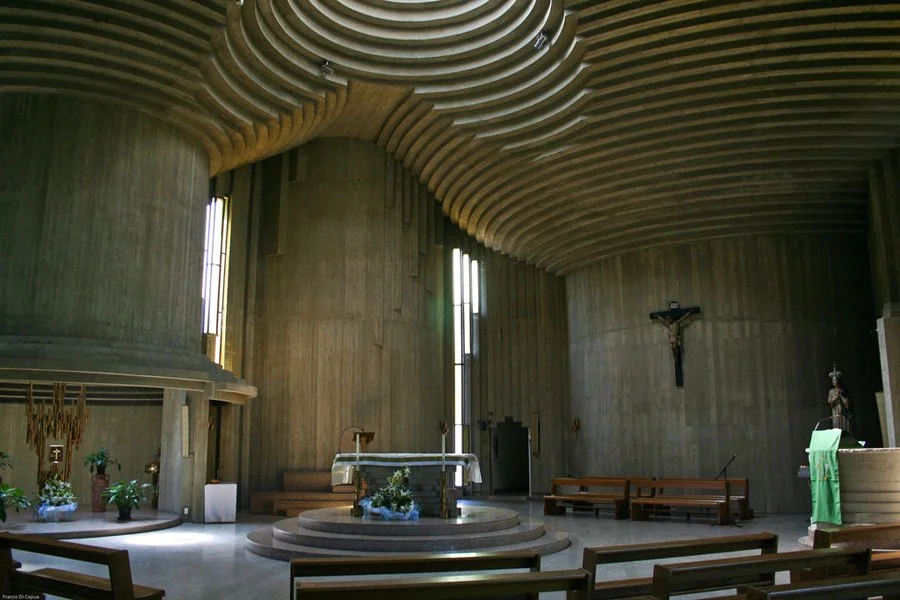
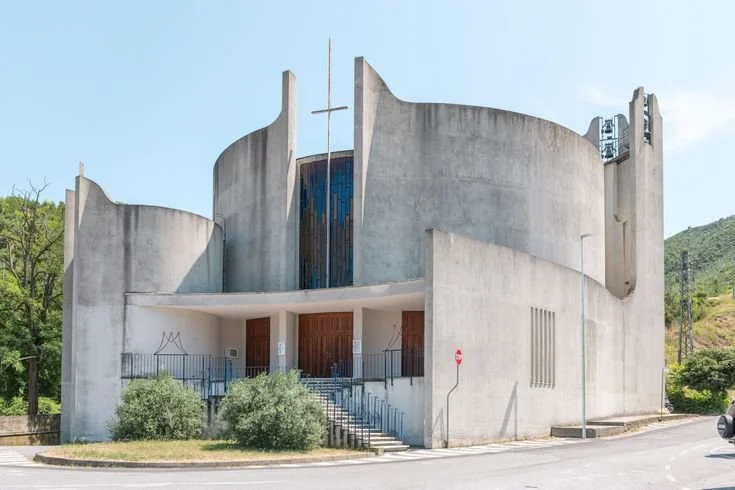
Chiesa della Sacra Famiglia, Fratte, Salerno
Salerno has its own version of this energy. Paolo Portoghesi and engineer Vittorio Gigliotti’s Chiesa della Sacra Famiglia was started in 1971, and is made of concentric concrete circles, with three big convex curves meeting to form the dome as a nod to the Trinity. The narrow windows split the light into blue-green glass for the human and yellow-white for the divine. The build may have started in 1971, but the finishing touches dragged on until 2011. Making the windows do theology is the most Italian part. Taking forty years is a close second.
Brion Cemetery, San Vito d’Altivole, near Treviso
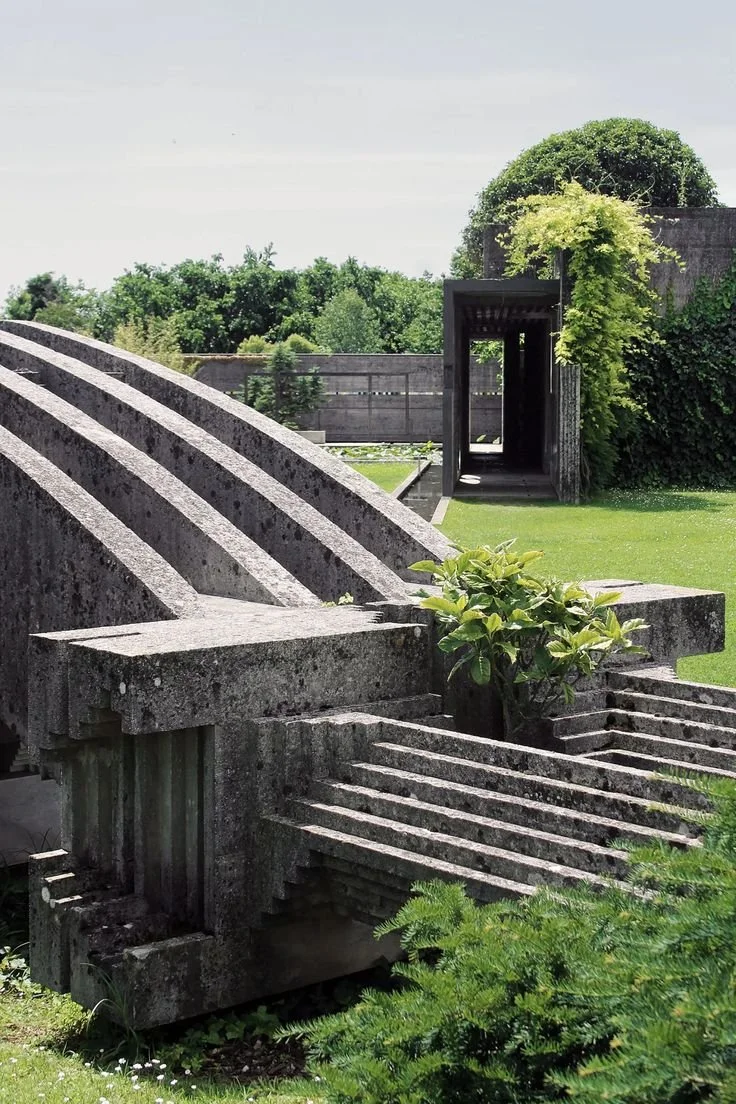
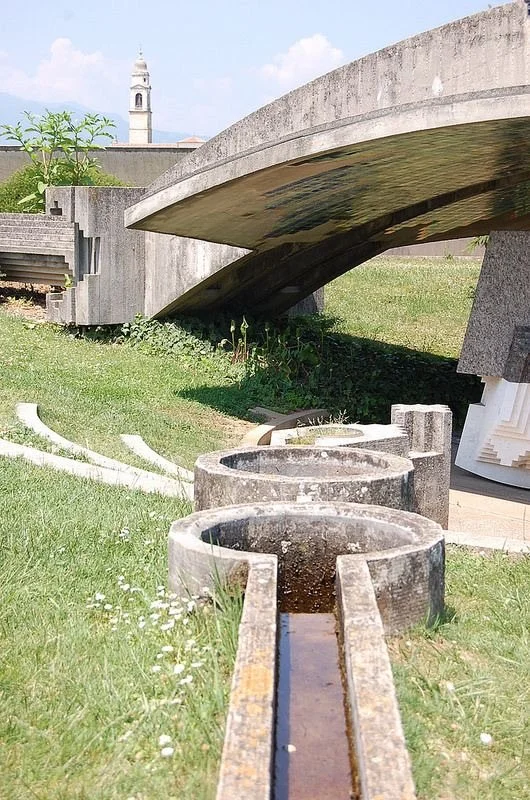
Carlo Scarpa spent the last decade of his life on this tomb for Giuseppe Brion, the man behind Brionvega, after Brion’s widow Onorina, commissioned it in 1969. Slanted concrete walls, a reflecting pool gone wild with plants, and two overlapping circles cut into the wall like a pair of eyes. Scarpa believed “the place for the dead is a garden,” and he’s buried right beside it. Hard to argue with a man who designed his own neighborhood.
The Futuristic Complex
This is where Italian Brutalism gets closest to the stereotype, and more interesting for it.
Corviale, Rome
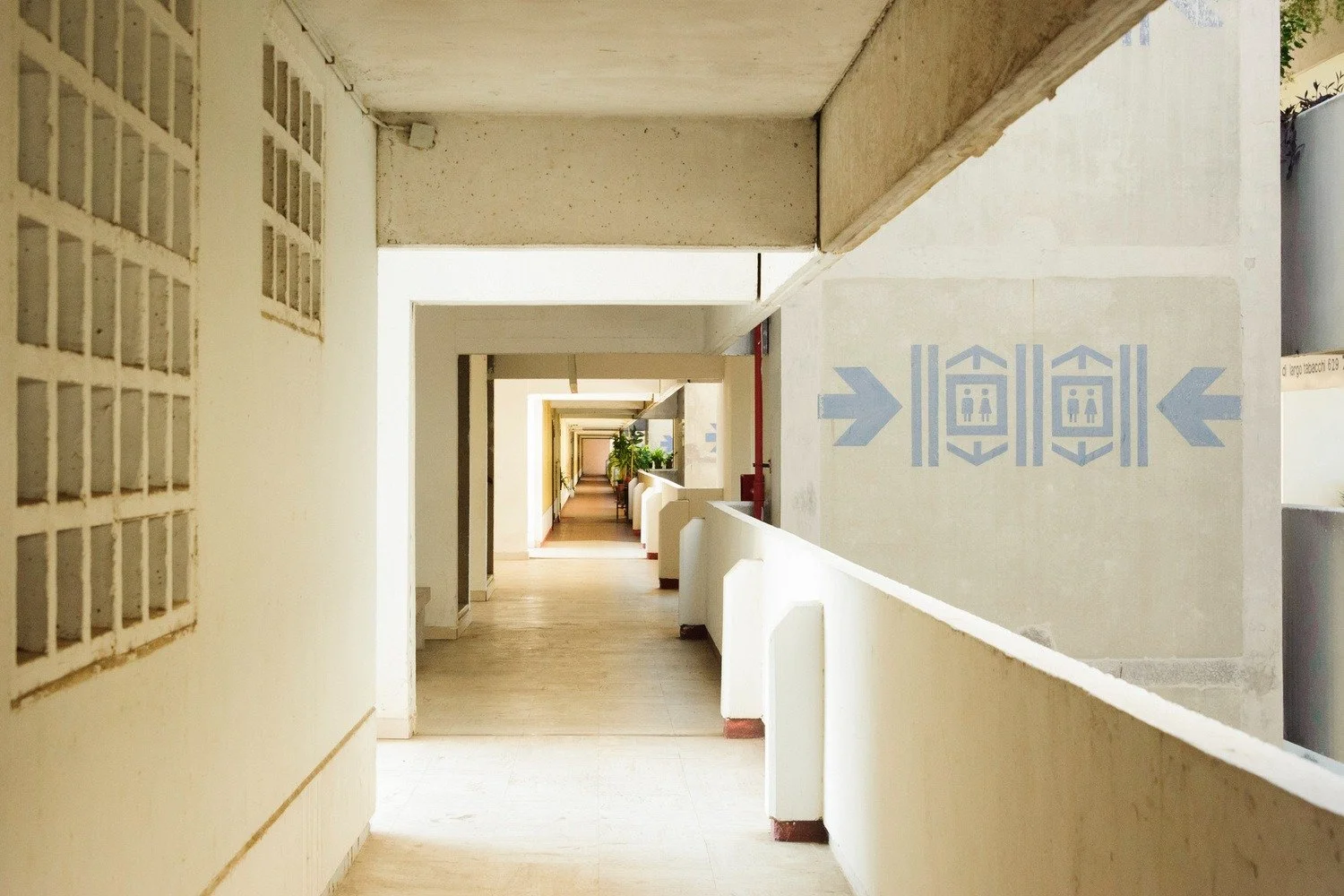
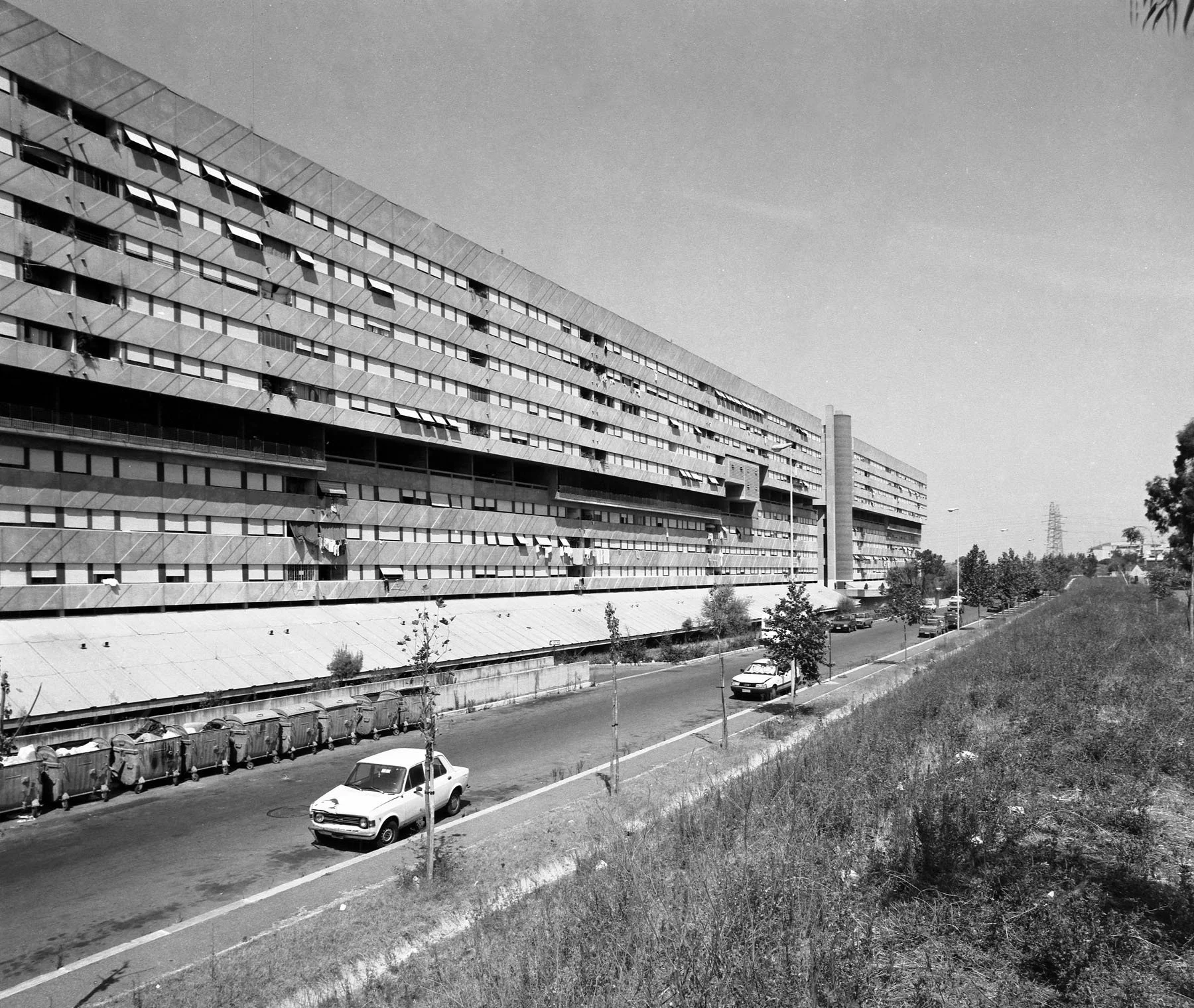
Mario Fiorentino’s team built a single residential block one kilometer long between 1973 and 1982. Romans call it the Serpentone, the big snake. The fourth floor was supposed to hold shops and services for the whole building; the contractor went bankrupt, the plan died, and residents moved into the empty floor themselves.
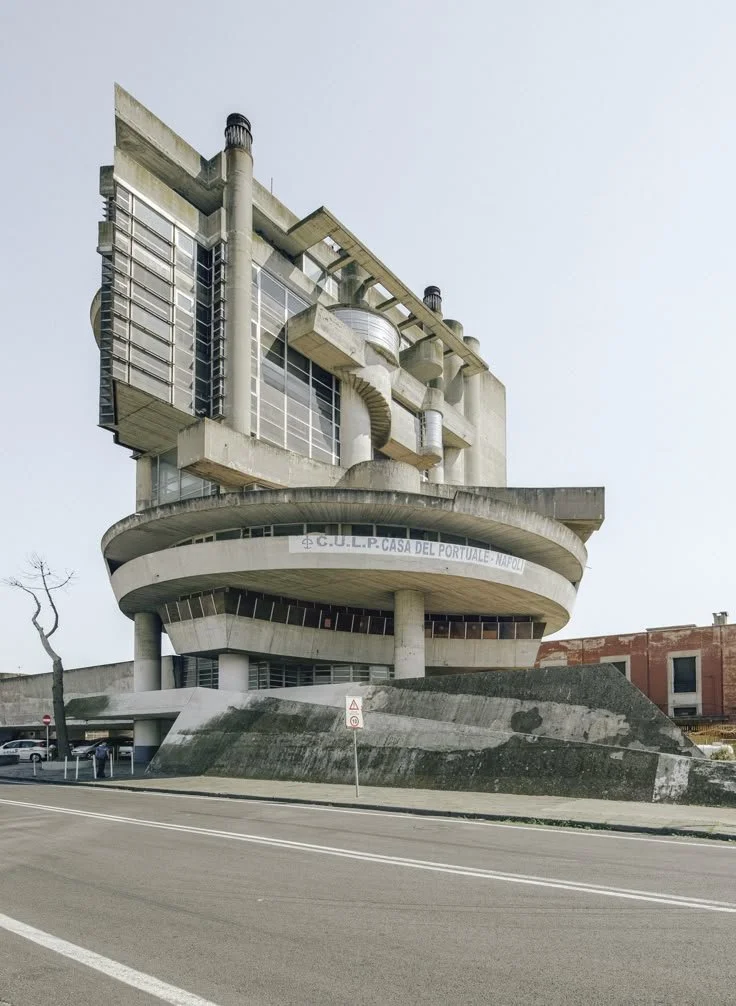
Vele di Scampia, Naples
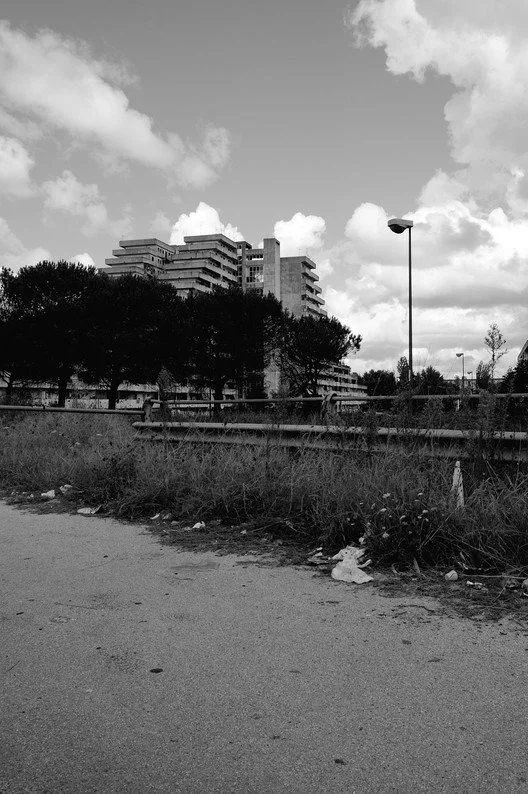
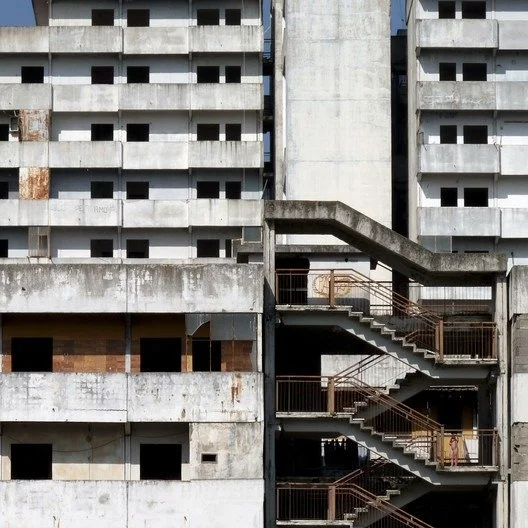
Francesco Di Salvo’s seven slanted blocks, built between 1962 and 1975, were meant to look like snails and recreate the life of Naples’ packed alleys, but stacked vertically. They became famous for the wrong reasons, most visibly as a set for Gomorrah, and most have since been demolished.
Monte Amiata, Milan
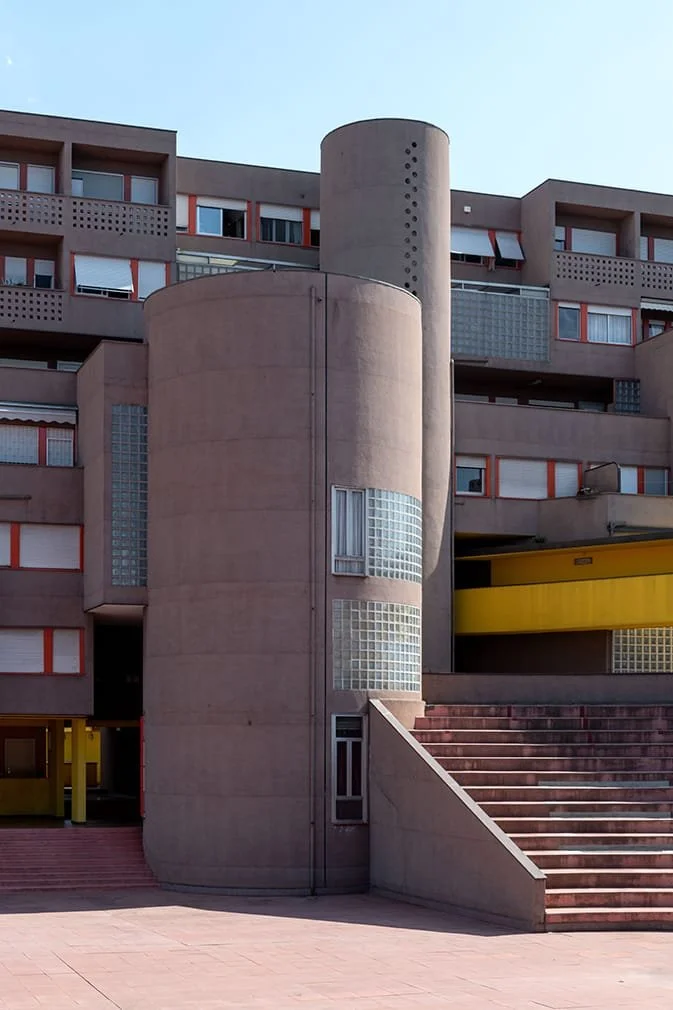
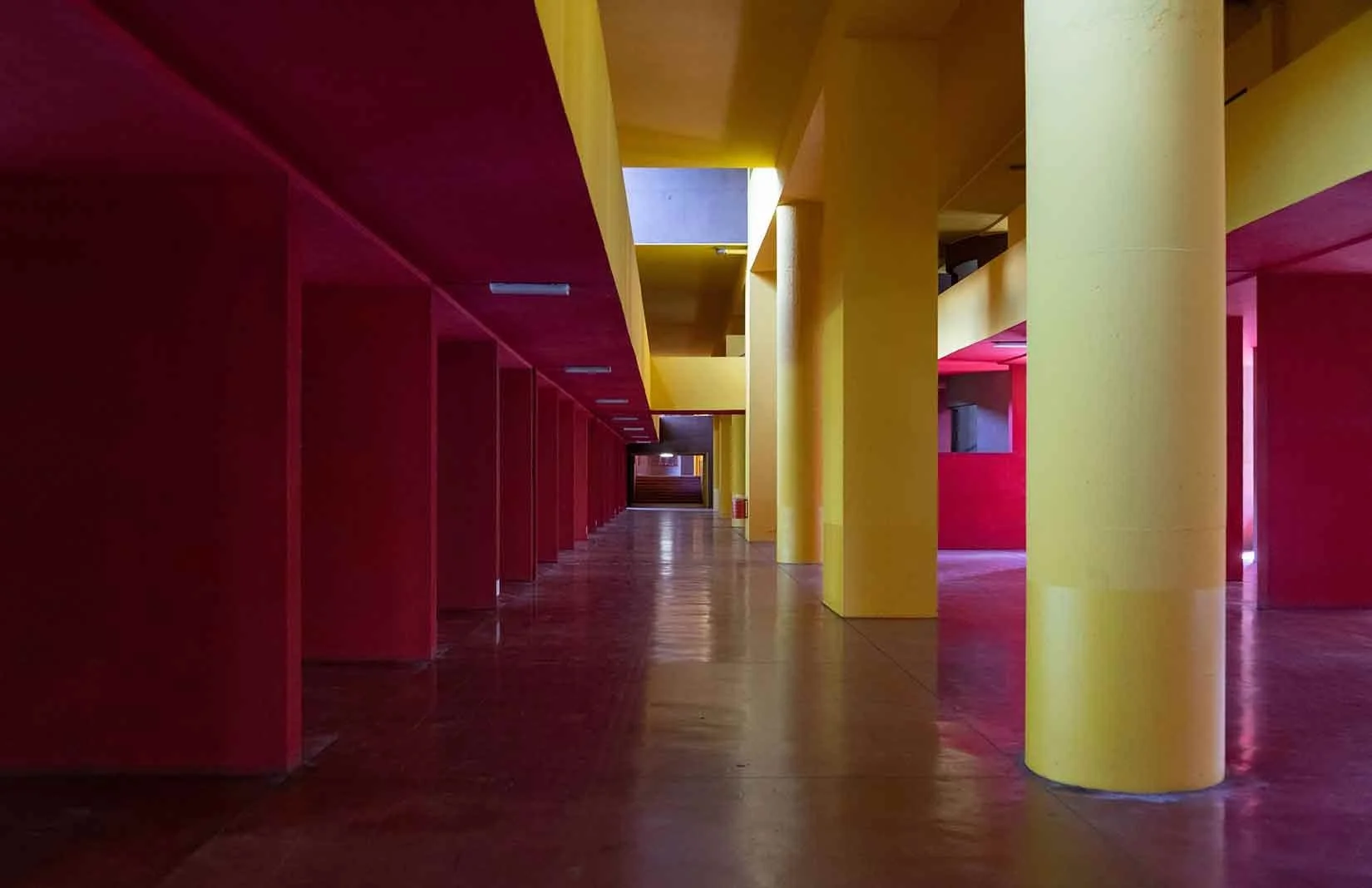
Carlo Aymonio’s complex in the Gallaratese district, with one block by Aldo Rossi, went up between the late 1960s and 1974, and the locals named it The Red Dinosaur. Accurate. It’s a small city of red concrete slabs linked by bridges and terraces around a yellow open-air theater. The architects listed Le Corbusier among their references, which you’d expect, but also Giorgio de Chirico’s paintings, which you wouldn’t. British brutalism housed people. Italian brutalism wanted to house them inside a painting.
San Cataldo Cemetery, Modena
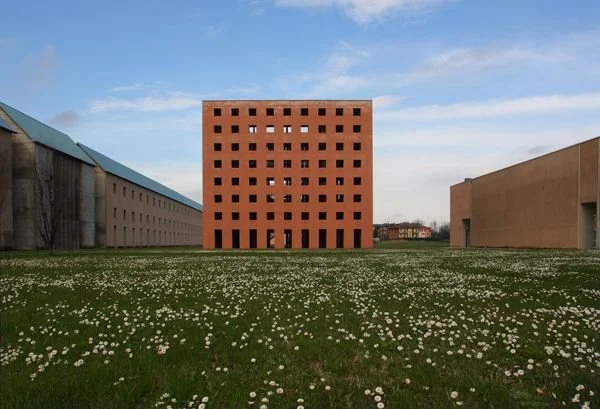

Aldo Rossi, with Gianni Braghieri, worked out this design in 1971 while recovering in a hospital after a car crash. The centerpiece is a terracotta-colored ossuary cube punched with rows of identical windows, with no glass and no roof. Rossi’s city of the dead remains unfinished, and the planned cone tower never got built. It looks like a de Chirico painting someone forgot to put people in.
In your photos, get the repetition. Deep window grids, the rhythm of the balconies, and a facade that keeps going long after the frame ends.
Part II: The Insides
Raw walls, polished everything else
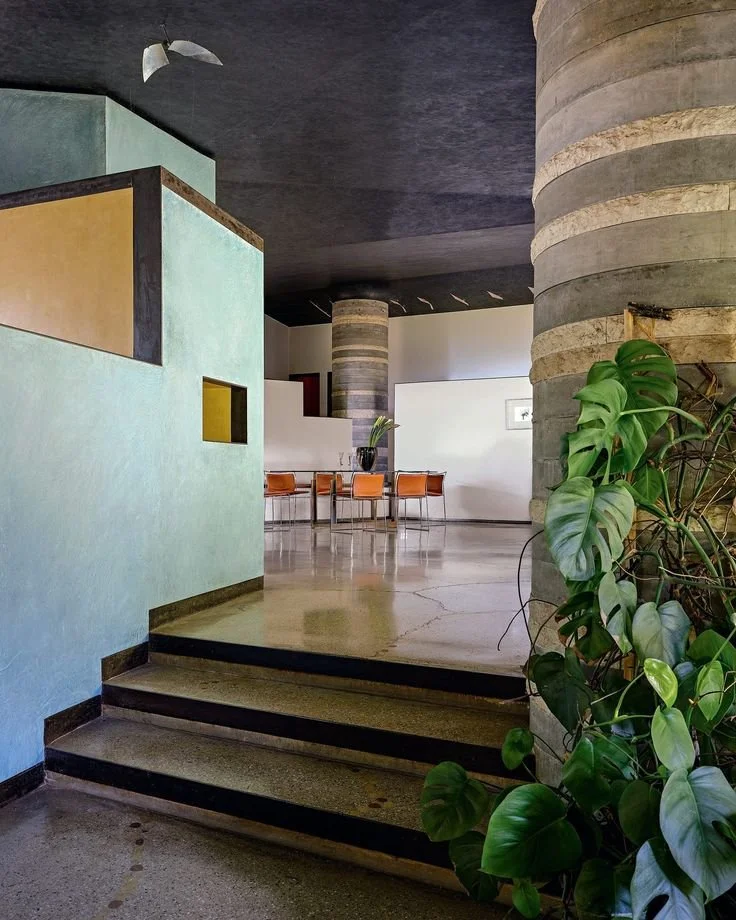
The best Italian interiors from this era refuse to pick a side. At Scarpa’s Bron tomb outside Treviso, rough concrete walls carry inlays of gold tile that looks lift from a Byzantine mosaic. At Villa Nava, Francesco Castiglioni’s 1970 concrete house outside Milan, full-height glass keeps all that weight from feeling like a bunker.
Raw on the walls, refined underfoot, and at hand. That’s the formula.
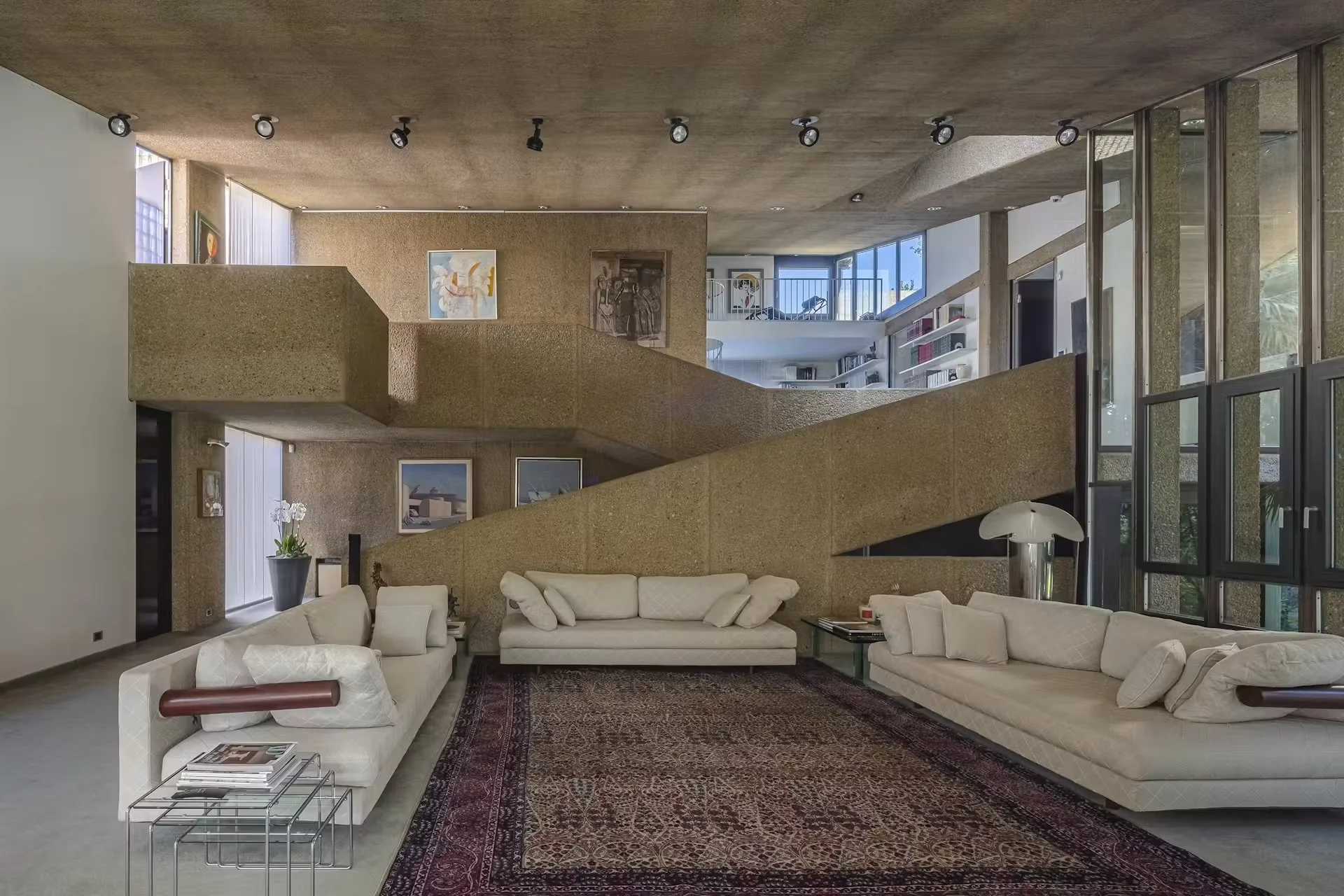
The Staircase as Centerpiece
Villa Nava’s living room is organized around a monumental concrete staircase, and the double-sided fireplace beside it doesn’t hurt. Scarpa did the most famous one, and it isn’t even concrete. In the Olivetti showroom in Venice, he set a stair of cantilevered Aurisina marble slabs in the middle of the room, each step offset from the one below so the whole thing looks like it’s floating. It’s part of the reason you’ll find people booking trips to Venice to skip the gondola.
Light that does the work
Step inside the Sacra Famiglia and those green-blue and yellow-white windows take over, throwing color that moves across the bare concrete all day. No chandelier could compete.
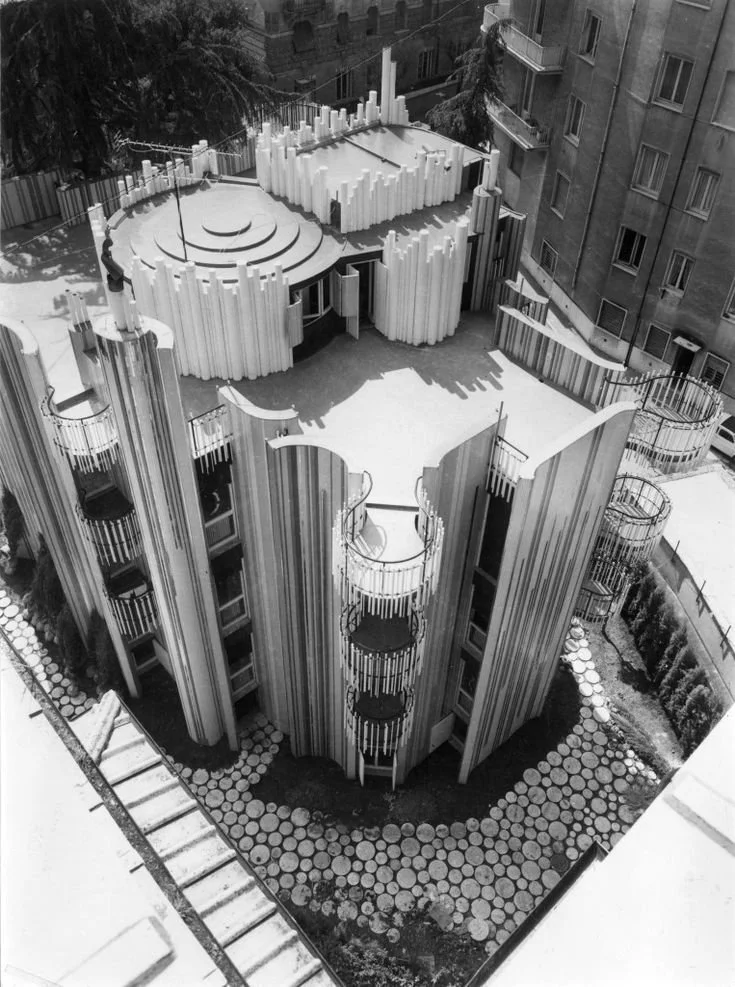
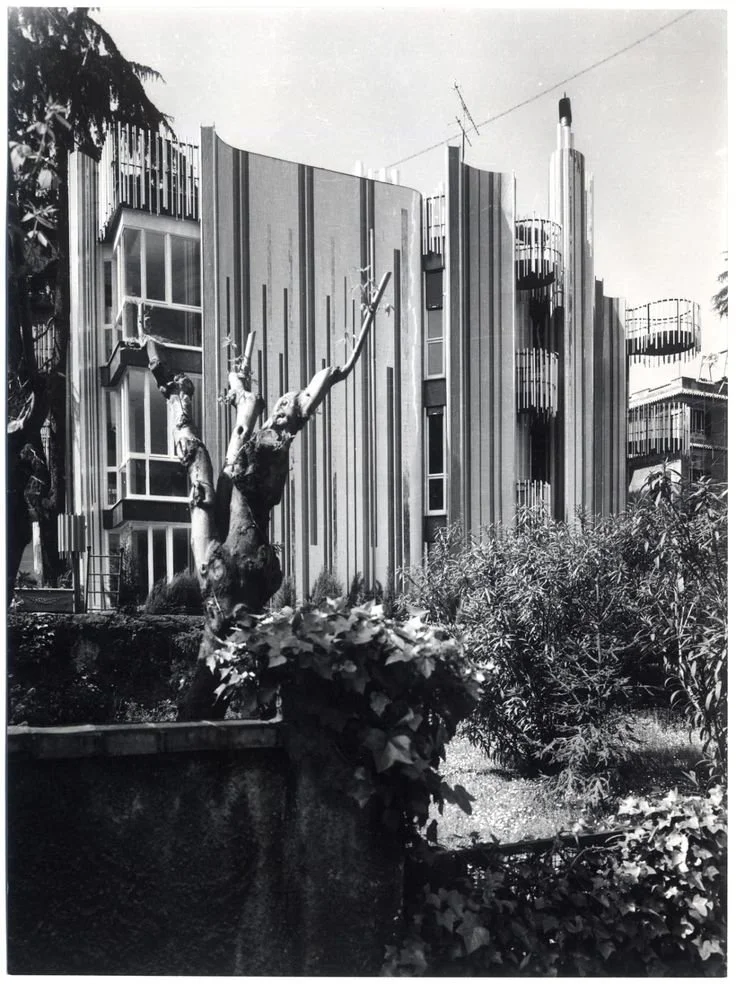
Heavy walls need warmth, and the Italians knew exactly where to put it: brass fittings, leather, velvet, and wood. Scarpa left the brass screws on his Olivetti stair exposed, like jewelry. For the maximal version, there’s Casa Papanice in Rome. Portoghesi and Gigliotti designed it in 1966 for the builder Pasquale Papanice: stacked circular balconies wrapped in bands of gold, green, and blue majolica. Inside were round velvet sofas and marbled glass pod doors. Those space-age rooms are gone, and the building now houses the Jordanian Embassy. The films are the only record of the days gone by. It’s the set of Ettore Scola’s Dramma della gelosia and two gialli: the Strange Vice of Mrs. Wardh and The Red Queen Kills Seven Times, which feels exactly right.
Where you’re seeing it now
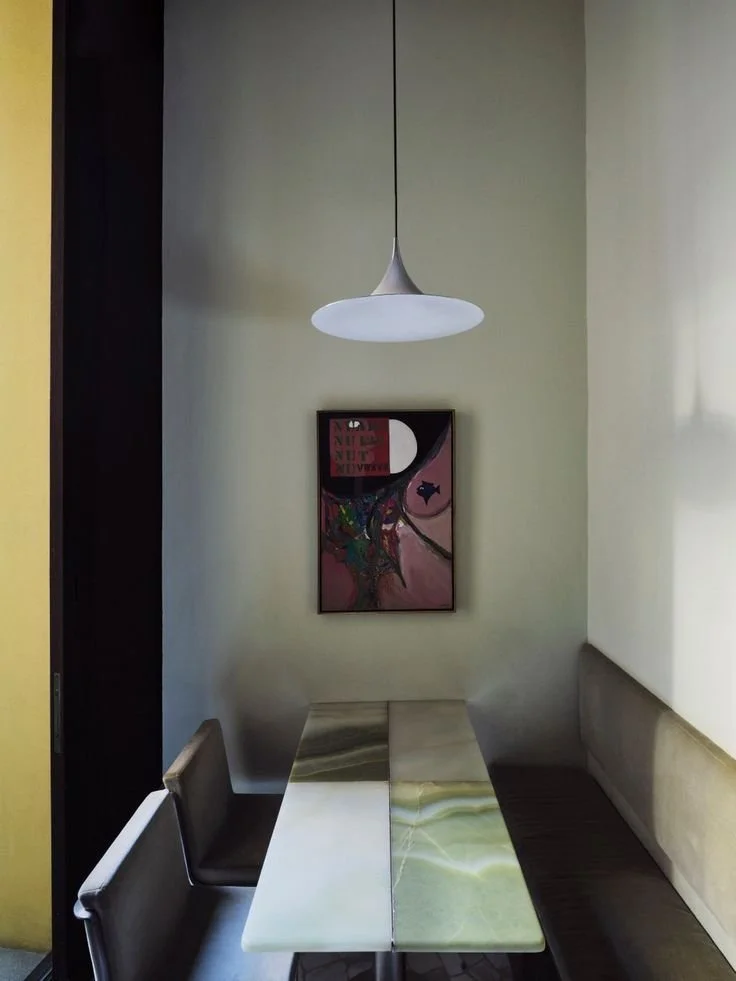
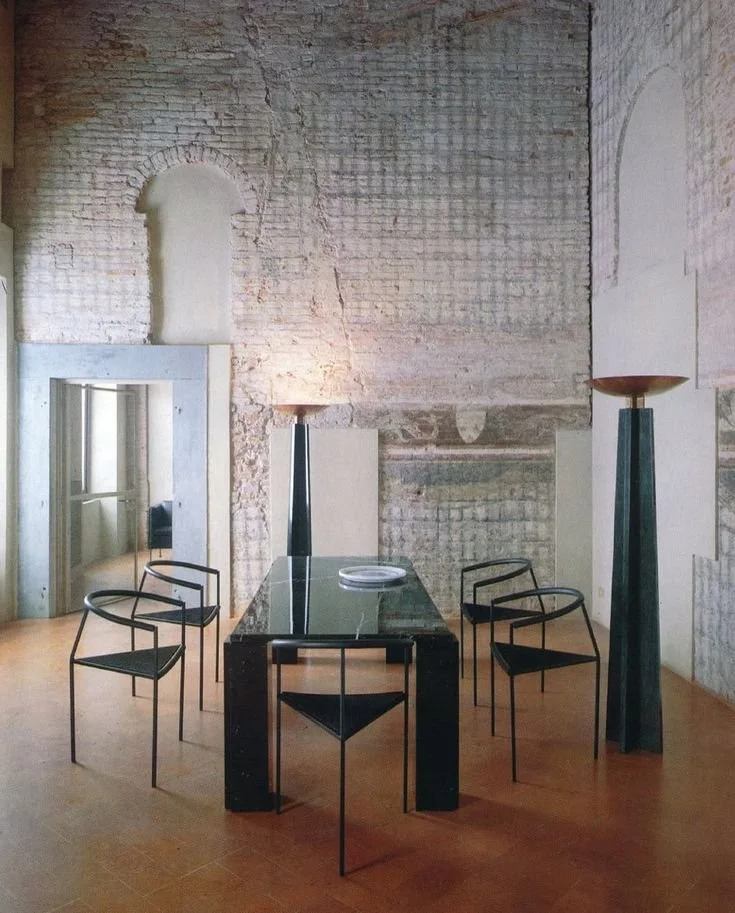
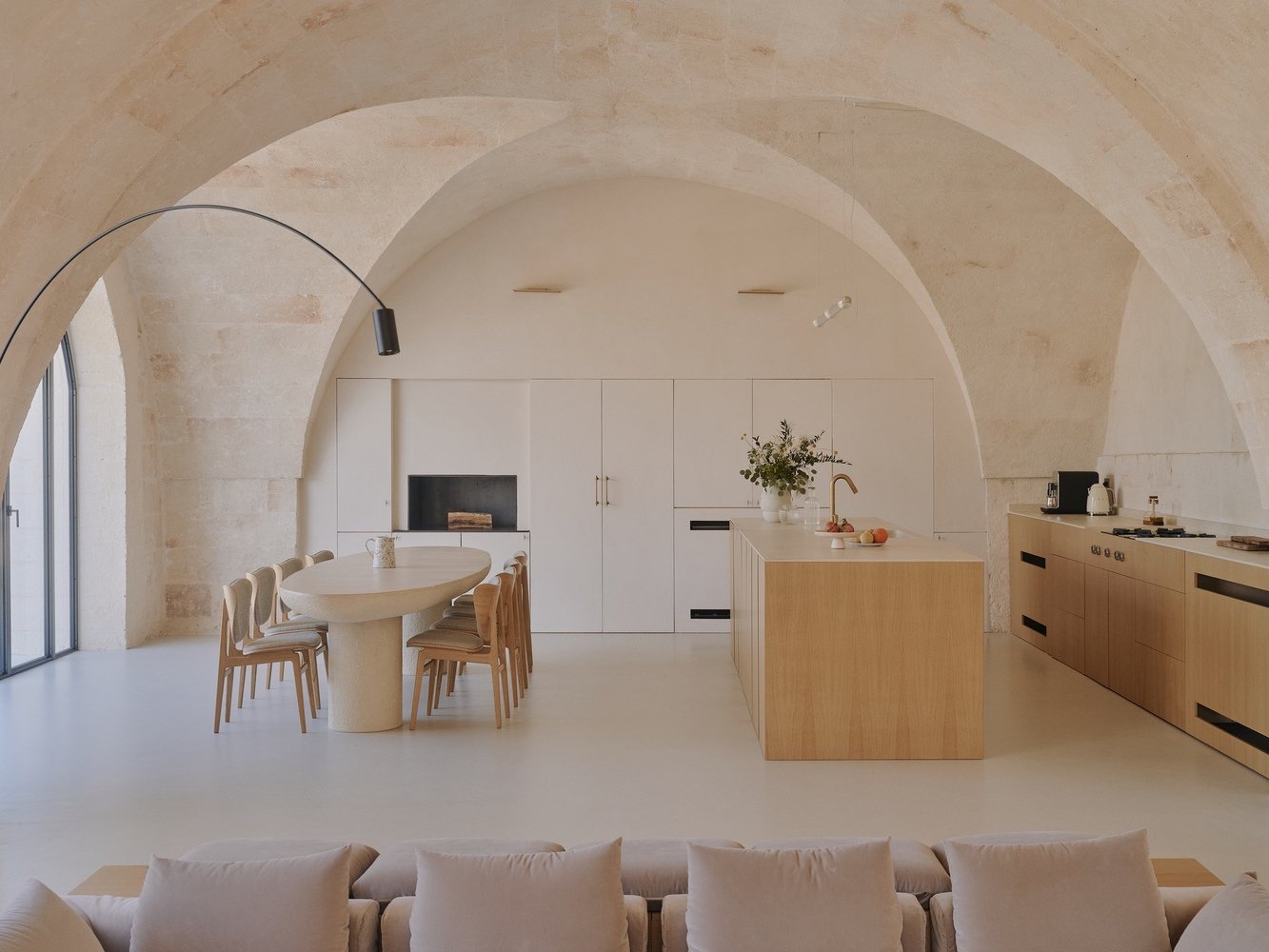
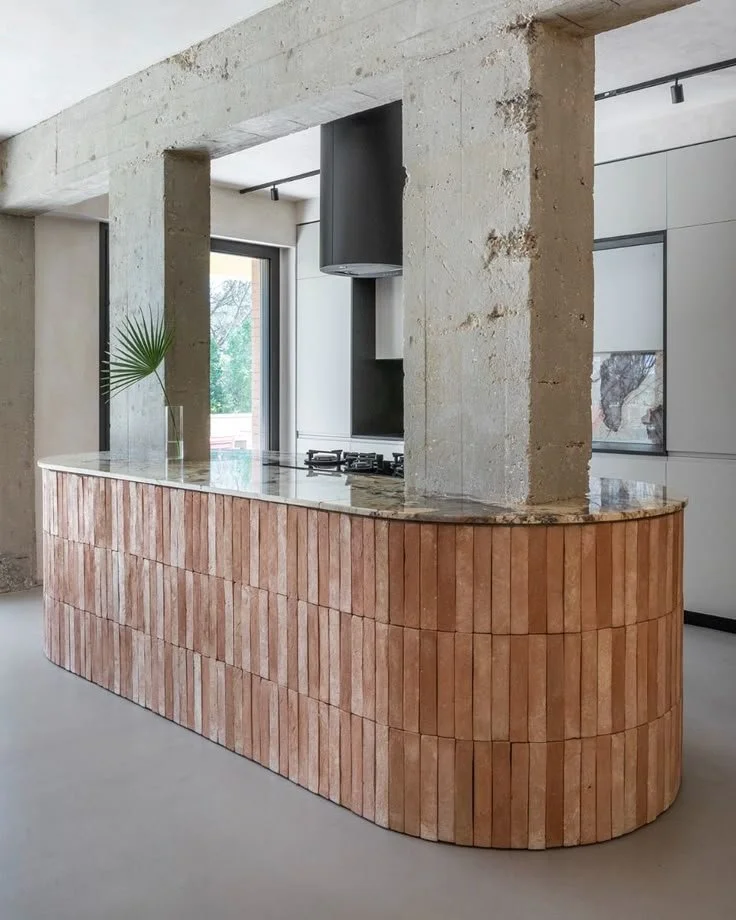
If you’ve saved a single interior in the last few years, you’ve likely saved a little of this. The “warm minimalism” look is basically Italian brutalism with the volume turned way down: lime-washed or raw plaster walls, micro-cement floors and counters, an exposed concrete wall left all alone, all softened with pale wood and a vintage Italian chair that costs more than my sofa.
It works when there’s one heavy thing in the room and everything else there is meant to flatter it. A full concrete box with no warmth is just a parking garage with some throw pillows.
Easy places to start:
A travertine coffee table. It’s the gateway material, and nobody has ever regretted one.
Matte brass on cabinet pulls, a lamp base, or a mirror frame. Matte, not shiny.
Fluted concrete planters, big ones, with something leafy spilling out.
One sculptural light that looks like it could hold up a ceiling.
The last word
Italy took the most unloved material in modern architecture and gave it a soul. I’m still a little annoyed the rest of the world didn’t really take notes. Now you tell me: raw concrete at home? Love the drama or way too industrial? Which one of these would get you on a plane to see it? Mine’s the church at the rest stop or the unfinished cemetery.