PINK ARCHITECTURE IS A VIBE
I read an article a while ago about pink architecture around the world. Functionally, they are just pink buildings, but the more I started to explore the rabbit hole, the more I started to realize not only are there so many pink buildings around the world, but they utilize the color pink for all sorts of reasons. A pink building is absolutely going to stop me from scrolling immediately. It’s probably because pink is a choice. It’s not a natural decision. It’s a decision you defend.
Why Pink Architecture?
Think about the actual logistics. A building is expensive and permanent. It’s visible to everyone who lives near it for the next hundred years. Most people who commission buildings go with whatever the surrounding blocks already have. Choosing pink means someone looked at their structure and decided to make it pink. It got through committees, budgets, and a total absence of second thoughts. That’s why pink buildings photograph the way they do. You’re not looking at color, you’re looking at someone’s nerve.
The Color Has Meaning - And Not What You Think
The feminization of pink is a fairly recent thing and pretty much retail’s doing. After WWI, there was a concentrated effort from department stores and magazines to code pink as feminine, and it worked. We just completely assume it’s always been that way. Before that, pink was money. Madame de Pompadour liked it enough that Sèvres named a porcelain glaze after her. In the 14th-century, pink walls came from lime wash mixed with whatever was around, from berries to animal blood.
And in Jaipur, pink was synonymous with diplomacy. In 1876, Maharaja Sawai Ram Singh II had the old city painted pink before a state visit because pink read as hospitality. The following year, he made it a law that is still on the books today. Not a single one of those people or situations was thinking about a nursery, so we shouldn’t be either.
So here are 9 fascinating pink buildings from around the world you should know about.
Hawa Mahal
JAIPUR, INDIA
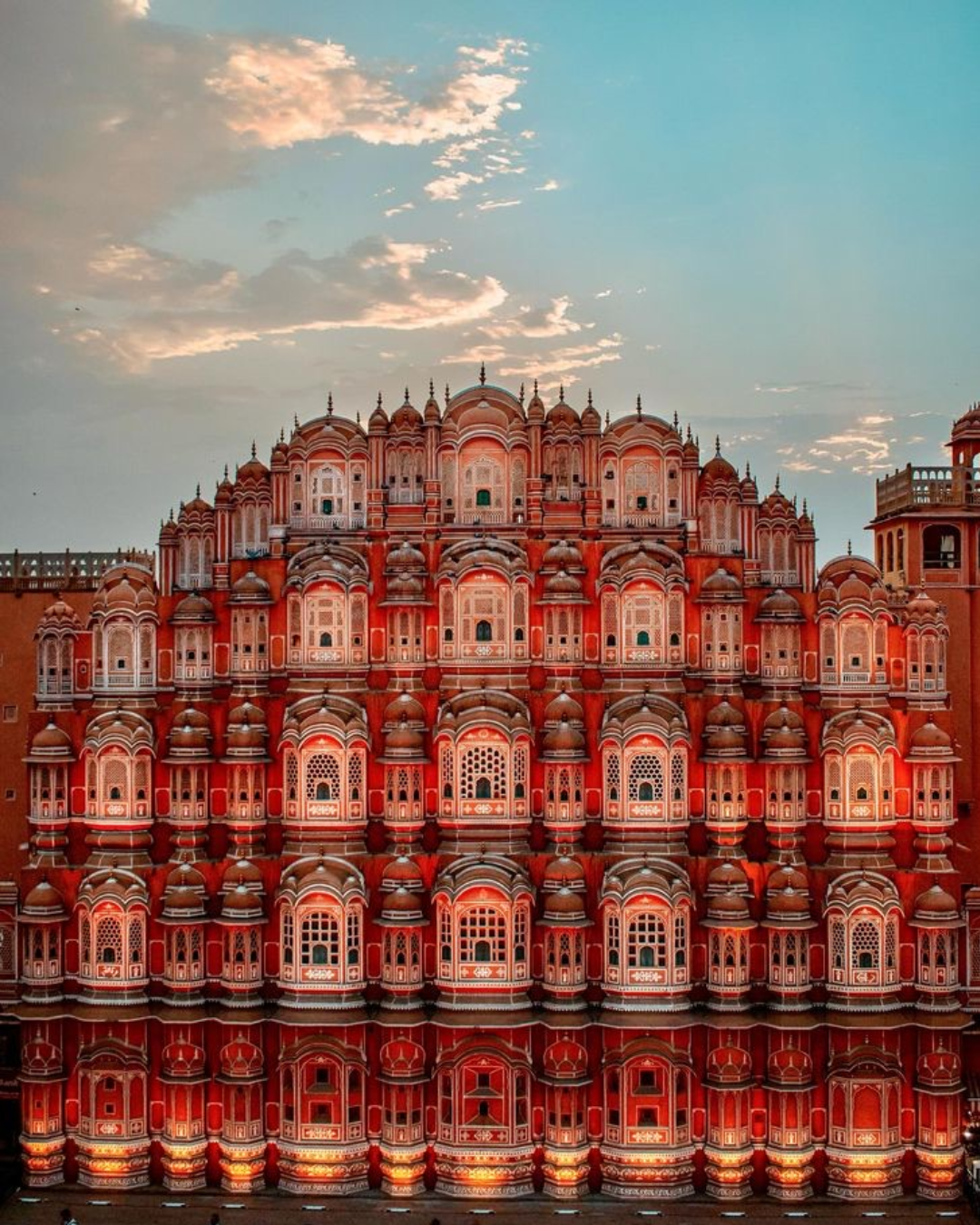
Hawa Mahal was built in 1799 by Maharaja Sawai Pratap Singh and was designed by Chand Ustad. It’s five stories of red and pink sandstone with 953 latticed windows.
The windows were purely decorative. They let royal women watch street festivals without being seen. They also allowed airflow through all that stone honeycomb to cool the interior in a Rajasthani summer. It’s a rare building where the most beautiful part happens to also be the most functional.
La Muralla Roja
CALP, SPAIN
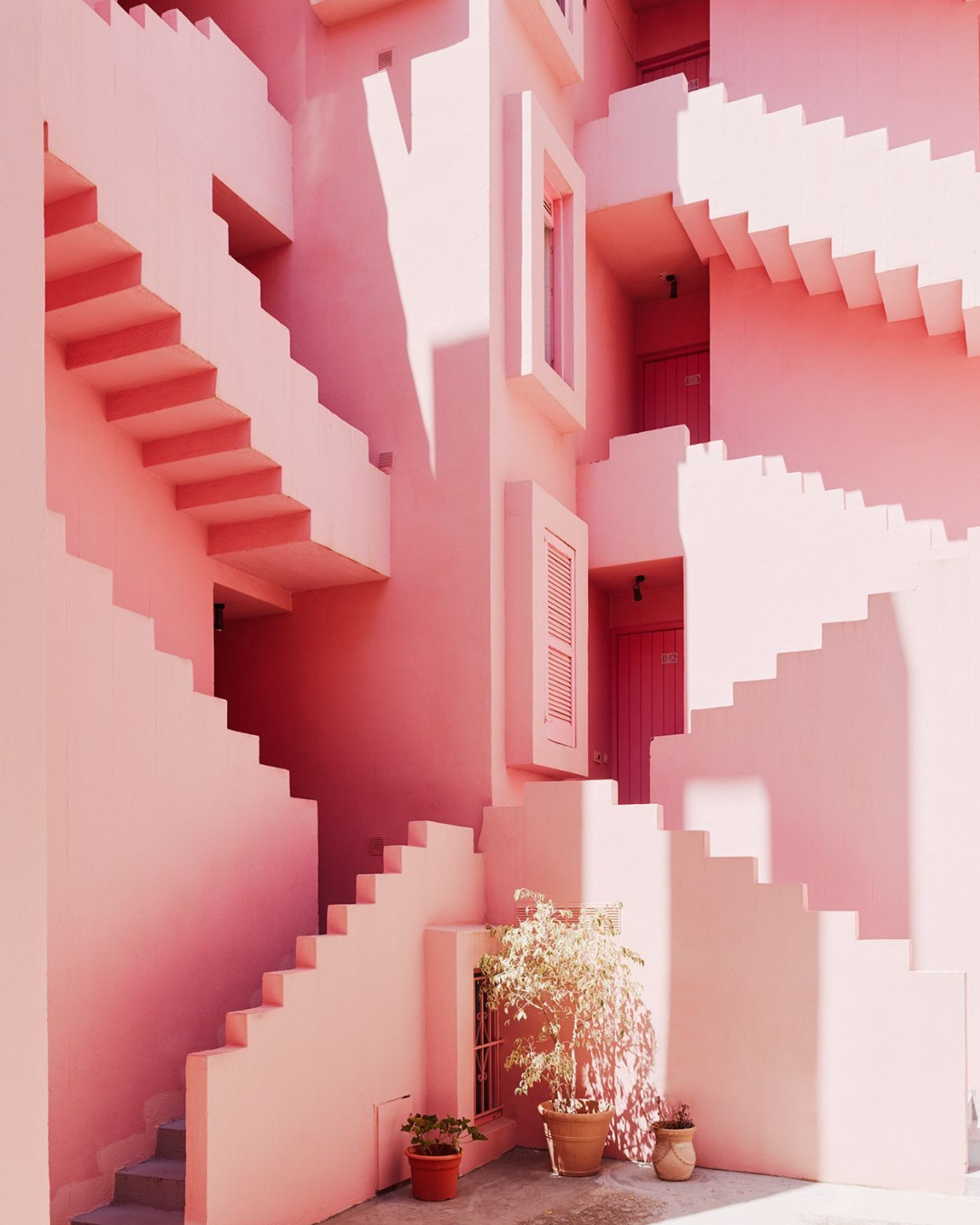
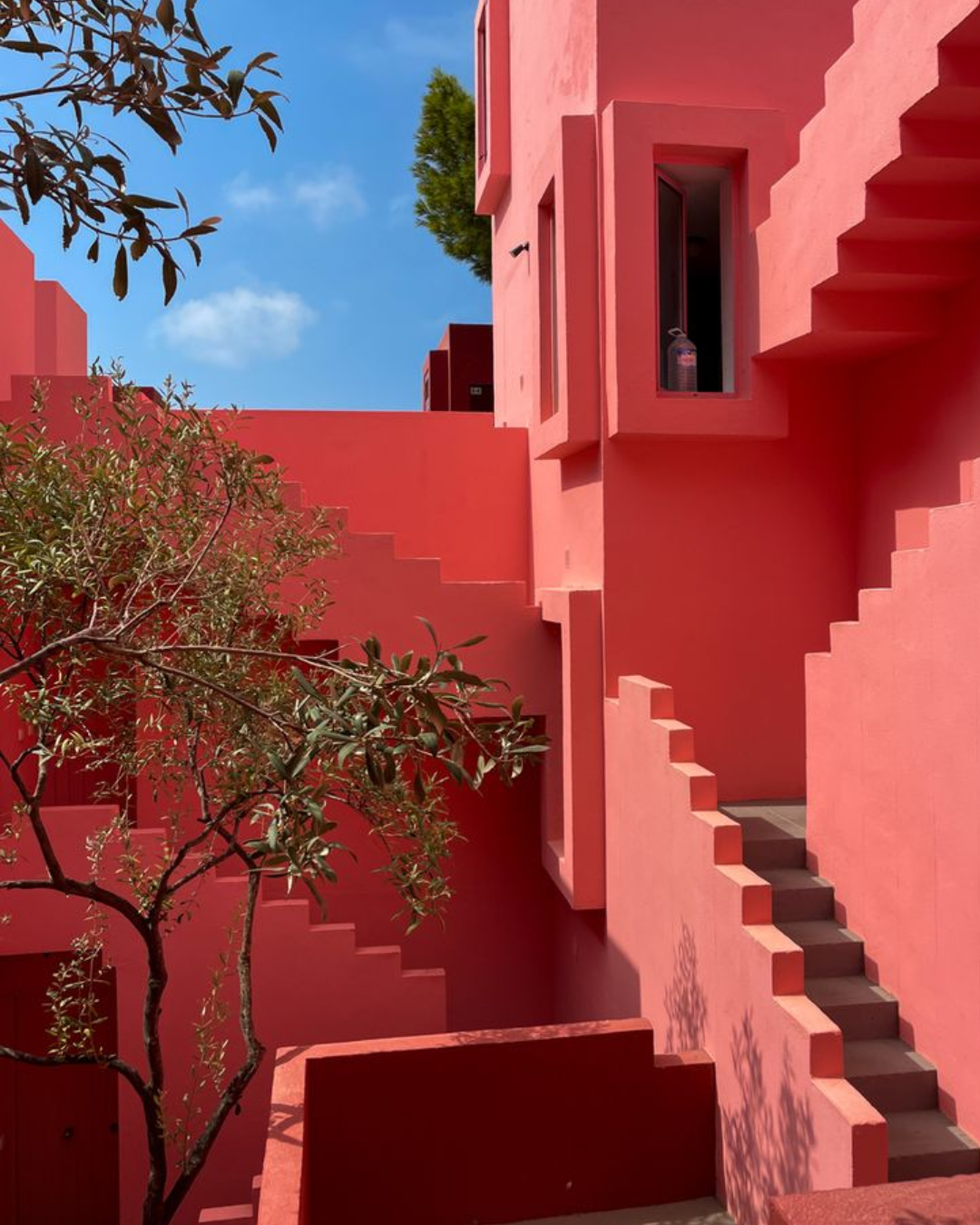
Ricardo Bofill designed La Muralla Roja in 1968 and finished it in 1973. It is fifty apartments arranged around thirteen Greek crosses and stacked on a cliff above the Mediterranean.
Pink marks the smaller courtyards, while blue and violet handle the stairs and bridges. Bofill borrowed the logic from North African casbahs, and the result is an Escher drawing that decided to become housing. If it feels familiar, the Squid Game set designers were paying attention to.

Nasir al-Mulk Mosque
SHIRAZ, IRAN
The mosque was commissioned by Mirza Hasan Ali Nasir ol-Molk and built between 1876 and 1888 by three designers.
Pink tilework gives the mosque its name, but the real event happens at sunrise. Light comes through the stained glass and lands on the carpets in sheets of brillant color. People line up before dawn to see this in a twenty-minute window. It looks well worth the wait.
La Maison Rose
PARIS, FRANCE
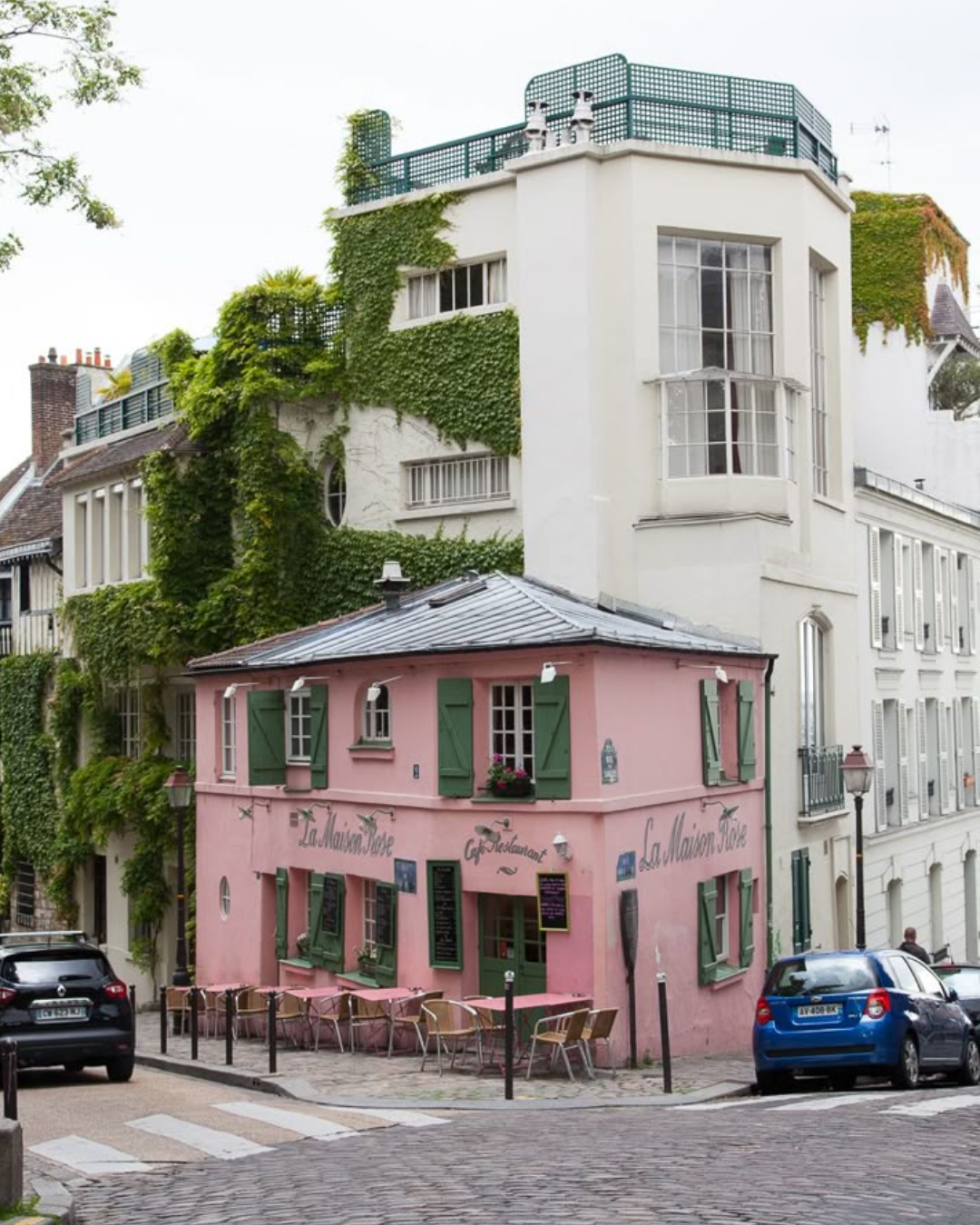
Catalan painter Ramon Pichot bought this corner house in Montmartre in 1905 as a studio. His wife, Germaine Gargallo, came back from a trip to Spain and painted the outside pink and opened it as a restaurant.
Utrillo painted it. Camus and Alain Delon ate there. Pichot’s line ran through Picasso and Dali, which means one of the most photographed facades in Paris exists because a woman got an idea on vacation.

The Don CeSar
ST. PETE BEACH, FLORIDA
The Don CeSar was opened in 1928 by Thomas Rowe, who built it as a monument to Lucinda, an opera singer he loved and wasn’t allowed to marry. It was named after a character in her repertoire.
Fitzgerald drank here. Capone stayed there. The Army bought it in the forties and turned it into a hospital. Most grand gestures don’t survive their own decade, but this one is still standing and still very pink.
Five Cats Recreation Mall
BEIJING, CHINA
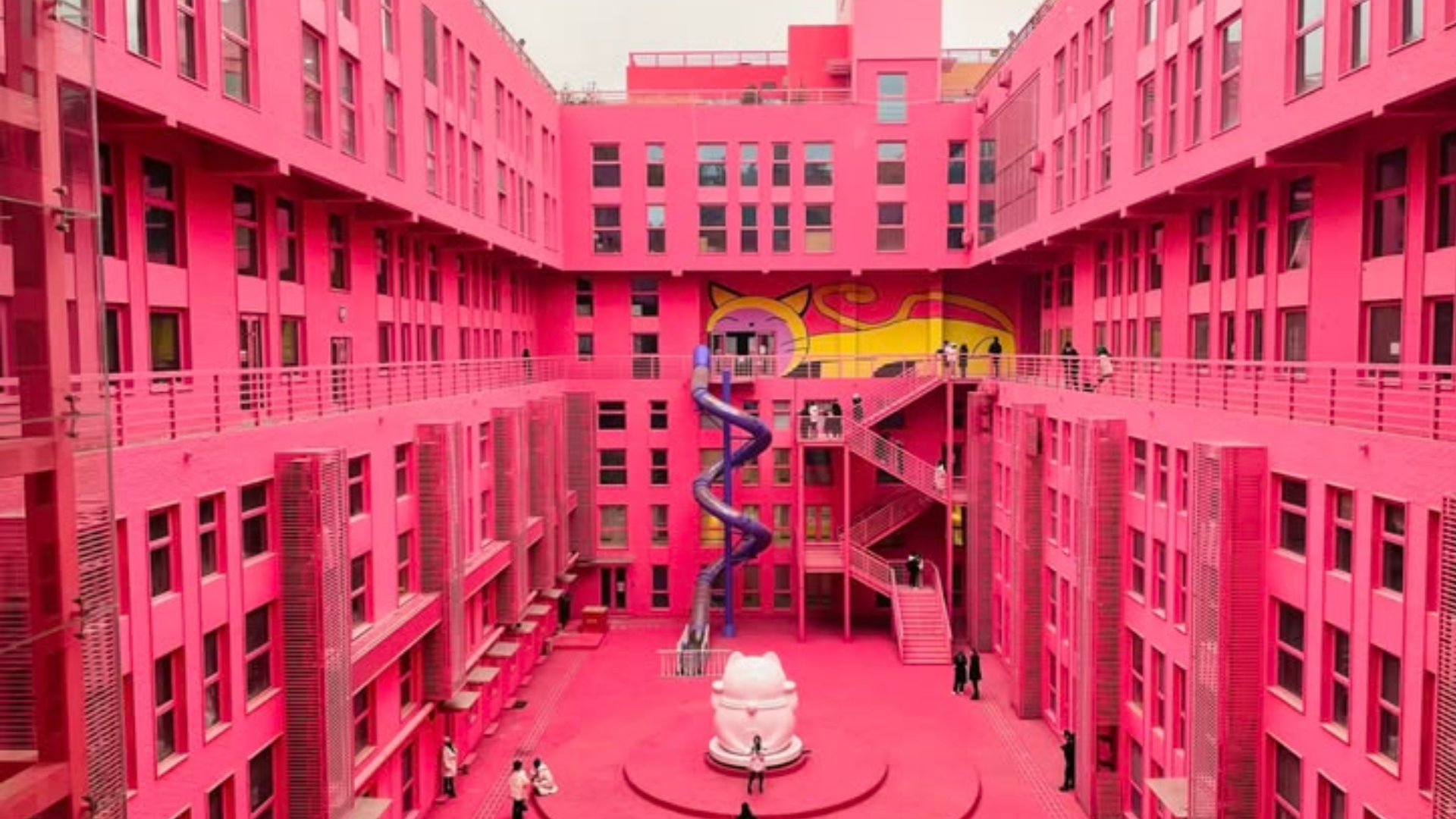
This is a newcomer to the bunch and the least reverent. The Five Cats Recreation Mall covers over 50,000 square meters in Chaoyang, and is done in pink so saturated it’s almost aggressive.
The mall contains rotating slides, a rooftop, and a set of escape rooms that are its main draw. It was built for people born after 1995 to hang out at, not shop in. Everyone compares it to The Grand Budapest Hotel, but Wes Anderson would never let a color get this loud.
Putra Mosque
PUTRAJAYA, MALAYSIA
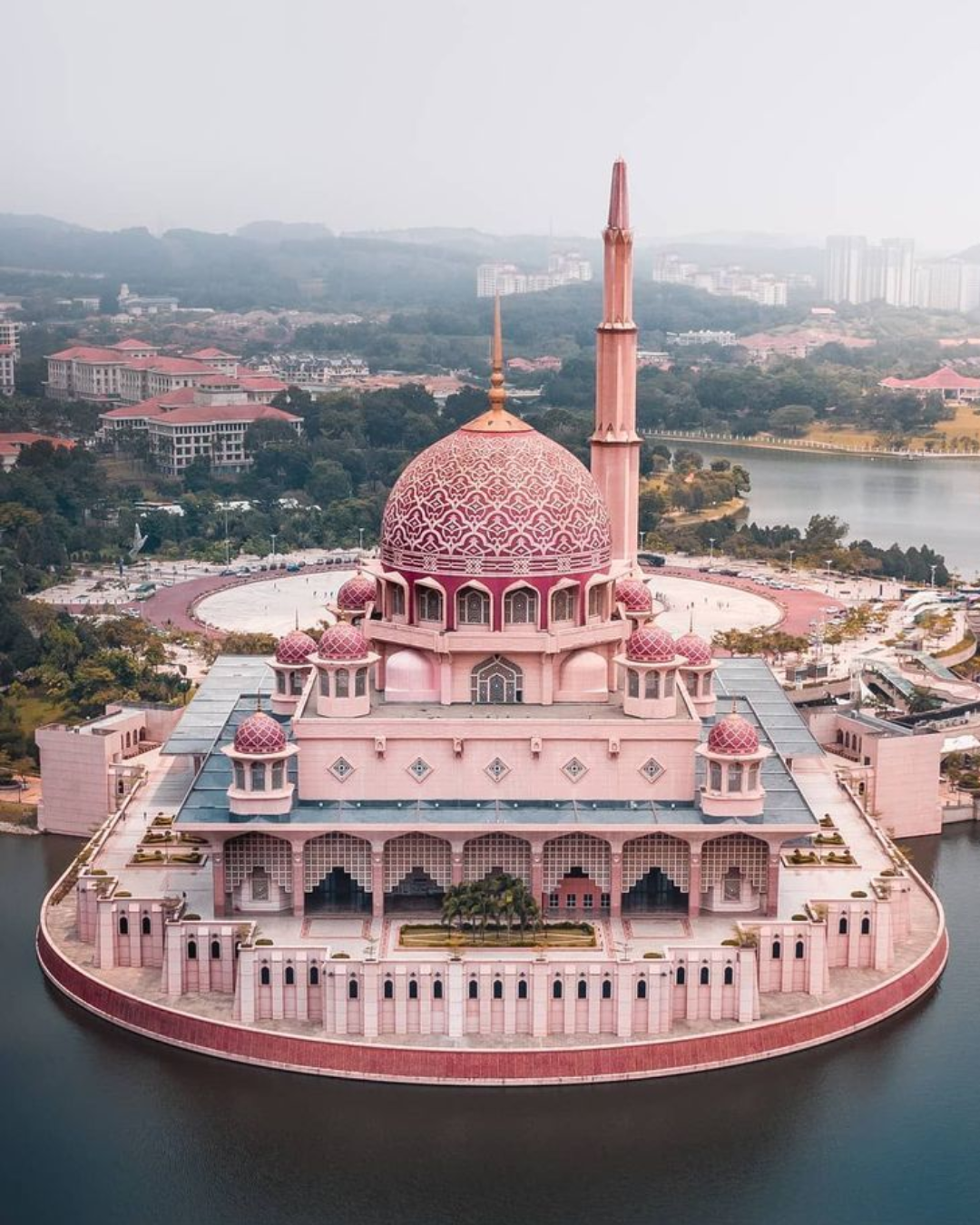
The mosque was finished in 1999 and built from rose-tinted granite, with a dome patterned in pink and white tiles.
It holds 15,000 worshippers and sits right on the edge of a man-made lake. Half of it is always doubled in the water. Modern pink usually reads as playful, but this one reads as serious. I think that is in large part due to the granite.
The Royal Hawaiian
HONOLULU, HAWAII
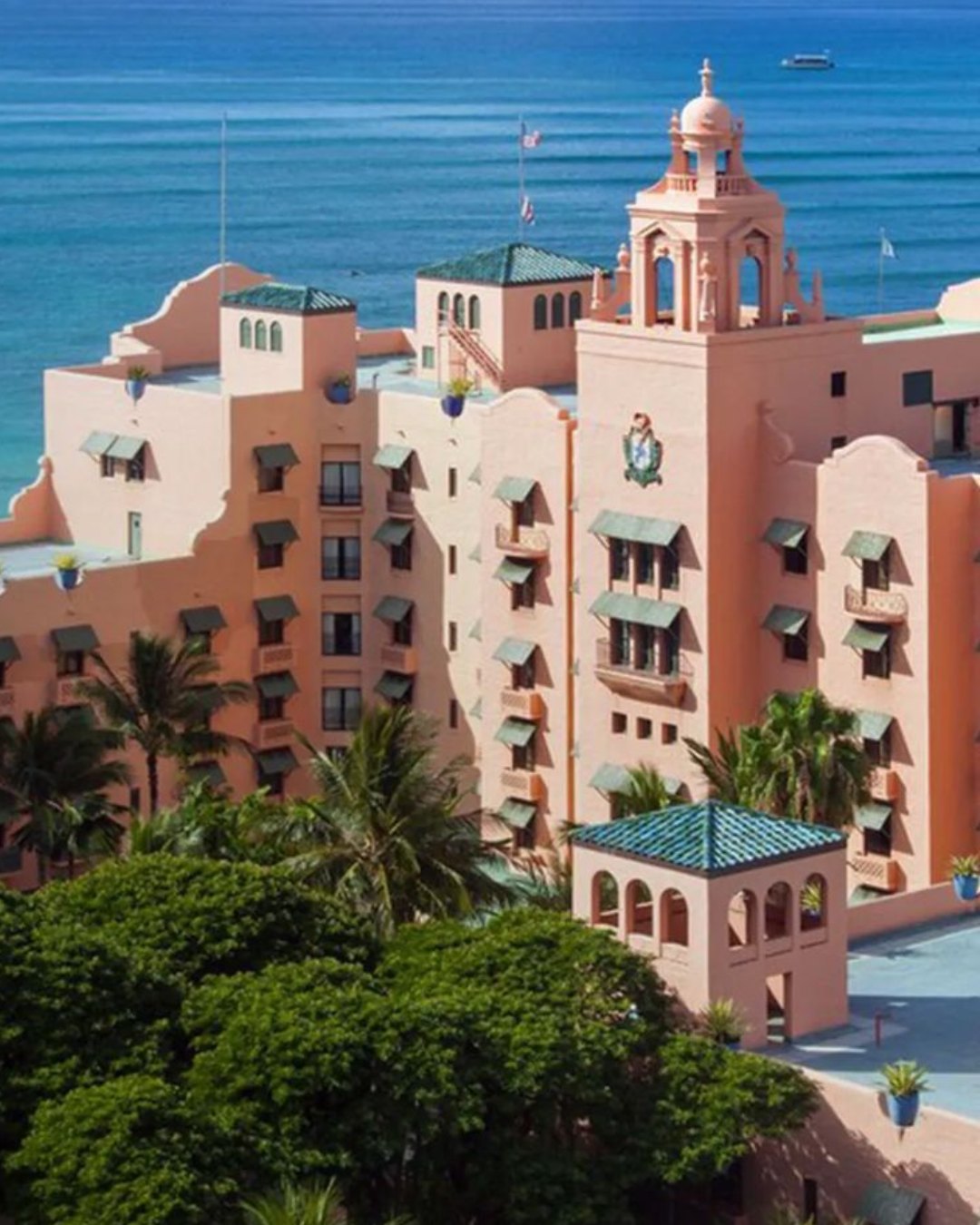
The Royal Hawaiian opened in February 1927 and was designed by Warren and Wetmore. The design is Spanish-Moorish, and is four million dollars worth of pink stucco in Waikiki.
It essentially invented the pink resort. During the war, the Navy took it over as an R&R center. They strung barbed wire across the beach, which is a picture I just can’t seem to get rid of. A pink palace behind concertina wire? Crazy.
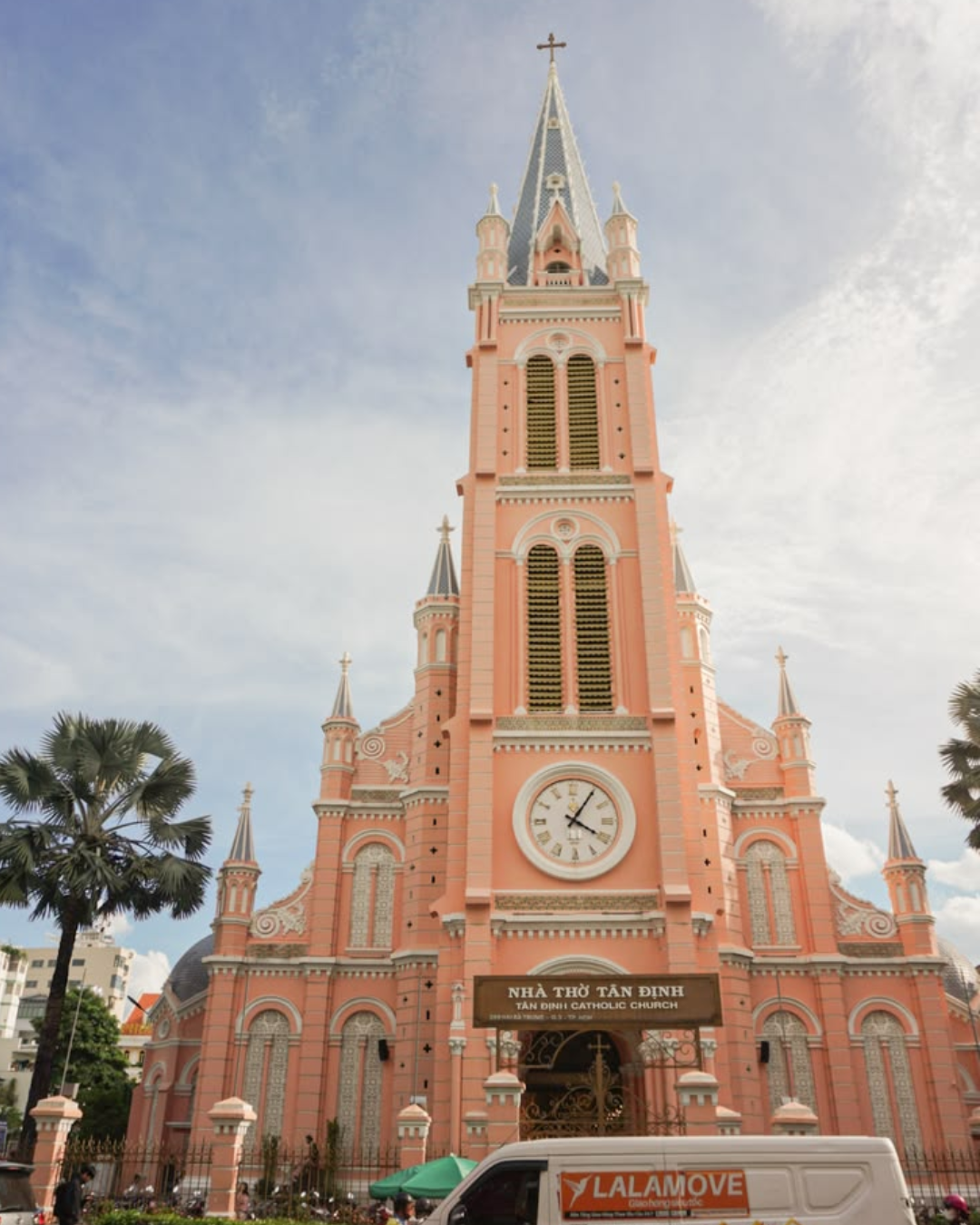
TÂN DĮNH CHURCH
HO CHI MINH CITY, VIETNAM
The church was built between 1870 and 1876 under French colonial rule. Its design is a Gothic revival by way of Neo-Romanesque, and painted pink like a bakery box.
It is still an active parish, which I love. People go to mass there on Sunday and then step outside into a crowd of tourists trying to get the whole bell tower in frame.
Ninety-Nine Years of Pink
The Royal Hawaiian opened ninety-nine years ago, but the Beijing mall is younger than most of the people in it. None of these places shares an architect, let alone a continent. They aren’t from the same century and absolutely don’t have the same design philosophy. But they share one thing: someone looked at a safe option and just passed. My interest started out being about the color pink, but ended with a newfound respect for people who refused to build something forgettable. Pink is just the fastest way to spot them.