You can spend all day scrolling through architecture archives, feeds, and articles, but great design just doesn’t translate on a 6-inch screen. You have to actually walk through a building to get the sense of the proportions, to feel the way the afternoon light hits the raw materials, and to understand why a certain room just makes your heart rate drop.
After visiting Taliesin West with my brother and his girlfriend on their recent visit, I started thinking about all of the other places I’ve always wanted to visit or would visit again. Then came the rabbit hole. I have spent so much time exploring all of the places I’ve seen fellow design lovers mentioning being must-sees, it’s only natural that I made it into a post. So if you’re the type of traveler who plans your trips around chairs, good sightlines, or a fascinating history, this is a definitive syllabus.
The Residential Icons: Where Architects Lived & Experimented
Le Corbusier’s Villa Savoye
Poissy, France
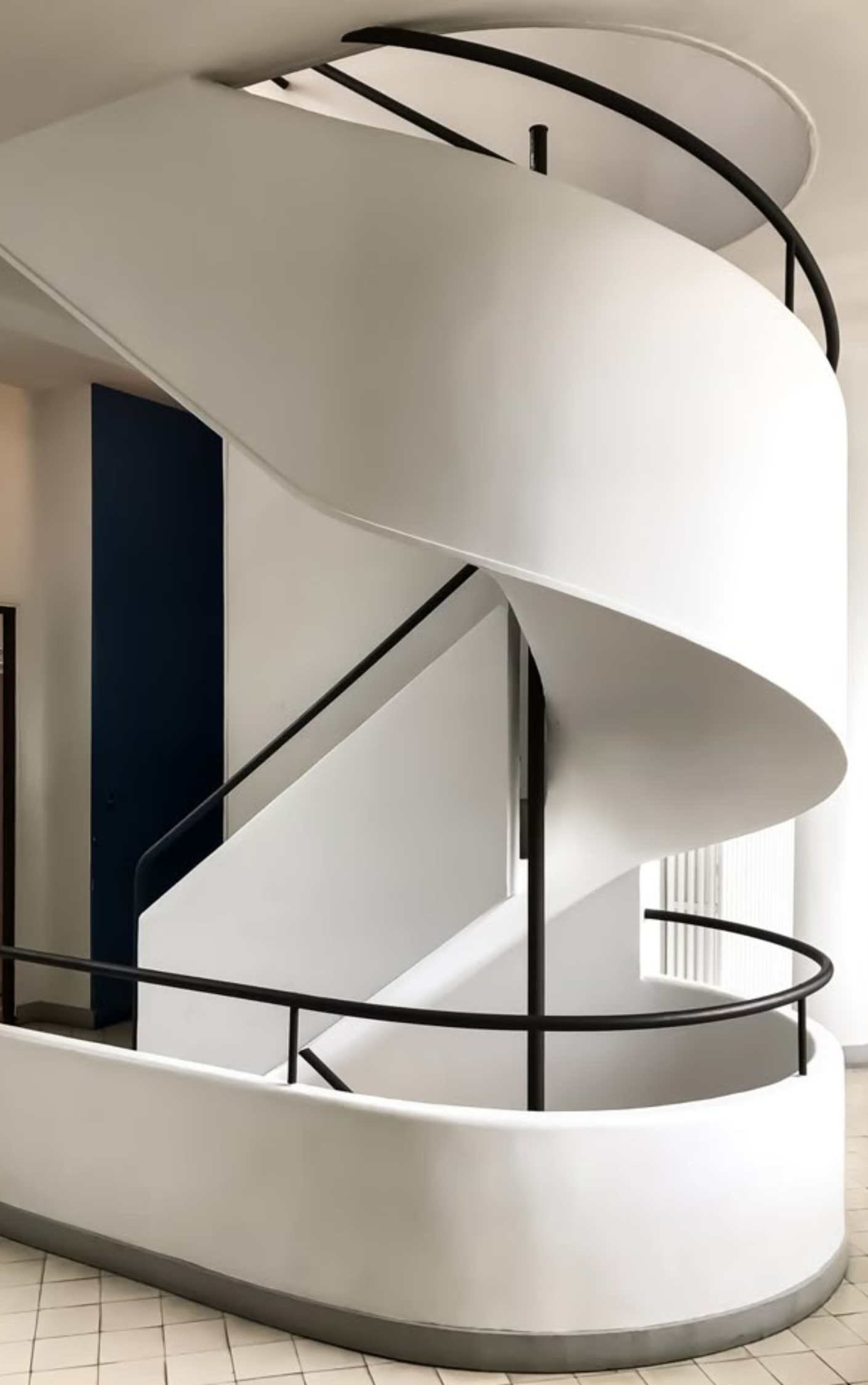
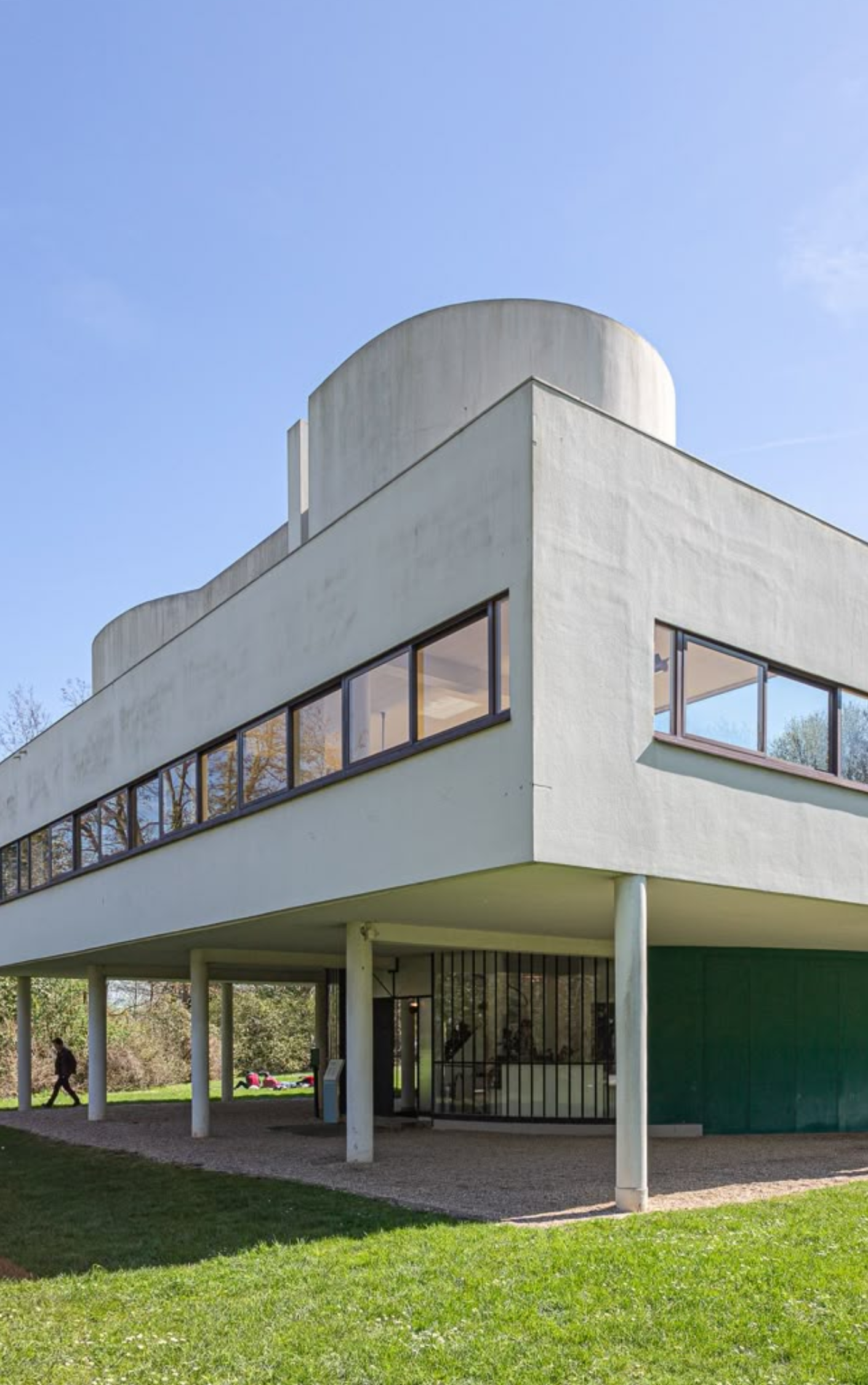
Every single glass house or open floor plan you’ve ever scrolled past owes Le Corbusier. Villa Savoye, completed in 1931, is the perfect example of his Five Points of Architecture in one house. It’s on slender columns, has a rooftop garden, an open floor plan, a long strip of windows, and a facade that is completely free from structural function.
That’s the design textbook version. In reality, the ramp is the thing. It takes you from the entry up to the living floor and out onto the roof terrace gradually, with the views opening up as you go. He called it an architectural promenade, but most people, including me, would call it the reason to go there rather than just read about it.
Now here’s what the textbooks don’t say: the Savoyes really hated living in this house. The roof leaked so badly that Madame Savoye was constantly writing furious letters to Le Corbusier about it. The house was pretty much going to be demolished before France designated it a historic monument in 1964. He was still alive to see that happen, which is rather rare.
How to see it: Villa Savoye is open to the public Tuesdays through Sundays, and tickets are under €10.
The Eames House / Case Study House No. 8
Pacific Palisades, California
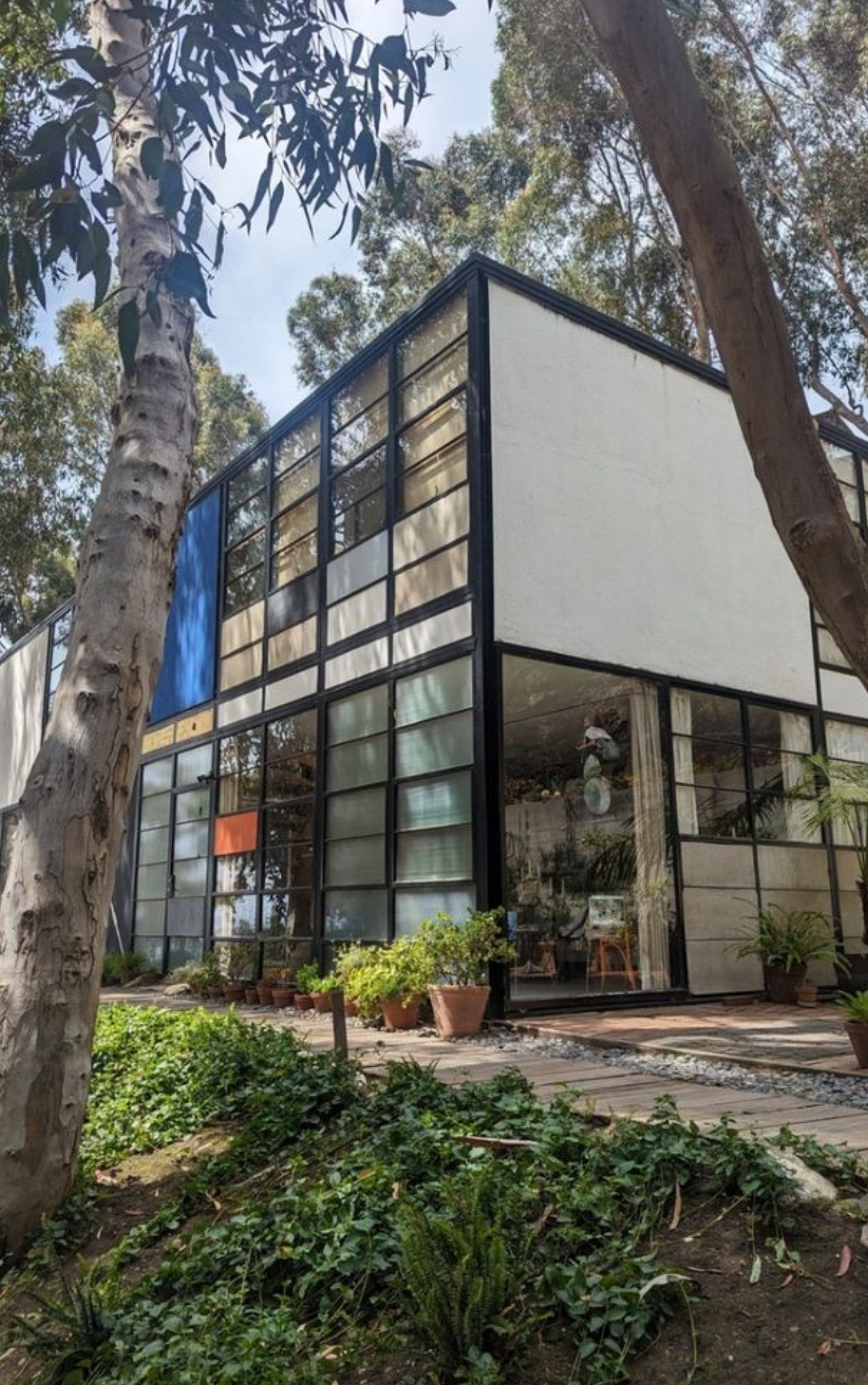
This was meant to be a completely different house, and I feel like that would have been heartbreaking. The initial design (with Saarinen) was a steel box extending out over the meadow. Charles and Ray then got completely taken with the meadow and reworked the same sequence of steel parts into a larger design, which was tucked into the hillside behind the eucalyptus trees. Case Study House No. 8 was completed in 1949.
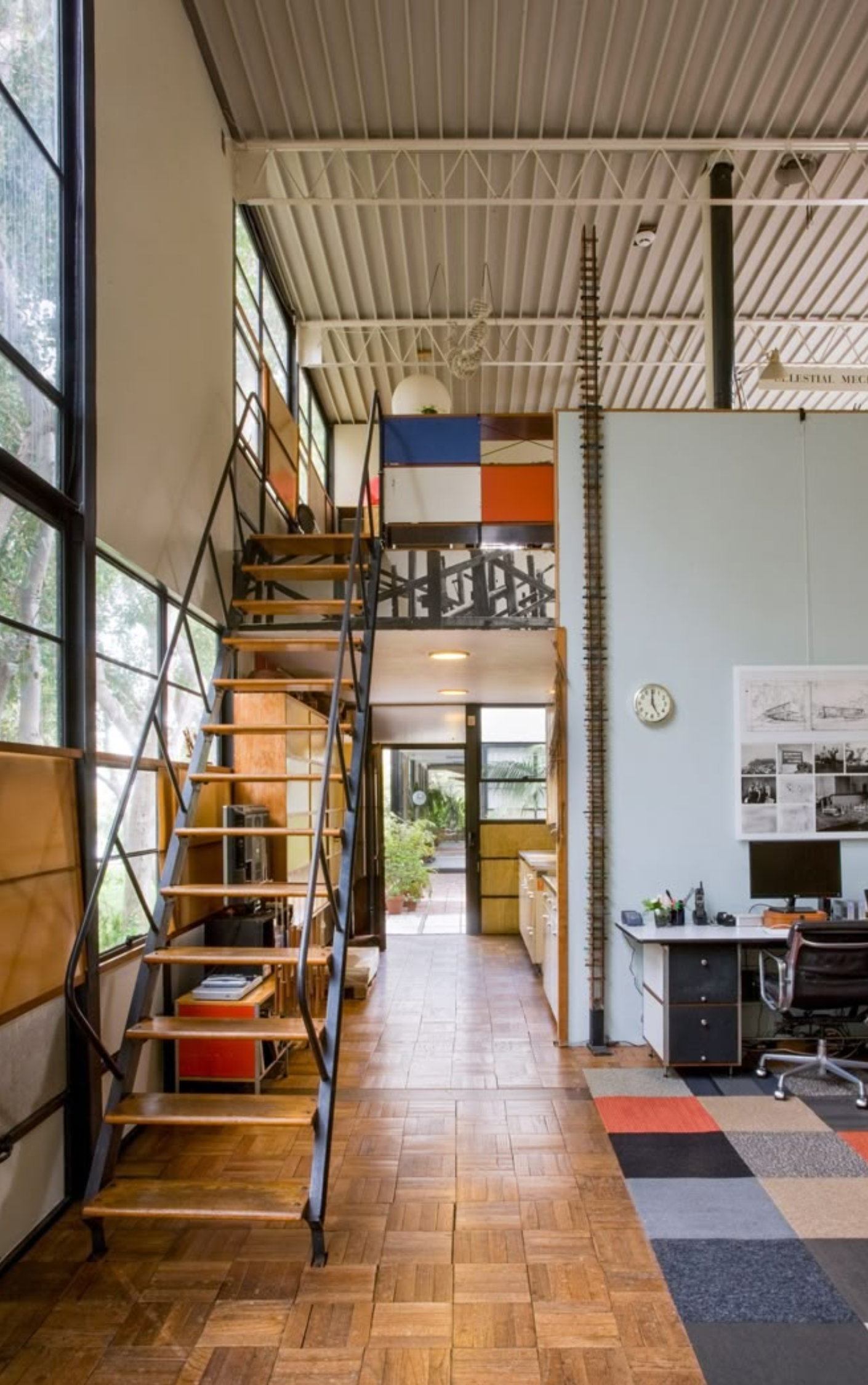
That encapsulates the Eames philosophy perfectly. They took parts straight out of an industrial catalog, like decking and factory sash windows, and made a house that was warm, bright as a Mondrian, and full of all the things they loved. The most convincing example I can think of is that prefab doesn’t have to be cold. Make sure you check out the courtyard between the house and studio. That’s how they structured their days really: work on one side, life on the other, and a few steps of the garden in between.
How to see it: Reservations are required, so pay attention to when The Eames Foundation releases the tour dates for the month, the first week of the prior month (aka June tour dates get released the first week of May). The standard guide starts in the meadow, goes through the residence, and into the studio. No photos are allowed in the residence, not even through the glass. You can also take a private interior tour at a separate price.
Saarinen House
Bloomfield Hills, Michigan
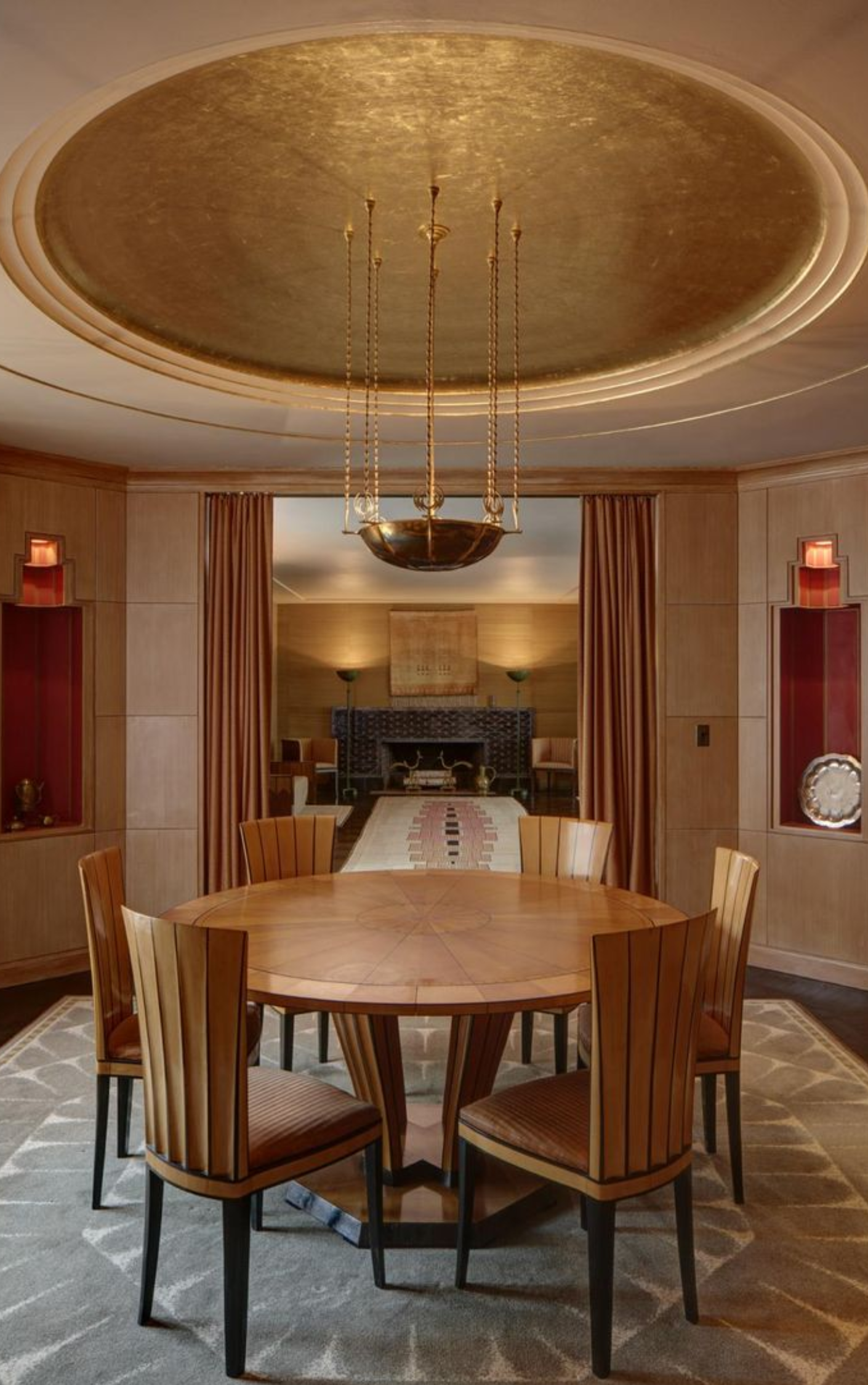
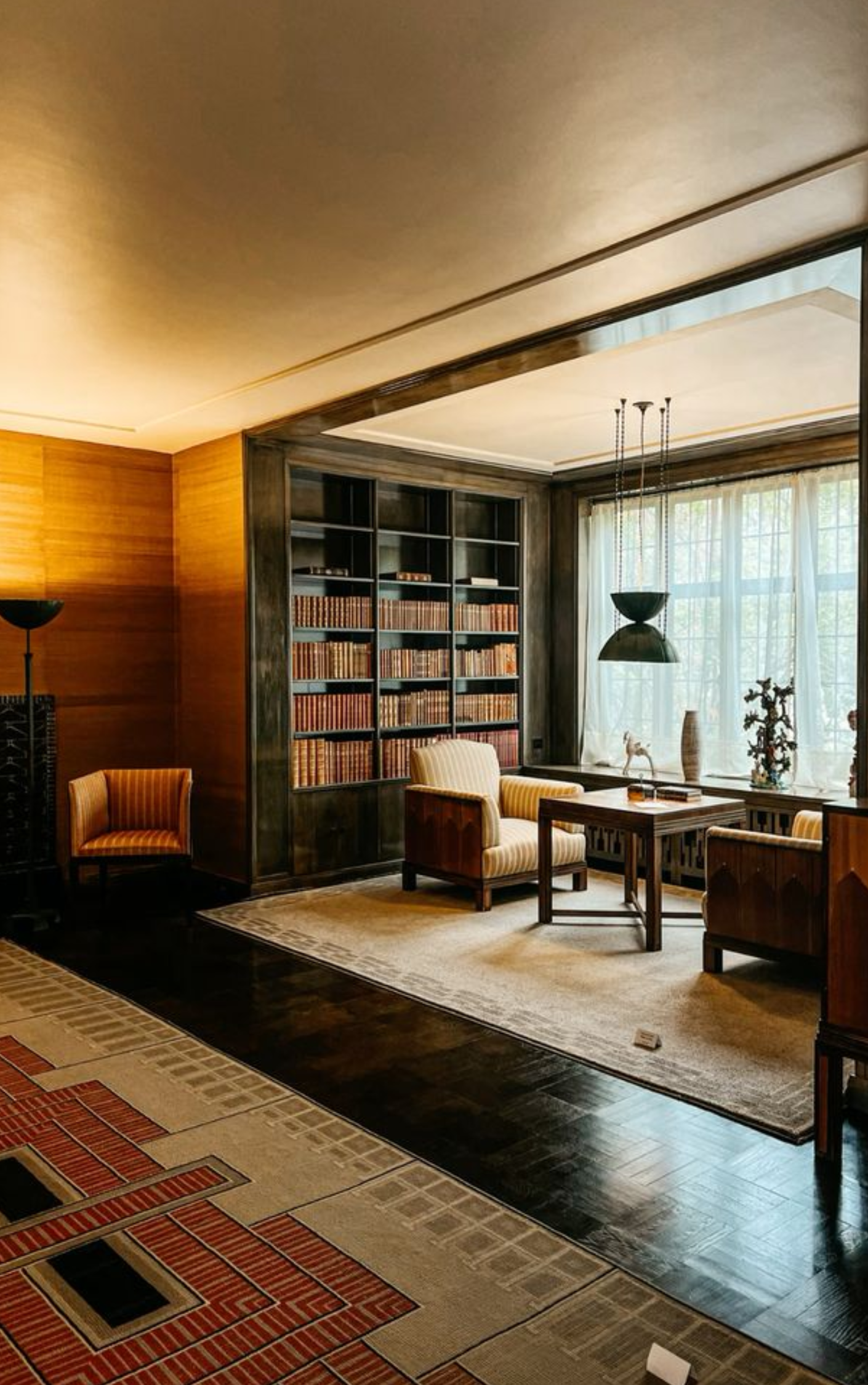
If Villa Savoye is a manifesto, then the Saarinen House is a love letter with an impressive furniture budget. This is Eliel Saarinen’s house. It was the family home on the Cranbrook campus, which he was also designing, and they lived in it from 1930 to 1950. It’s Art Deco at its most hand-crafted, with Eliel drawing all the furniture and lighting himself. His wife, Loja, who ran the weaving studio at Cranbrook, made all the rugs and textiles. Nothing was off the shelf, which is the very opposite of what the Eameses did a generation later.
My absolute favorite fun fact is the link between the Eames House and this one. Cranbrook is where Charles Eames met Ray Kaiser. Eero’s early furniture is actually on show in his parents’ house, so you’re literally standing in the family tree of American modern design.
How to see it: There are seasonal public tours, roughly from spring through fall, and they leave from the Cranbrook Art Museum. They’re about 75 minutes with small groups and regularly sell out. Guests are given shoe covers at the door, and the house has no air-conditioning. You’ve been warned!
Schweikher House
Schaumburg, Illinois
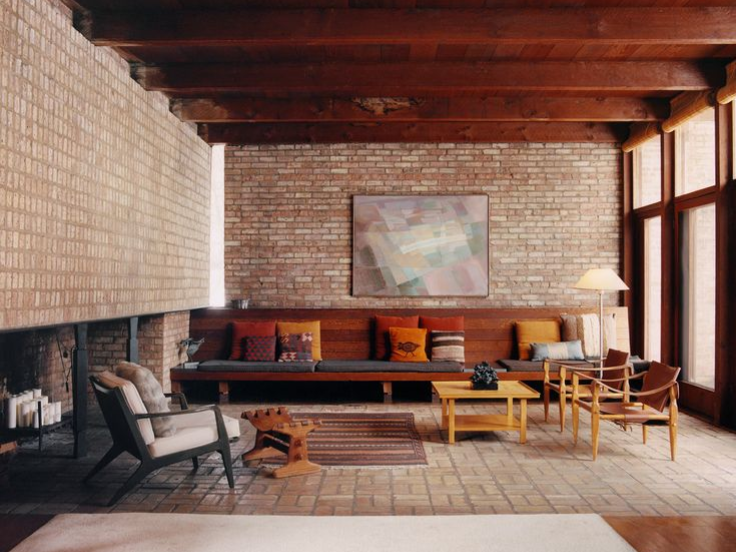
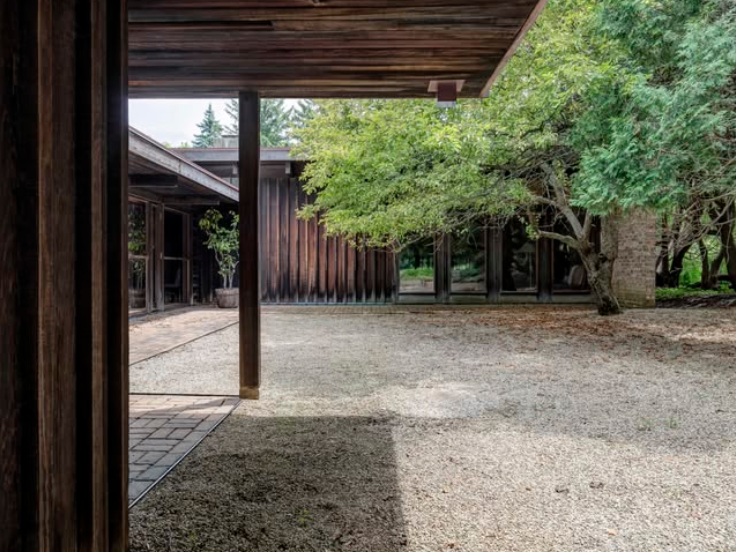
Nobody goes to Schaumburg for the architecture, but someone should. Paul Schweikher built this as his home and studio in 1938, long before midcentury modern was something you could buy at the mall. It’s redwood, brick, and glass with a bit of Frank Lloyd Wright in the structure and a lot of Japanese influence in the detail. There’s a soaking tub, raked gravel courtyard, and exposed beams. Inside and out, it all pretty much blends.
Here’s the part that just blows me away. After Schweikher sold the house in 1953, it went to physicist Alexander Langsdorf, who worked on the Manhattan Project, and his wife, Marty Langsdorf, artist and designer of the Doomsday Clock. She lived there for the rest of her life. When the water district came along and threatened to take the land, the village of Schaumburg purchased the house in 1999 to save it.
How to see it: Guided tours run on Wednesdays, Fridays, and the first two Saturdays of each month. The tour covers all the rooms plus the studio in about 75 minutes.
A midcentury road trip
Palm Springs, California
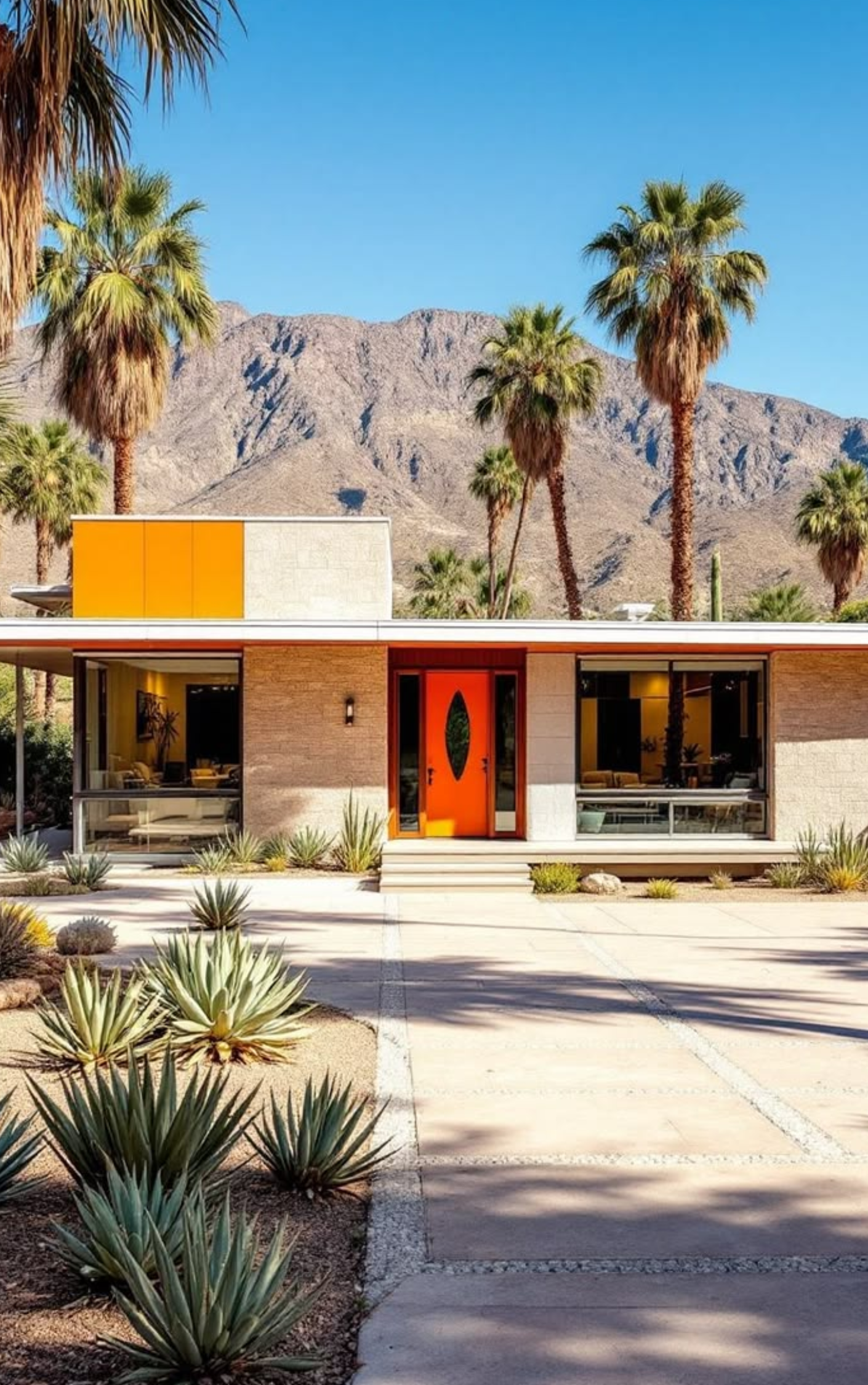
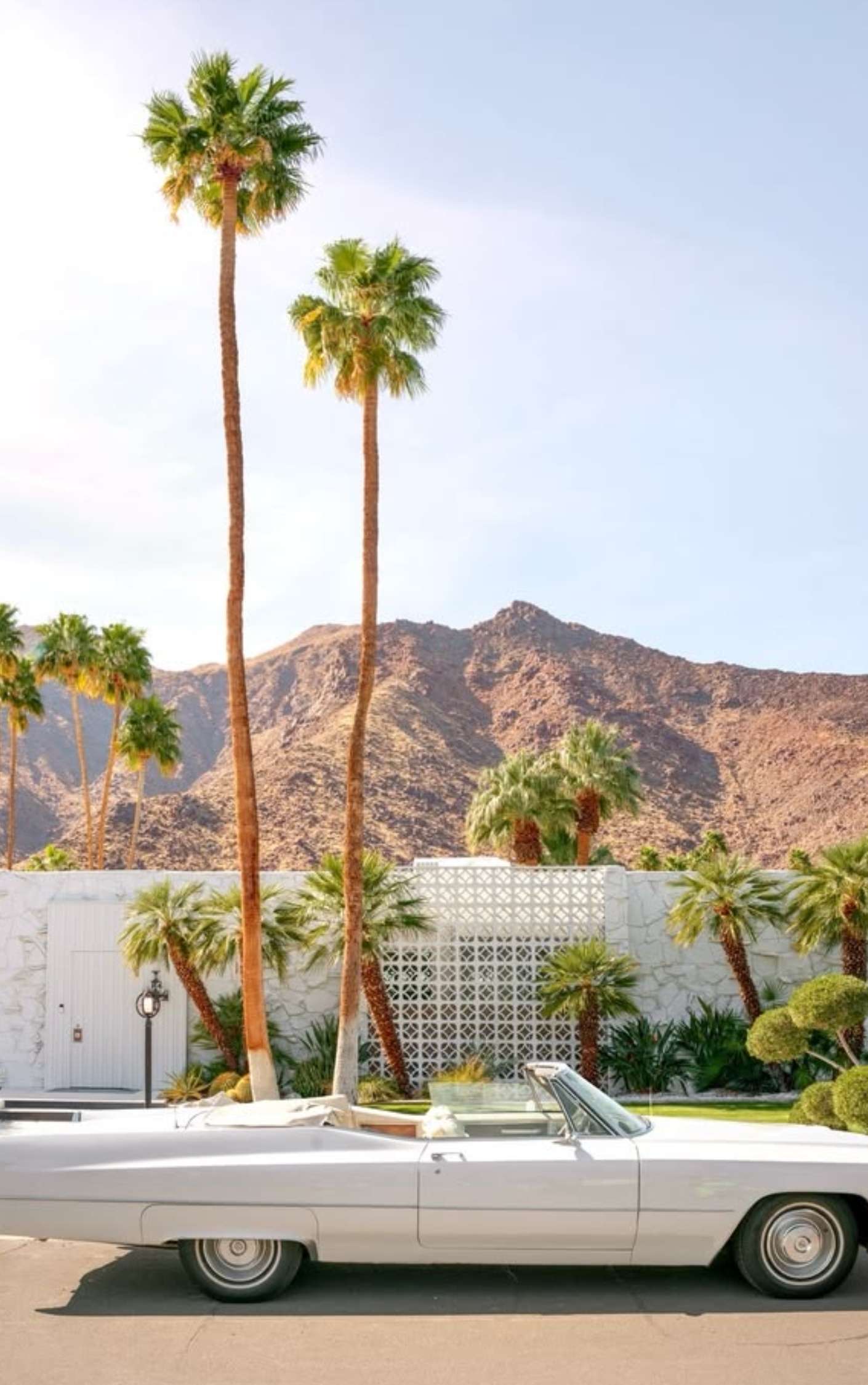
This is the only entry where the entire town is the exhibit. After WWII, Palm Springs became Hollywood’s weekend getaway, and architects such as Albert Frey, William Krise, and Donald Wexler experimented with butterfly roofs, steel-framed houses, and endless breeze blocks.
My favorite is Frey House II, which Albert Frey built for himself in 1964 on the side of a mountain. There’s a massive boulder running right through the living area, and he didn’t take it out - at all. He literally designed the house around it. He worked with the desert rather than against it. It’s absolutely palpable in all his buildings.
When you’ve seen enough of the town, drive an hour to Joshua Tree. The houses there start to merge into the rock piles, and you’ve got a lot more space to explore and a lot less pastel.
How to see it: Go during Modernism Week (February 11-21, 2027). Tickets are on sale now, and the home tours always sell out first. There’s a shorter fall version which runs in October. At any other time of year, you can start at the visitor center, in Frey’s old Tramway Gas Station, and pick up a driving map of neighborhoods.
Where artists built for light
James Turrell’s Roden Crater
Near Flagstaff, Arizona
This is truly a bucket list item, and many of us will never get in.
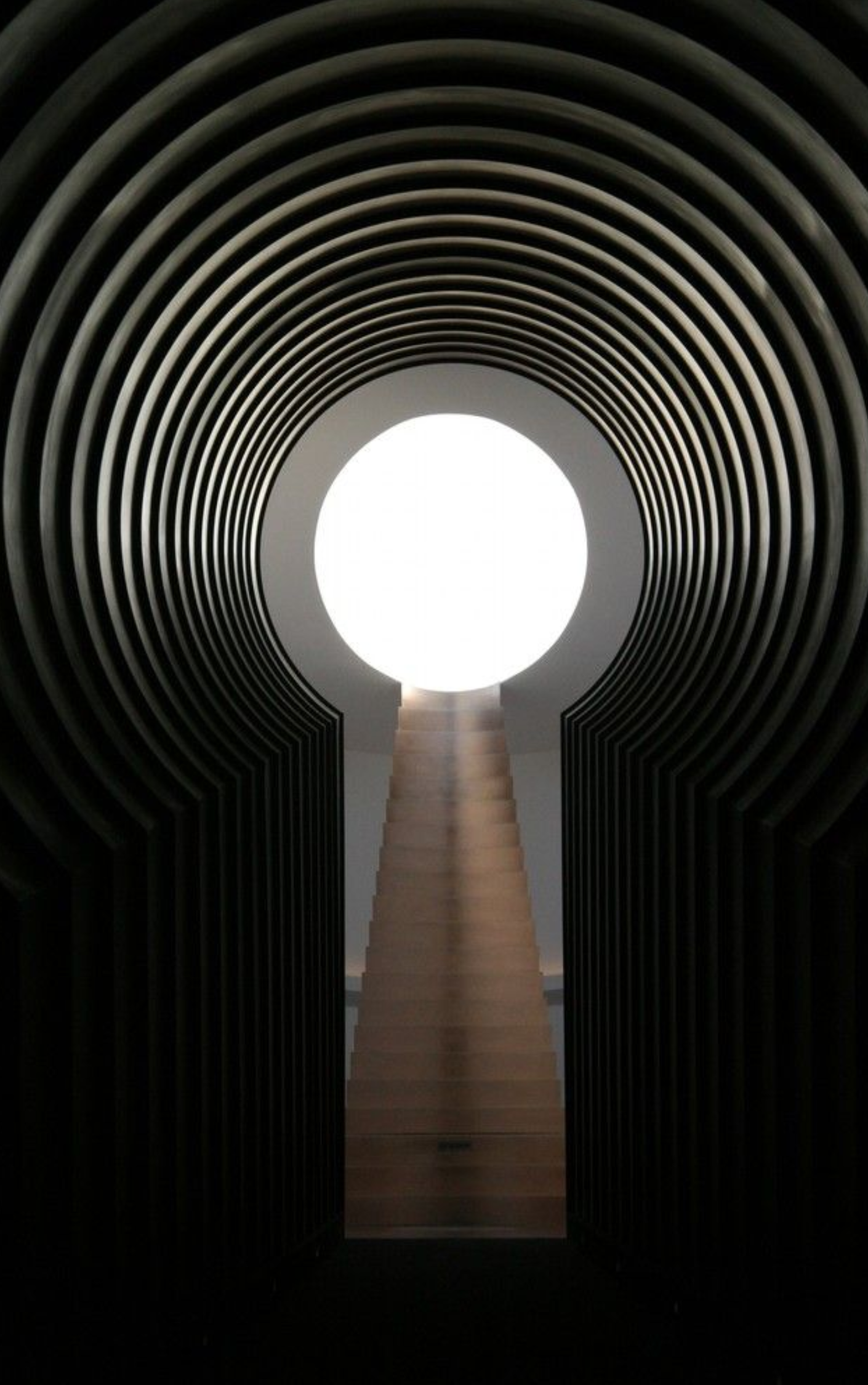
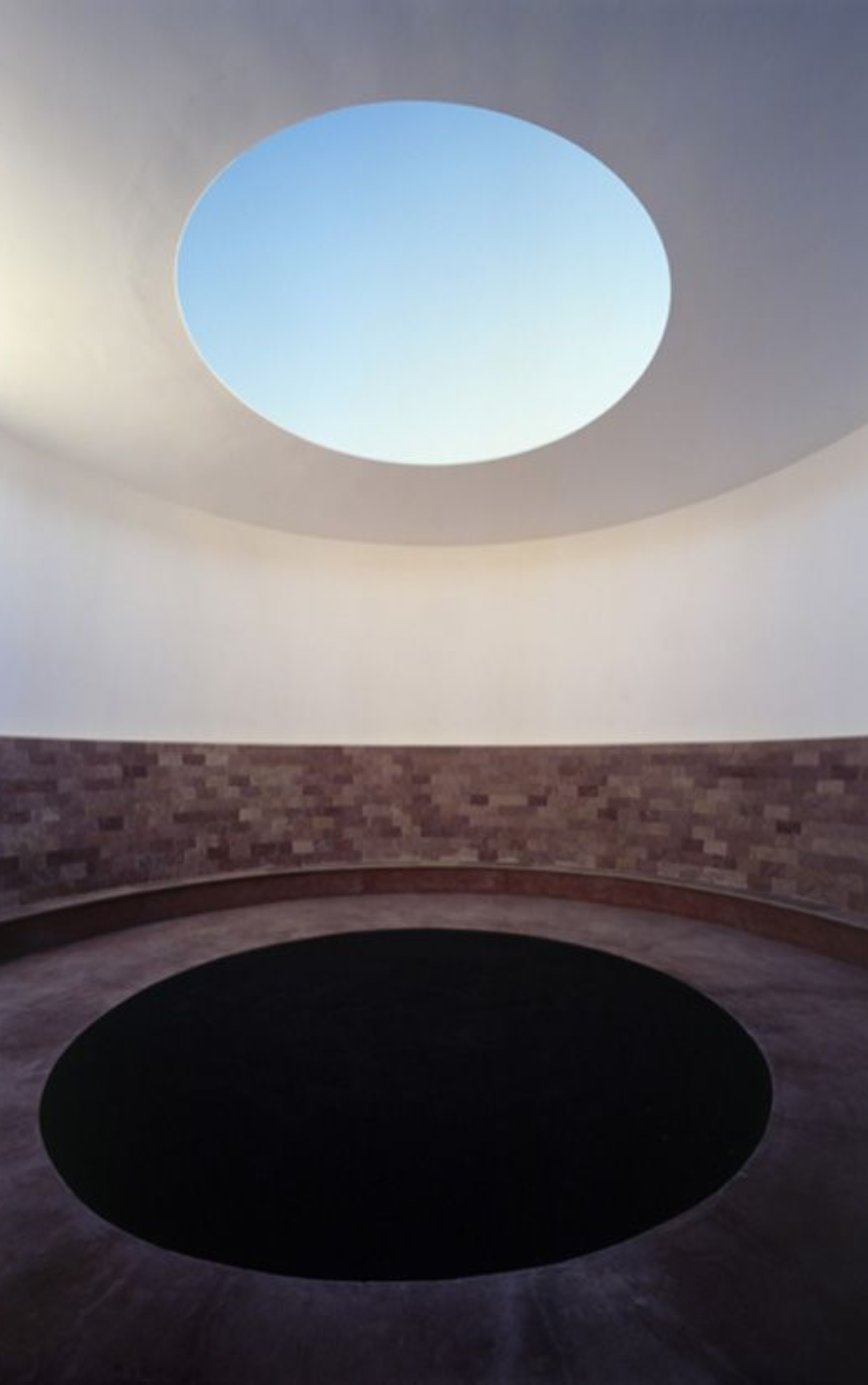
Turrell, who is also a pilot, spent months flying over the American West looking for the right volcano. He bought Roden Crater in 1979 and has been carving tunnels and chambers into it ever since. The aim is to create a naked eye observatory: a whole crater tuned to sunrise, moonrise, and the movement of the stars. The opening dates have come and gone. First in 2011, then in 2024, and in 2025, the NYT reported that it was still not complete.
I can’t think of any other work that has this much ambition that is still being made in my lifetime. The people who have been in it describe a long, perfectly straight tunnel which terminates in a disk of open sky.
How to see it: You pretty much can’t at the moment. The crater itself isn’t open to the public, and access is restricted to major donors and academic partners like Arizona State University. You can be a member of Friends of Roden Crater if you want to, but that doesn’t necessarily get you in. For now, the closest you can get from Phoenix is Turrell’s Skyspace Knight Rise at the Scottsdale Museum of Contemporary Art.
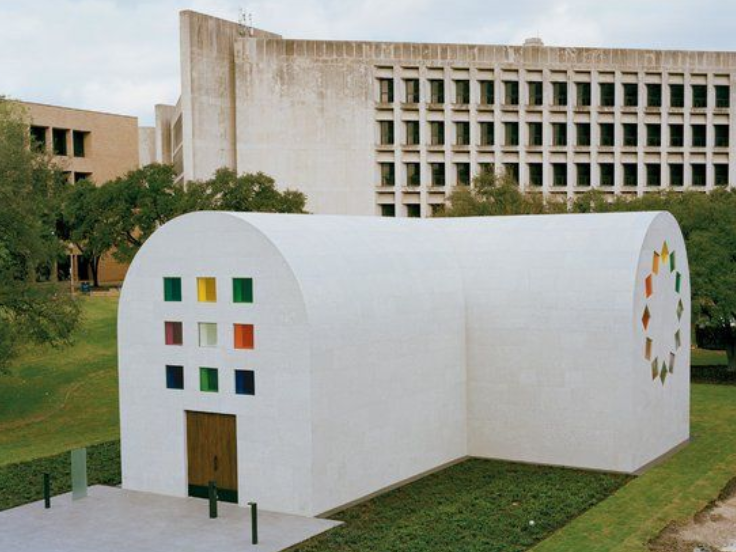
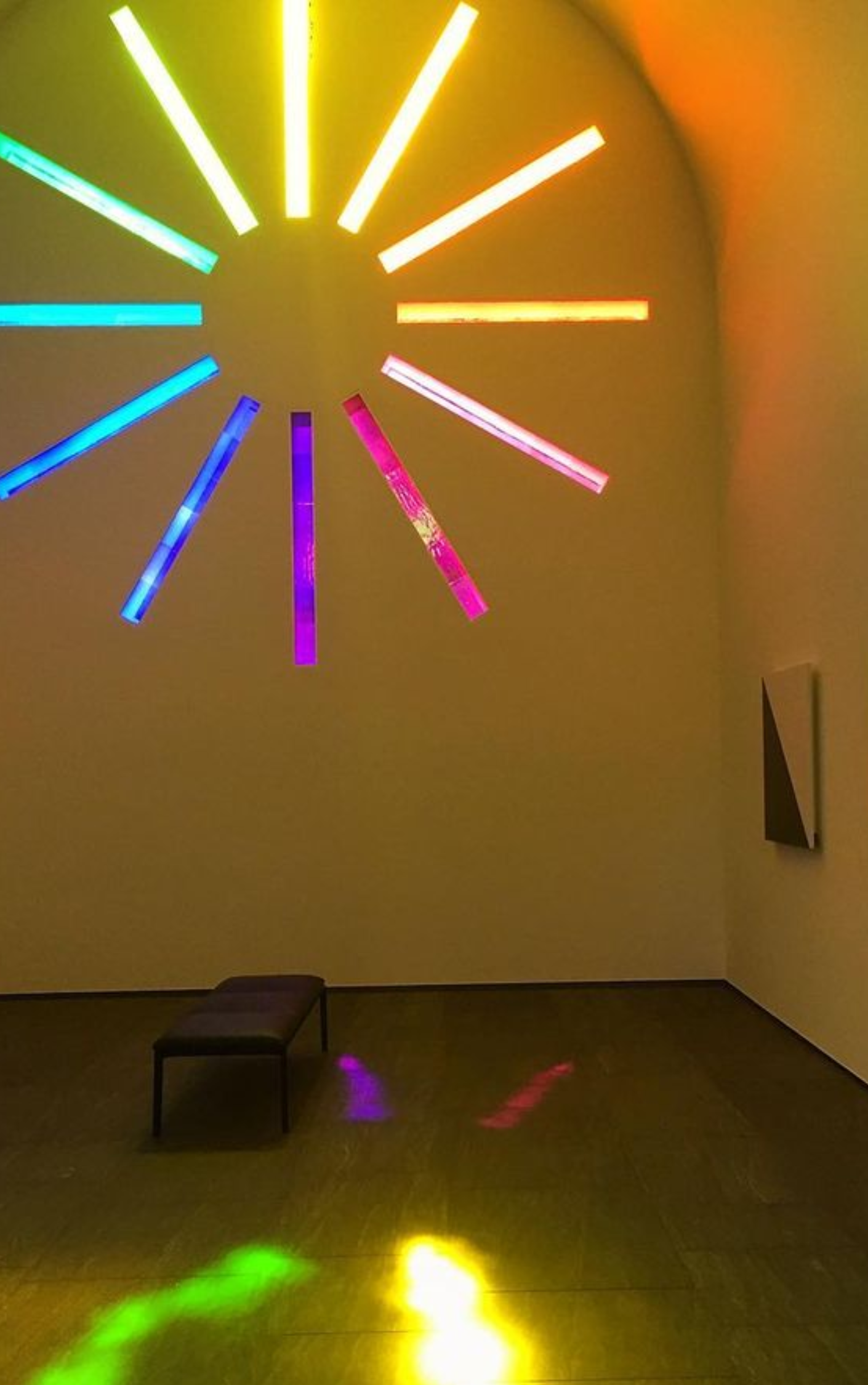
Ellsworth Kelly’s Austin
Blanton Museum of Art, Austin, Texas
Ellsworth Kelly never saw it built. He came up with the concept in the 80s for a commission that never materialized. The design sat in his files for decades until he passed it on to the Blanton in 2015. He died in December of that year, and Austin opened in February 2018 as his last work and the only building he ever designed.
It’s a plain white stone building from the outside. Inside the colored glass is projected all over the walls in blocks of color, and there are 14 black and white marble panels down either side. A redwood totem at the far end. It’s the simplest room on the list and somehow the most emotive.
How to see it: it’s included with museum admission and open all day when the Blanton is open (Tuesday through Sunday). You have to check in at the Smith Building first, and if you go, try to visit twice in one day. The light at noon and the light near closing are two very different artworks.
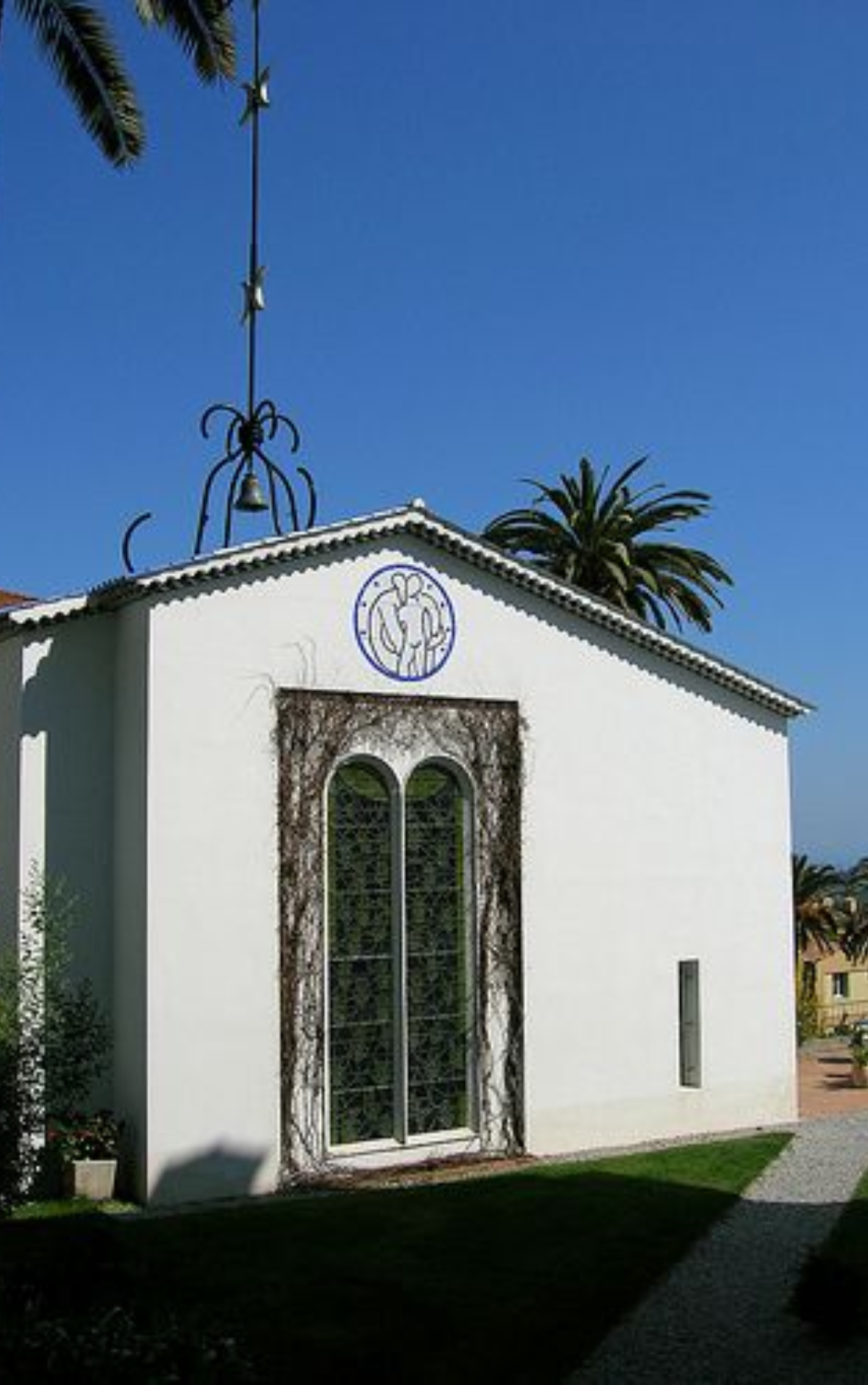
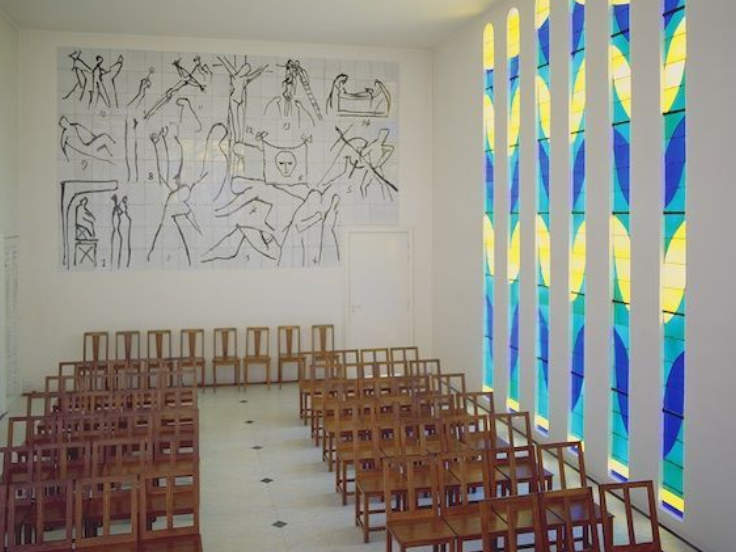
Chapelle Du Rosaire (The Matisse Chapel)
Vence, France
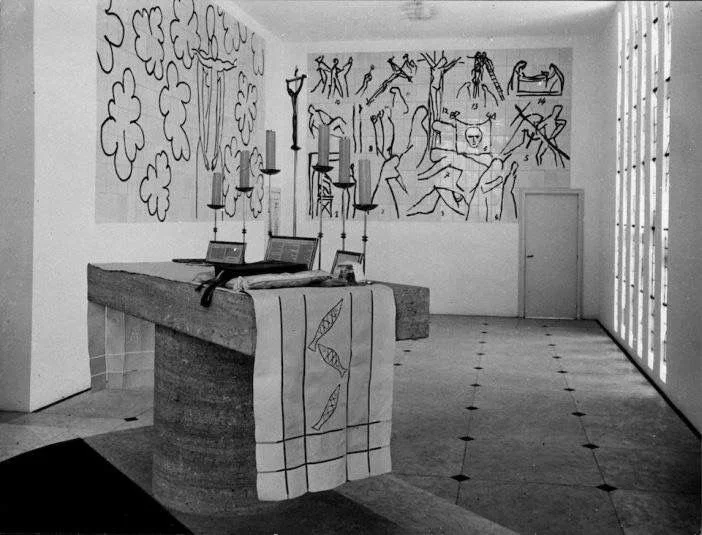
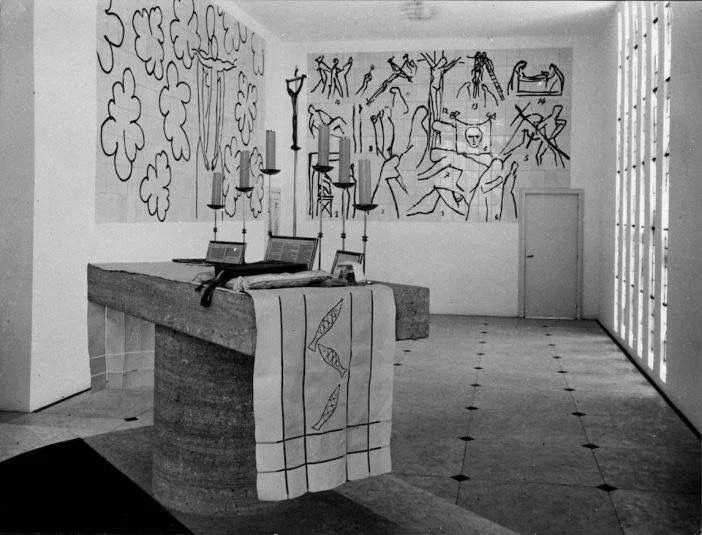
It all started with a nurse. In 1942, a young woman named Monique Bourgeois was Matisse’s nurse after surgery and did his portraits. A few years later, she had become Sister Jacques-Marie in the Dominican convent at Vence and showed him her sketch for a chapel window.
He designed everything from 1947 to 1951: the stained glass, the black line drawings on white tile, the altar, and the priests’ vestments. Matisse was well into his 80s and frequently worked from his bed. He called it his masterpiece, and of all the things on that list, I’d have no hesitation in believing him.
Look at the color on the floor. The windows are only lemon yellow, bottle green, and ultramarine blue. On a sunny day, they all spread out over the white tiles and change as the day progresses.
How to see it: Vence is in the hills above Nice, about an hour’s drive. The chapel has very limited hours, and the hours vary with the season. It’s closed on Sundays and sometimes during services. It is still a working chapel, so please be respectful.
Less, More, and a Lot More
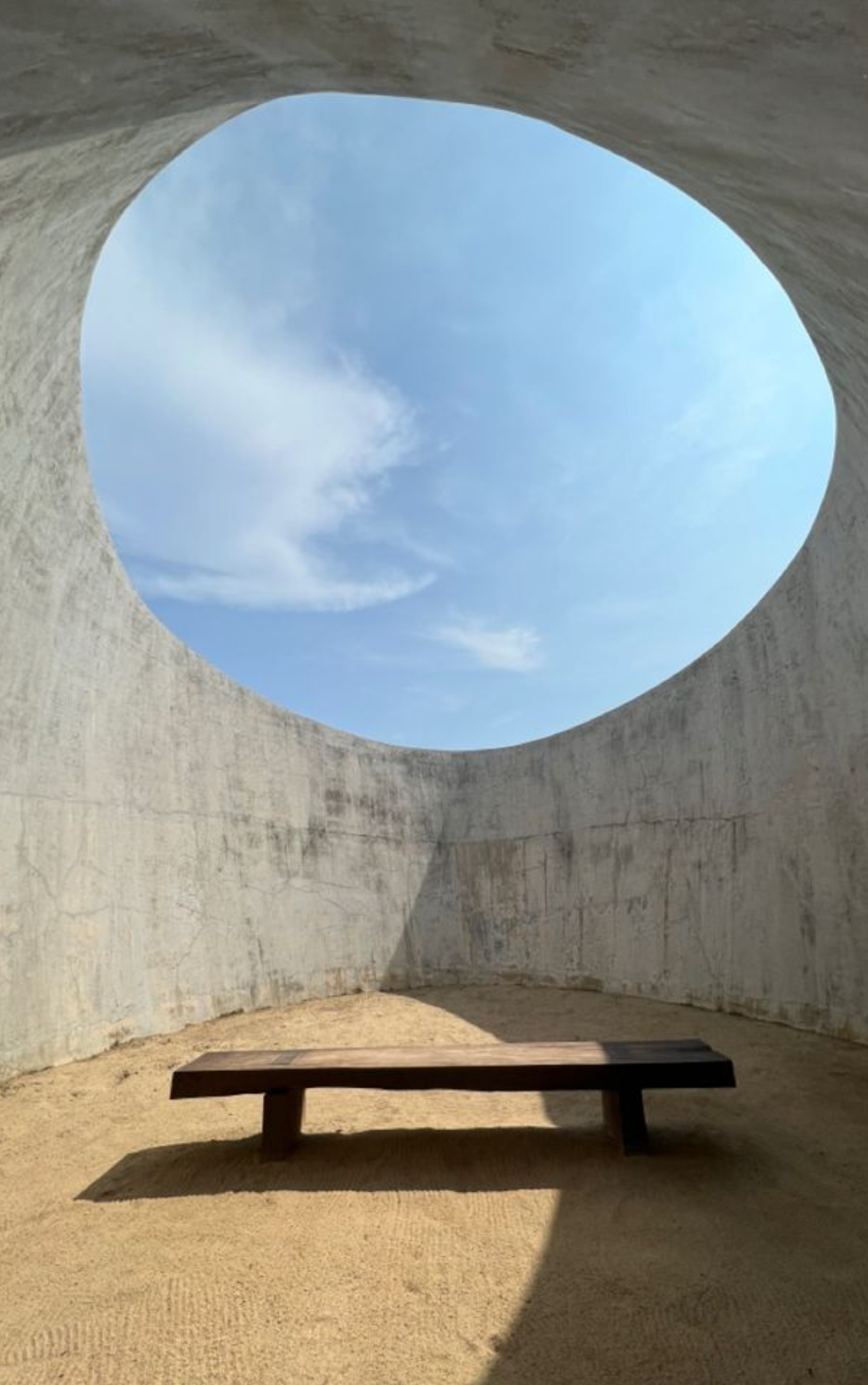
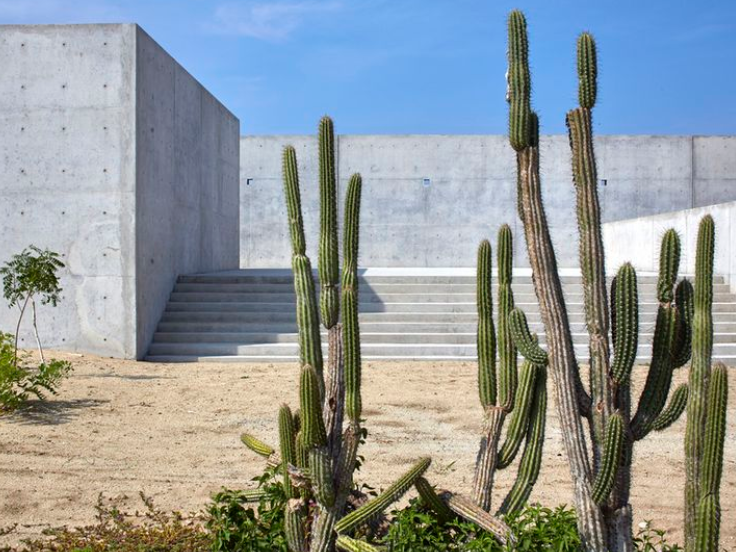
Casa Wabi
Puerto Escondido, Oaxaca, México
Tadao Ando’s first building in Latin America is on a very wild stretch of the Pacific coast. It was built for Mexican artist Bosco Sodi as his Casa Wabi artist residency, which started in 2014. It’s a building of long, serene lines of board-formed concrete with palapa roofs of dried palm above. That’s wabi-sabi in the purest form: rough materials, salt air, and nothing at all trying to be perfect.
The residency also gives back to the community. Visiting artists give workshops to locals, and the money raised from the tours goes toward supporting the program.
Here’s a little fact to pass around at dinner: Kengo Kuma designed the chicken run. So we’ve got two Japanese architectural greats in the mix, and one of them has actually built a chicken house.
How to see it: it’s not in Oaxaca city. It’s on the coast, approximately 30 minutes from Puerto Escondido’s airport. Puerto Escondido is also a short flight from Mexico City. You’ll need a car or a driver, and visits are by guided tour only. They run about 1.5 to 2 hours and happen several times a day for a suggested donation of 600 pesos. In high season, the tours can be fully booked out weeks in advance, so be sure to check.
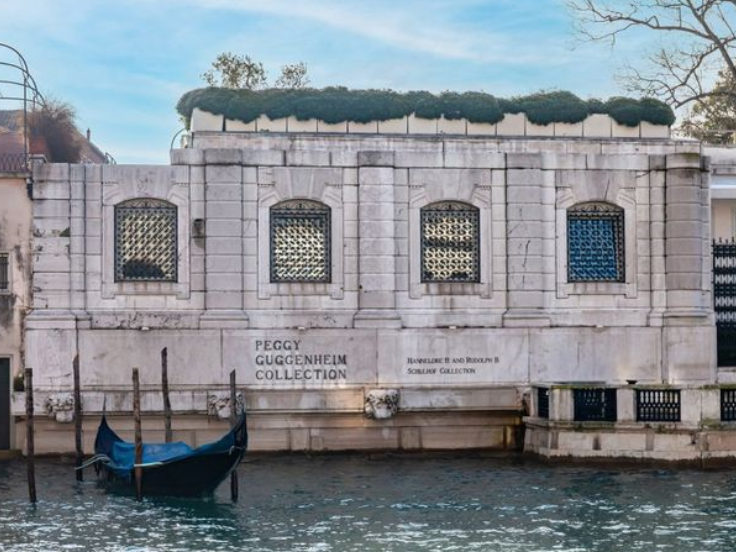
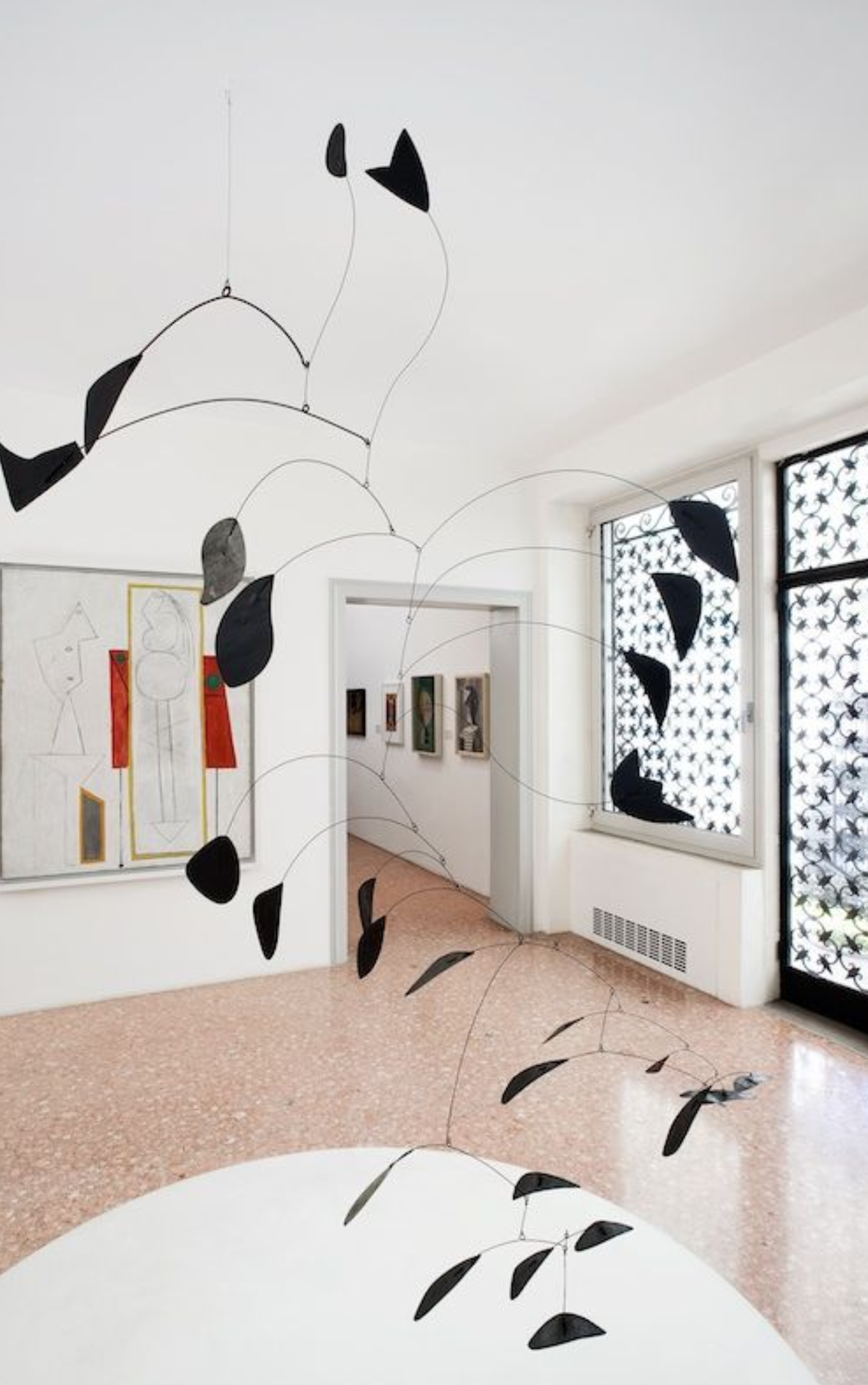
The Peggy Guggenheim Collection
Venice, Italy
Peggy Guggenheim had the most acute eye on the list and very little tolerance for the conventional. Her house was the same.
Palazzo Venier dei Leoni was begun in 1749 and never got beyond the ground floor, so the ‘palazzo’ is just one long, low white story along the Grand Canal. She bought it in 1949 and lived in it for 30 years with Pollock, Magritte, and Max Ernst, her ex-husband, all over the walls. It’s absolutely wonderful to see such radical 20th-century art in a house which was built for actual living rather than for exhibition. You feel you’ve been invited in rather than just being shown around.
Here are two things I really love. On the canal terrace is Marino Marini’s horseman, and she’s on record as having unscrewed the very anatomically correct rider every time a nun went past. In the garden, Peggy’s ashes are buried right alongside her dogs.
How to see it: it’s in Dorsoduro, a short walk from the Academia bridge. It’s closed on Tuesdays. Book a timed entry online, and if you can, go in the winter when Venice is quiet enough to properly enjoy it.
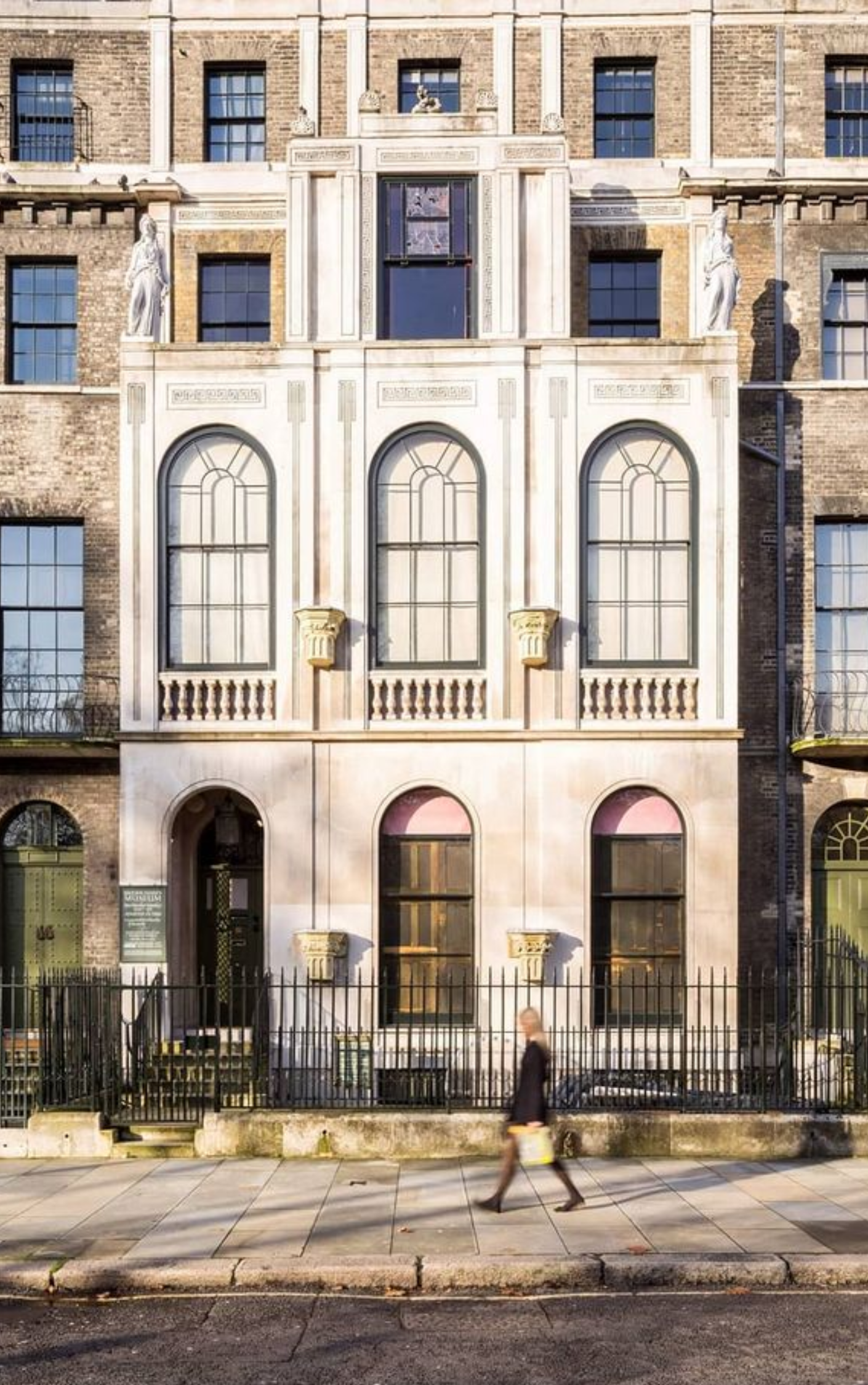
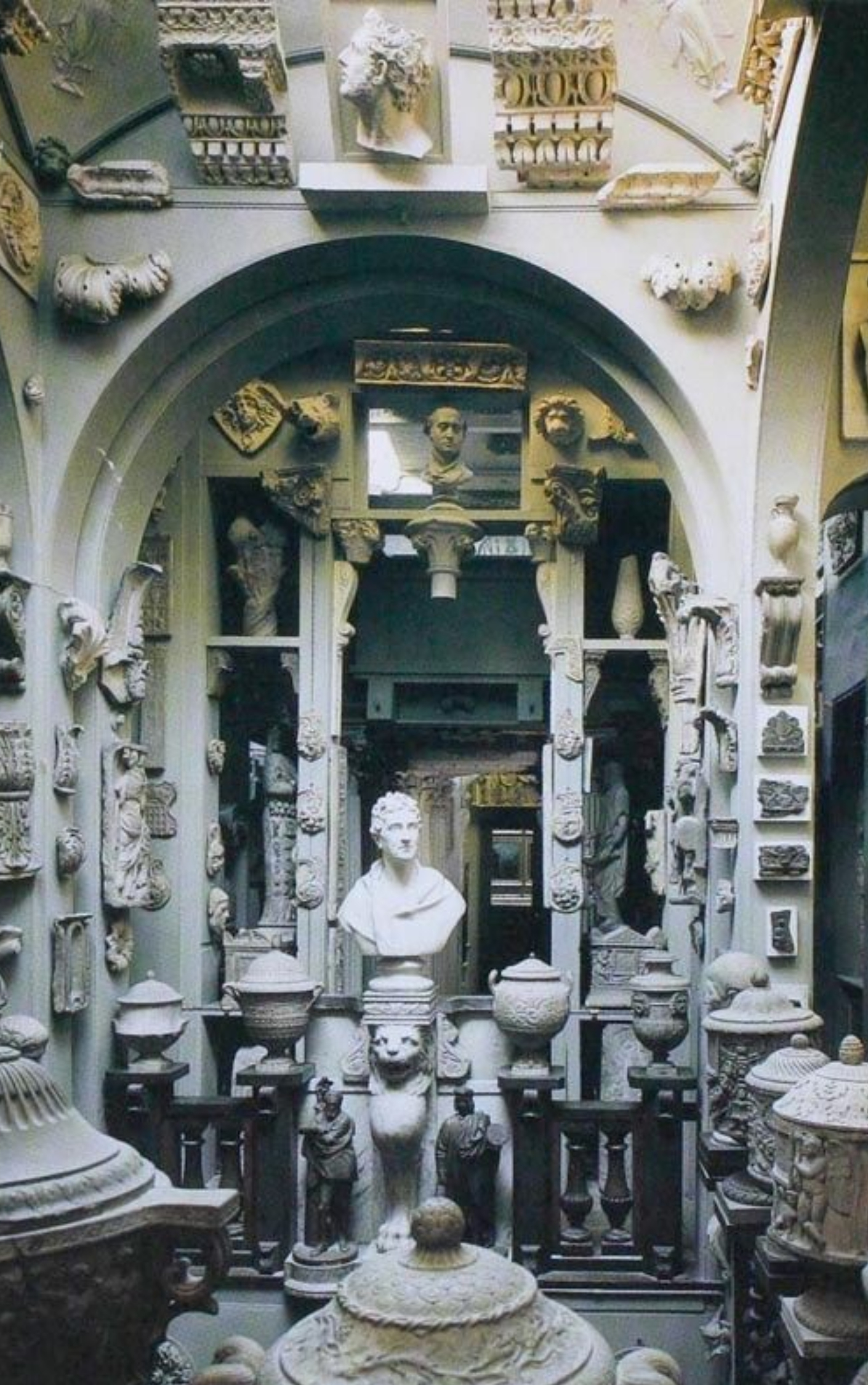
Sir John Soane’s Museum
London, England
Sir John Soane had an Act of Parliament passed to preserve his house exactly as he left it. The 1833 Act stipulated that everything had to remain as it was after his death, and it’s the case nearly two hundred years on.
This is the ultimate expression of the white box aesthetic on this list. Soane achieved the effect of infinite space in a small townhouse through the use of skylights, convex mirrors, and top-lit domes. Then he filled every square inch of that space with antiquities, casts, and paintings. The Picture Room is the piece de resistance with its walls opening out in layers to reveal even more paintings, including Hogarth’s A Rake’s Progress.
Head down to the basement, where you’ll find the alabaster sarcophagus of Pharaoh Seti I. Soane acquired it after the British Museum refused and then held a three-night, lamp-lit party to display it. That’s pretty iconic.
How to see it: admission is free, and it’s open Wednesday through Sunday. You can just walk right in. Highlights tours and groups of 8 or more need to book in advance. The newly restored Drawing Office, the oldest room of its type, is now open to the public for tours. For candlelit evenings, see the museum website, as they sell out pretty quickly. The house is very small and quite winding, so do leave your bags at the hotel.
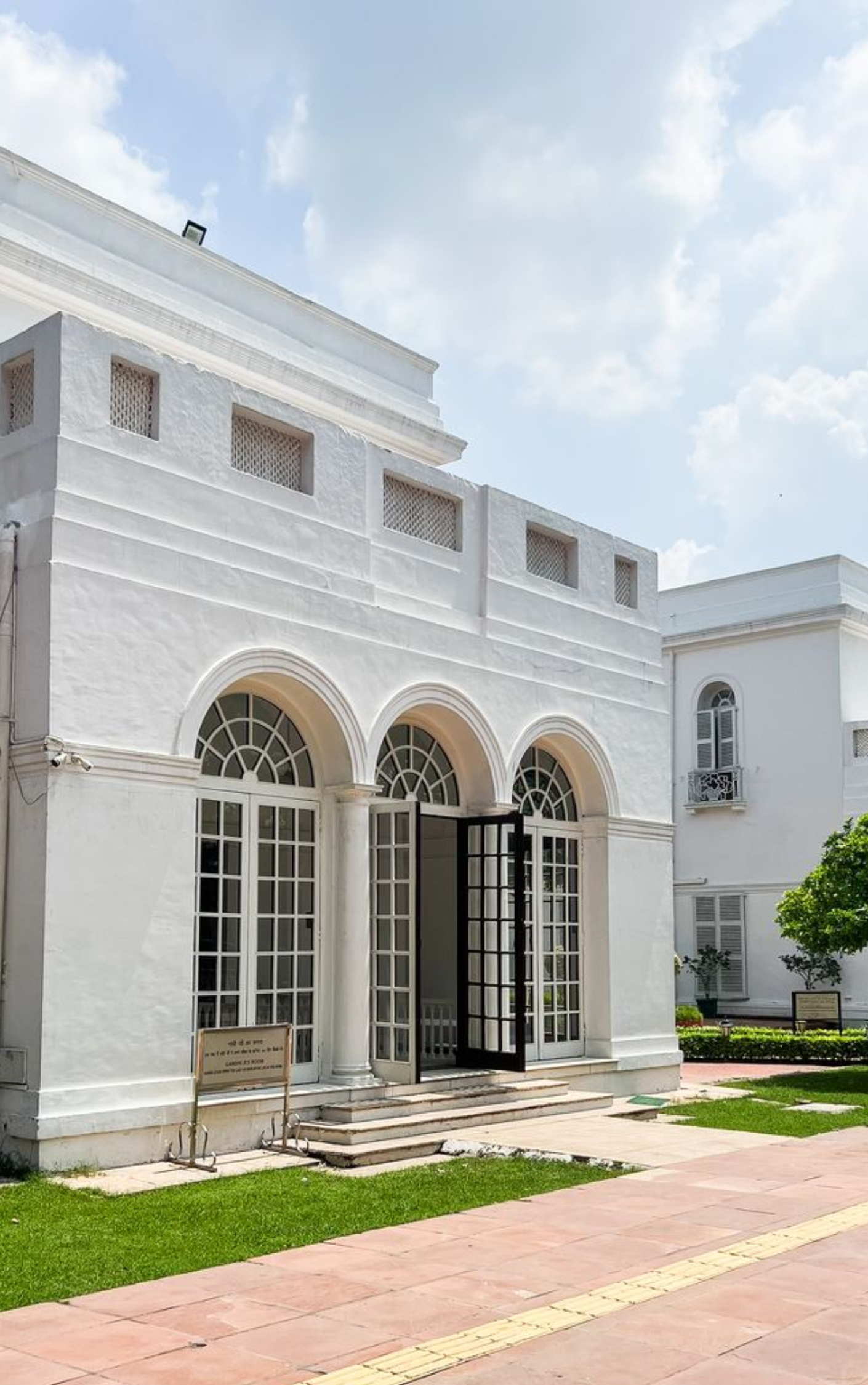
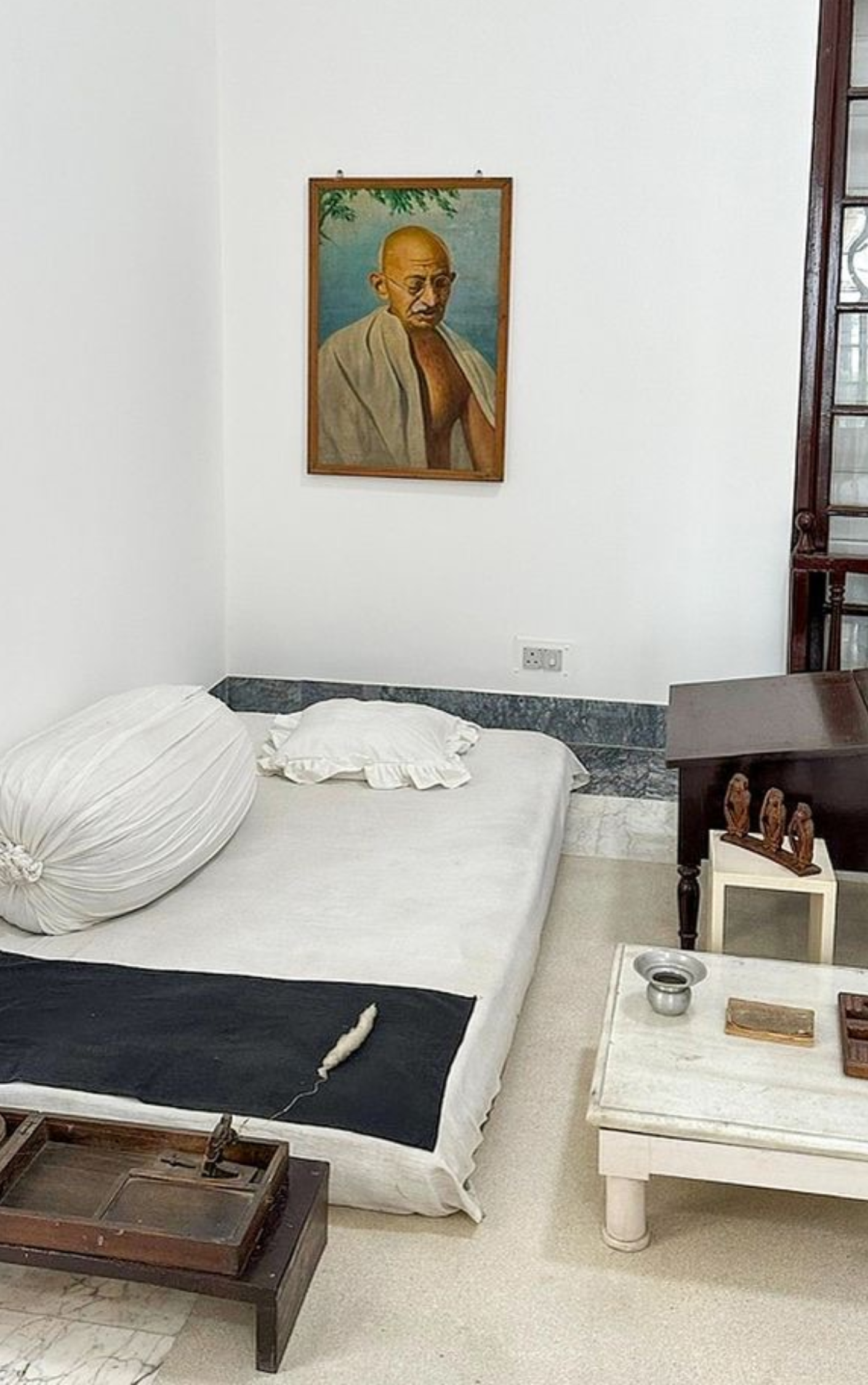
Gandhi Smriti
New Delhi, India
This one is different from all the others on the list. Gandhi Simriti was once Birla House, the house in which Gandhi spent his final 144 days. His room has been preserved exactly as he left it: a mattress on the floor and a very small number of things. Outside the room, there is a path of stone footprints that traces his final walk to the prayer ground where he was assassinated on January 30, 1948.
Every other place here is all about adding in some form or another. More light, more color, and more things. This one is all about subtraction, and I think that’s the single most valuable lesson a designer can learn. It forces you to think about what luxury actually is, and that question remains with you long after you’ve left.
How to see it: admission is free, and it’s open all day. They are closed on Mondays and national holidays. It’s best to go on a winter morning when it’s cooler in Delhi, and the garden is just lovely and quiet.
THE CATCH IS PART OF THE FUN
Half of this list really makes you work for it. You have to book the Eames House a month before the dates even exist. You plan an entire morning around a chapel that closes for lunch. And then there is Roden Crater that literally won’t let most of us in at all.
I used to find that irritating. It felt a lot like the Eric Andre “let me innnnnnnnn” GIF. But now I think the friction kinda serves people. It filters out the people who are just there for the picture. By the time you’re standing on Le Corbusier’s ramp or under Kelly’s colored glass, you’ve restructured your trip to be there, and you’re genuinely looking forward to it.
Doing all 12 is a bit ambitious, but hey, I respect it. If you can’t, why not pick the one that’s closest to something you want to experience, not the one that is going to look the most impressive in a photo? For me, that changes week to week, but one thing I do hope is that anyone who visits these sites will keep their phone in their pocket for at least the first ten minutes.