ALEXANDER GIRARD: THE DESIGNER WHO DID IT ALL
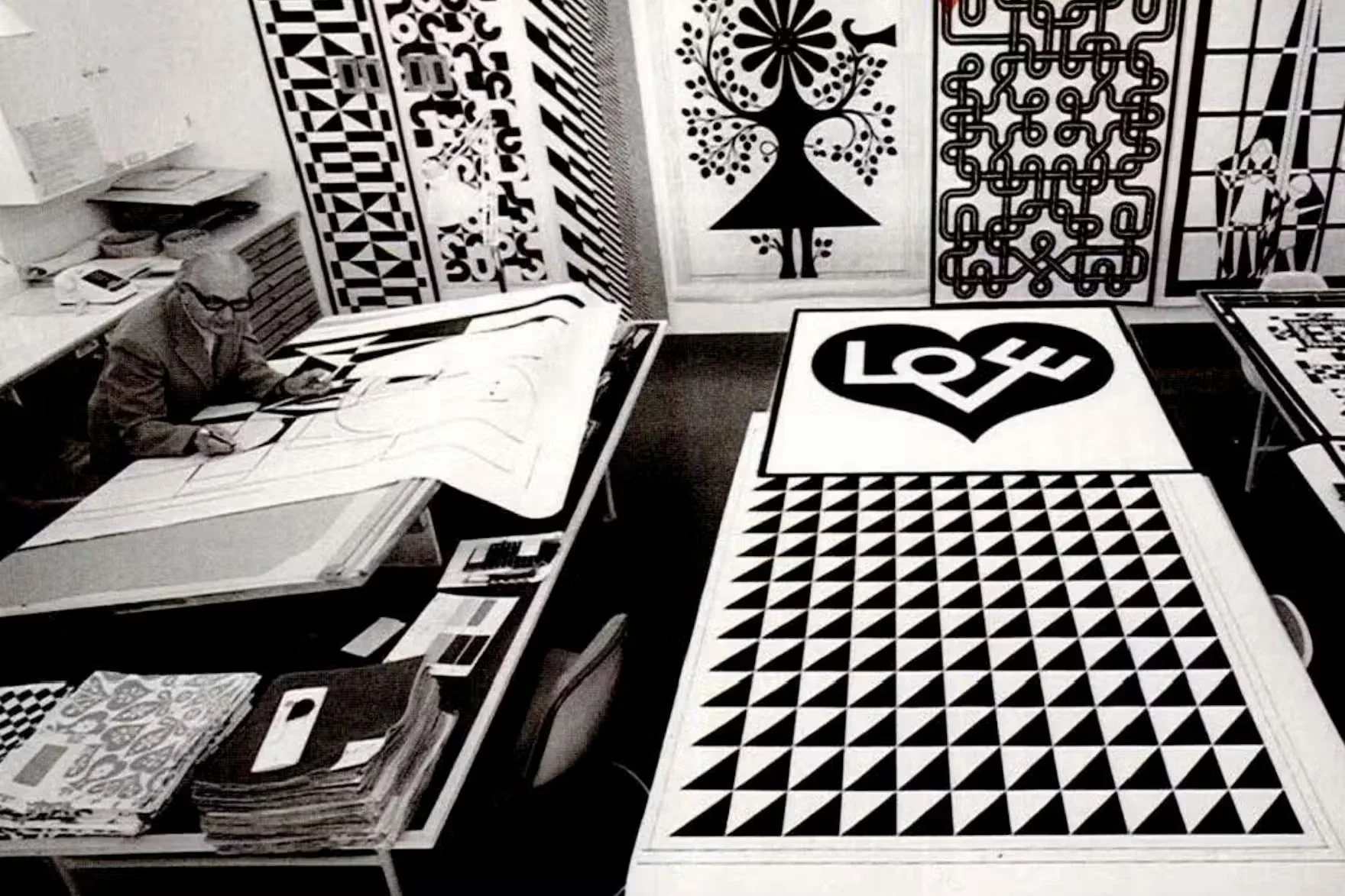
Back in college, I studied design for a few semesters, and there are designers you simply learn about, and then there are designers who make you feel something. Alexander Girard is firmly, without a doubt, in the second category. If you’ve ever walked past a fabric that stopped you in your tracks with how bold, geometric, and impossibly cheerful it was, there’s a good chance Girard had something to do with it. And if you don’t know his name yet, you’re about to.
Girard is one of those rare, unique creative minds that couldn’t be contained by one single discipline. He dabbled in textiles, interiors, graphic design, furniture, and even restaurant concepts. Yes, restaurant concepts! He did it all, and he did it with a fearless, joyful confidence that really makes you wonder why anyone would choose to play it safe. While his contemporaries, whom I also love, Charles Eames and George Nelson, have become household names in the design world, Girard has been slightly more under the radar. Honestly, I’d argue that’s a huge oversight.
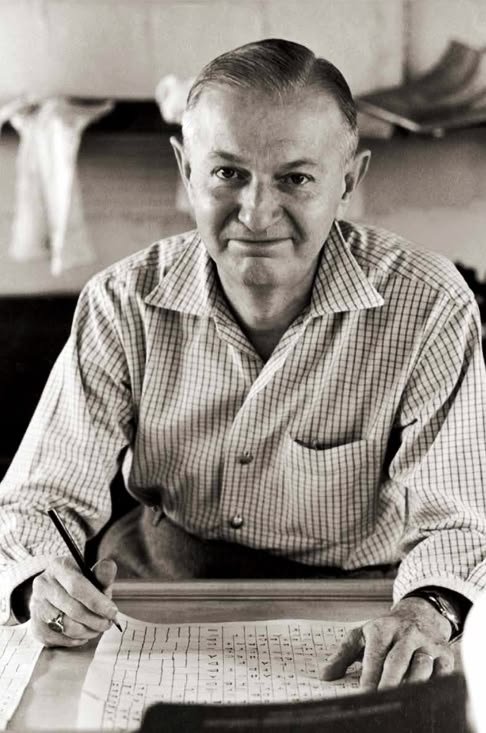

Who Is Alexander Girard?
Girard was born in New York in 1907 and raised across multiple countries, including England and Italy. An international upbringing that would shape everything he created. He trained as an architect, but simply calling him an architect would be wrong. Technically accurate, but wildly incomplete. What set him apart from the jump was his philosophy. He called his approach “aesthetic functionalism,” or the belief that beauty wasn’t a bonus; it was the whole point. He believed that making something delightful was just as important a design goal as making it useful. In an era where modernism was typically synonymous with restraint, Girard was asking: what if we add more color? More pattern? What about joy? And it turns out the answer was always yes.
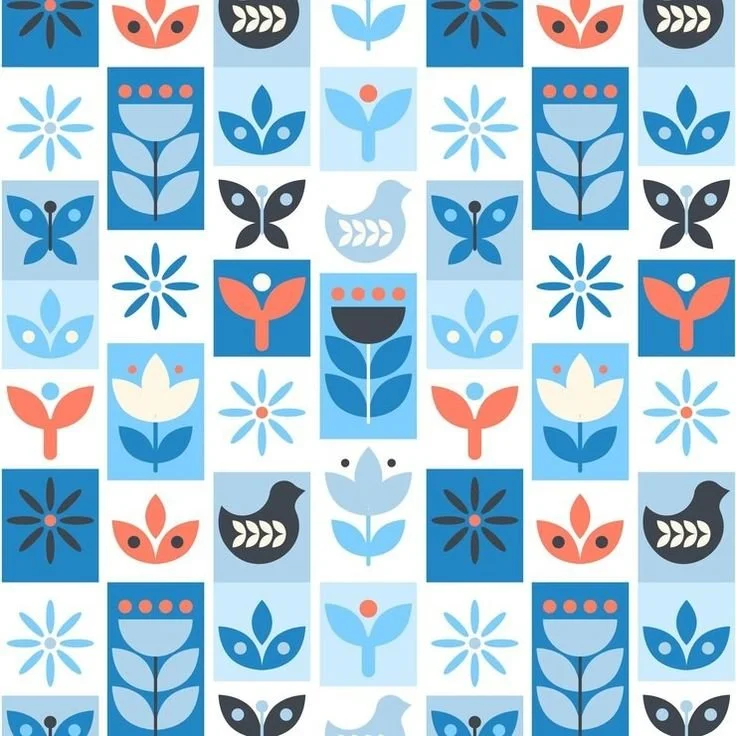
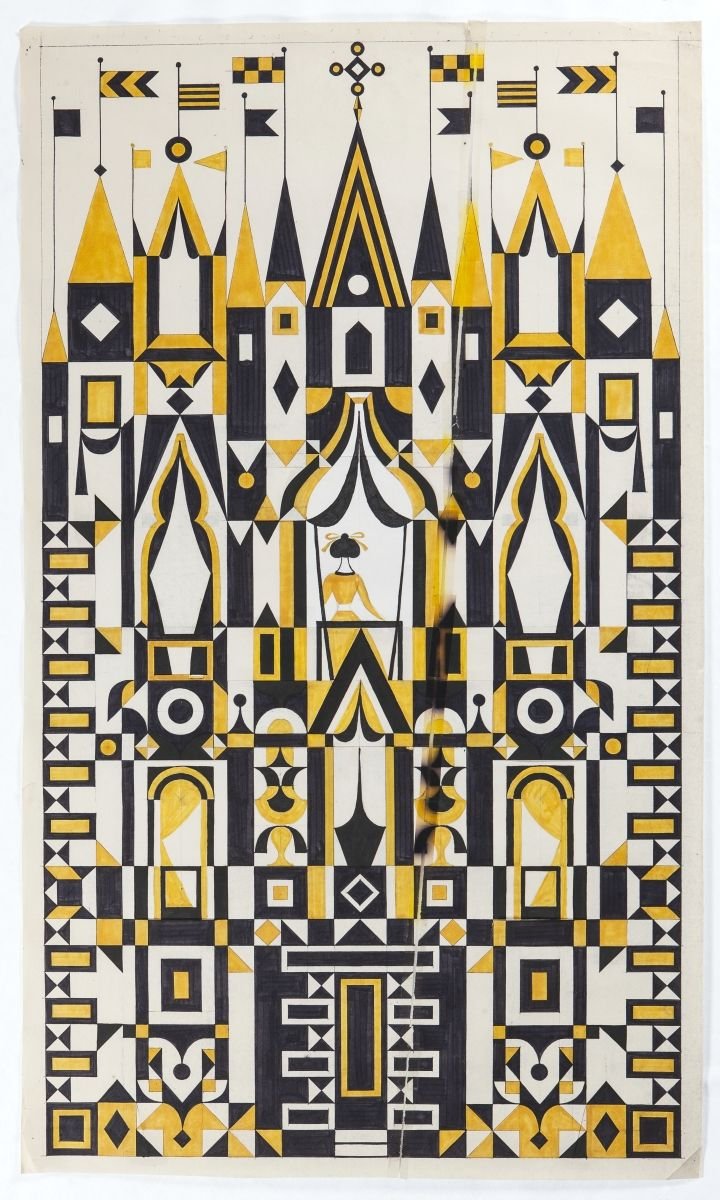
What He Did - It was a lot
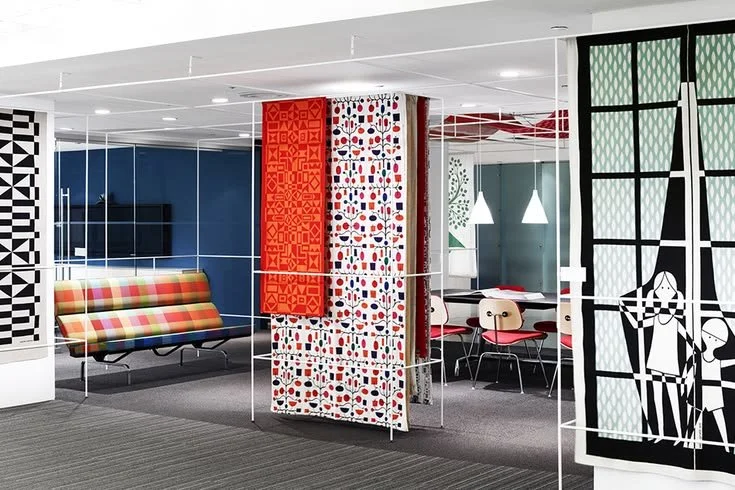
In 1951, Girard was appointed head of the textile division at Herman Miller, and that’s when things started to get really interesting. He joined a creative lineup that already included George Nelson and Charles Eames, forming what can only be described as the most talented design team of the 20th century. Together, this trip was given creative freedom to do whatever they wanted, and what came out of that era is still referenced and reproduced today.
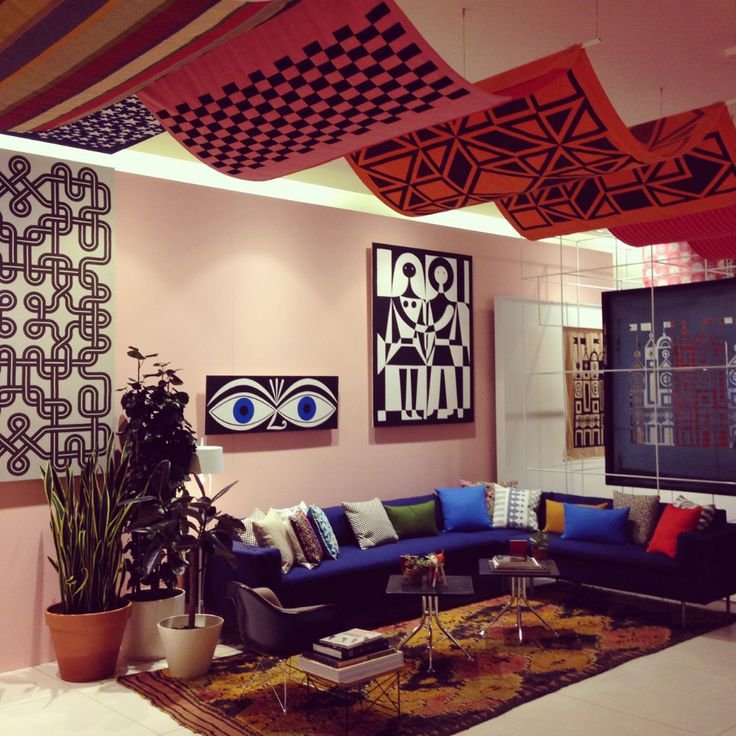
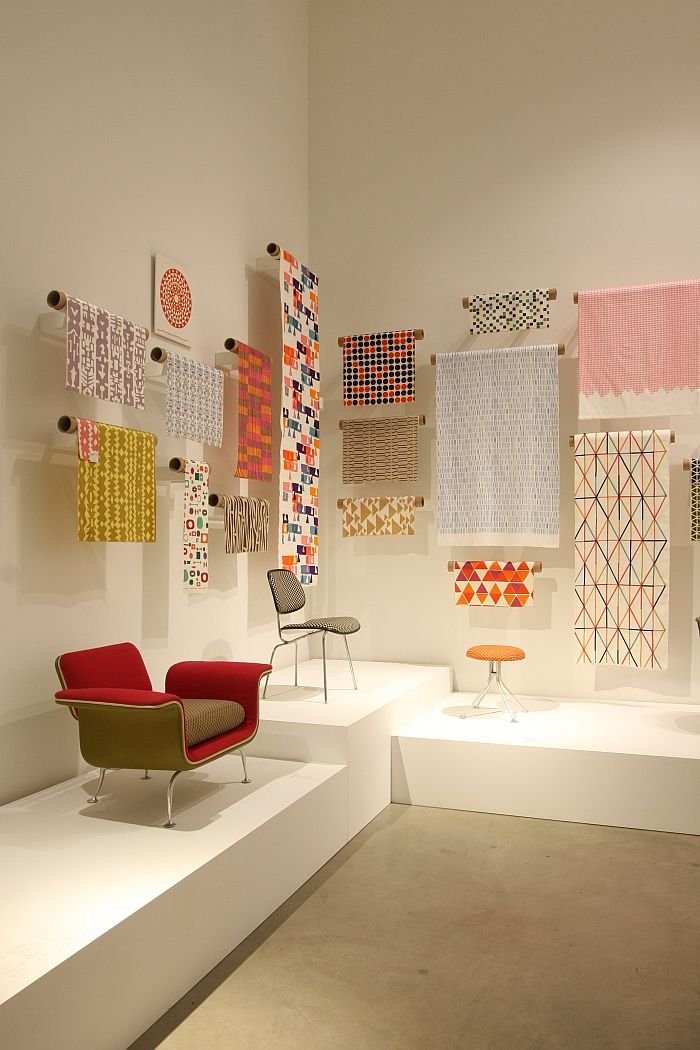
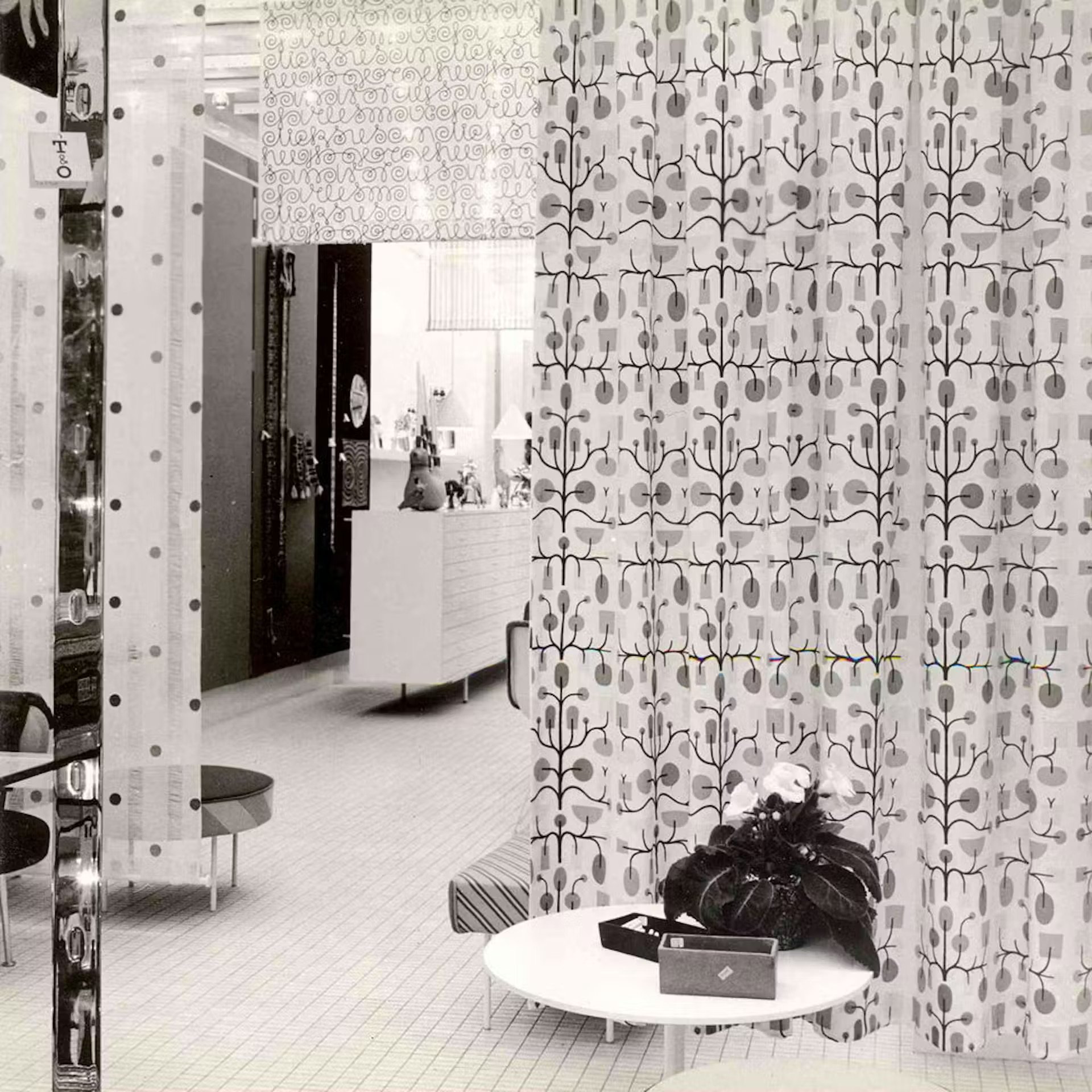
At Herman Miller, Girard produced hundreds of textiles that blew up the rulebook. He rejected the idea that certain colors or patterns belonged in certain rooms or on certain pieces. To him, everything was fair game. The combinations were infinite, creativity had no ceiling, and rules existed to be ignored. His work was bold, geometric, and brimming with a sensibility that felt completely new at the time when design felt relatively beige. His rare textiles go for thousands online today.
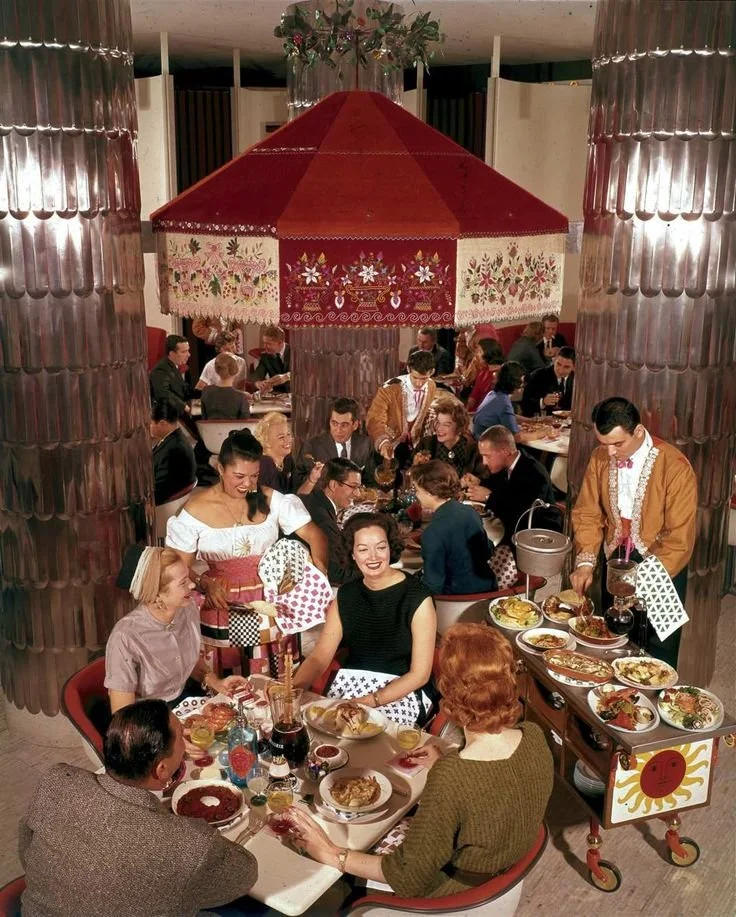
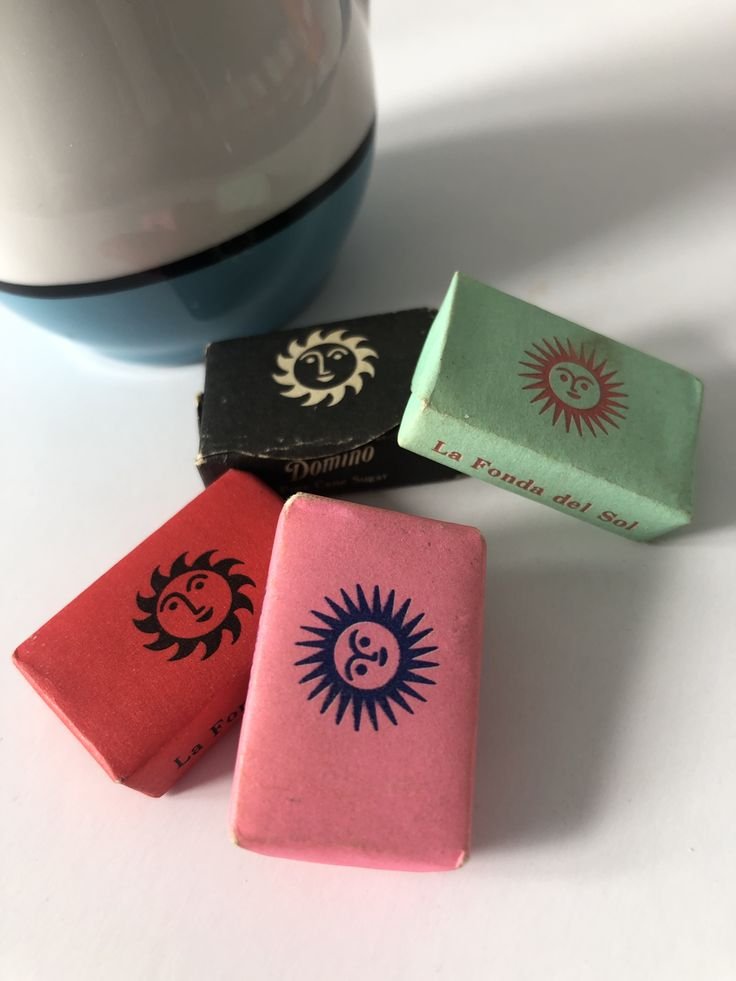

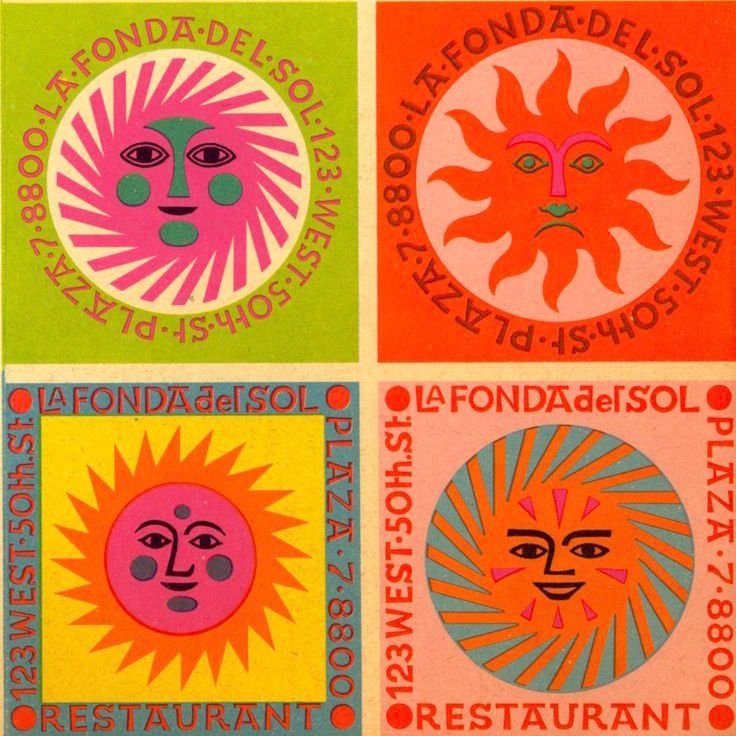
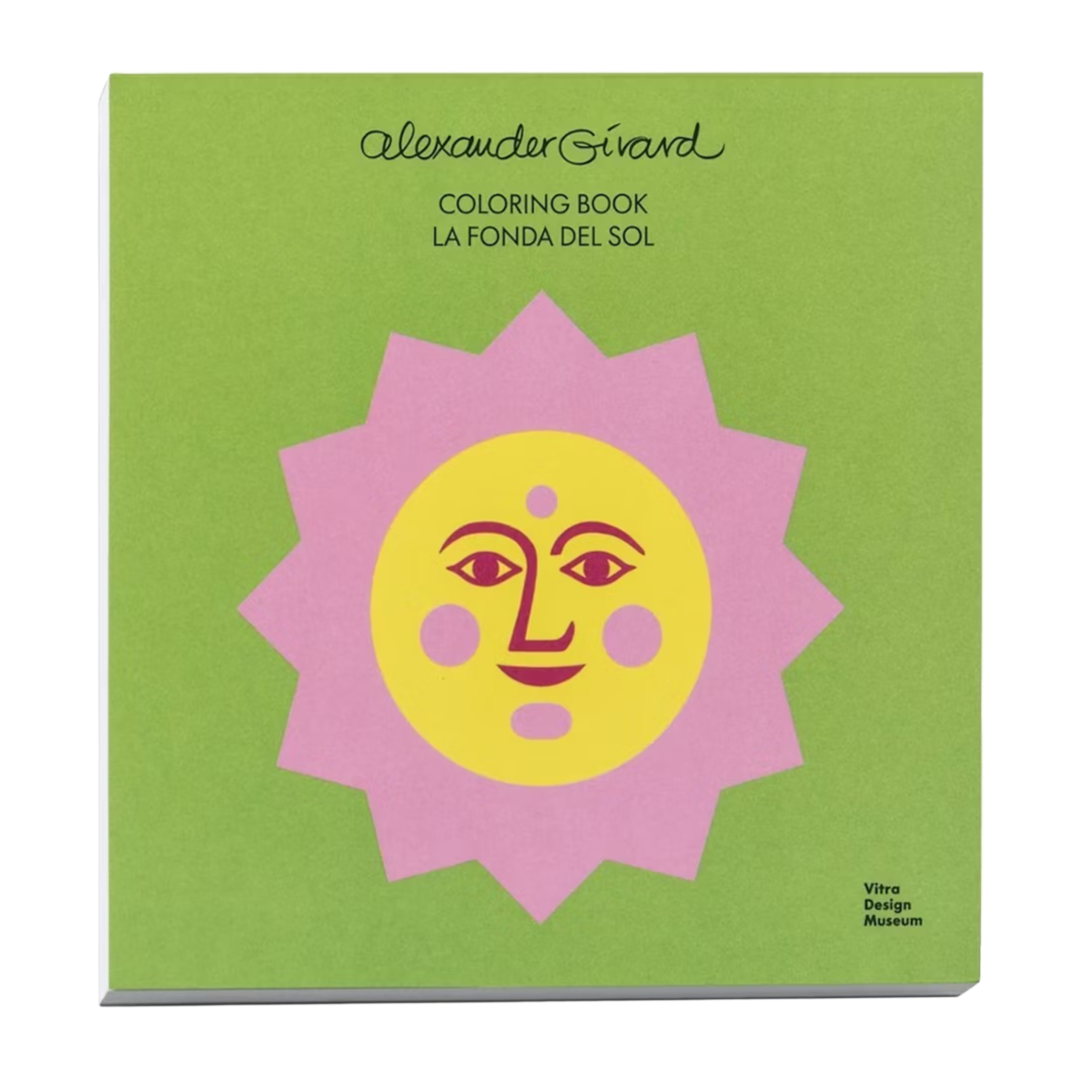
But textiles were only one chapter. One of his most ambitious and celebrated projects was La Fonda Del Sol, a Latin American-themed restaurant that opened in 1960 inside the Time & Life Building in New York. This is truly one of my favorite projects of his for a variety of reasons. Girard designed everything about La Fonda Del Sol. The architecture, the menus, the matchbooks, the server carts, and even the washroom fixtures. He collaborated with Eames on a custom seating design. The restaurant’s central motif was the sun, rendered in Girard’s signature hand-drawn style and repeated in countless variations across every surface. Accounts from the time describe it as so visually thrilling that at least one person reportedly couldn’t eat because they were too busy looking at everything.


He also took his signature aesthetic literally to the skies. In the late 1960s, Girard designed a comprehensive visual identity and interior concept for Braniff International Airways, which turned air travel into a full sensory experience. That project led to the Girard Group Collection for Herman Miller. It was a line of chairs, sofas, ottomans, and tables designed around endless customizable upholstery combinations. It was way ahead of its time and discontinued way too soon. There are still rare pieces from this collection around, and when found go for significant amounts of money.
What Made Him Different
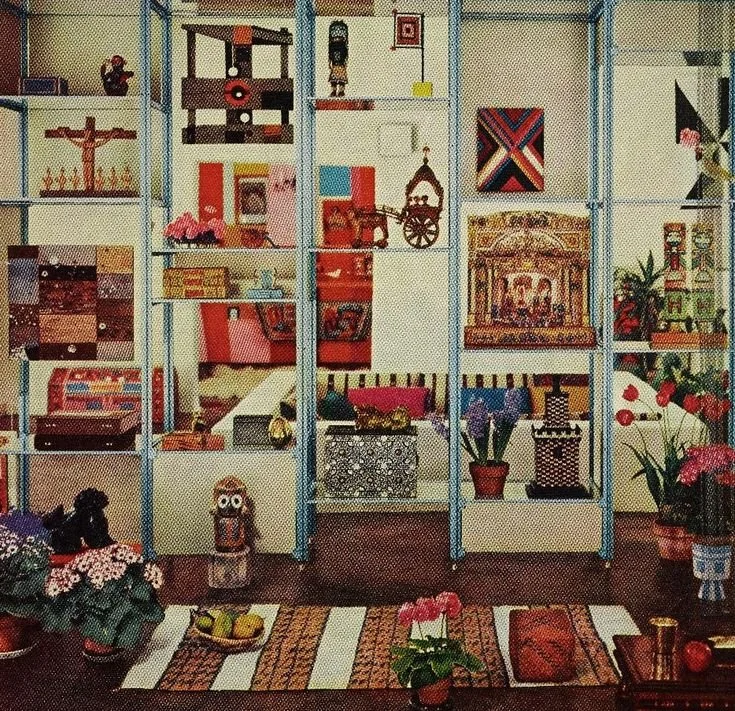
Here’s what I love most about Girard: he was a collector at heart. Over his lifetime, he amassed thousands of pieces of folk art from all over the world. Art, which he called his “toys.” He didn’t collect them as status symbols or museum pieces. Rather, he collected them because they brought him joy and because he saw something in them so many design circles liked to dismiss: the idea that handmade and imperfect things by everyday people had just as much value as anything produced by those who are trained. That philosophy bled into everything he created. His work was never cold, and it wasn’t trying to be impressive. It was trying to delight people. There’s a real difference, and you can see and feel it when you look at his pieces.
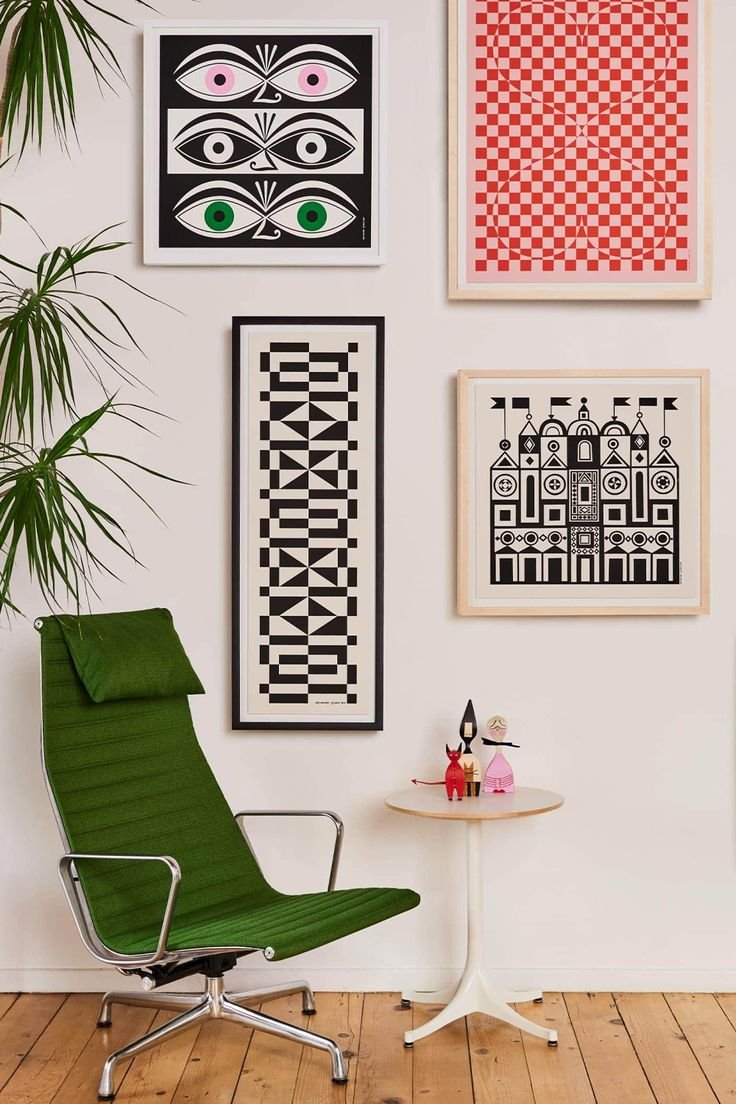
While I love minimalism, he was a total design maximalist. Not only was he a maximalist, but he was a maximalist at a time when minimalism was the moment. Where his peers leaned into clean lines and neutral palettes, Girard leaned into color, pattern, texture, and layering. He was decorative in the best possible sense of the word, even though, in the design world, “decorative” was often said with a hint of condescension.
His Legacy
After retiring in the early 1970s, Girard settled into his home in Santa Fe, New Mexico, where he had lived since the late 1950s. His enormous collection of folk art, which has been meticulously catalogued by the Girard Foundation, was donated to the Museum of International Folk Art in Santa Fe in 1978. In 1982, the museum opened the Girard Wing, which he personally designed as a display for some 10,000 objects. The wing is still open today, and is apparently one of the most extraordinary rooms you’ll ever walk into. A riot of color and chaos that reveals an underlying order. Very on brand.
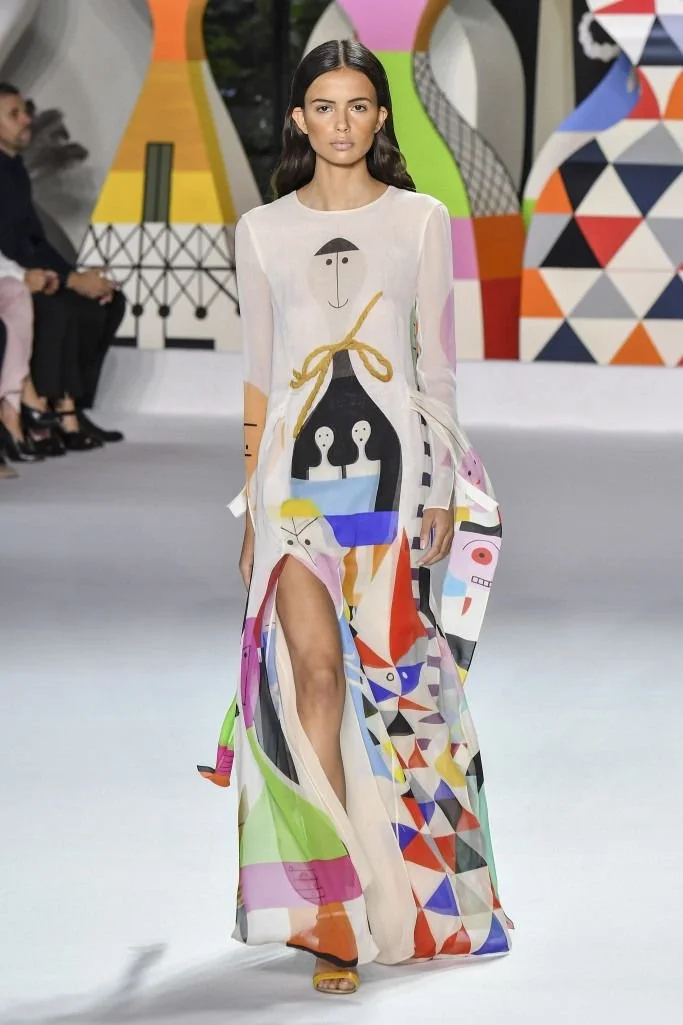
Girard passed away in 1993 at the age of 86, and while his legacy is quieter than Eames’, his work, more decorative, ephemeral, and less easy to pin down, has had a serious and well-deserved revival of interest in recent years. His textiles have been reissued, his prints are collected and framed, and designers across every discipline are finally giving him his flowers.

Why He Still Matters Today
We are living in a cultural moment that is embracing maximalism again. Craving color, personality, and things that feel human. The “all-white-everything” era has run its course. People want warmth and craft. They want spaces and objects that feel like someone made a choice rather than picking a safe option. This is exactly what Girard spent his career building. His work speaks to anyone who has ever looked at a patterned textile and felt something. Anyone who has ever wanted their home to feel joyful rather than simply stylish. Anyone who believes that design should make your life feel richer instead of just looking good in a photo.
His pieces are also just really good. The kind of timeless that doesn’t require context or explanation. You just know it’s right, and that’s the mark of a truly great designer.
My Favorite Pieces
Make it stand out
The Wooden Dolls
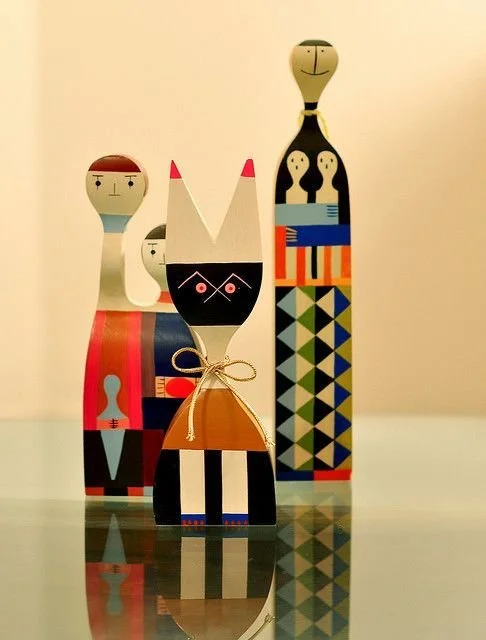
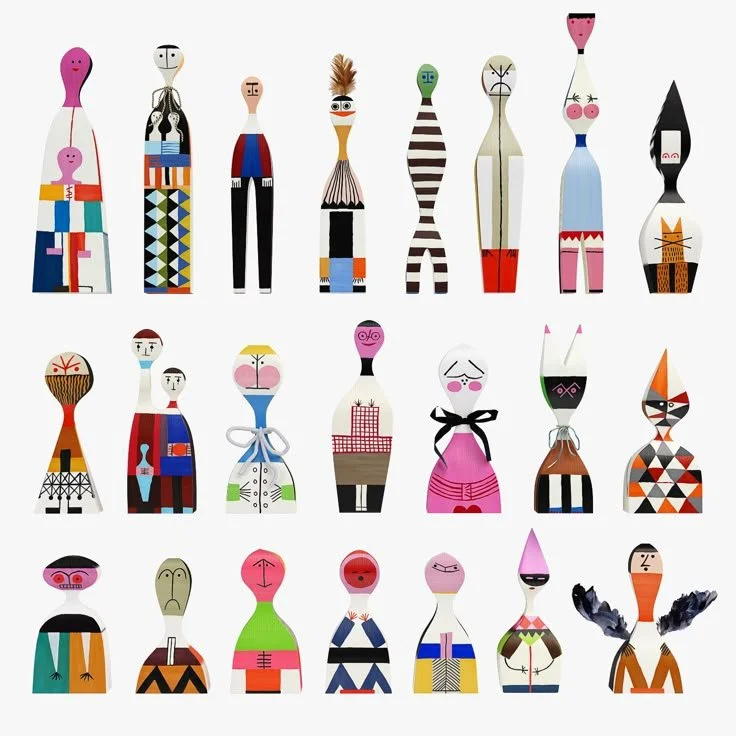
Okay, so maybe the Devil isn’t your vibe. Luckily, there is a whole slew of Wooden Dolls to choose from. The Wooden Dolls as a whole are proof that Girard collected and made things purely because they brought him joy. He carved and painted this entire family of human and animal figures in 1952. They range from joyful to slightly eerie (you know the ones). They are made of solid fir wood and finished by hand with paint, feathers, twine, and whatever else felt right. Some are tall and narrow, while others are squat and wide. Some look friendly, and some absolutely do not.
That mix of moods is part of what makes the collection so great. It feels genuinely human in a way a lot of designed objects don’t. These too are produced by Vitra now, while the originals are held in the Vitra Design Museum. Each is replicated down to the last detail and still finished entirely by hand and delivered in its own little wooden gift box.
Make it stand out
The Nativity
I’m not one to love a Nativity set, although I will argue Mid-Century Modern Nativities are top tier; however, this one hits differently with the backstory. Girard’s relationship with the Nativity didn’t start as a design project. It started in childhood when he, much like many of us, myself included, received one as a gift. That single object led to a lifelong obsession. Over his years of collecting, he amassed an enormous collection of Nativity scenes from countries all over the world - wood, pottery, painted, unpainted, elaborate, minimal - each one reflective of a different culture’s interpretation of the same story.
In 1961, he curated an exhibition of 170 sets at the Museum of International Folk Art and took it to Kansas City, where it became a cultural moment. Time Magazine even ran a two-page spread. A critic wrote that Girard’s secret was that he never lost the eye of a child, which might be an entirely accurate statement. For the exhibition, he designed a poster that was bold, graphic, and unmistakably his. Years later, a nativity set was created by House Industries based on the original illustration found in his son’s home, which feels like a full-circle moment he probably would have loved. The sets aren’t available today (bummer), but are collectors’ items that run between $400 and $800 if you can find them.
The Little Devil
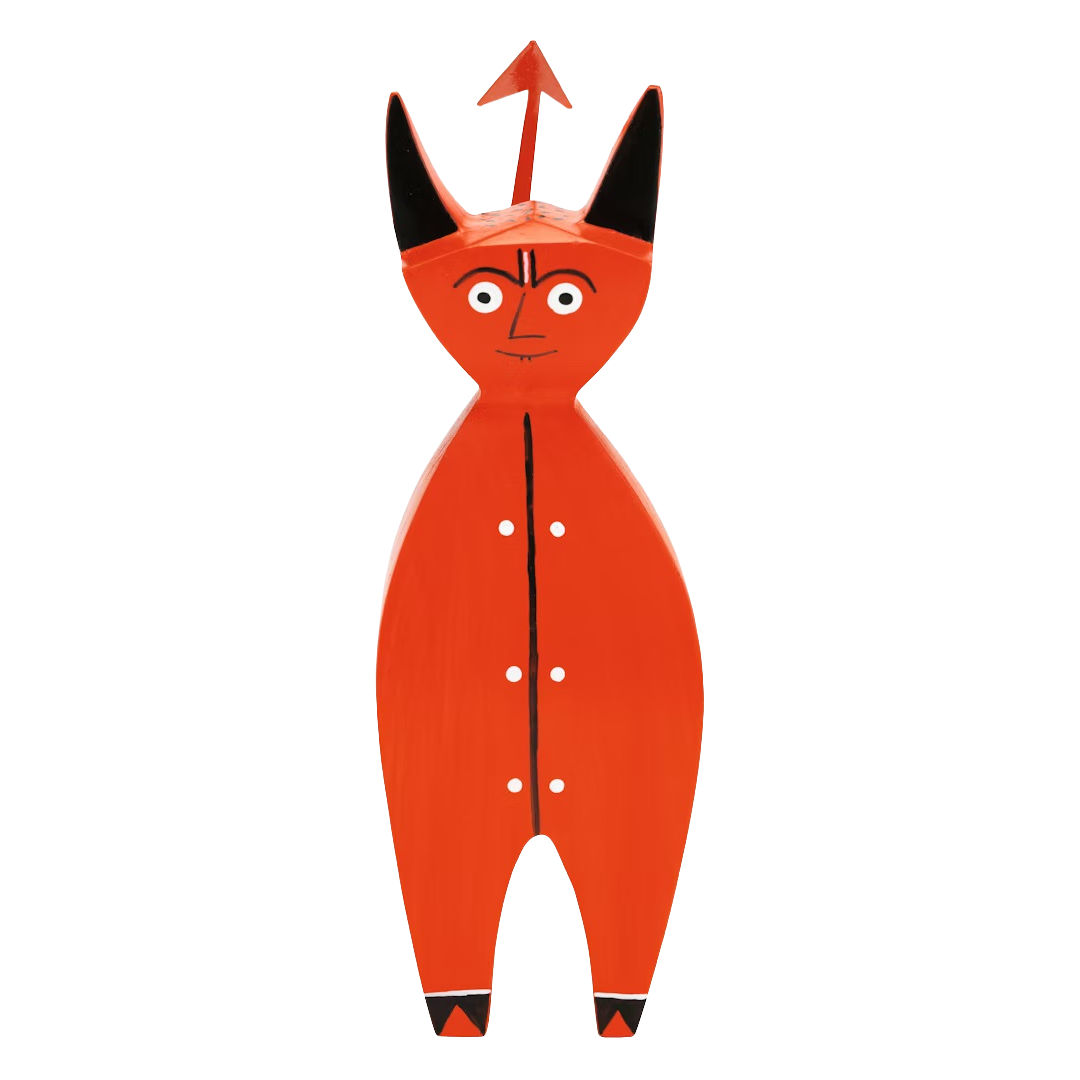
This is my personal favorite, and I am slightly shocked that after all this time, I haven’t purchased one yet. Trust me, I’ve added it to my cart like twice a year. The Little Devil is part of his Wooden Dolls collection, and he happens to be the most charismatic of the bunch. While the rest of the dolls have a wonderfully stark, serious energy, the Little Devil shows up with an expression that can only be described as gleefully up to no good.
At six inches tall, he has the presence that makes him impossible to ignore on the shelf. Girard made the original dolls by hand for his own Santa Fe home, never intending them to be sold. The fact that we get to own them feels like a gift. Today, they’re produced by Vitra, hand-painted one by one, and no two are exactly alike. Which, honestly, makes the Little Devil feel even more fitting - a one-of-a-kind troublemaker.

Make it stand out
The Eyes
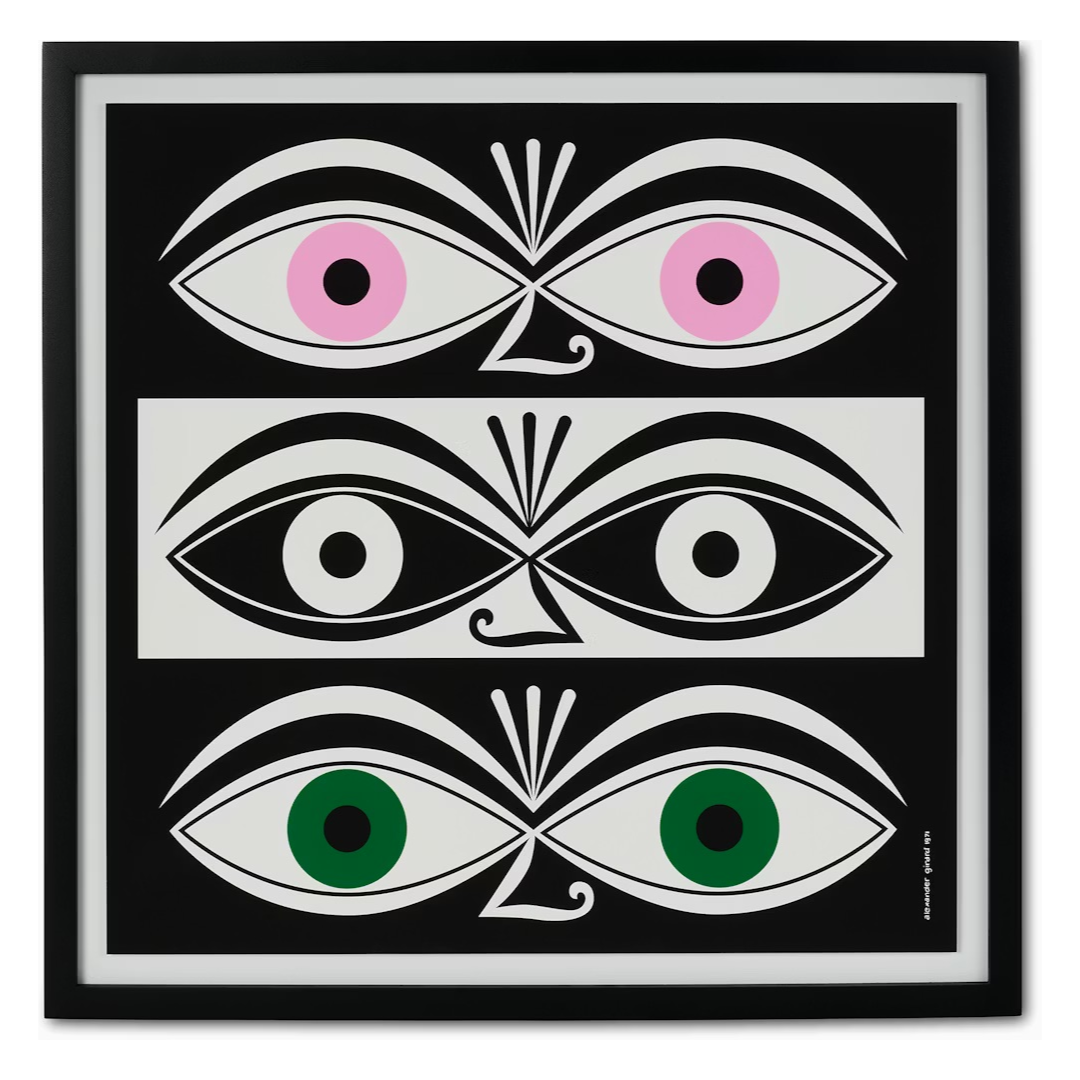
Here’s a fun piece of design history: the Eyes print was never meant to hang in someone’s home. Girard created it in 1972 as part of a series of 40 silkscreen designs called the Environmental Enrichment Panels - a parting gift to the working world before he retired. They were designed specifically to hang on the walls of Herman Miller’s Action Office cubicles, which were a brand-new concept. Girard, being himself, looked at the office cubicle and thought: this needs more eyeballs. And he wasn’t wrong.
The panels ranged from abstract geometry to figurative motifs, and the Eyes landed somewhere in between. They are bold, surreal, and completely unforgettable. Herman Miller has since reissued them as a selection of posters and prints, and the Eyes have become one of the most sought-after in the collection. It’s one of those pieces that works in literally any room and makes everything around it look more interesting. It always reminded me of I Dream of Jeannie, which is why I love it so much. It’s classic Girard: effortless and a little bit weird in the best way.

Make it stand out
Bringing People Joy
Alexander Girard once wrote about his folk art collection that the objects within it “were not designed for deep contemplation but rather as simple expressions of delight, amusement, or reverence.” He could have just as easily been describing his own body work. There was no pretension that he made. No desire to be taken too seriously. Just a genuine, sustained commitment to making things that brought people joy.
In a design world that sometimes confuses complexity with intelligence and restraint with good taste, Girard is a welcome reminder that bold can be brilliant. That color isn’t a crutch. That delighting someone is a completely valid design goal. He’s the designer I wish more people talked about, and now, hopefully, you will.
Shop Alexander Girard Pieces