ART DECO: GLAMOUR THAT NEVER REALLY LEFT
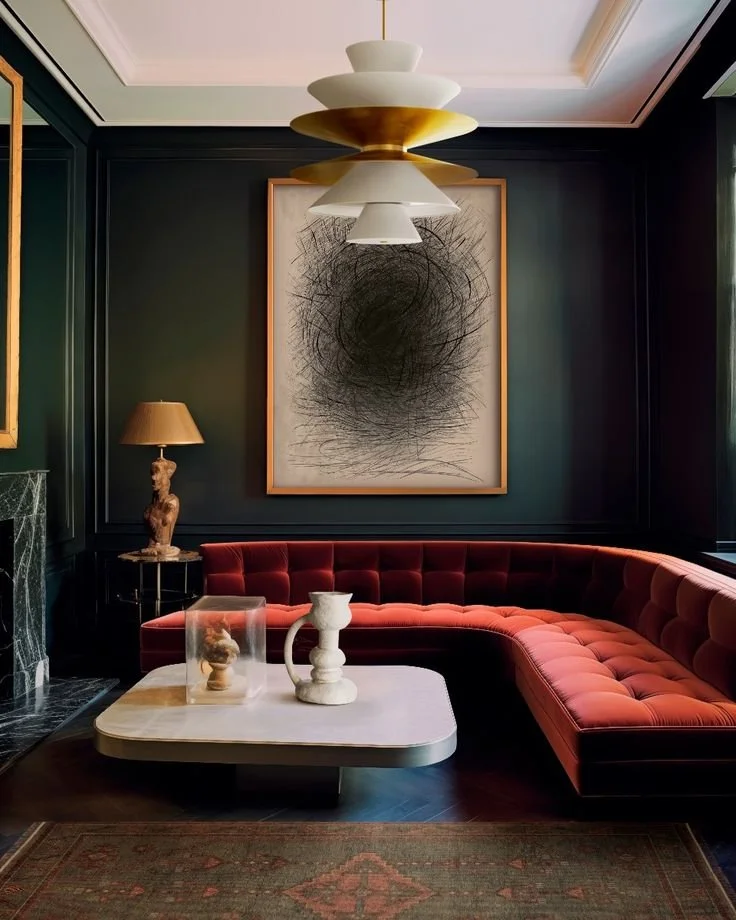
If you’ve paid any attention to interior design lately, you probably noticed something distinctly glamorous is making its way back. Rich jewel tones. Bold geometric patterns. Lacquered surfaces and decadent materials that seem to feel like they belong in the kind of place that serves cocktails with an overly ornate garnish. Yep, you guessed it, Art Deco is back. Again.
It’s almost cliché to be having a moment in 2026, but the thing about Art Deco is that it never really disappeared. It just waited patiently in the lobbies of grand old hotels, on the facades of skyscrapers, and in the details of antique furniture pieces that never stopped being beautiful. It’s back in full force, showing up in interior trend roundups, on design feeds, and in homes that want to feel less safe and a lot more interesting. So let’s get into it. Where it came from, what it actually is, how to recognize it, and how it stacks up against the other “deco” styles that often get lumped with it.

A Fascinating History
Art Deco emerged in the early twentieth century as a design movement that reflected the mood of an era. The 1920s were a time of cultural optimism in the aftermath of World War I, rapid industrialization, the rise of mass media, and the roaring energy of modernism taking over art, architecture, and fashion. People wanted to celebrate. They wanted beauty that felt new and progressive, not the ornate romanticism of Art Nouveau that came before it.
The style got its name retroactively from the 1925 Exposition Internationale des Arts Décoratifs et Industriels Modernes held in Paris, a landmark art fair that showcased this brand-new design language to the world. That fair and the international appetite for what it represented launched Art Deco into a global movement. It wasn’t just contained to one city or country. It spread through mass media, the film industry in particular, and left its mark on everything from architecture to interiors and fashion to jewelry and product design all over the world.
The names attached to this era of design are remarkable. Visionaries like René Lalique pushed decorative glass into an art form. Jean Dunand brought lacquerwork and sculpture into the interior world. Fashion designers like Paul Poiret and Madeleine Vionnet were dressing women in ways that echoed the geometric, streamlined aesthetic. Architects like William Van Alen, designer of the Chrysler Building, made the style soar quite literally. Even the automobile industry got in on it with sleeker, streamlined vehicles embodying many of the same principles.
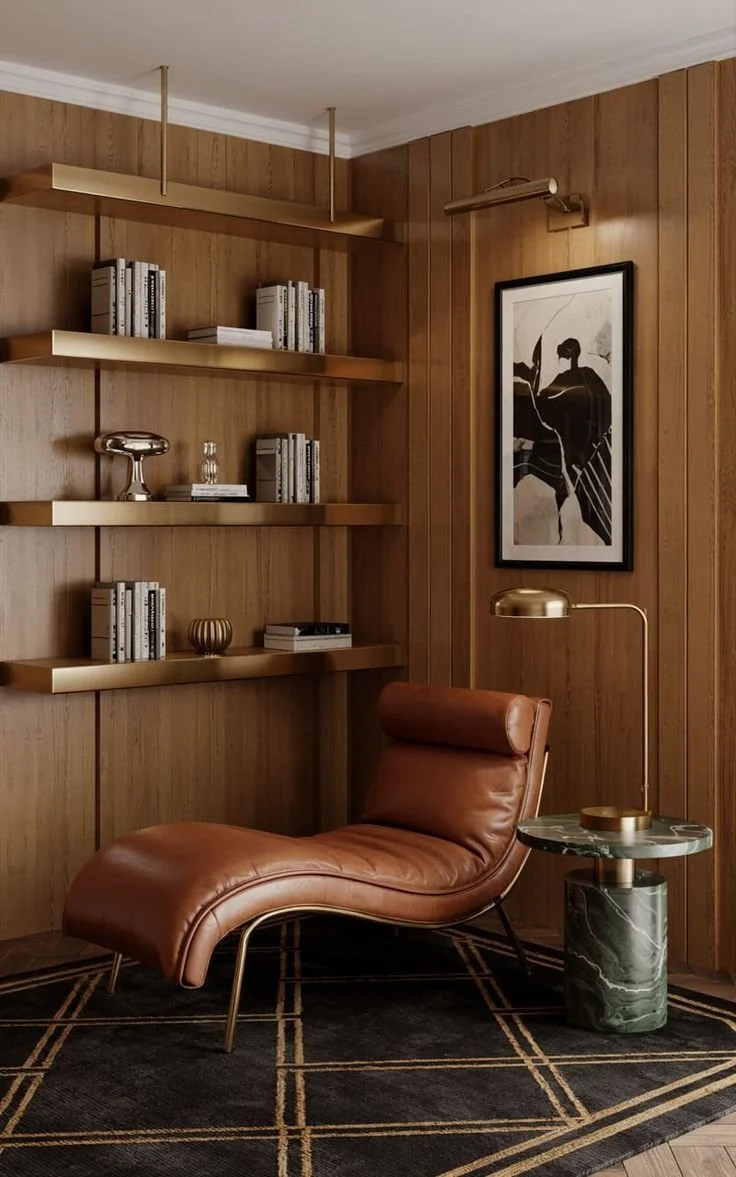
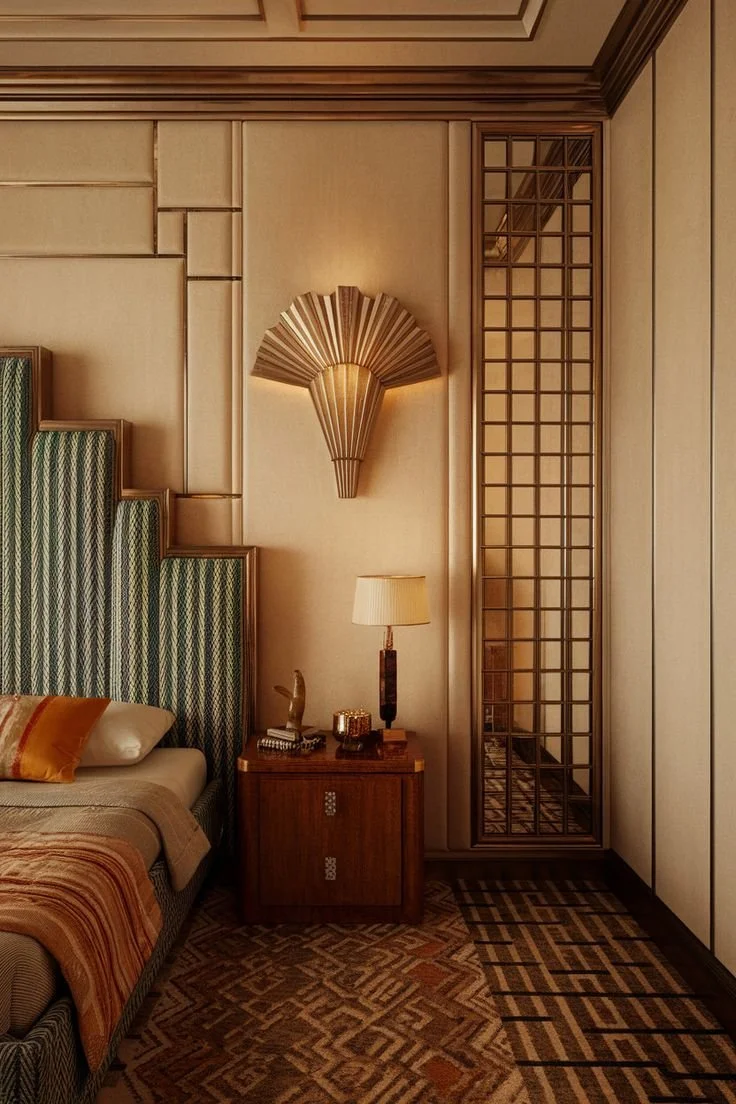
Art Deco’s reach wasn’t only cultural. It was also architectural and civic. Some of the most recognizable buildings in the world came from this era, including the Empire State Building, Radio City Music Hall, and the Piscine Molitor in Paris. Cities like Tulsa, Oklahoma, and Detroit, Michigan, have entire collections of Art Deco structures that still draw design enthusiasts today. The style didn’t just decorate rooms; it shaped skylines. By the 1940s, the style had started to fade with wartime austerity and the rise of midcentury modernism. But as we know, truly great design has a way of coming back around.

What Is Art Deco?
Art Deco is a design style characterized by a few unmistakable qualities. It is glamorous, geometric, and unapologetically luxurious. It draws from a fascinating range of influences like Art Nouveau, the Bauhaus school, Cubism, ancient Egyptian and Aztec motifs, and the machine age aesthetic of the early twentieth century. The result is a style that is equal parts historical and avant-garde.
Art Deco is a departure from the organic, nature-inspired curves of Art Nouveau that preceded it. Where Art Nouveau was flowing and floral, Art Deco was bold and angular. Where Art Nouveau embraced nature, Art Deco embraced modernity. The machine, the skyscraper, and the streamlined furniture: it wanted to be opulent but also modern. Ornate but ordered. The combination is part of why it lasted so long. Art Deco is a style that feels considered with every detail having a distinct intention. There is symmetry, drama, and a confidence that is pretty hard to replicate.

Characteristics of Art Deco
Understanding what makes Art Deco, Art Deco is the key to pulling off the entire style with conviction. These are the defining elements:
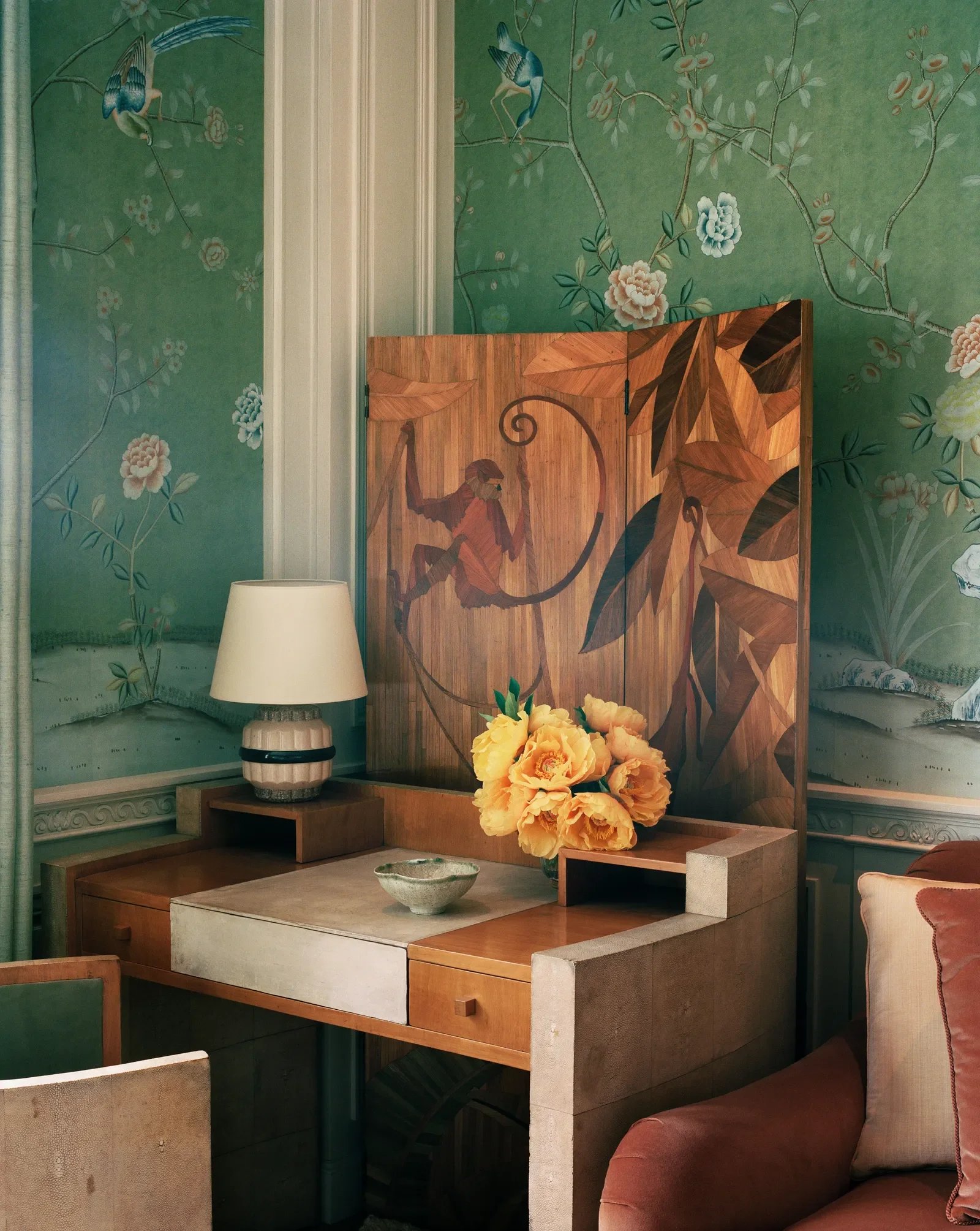
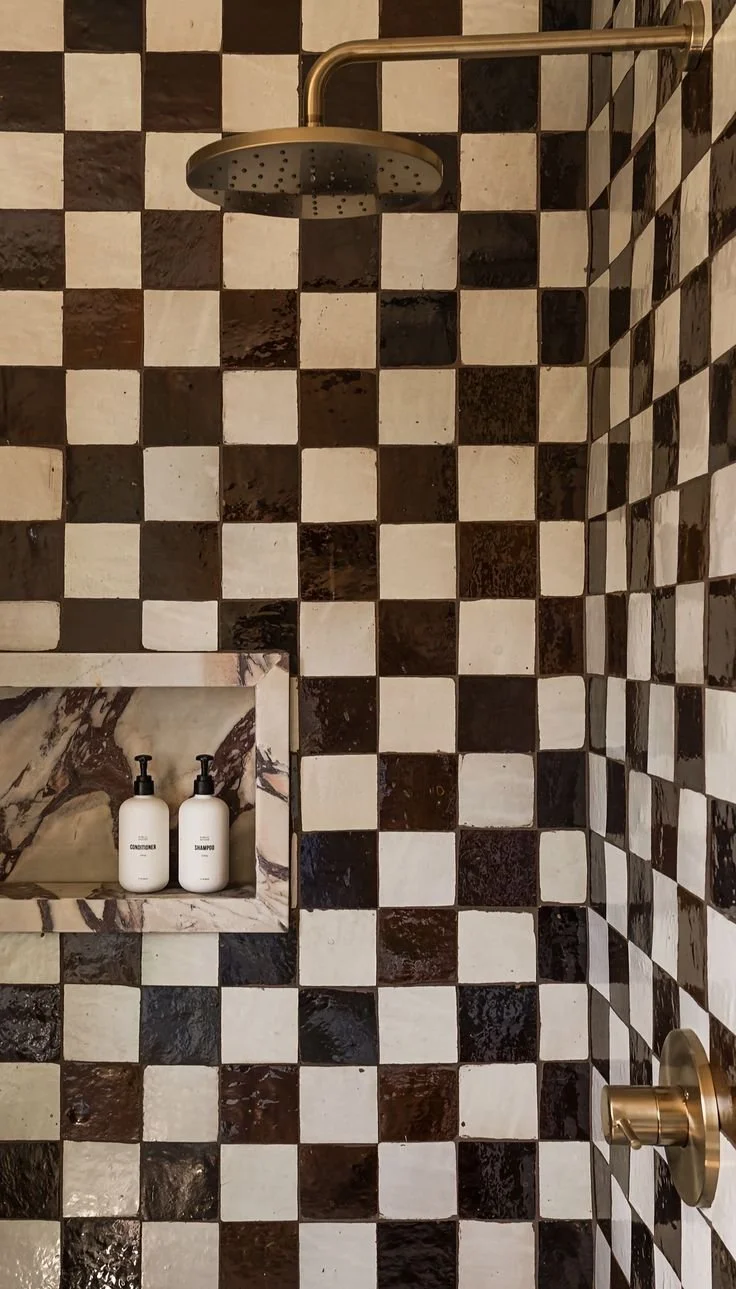
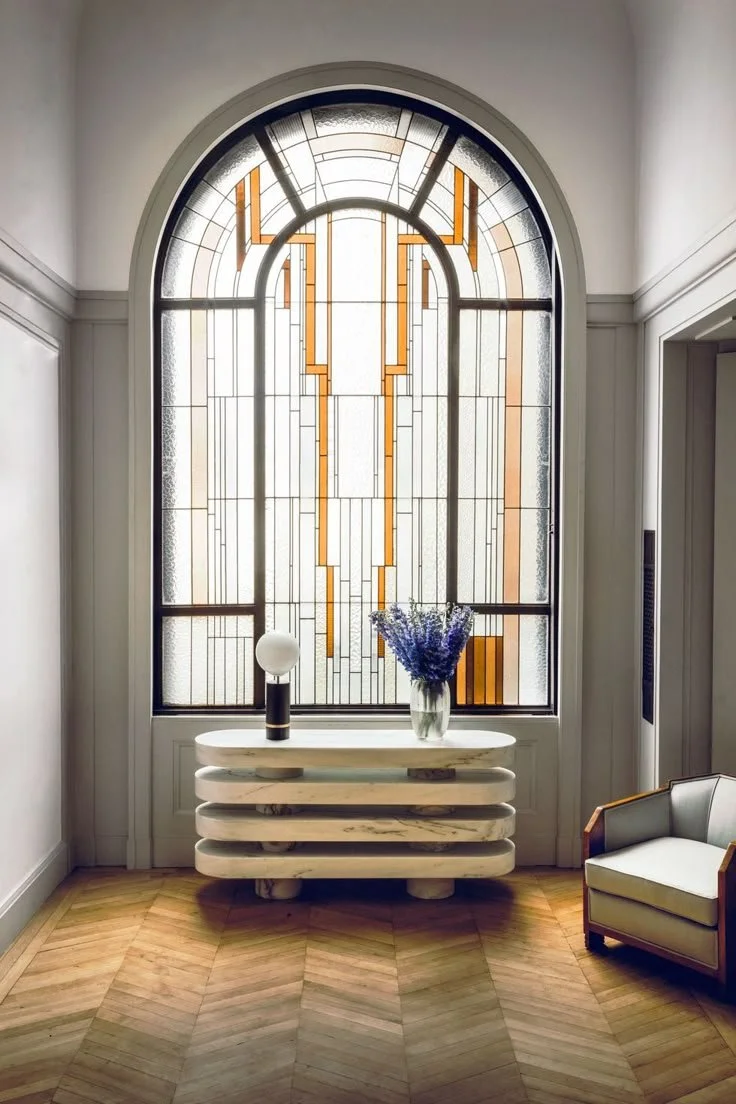
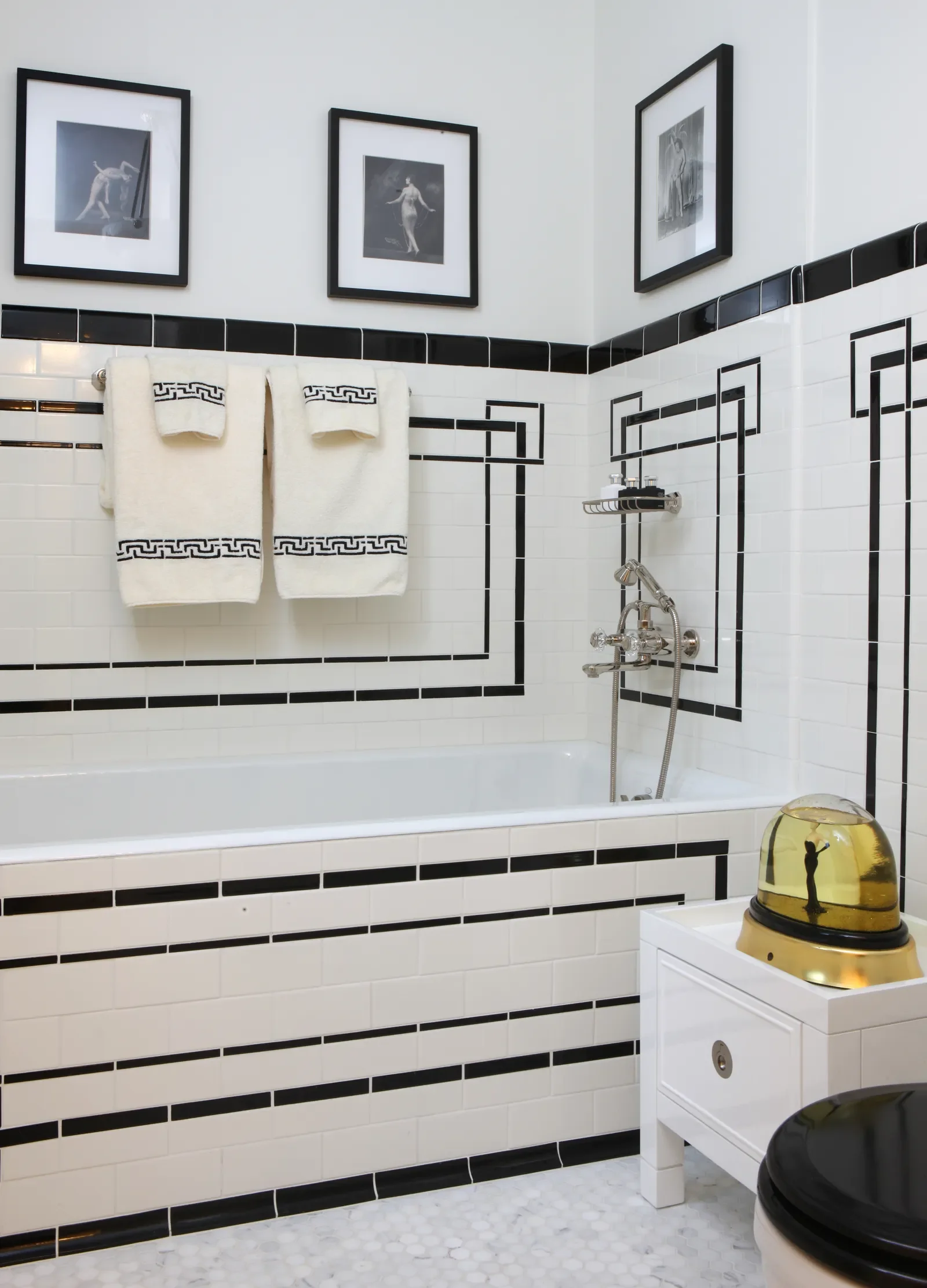
Geometric Patterns: This is the most immediately recognisable feature of the style. Sunburst patterns, chevrons, fan shapes, zigzags, and strong symmetrical compositions are everywhere. These patterns appear in wallpapers, textiles, tile work, and architectural details. If it’s bold and geometric, it fits the vibe exactly.
Rich Materials: Art Deco doesn’t do anything halfway. Lacquered wood, polished chrome, gilded accents, marble, brass, onyx, and tortoise shell were all hallmarks of the era. The materials were chosen not just for function but for maximum visual impact. The tactile experience of an Art Deco interior is just as important as how it looks.
Jewel Tones and Dramatic Color Palette: Deep emerald, sapphire, ruby, amethyst, and gold are the colors most closely associated with Art Deco. These were not shy or safe colours. They were chosen to make a statement and to complement the richness of the materials used alongside them. Black and gold is perhaps the most iconic combination. It exudes high contrast and high glamour.
Lucious Textiles: Velvet, silk, and lacquered leather were the fabrics of choice, and upholstery was plush. Drapery was heavy and almost cinematric. There was nothing minimal about how soft furnishings were handled in one of these spaces.
Bold Furniture Silhouettes: Art Deco furniture tends to have strong, architectural shapes. Curved backs on chairs that feel theatrical, stepped profiles on cabinets, and furniture that functions as a sculptural element within the room.
Metallic Accents: Gold, bronze, and chrome appear throughout in light fixtures, hardware, decorative objects, and furniture details. These metals added warmth or cool glamour, depending on the finish and have a way of tying the whole room together.
Symmetry and Order: Art Deco rooms tend to be composed with intention. Balance and symmetry play a major role. There is a structured quality to the style that prevents the opulence from tipping too far into chaos.

IMAGE

How to Get the Look in 2026
Here’s the main thing about bringing Art Deco into a contemporary home: you definitely shouldn’t recreate a period-accurate room from 1928. Even the most Art Deco enthusiasts will tell you that a fully authentic Art Deco interior can tip into museum or theme park territory very quickly. The sweet spot is using Art Deco as a point of reference rather than a rulebook.
Start with Geometry: This is the easiest and most versatile entry point. A geometric wallpaper, a patterned tile, a sunburst mirror: any of these anchors is in the spirit without requiring a full commitment. Geometric patterns also work well with a lot of other design styles, so it’s a great way to dip a toe in.
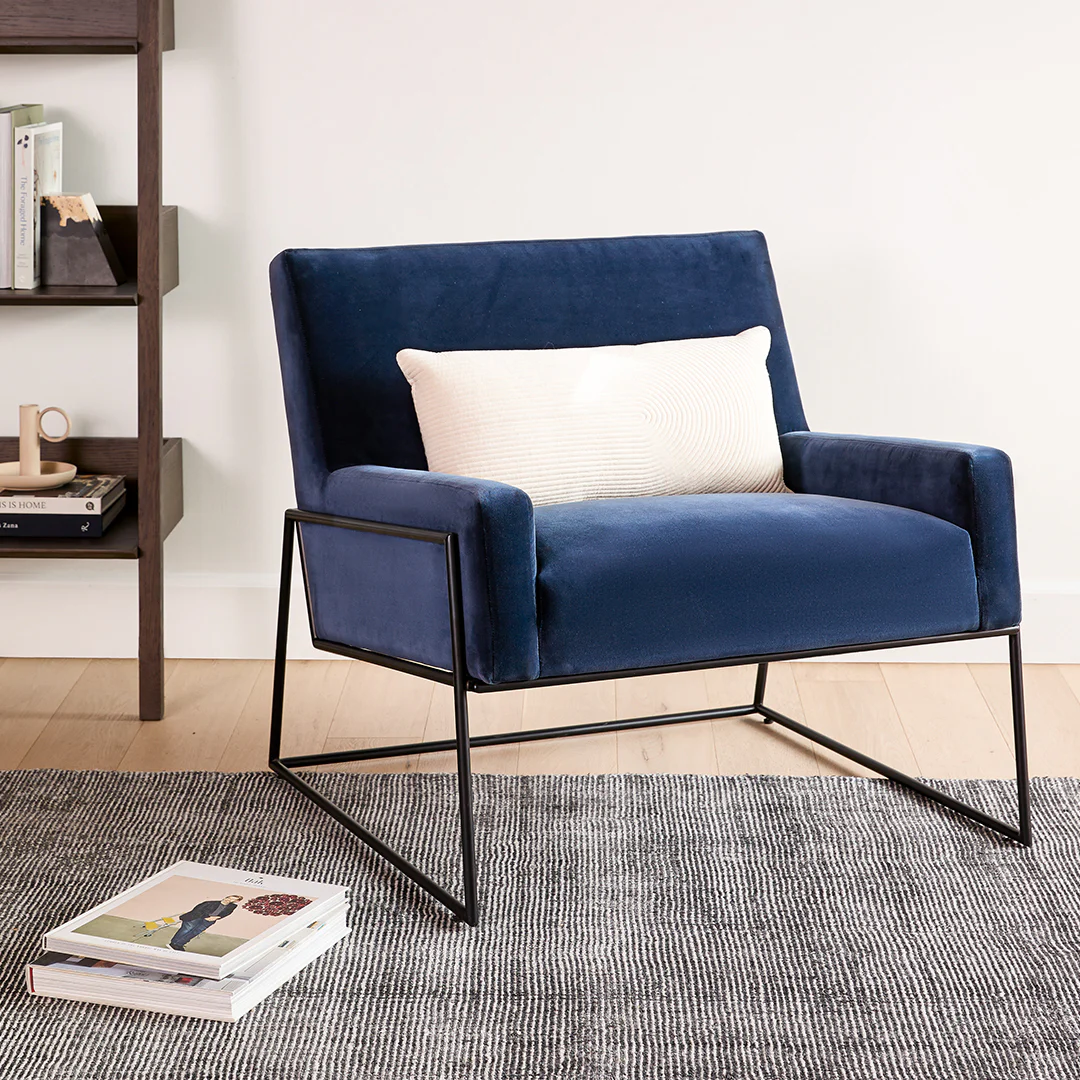
Lean Into Jewel Tones - Thoughtfully: A deep sapphire velvet lounge chair or a rich emerald accent wall doesn’t need to be paired with six other jewel tones. Let one saturated color lead and build naturally around it. Black, cream, and gold are you best supporting players without a doubt.
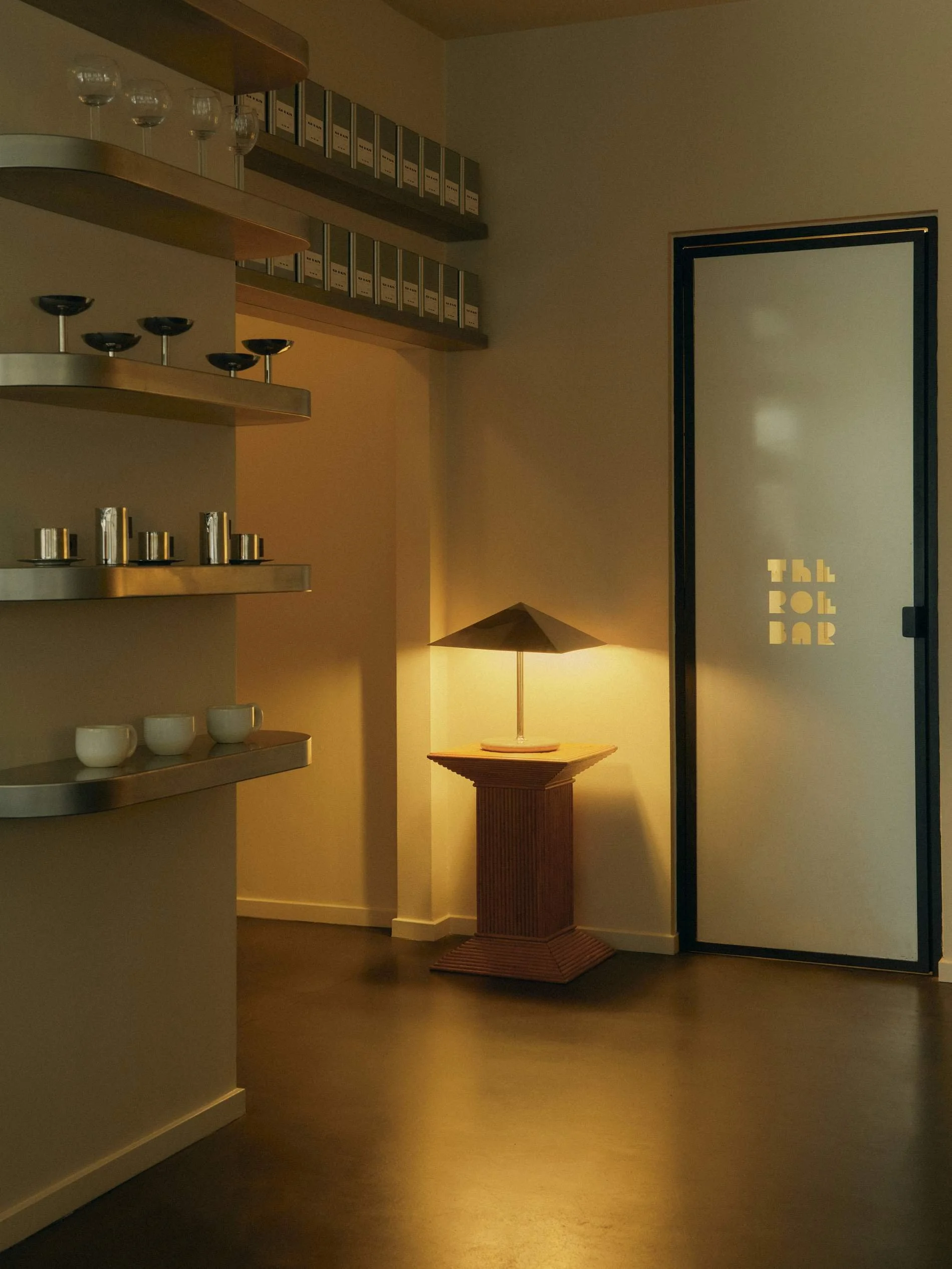
Add Metallic Details: Hardware is an underrated move. Swapping out basic, boring hardware for something in brass or antique gold is a small shift that makes a fairly notable difference. Same goes for light fixtures. A dramatic brass or chrome pendant carries significant Art Deco energy.
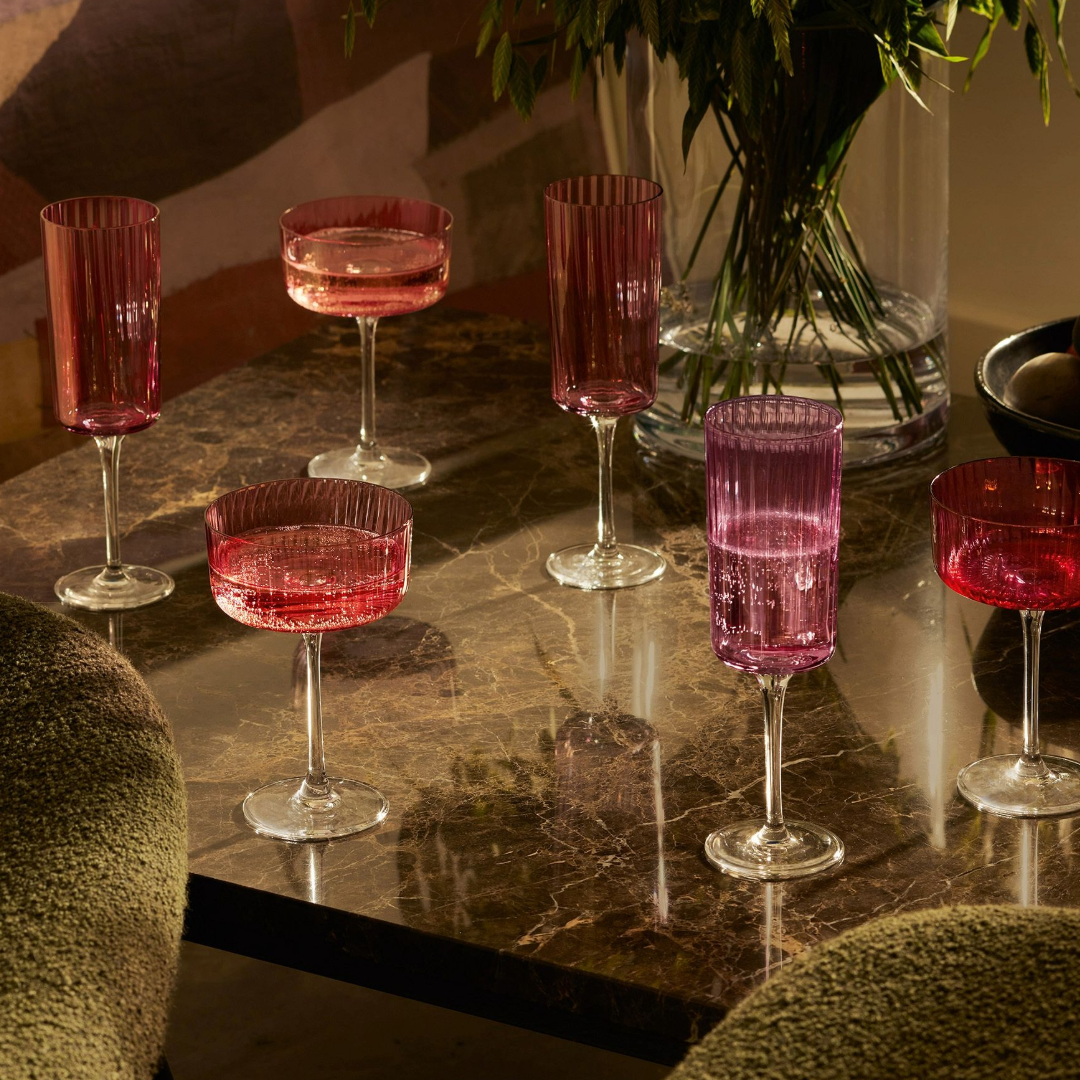
Layer In Decorative Glass: Decanters, vases, decorative trays, and sculptural objects in glass or lacquered finishes are deeply entrenched in the Art Deco spirit. They also just happen to be the most affordable and easiest way to incorporate the aesthetic.
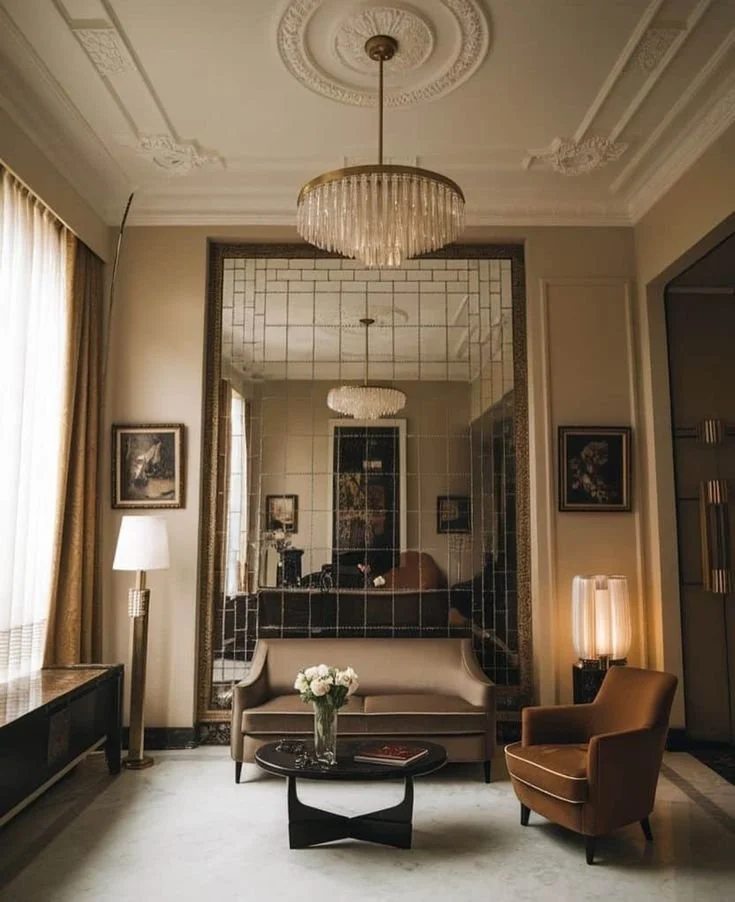
Think of Symmetry: One of the most subtle yet effective moves is styling with intention and balance. Pairs of lamps, matching sconces, a mirrored surface to double the effect, this kind of visual order reinforces the structured, deliberate nature of the style.
The goal is a space that feels both glamorous and confident not like a museum exhibit. Art Deco is inherently dramatic, so embrace that. But like it be your drama, not a direct reproduction of someone else’s.

IMAGE
Art Deco vs The Other Decos
The “deco” landscape can feel crowded and often confusing. Here is how the major players differ:
Art Deco vs Art Nouveau
These two are often confused because they are direct neighbors in history. Art Nouveau came first, flourishing from the late 1800s and early 1900s. Its hallmarks are organic, curving lines drawn from nature; think vines, flowers, feminine forms. It’s more lush and romantic than Art Deco, which is structural and more angular. Same love of beauty and craftsmanship, completely different geometry.
Art Deco vs Hollywood Regency
Hollywood Regency is like Art Deco’s maximalist, theatrical cousin. It emerged in the 1930s and 1940s Hollywood scene, borrowing heavily from Art Deco’s love of glamorous, jewel tones, and luxurious materials, but pushed everything even further. More mirrors, more lacquer, and amplified drama are the cornerstones of Hollywood Regency. Where Art Deco has architectural restraint and geometric precision, Hollywood Regency is unapologetically over the top. Think Art Deco as the film, and Hollywood Regency as a director’s cut with all the extra scenes left in.
Art Deco vs Glamour Modern
This is the closest contemporary style to Art Deco, and it takes the love of luxurious materials, rich colors, and dramatic silhouettes and updates them with a cleaner, more current sensibility. Think fewer historical references, more of a timeless luxury aesthetic. If Art Deco is the original, Glamour Modern is the reissue.
The short version: Art Deco is the one with the strongest geometric backbone, the most historical specificity, and the most architectural ambition. The others borrow from it to varying degrees.
Get the Look
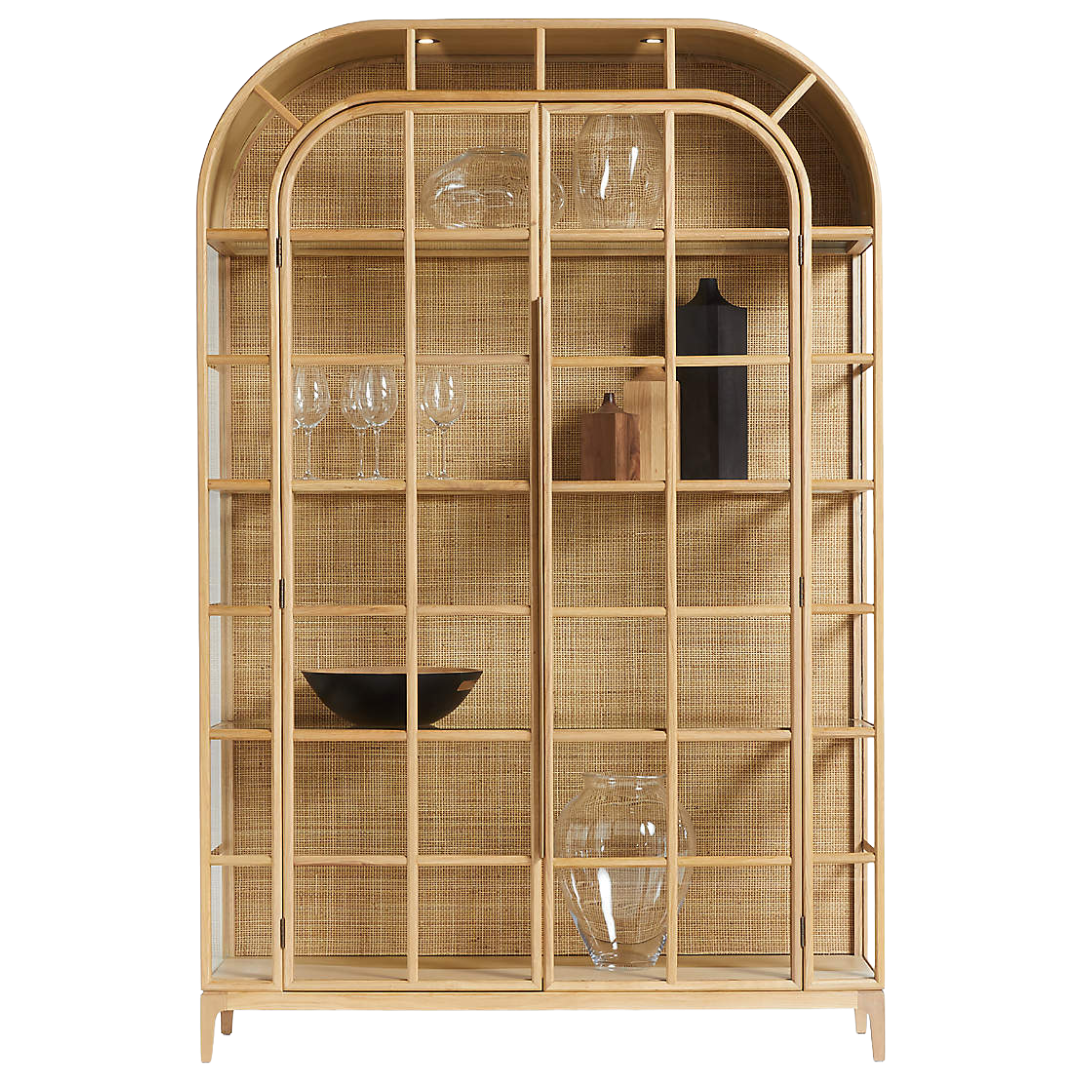
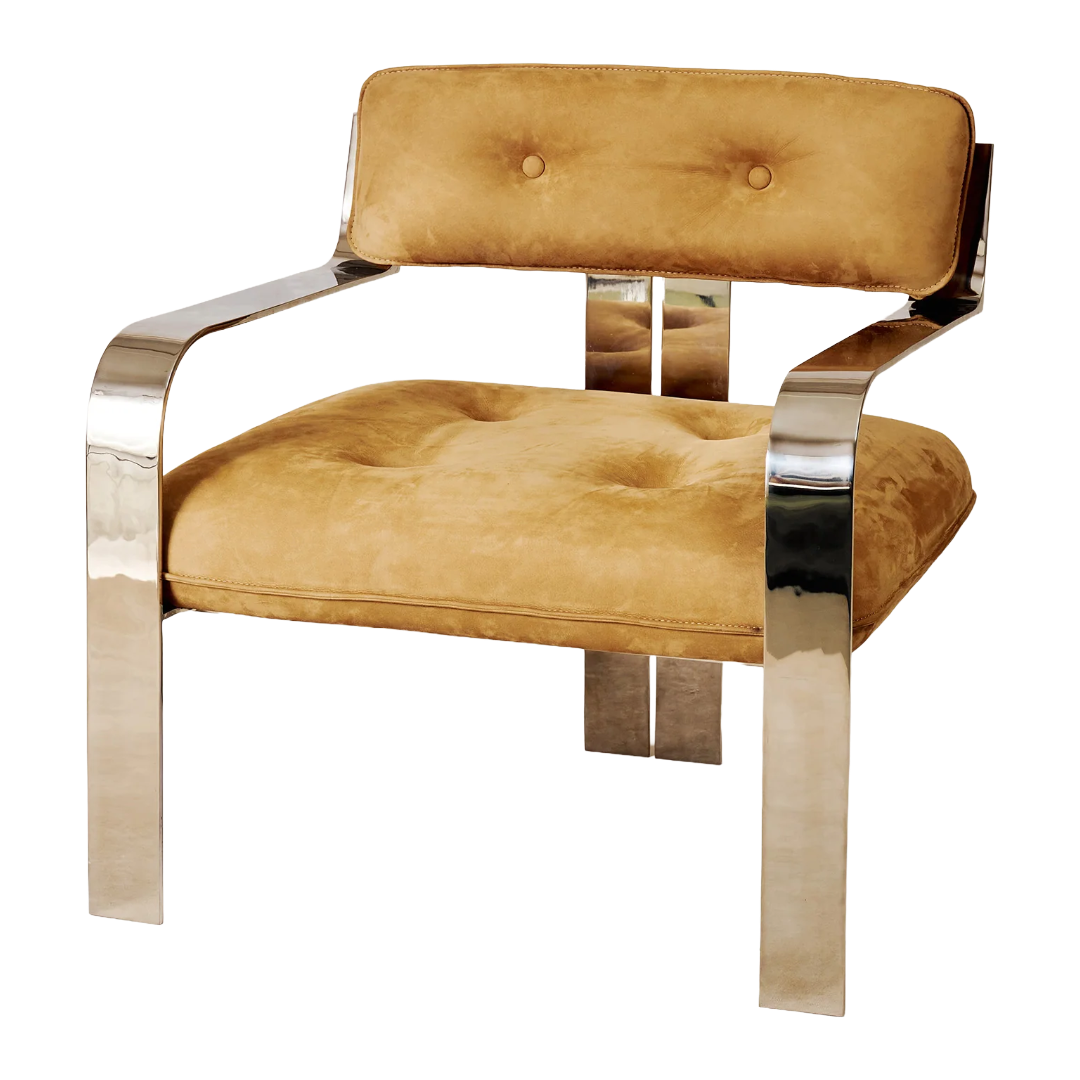

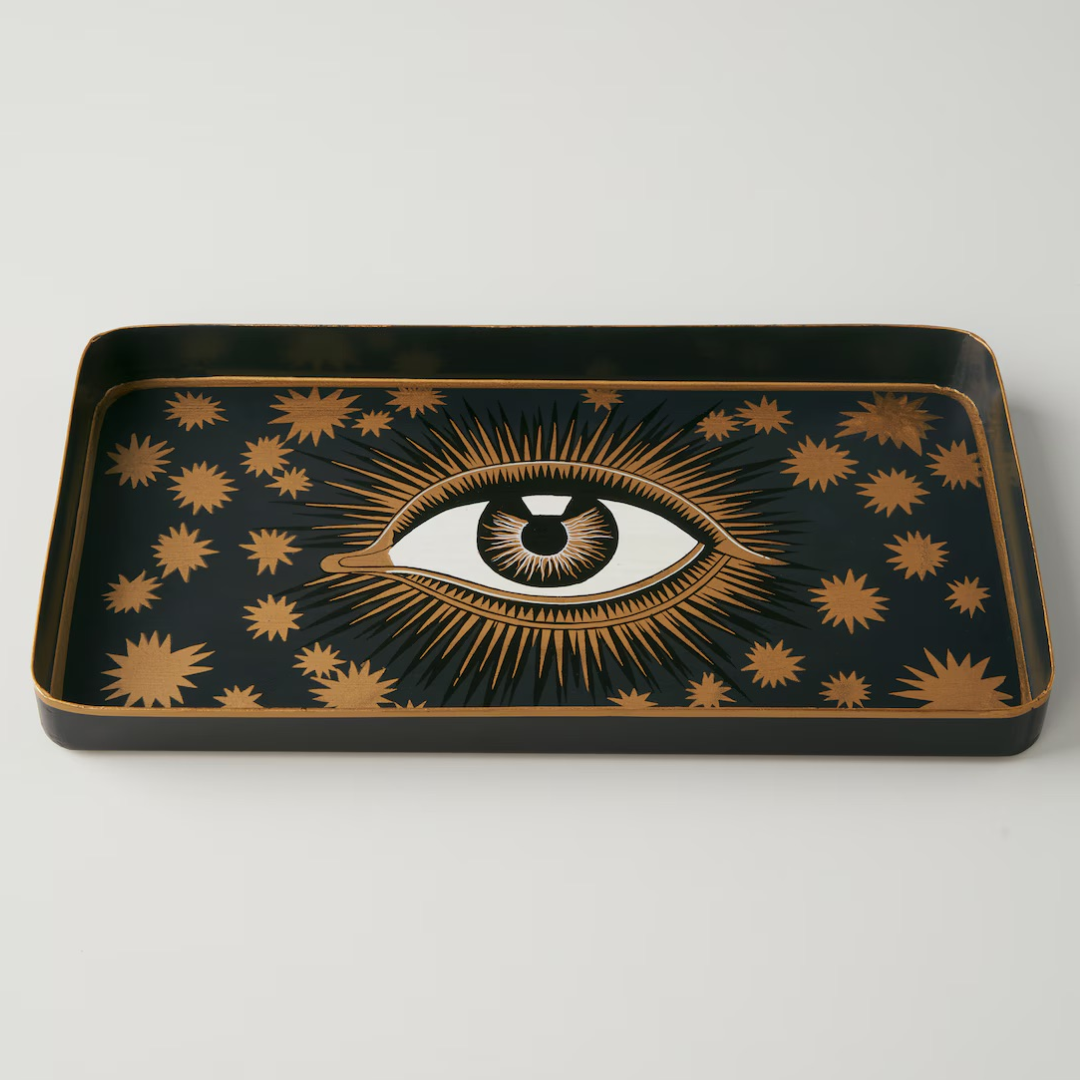
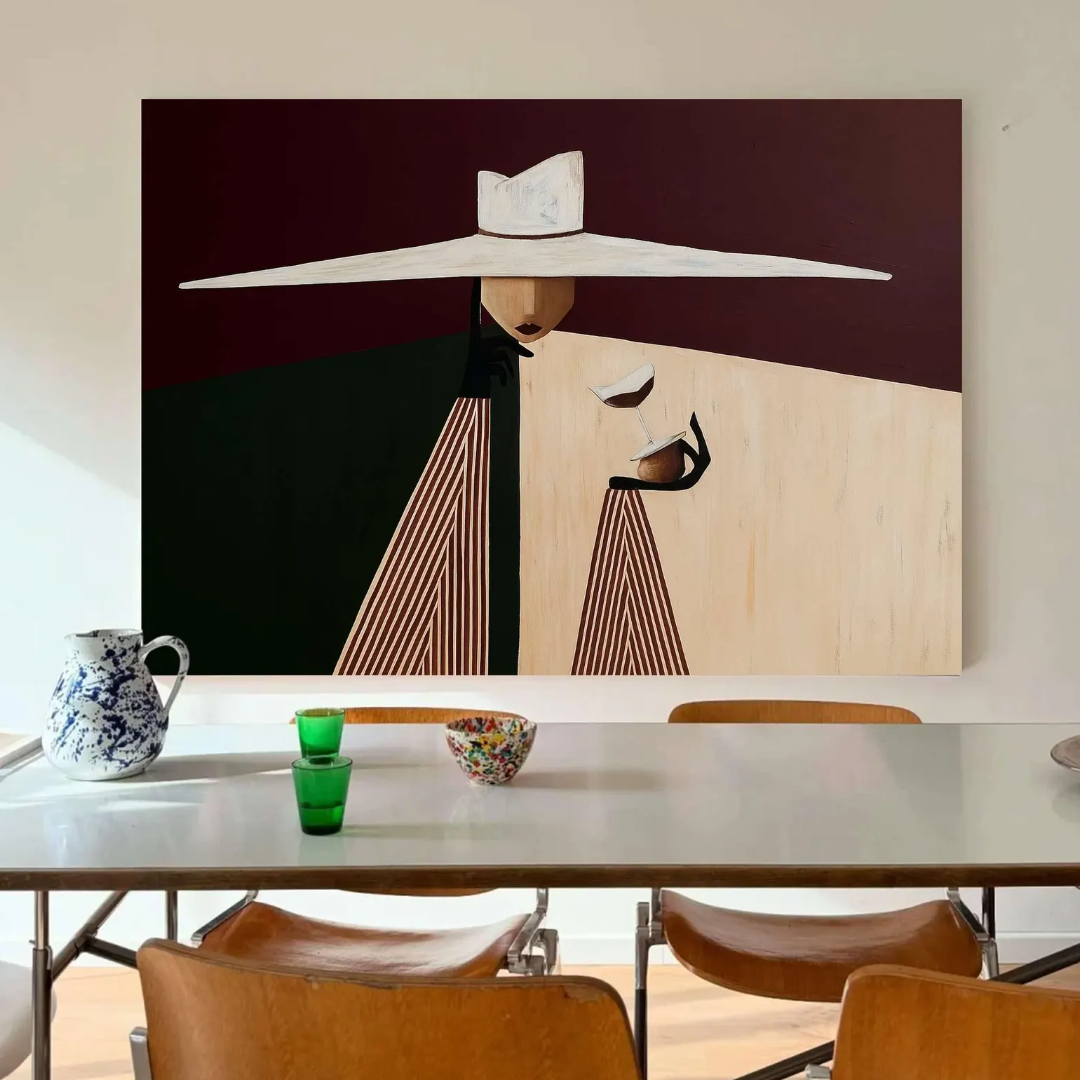


Now It’s Your Turn
Art Deco is one of those design styles that rewards you for paying attention to it. The more you understand where it came from and what it actually stands for, the better equipped you are to use it in a way that feels considered and personal rather than costumey or trend-chasing. What I love most about its current revival is that people aren’t trying to do a historically accurate copycat Art Deco room. They are taking the best parts: geometry, jewel tones, the commitment to materials, the unapologetic glamour, and integrating them into modern homes in ways that feel fresh. That is exactly how great design moments stay relevant. They don’t get preserved; they evolve.
If Art Deco has been on your radar and you’ve been waiting for permission to go for it, this is it. Start with one piece, one pattern, one room, and let the glamour do the rest.