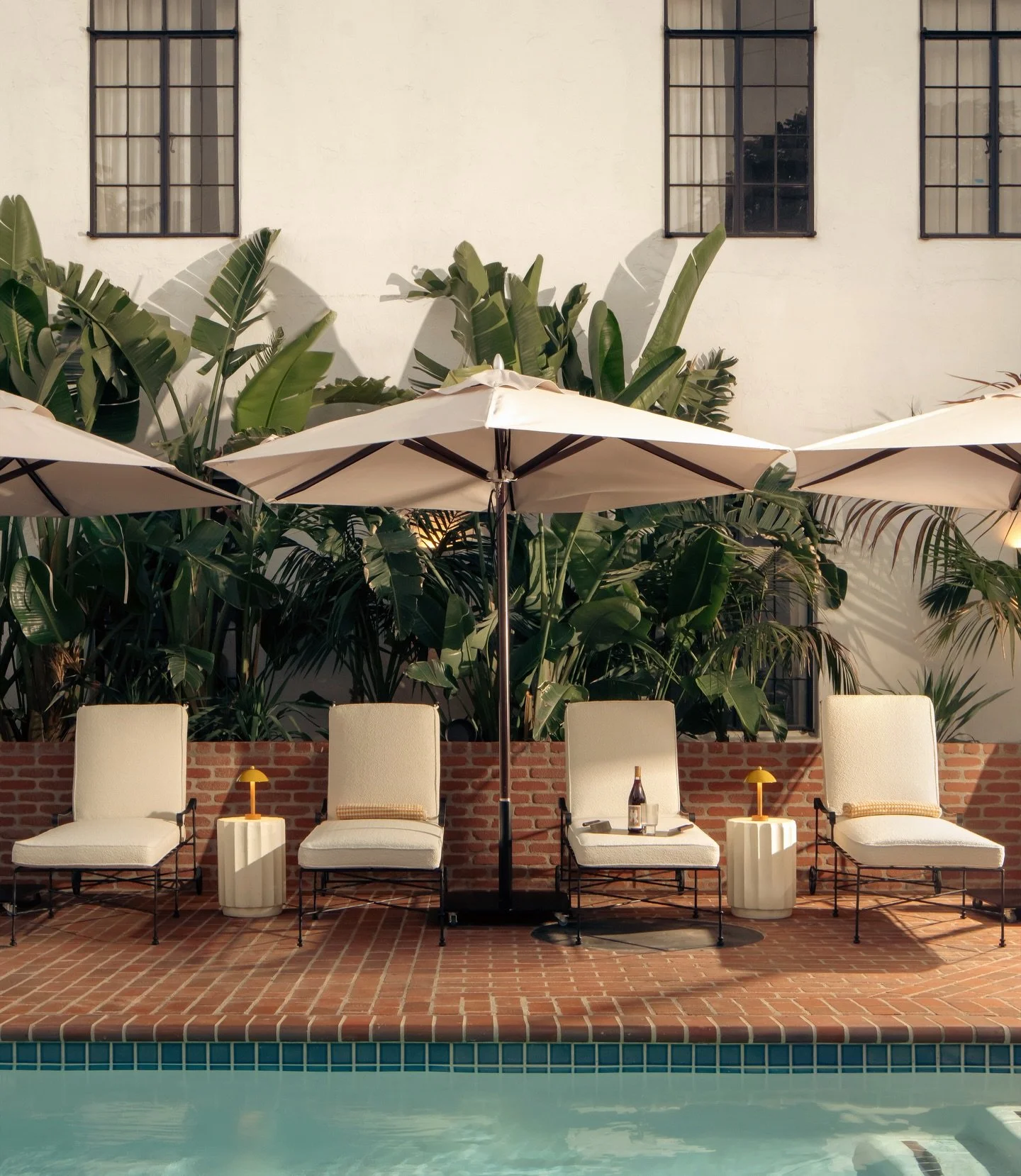
THE ROADSIDE MOTELS TO CHECK-IN TO
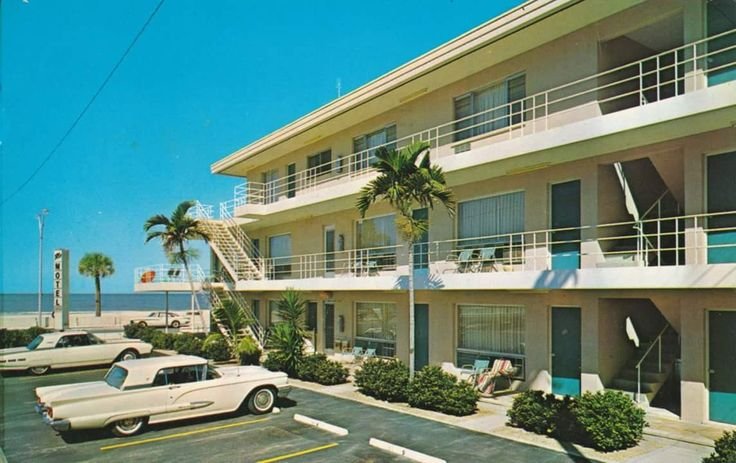
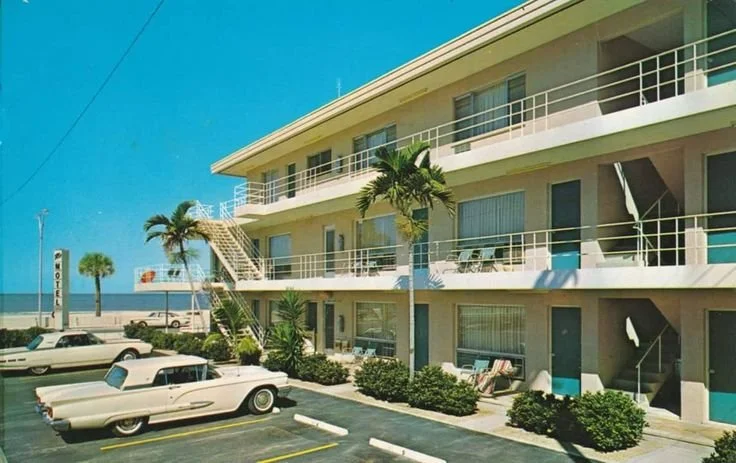
Route 66 is celebrating a huge birthday this year, and watching The Cars That Made America got me thinking about the idea of the great American road trip. Roadside motels used to be the standard, but somewhere along the way, they started becoming a literal last resort. Now we just book hotels three times the price, which probably would sound insane to someone 60 years ago. The word “motel” has been thoroughly ruined. There is always a punchline about thin walls and questionable bedspreads. They are genuinely places you’d end up rather than choose to be.
Something has shifted…again. A generation of new owners bought these rundown buildings for the bones, the neon, and the comfort of parking your car 10 feet from your bed and made the motel great again. Route 66 turns 100 in November, and it seems so much of the route has spent the last few years getting its act together and inviting us all to enjoy the open road again. The timing isn’t an accident.
How the Motel Happened
The first motel opened in San Luis Obispo in December 1925. Architect Arthur Heineman called it the Milestone Mo-Tel or “motor hotel” shortened. He charged $1.25 a night for a bungalow with a garage attached. He meant it as an upgrade from driver’s options that were either an expensive hotel miles away from where the car was parked or a cabin camp. The idea spread fast.
By 1926, there were roughly 2,000 cabin camps scattered across the country, with the thickest concentrations in California and the Southwest. Route 66 was commissioned that same November, and the two concepts ended up growing together. The road created the demand, and the motels answered it. Boots Court opened in 1939, advertising a radio in every room, which is basically the 1930s equivalent of listing your Wi-Fi speed.
When Eisenhower signed the Federal-Aid Highway Act in 1956, the interstates started developing at a rapid pace. The interstates were built straight, fast, and they went around towns rather than through them. Every motel that built its business on people needing to slow down and pause suddenly didn’t have anyone slowing down. Route 66 was decommissioned entirely in 1985. Chain motels took the interstate exits, and independent owners were handed Bates Motel jokes.
What’s happening now feels like a huge correction. The buildings that survived did so because someone kept paying for them, taxes and all, and the people buying them today aren’t gutting the character. They are leaning in, restoring the neon, and leaving the garages alone. Here are a bunch of the best ones worth popping into.

Interstate Inn
Stephenville, Texas
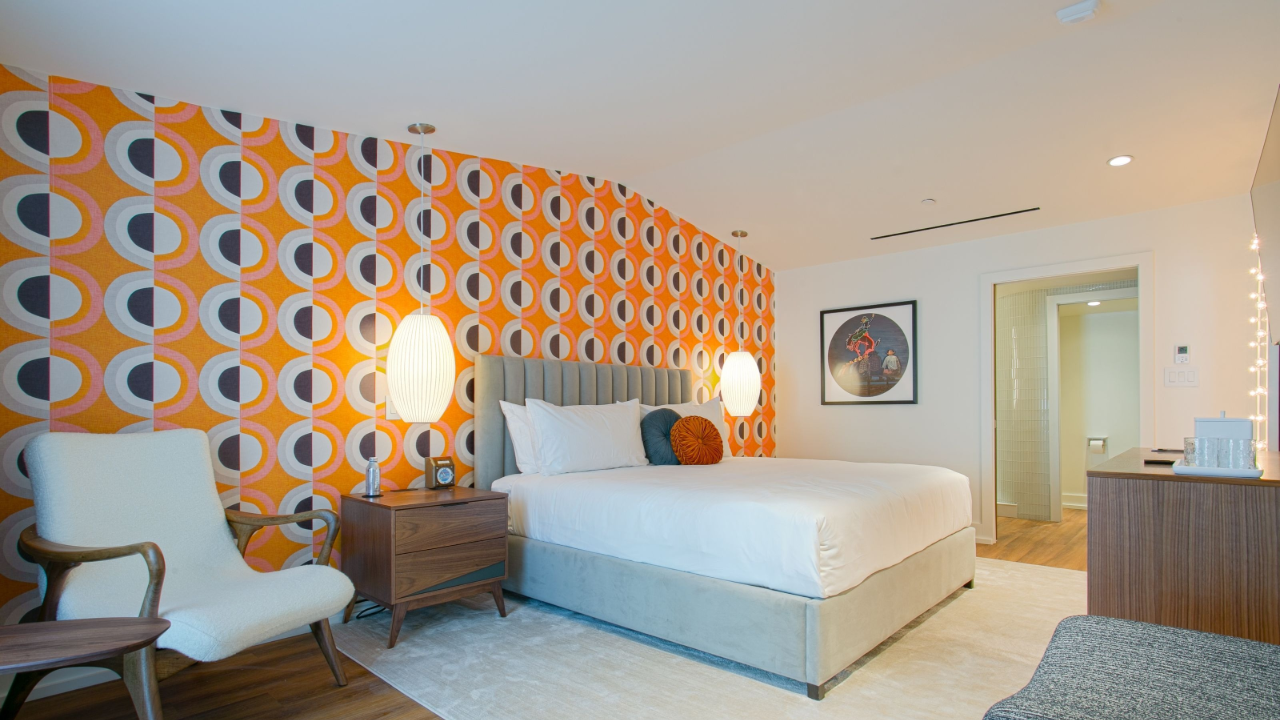
Opened in 1965 as the Caravan Inn with a roof shaped like an interstate shield, it was the most modern thing in Stephenville at the time. Lisa Lennox and Mod Motels bought it in 2022, gutted everything, but kept the roof. It reopened in January of 2025 with thirty-three rooms. There are gold, avocado, and tangerine colors with original midcentury furniture and record players. Breakfast arrives at your door in a vintage Stanley lunchbox. The Seeker, next door, is a Stephan Pyles restaurant, which is an extra exciting touch.
Wigwam Motel
San Bernardino, California
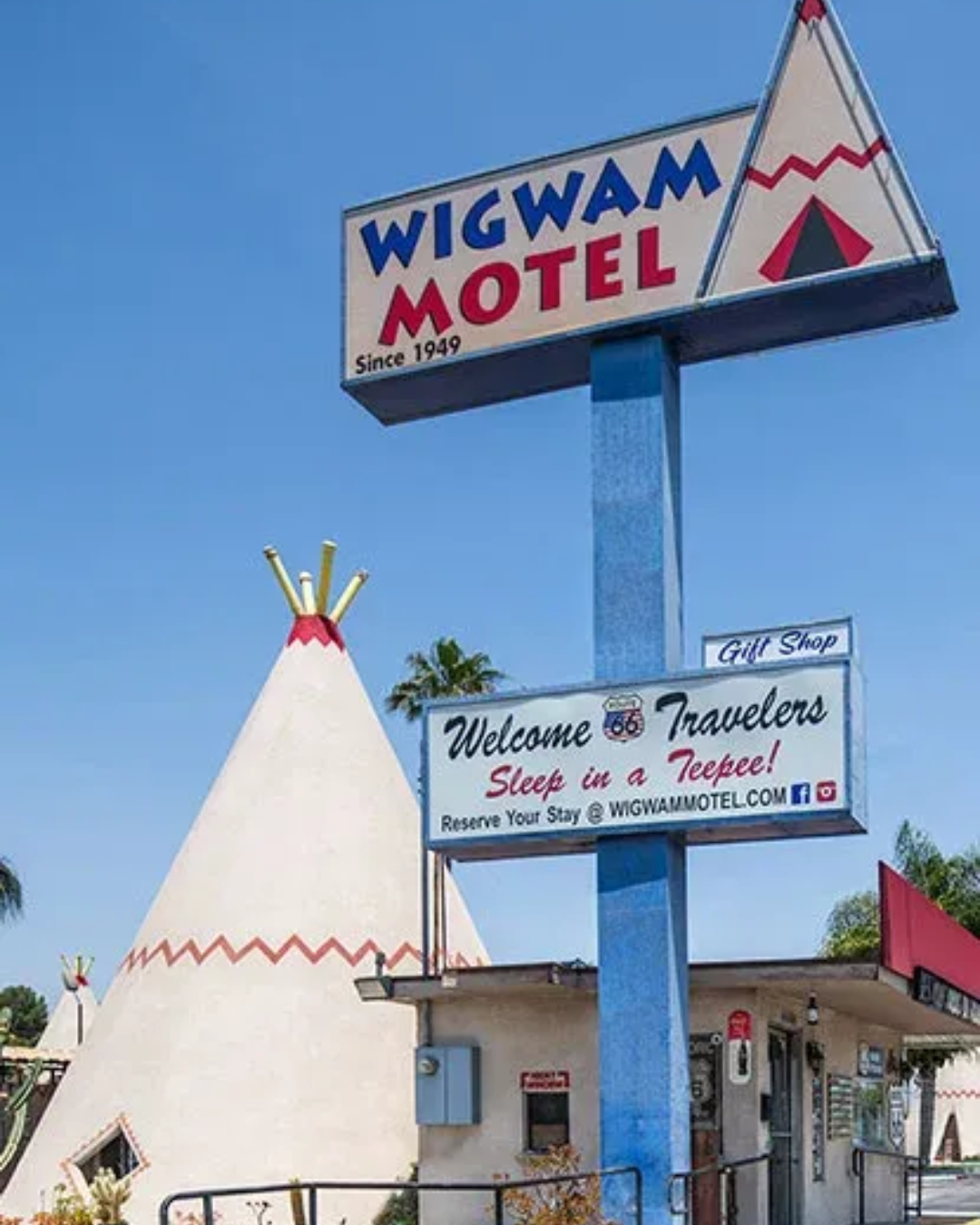
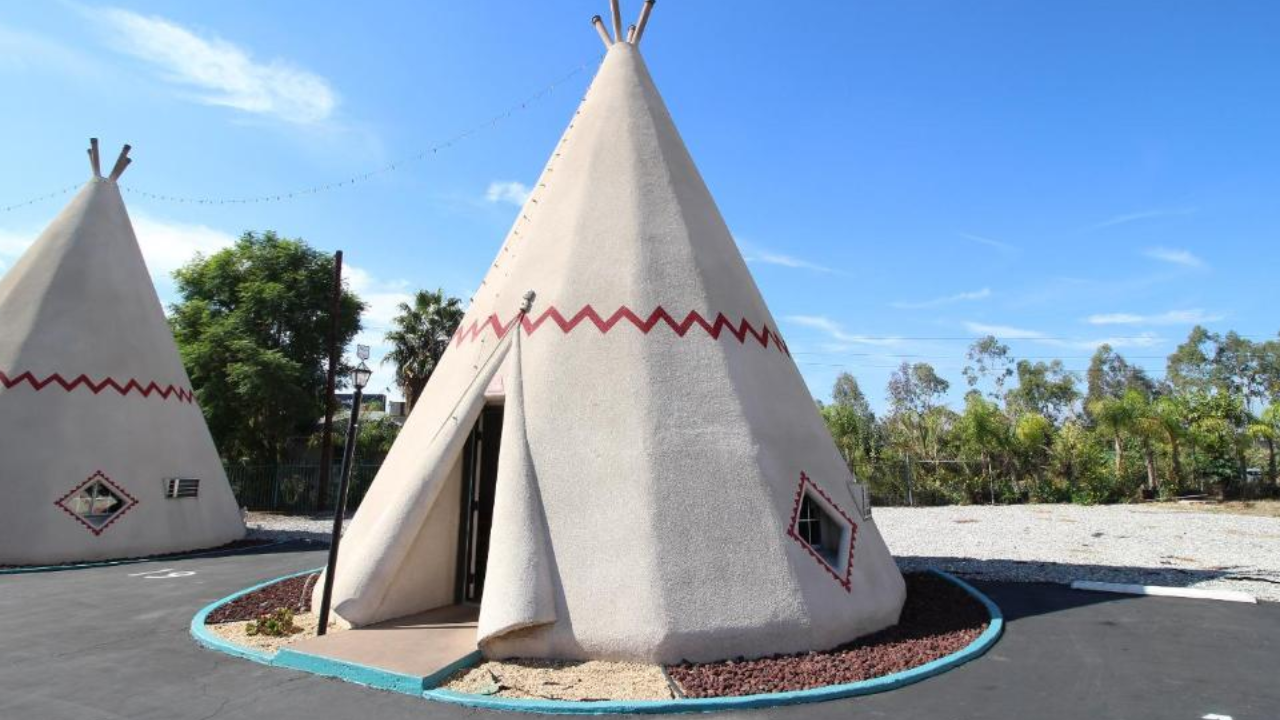
Frank Redford built seven Wigwam Villages between the thirties and forties. Only three are left. This one, finished in 1949, was the last. It has nineteen concrete and steel teepees that are 32 feet tall. They are parked around a crescent pool and have a lot of green lawn to enjoy. You pull your car up to a teepee, and there are communal grills for enjoying the full experience. It is on the National Register of Historic Places and is also, unmistakably, a roadside gimmick from 1949, and that is the ultimate compliment.

Austin Motel
Austin, Texas
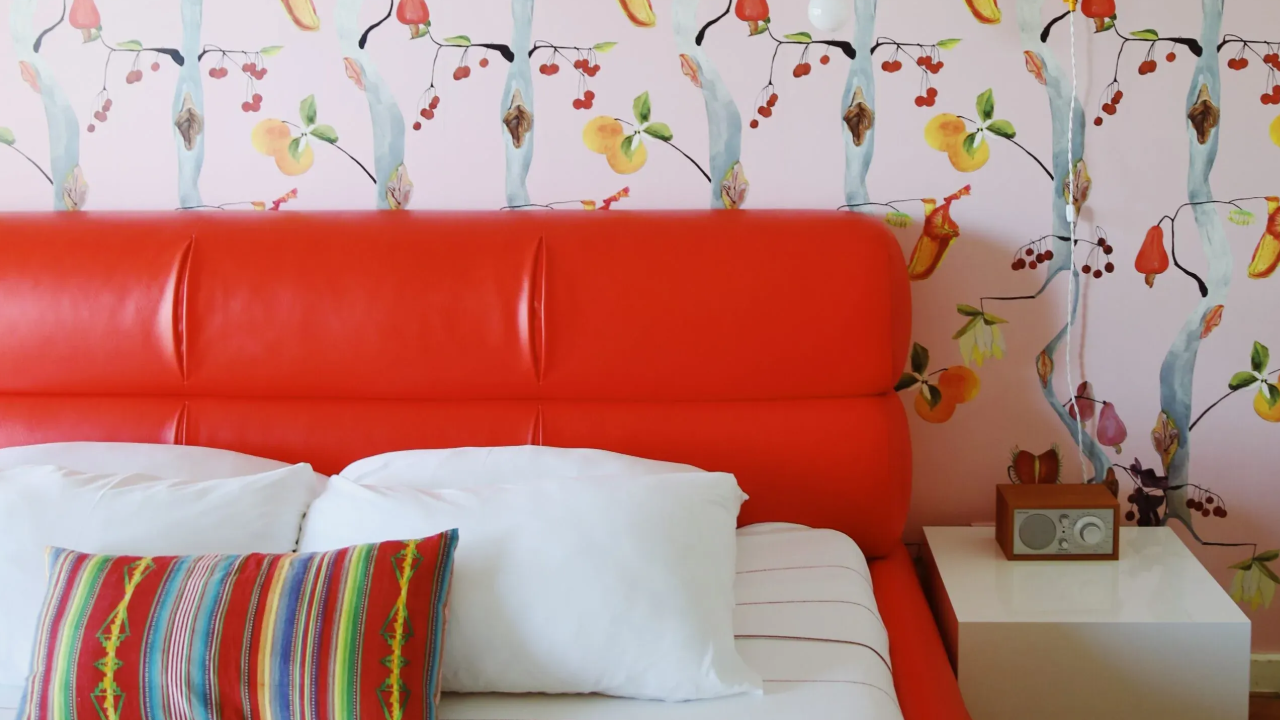
Jennie and Earnest Stewart inherited land on South Congress, watched Americans start vacationing by car, and opened a motor court in 1938. They also put up twenty-five foot neon sign, which has been there ever since. It’s the most recognizable piece of neon in the city. Bunkhouse renovated it and left the personality entirely alone. The pool is pretty much the whole point on a Texas afternoon.
Surfrider Malibu
Malibu, California
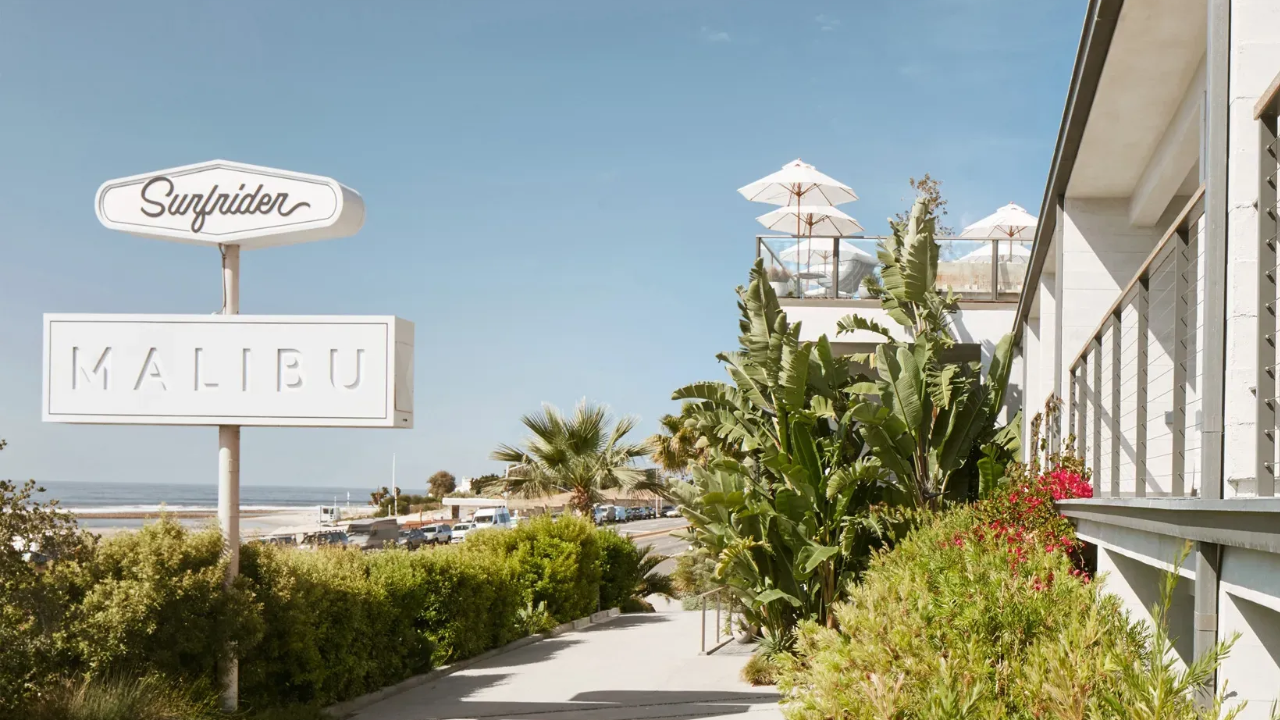
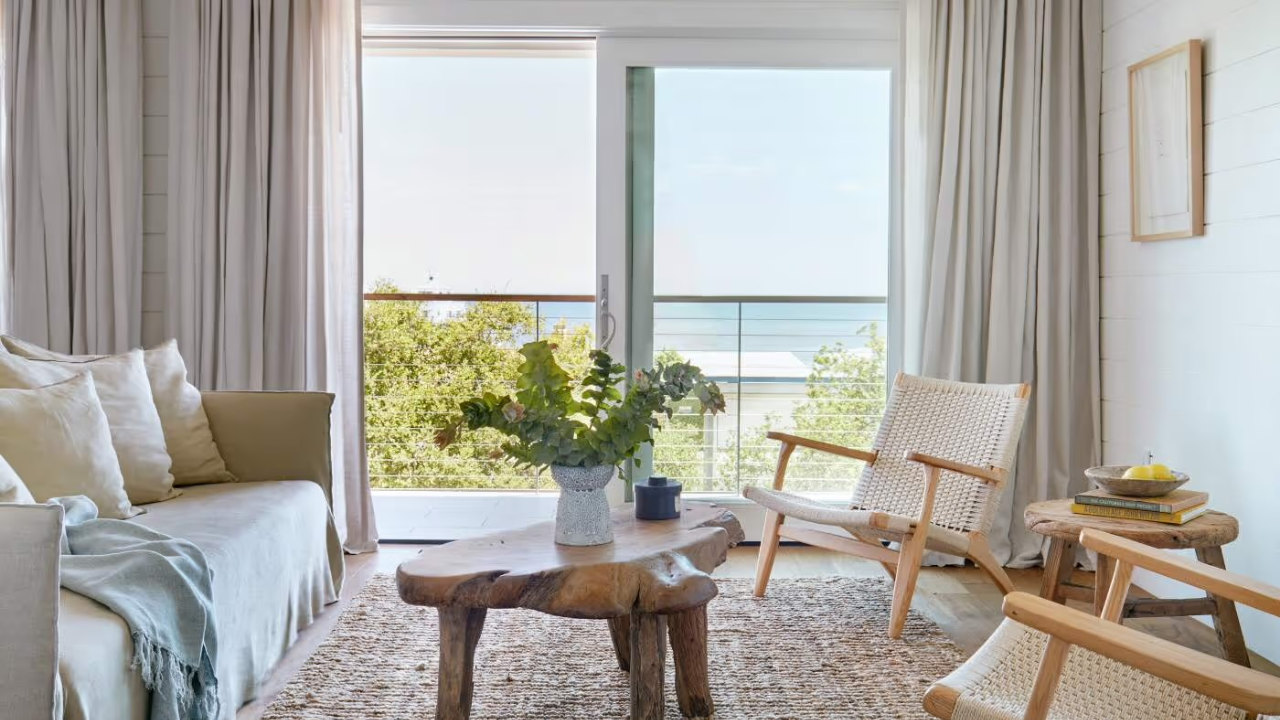
The Malibu Shores Motel opened in 1953 across from one of the most consequential surf breaks in California, and it ran hard through the sixties and seventies - and has the stories to match. Matthew Goodwin and Emma Crowther rebuilt it in 2017 into twenty rooms. Most of the rooms have private balconies and ocean views, plus there is a library carved out of the old attic and a rooftop bar for guests only. It’s small enough to feel like a house and in one of the best settings around.


Americana Motor Hotel
Flagstaff, Arizona
Built in 1962, it was briefly home to the cast and crew of Easy Rider. Today, it’s been reopened after a gut renovation as an eighty-eight-room Boogie fever dream. There is bocce and corn hole in the backyard, firepits, and a heated pool that runs year-round. There are free bikes for riding the stretch of Route 66 right out front. Flagstaff was also the world’s first International Dark Sky City, so the hotel lends telescopes, which is the kind of detail that tells you someone was paying attention. The Grand Canyon is also a short drive away!

El Rey Court
Santa Fe, New Mexico
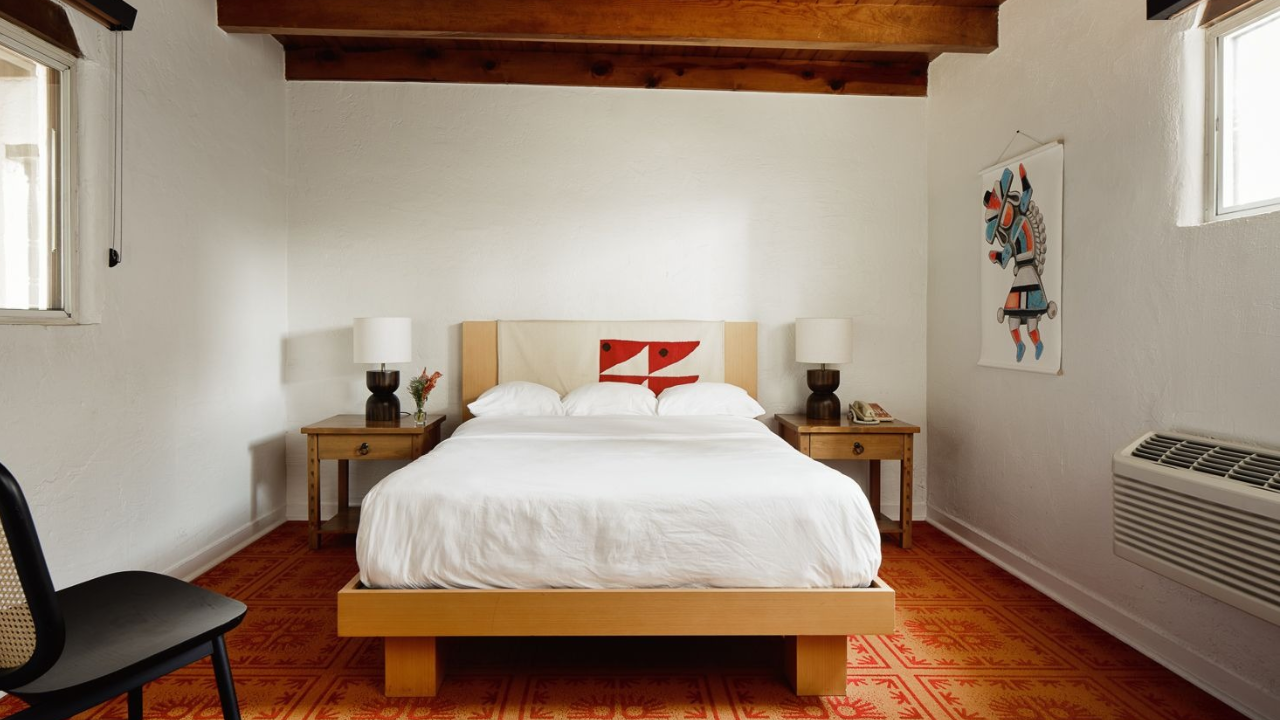
The 1936 adobe on Cerrillos Road got a second life under Jay and Alison Carroll, who understood that renovating a motel means editing, not erasing. There are eighty-six rooms and no two are identical. They commissioned art and use local textiles in each room, and some even have kiva fireplaces. The mezcal and tequila bar, La Reina, pulls in Santa Fe locals who have no intention of staying the night, which, let’s be honest, is the real test of if a hotel bar works.
El Rancho Hotel
Gallup, New Mexico
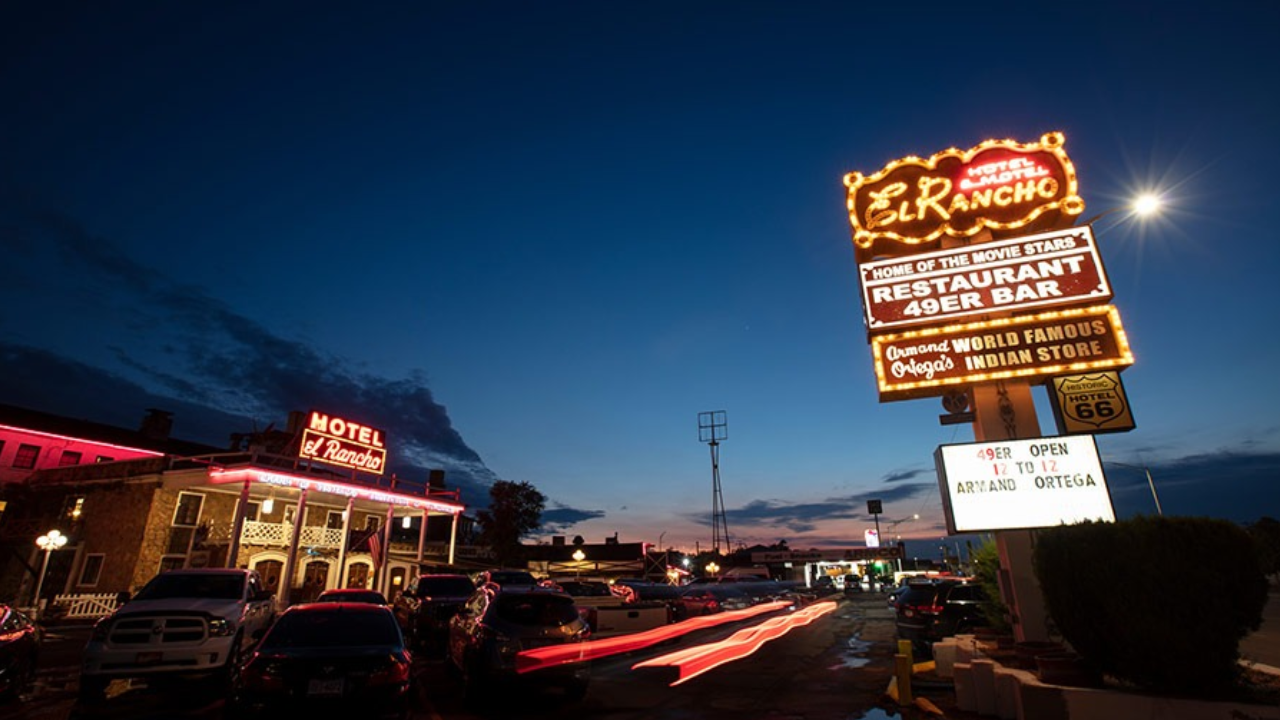
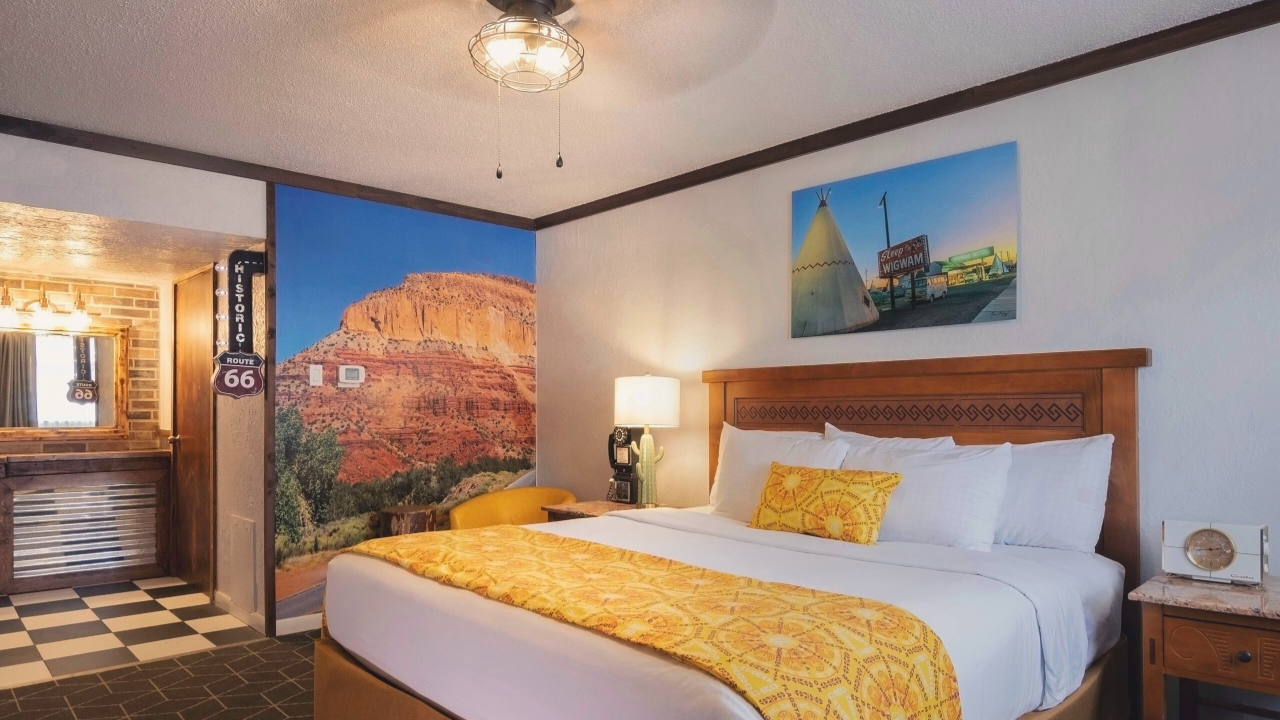
Filmmaker D.W. Griffith built El Rancho in 1937, and it became the default crash pad for anyone shooting a Western in the surrounding desert. Everyone, including John Wayne and Katharine Hepburn, plus an entire wall of signed photographs, is ready to prove other famous stays. The lobby is all dark wood beams, and Navajo textiles give it a particular kind of faded glamor that nobody could reproduce on purpose. It’s moody, unbothered, and a little haunted in the best way.

Trailborn Grand Canyon
Williams, Arizona
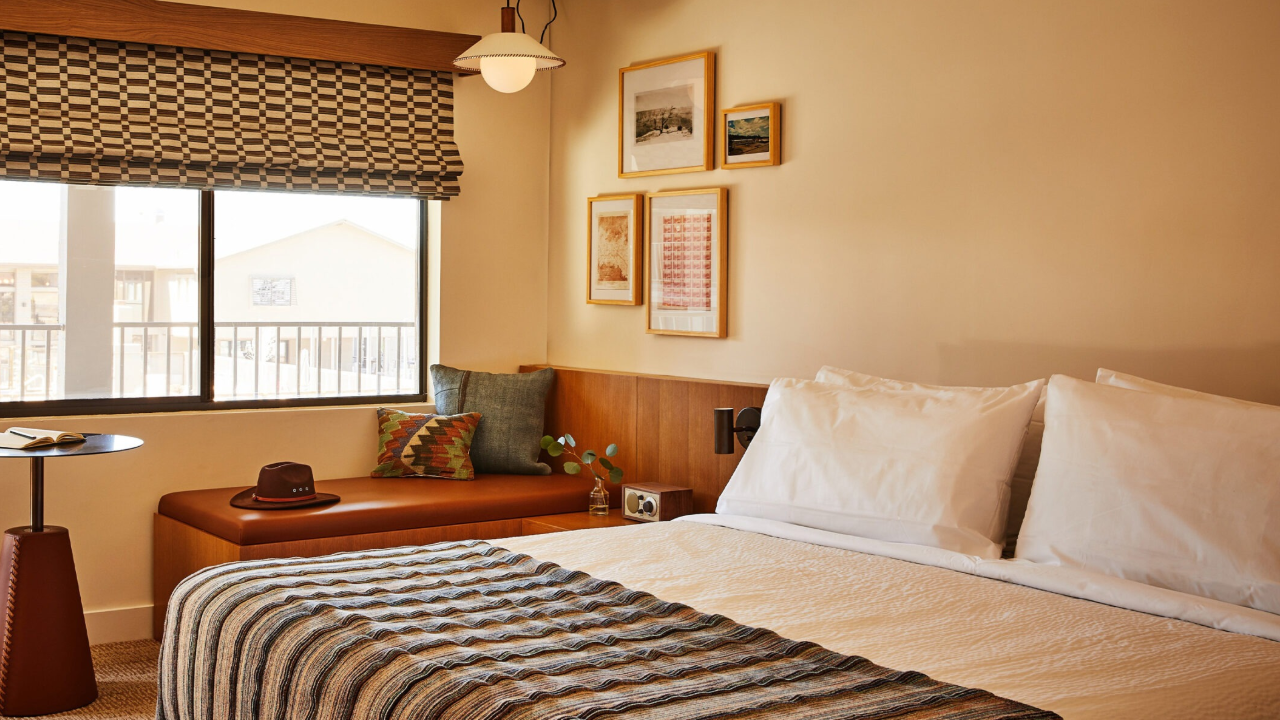
There has been lodging on this Route 66 lot since 1933. There was Clark Camp, Grand Canyon Camp, Thunderbird Inn, a Ramada, and the Mountain Side Inn. Trailborn opened its ninety-six-room version in 2025 with Lake|Flato on architecture. There is a restored saloon-style event space, a pool, a hot tub, a fire pit, and a bocce court. Miss Kitty’s handles the food, and the apple pie has a serious following. It is probably the best basecamp on this list if you’re into canyon hiking.
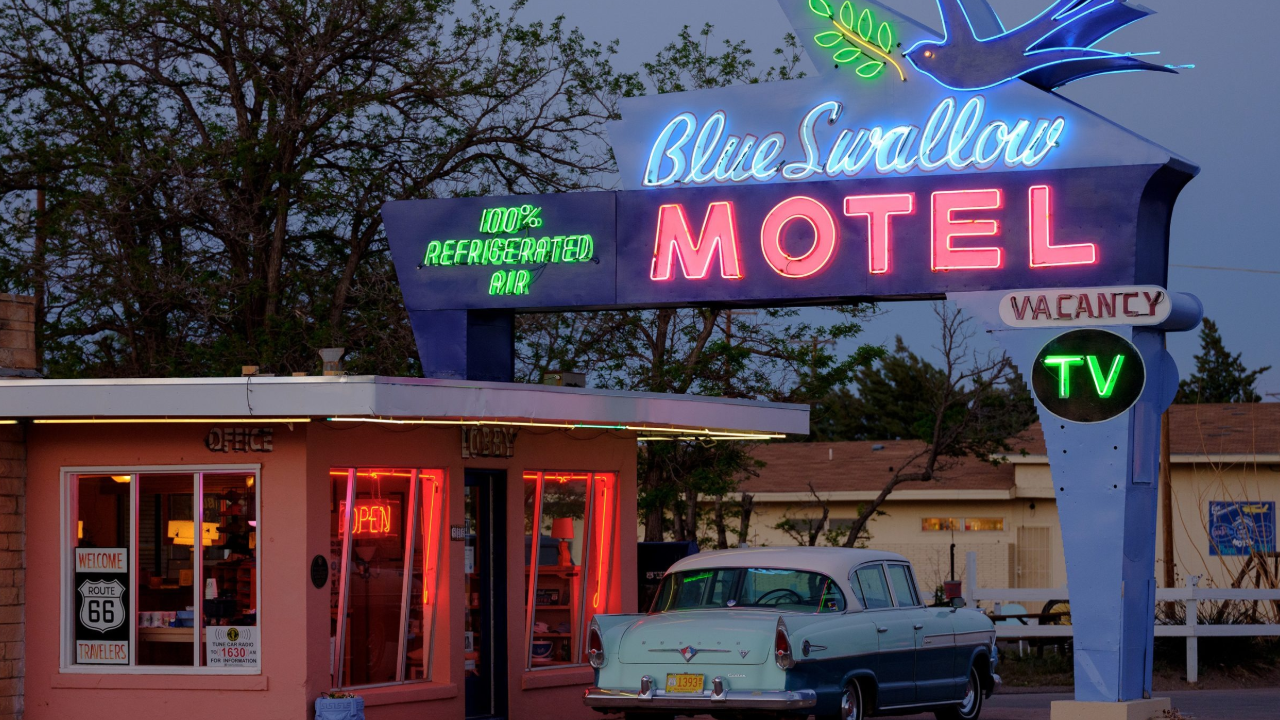
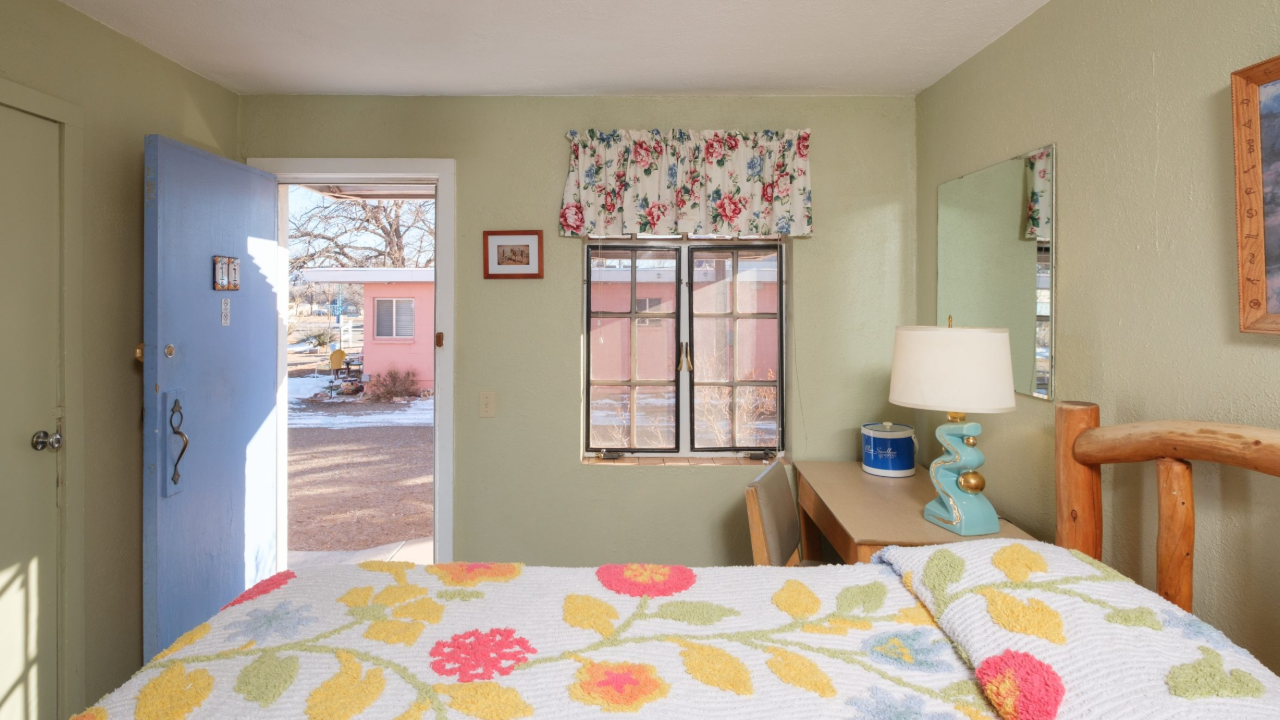
Blue Swallow Motel
Tucumcari, New Mexico
If you’ve seen one photograph of Route 66, it probably included this sign. The Blue Swallow opened in 1930 and is among the very few original stops still standing more or less intact. It has an L-shaped layout and individual garages for each room. The 1939 Bell rotary phones still work, which is pretty damn cool. Lillian Redman ran it from the fifties into the nineties and said she traveled the highway in her heart with everyone who stopped. The rooms are plain, clean, and completely uninterested in impressing you.

Skyview Los Almos
Los Alamos, California
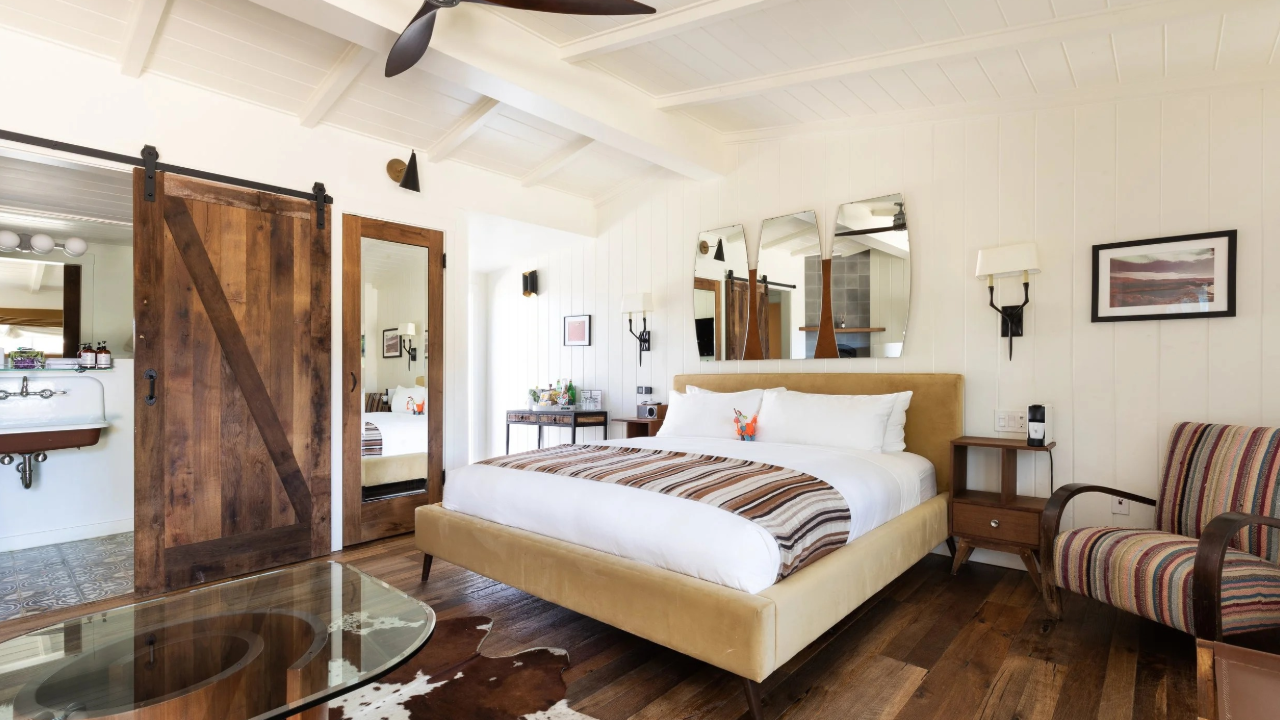
Opened in 1959 on a hill halfway between San Francisco and Los Angeles, it had the only pool for miles. And taking a swim costs 25 cents a dip. It slid far enough over the years that locals started calling it the Bates Motel. Nomada bought the five acres in 2016 and spent two years working on it. It reopened in 2018 with thirty-three rooms and white-painted original paneling. There are exposed beams, tiled fireplaces, and an adults-only pool. The on-site restaurant is called Norman because, of course, they know exactly what they are doing.
Boots Court
Carthage, Missouri
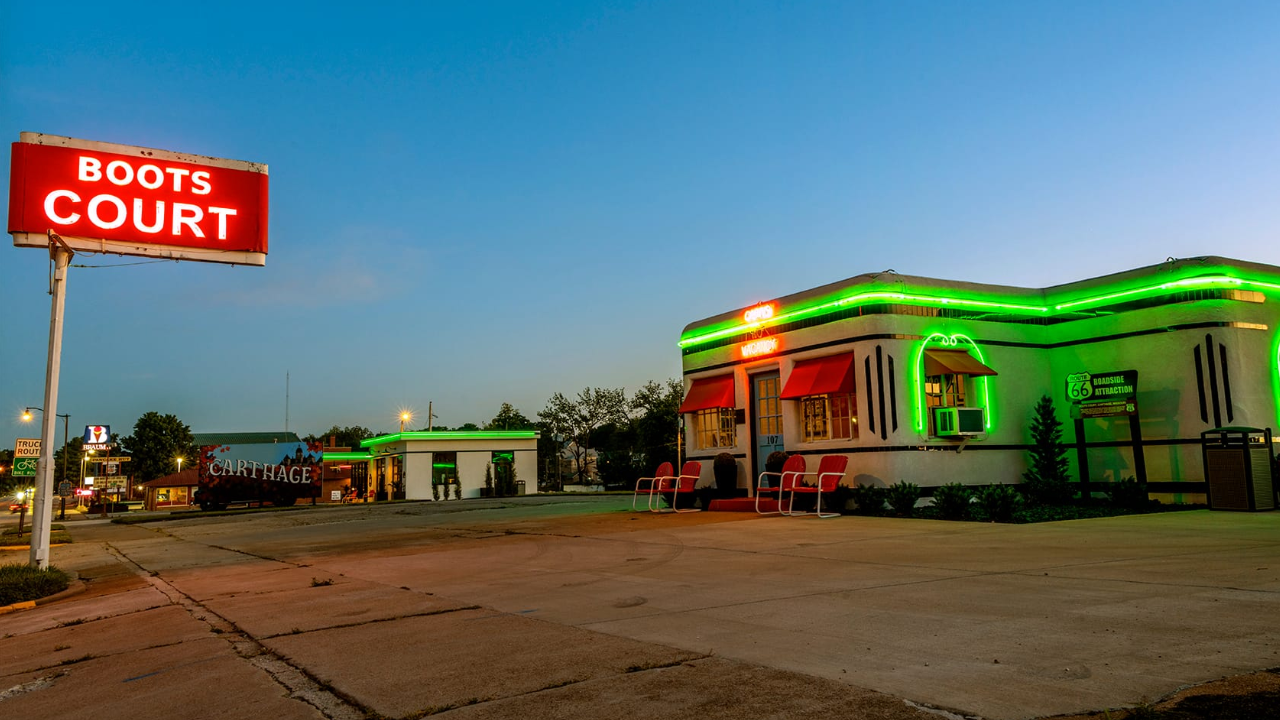
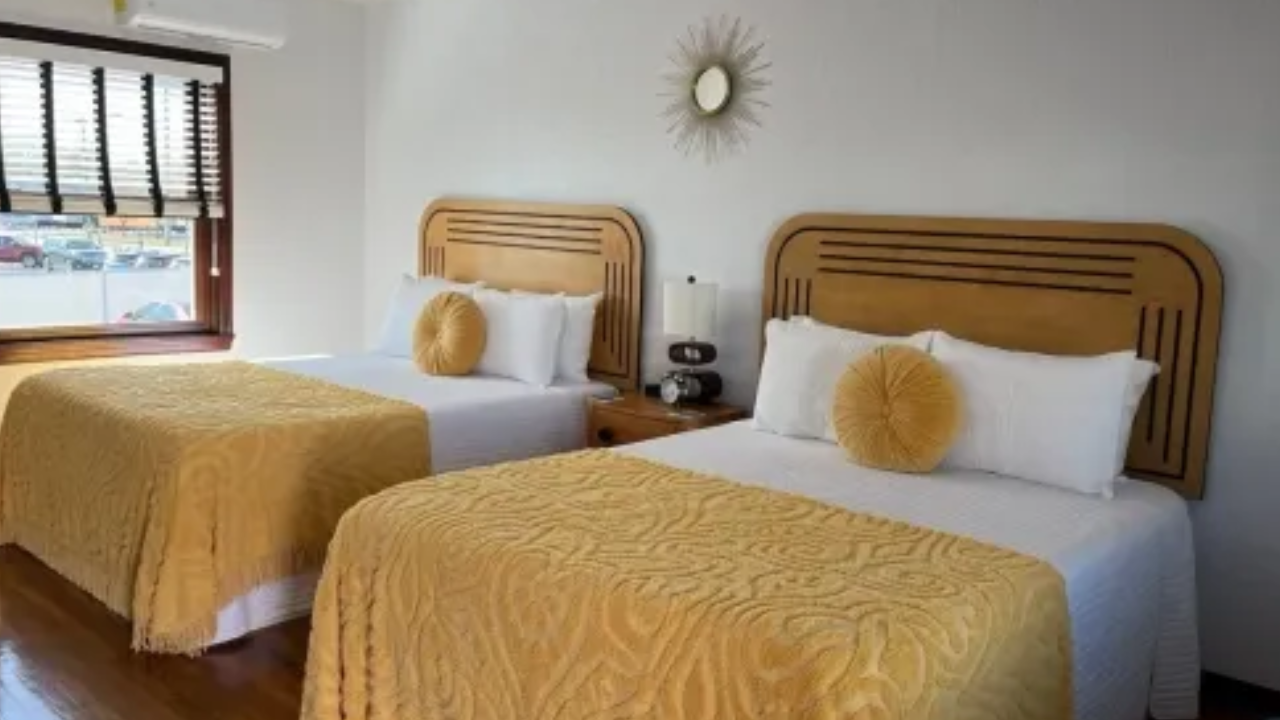
Arthur Boots built this Streamline Moderne motor lodge in 1939 and charges $2.50, a premium rate justified by a radio in every room and carports that let guests come and go unseen. Clark Gable stayed here, and so did Gene Autry and Mickey Mantle. Preservationists rescued it from demolition, and the Boots Court Foundation brought it back to something close to exact. There are 13 rooms with no TVs, no microwaves, and the original tile. Those radios that were the original selling point? They still exist in every room and play period broadcasts. The green neon still runs the way it did, but now there is Wi-Fi.
Here’s what these places actually offer that a good hotel can’t: proximity. Your car is right there. The door opens to the outside air. There’s no lobby to cross, no elevator, and no performance upon your arrival. You pull in, drop your bag, and you’re in the pool in four minutes. That was the original pitch in 1925, and it’s still the pitch. The neon is just the part that photographs well.